


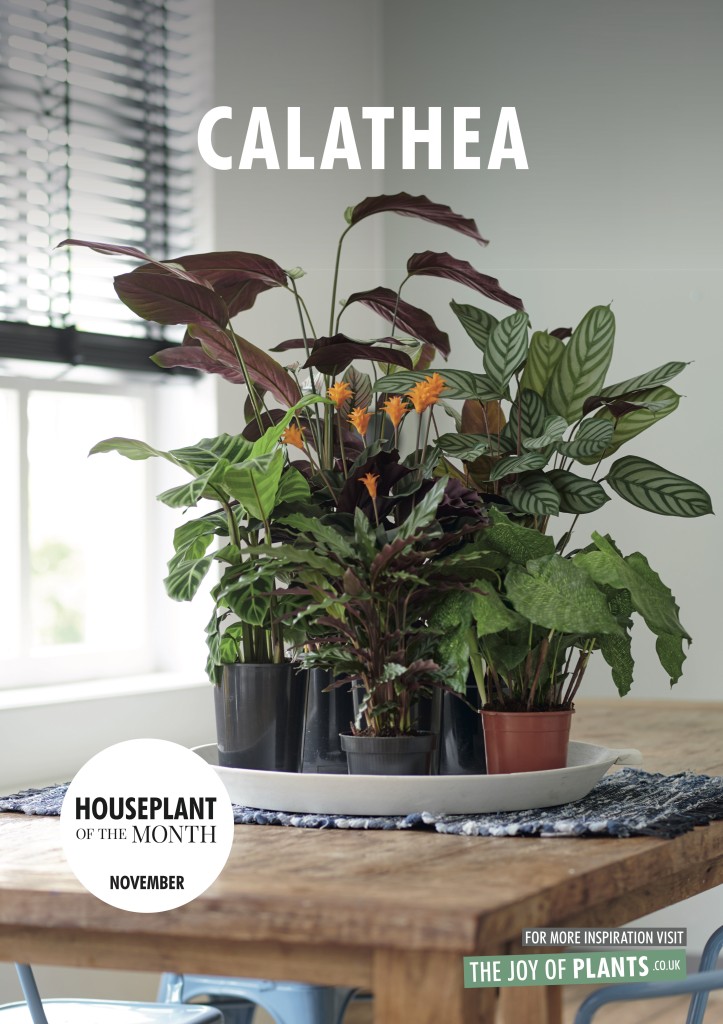
The genus Calathea is characterized by the fabulous markings on the leaves and the rich choice of leaf shapes, from round and oval to spear-shaped. Those leaves not only have air-purifying properties, but also join in your daily routine thanks to their day-and-night rhythm. There is a kind of joint between the leaf and the stem that allows movement. When it gets dark the leaves close, and if it’s quiet enough, you can hear the rustling of the closing leaves. When it gets light, they unfold again.
Origin

Calathea grows in tropical rainforests Central and South America in warm and damp conditions. It particularly thrives there in sheltered spots without too much direct sun, around forest giants that filter the light.
Calathea Assortment
There are many different calatheas. There are a few species that are sold as flowering plants, of which C. crocata—with orange flowers—is the best known, with cultivars such as ‘Tassmania’ and ‘Candela’. Other flowering calatheas are C. warscewiczii (white) and C. ‘Bicajoux’ (pink).

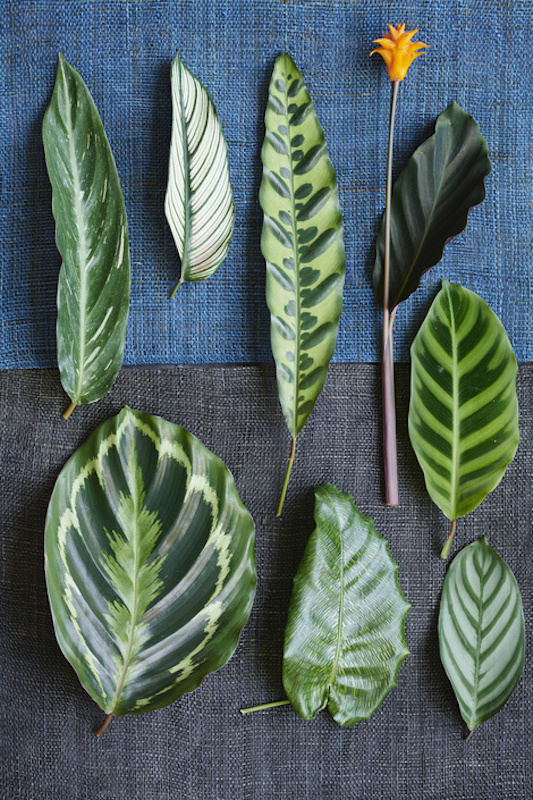
The other Calatheas are stunning decorative foliage plants with unusual leaf markings and colors. Many species feature a claret-colored back to the leaf. C. lancifolia and C. makoyana have been known for a long time; more recent varieties are C. rufibarba, C. zebrina and C. orbifolia. Calathea is available in sizes ranging from small compact plant to potted giant.
What to Look for When Buying Calatheas
- The plant’s pot size, diameter and height should be in proportion. The species or cultivar name indicates what leaf markings/color the plant has.
- With the flowering species, check the maturity and the number of flowers per plant.
- Calatheas must be free of pests and diseases. Soil that is too wet can lead to root rot. Brown spots and leaf edges are often caused by insufficient humidity and/or the potting soil being too dry.
- Look out for cold damage or leaf scorch. Cold can cause spots on the leaves or even cause the entire plant to collapse.
Care Tips
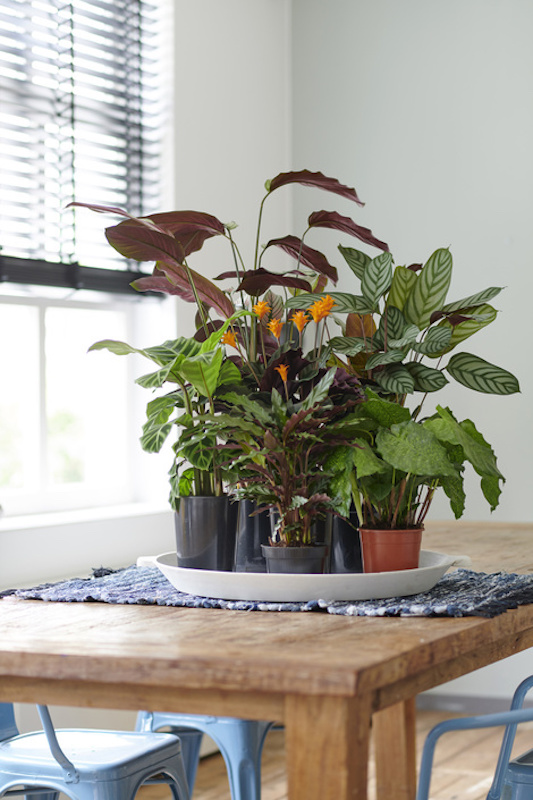
- Have your plant wrapped carefully at the time of purchase: calathea cannot cope with cold temperatures.
- Calathea likes a light and warm spot indoors; do not allow the temperature to drop below 12 °C.
- The more variegated the leaves, the more light is required, although it’s better to avoid full sunlight during the summer months. If the plant’s position is too dark, its markings may disappear.
- The potting mix should always be slightly damp. Preferably, give the plant water at room temperature.
- A humidity tray may be necessary during the heating season in order to increase the humidity and prevent dry leaf edges and tips.
- Light fertilizing once a month spring through fall keeps the leaves looking good and the plant growing.
- Clean dust and grime from leaves by placing it outdoors in a rain shower in the summer or rinsing stem in the shower.
- Cut off yellow or brown leaves.
Display Tips

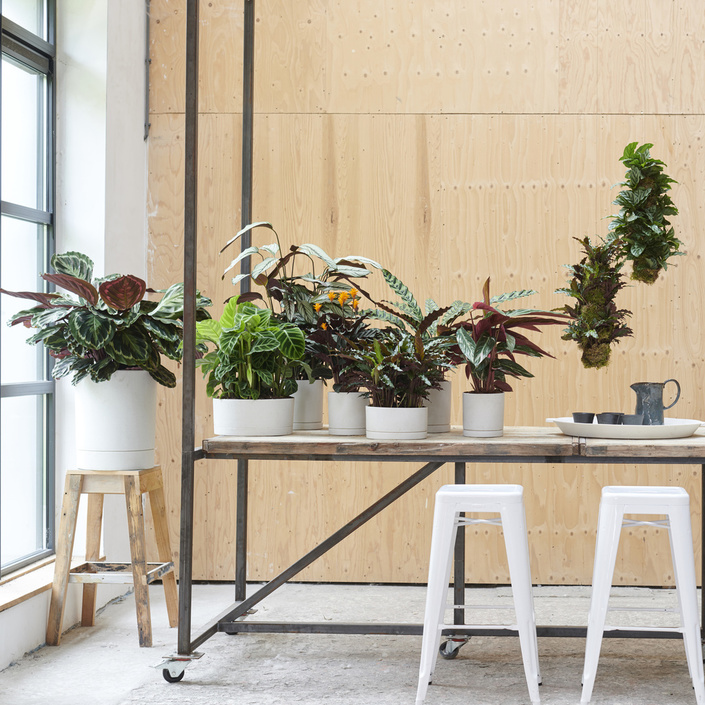
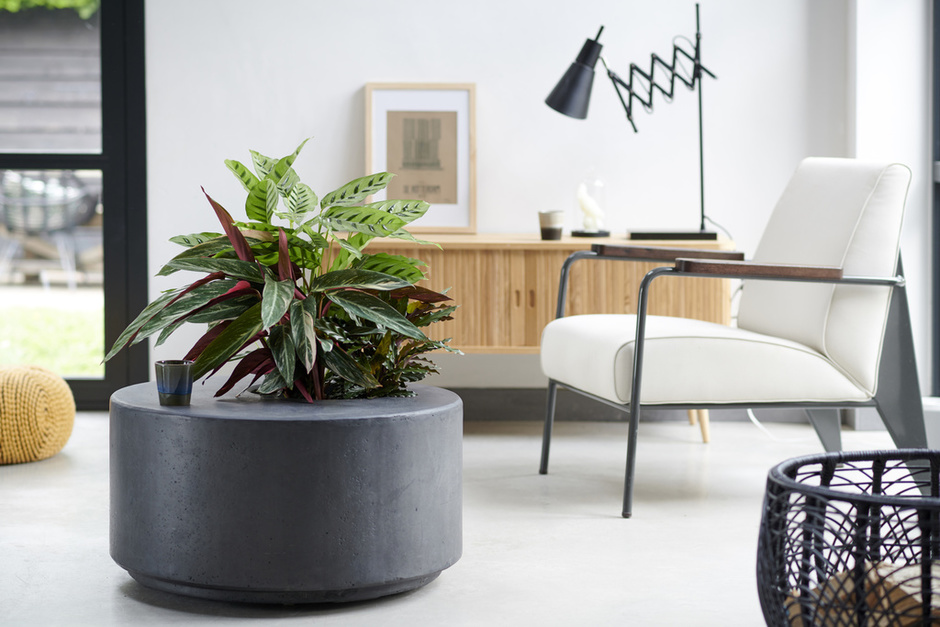
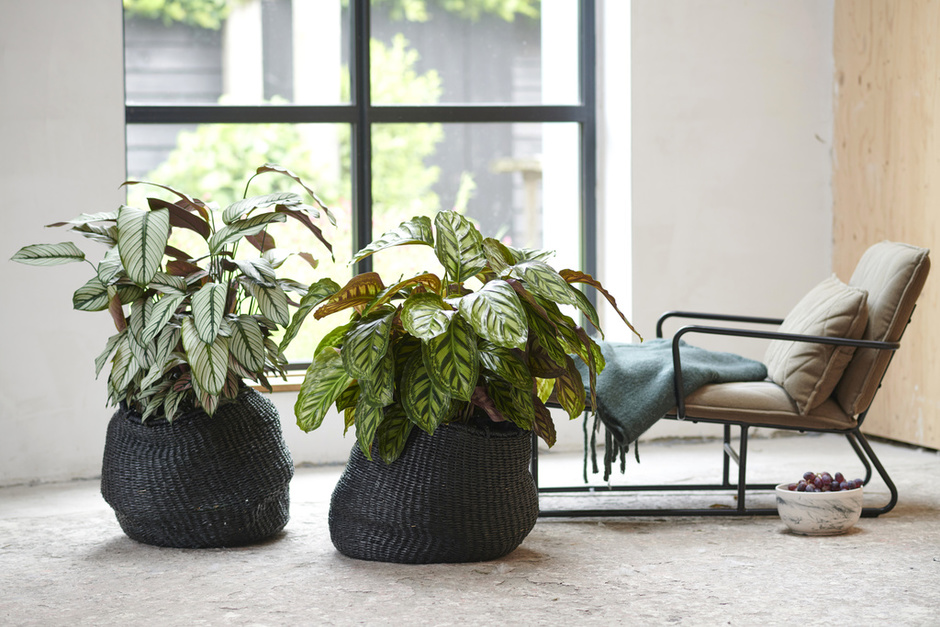
Calathea’s air-purifying effect makes it a great plant for both the office and the home, especially now that the central heating is on again. To make sure the attractive foliage is displayed clearly, don’t place the plants too close together. The styling can be trendy and sleek—that shows off the leaves particularly well.
Text and photos adapted from a press release by Thejoyofplants.co.uk.
Styling by Elize Eveleens, Klimprodukties