


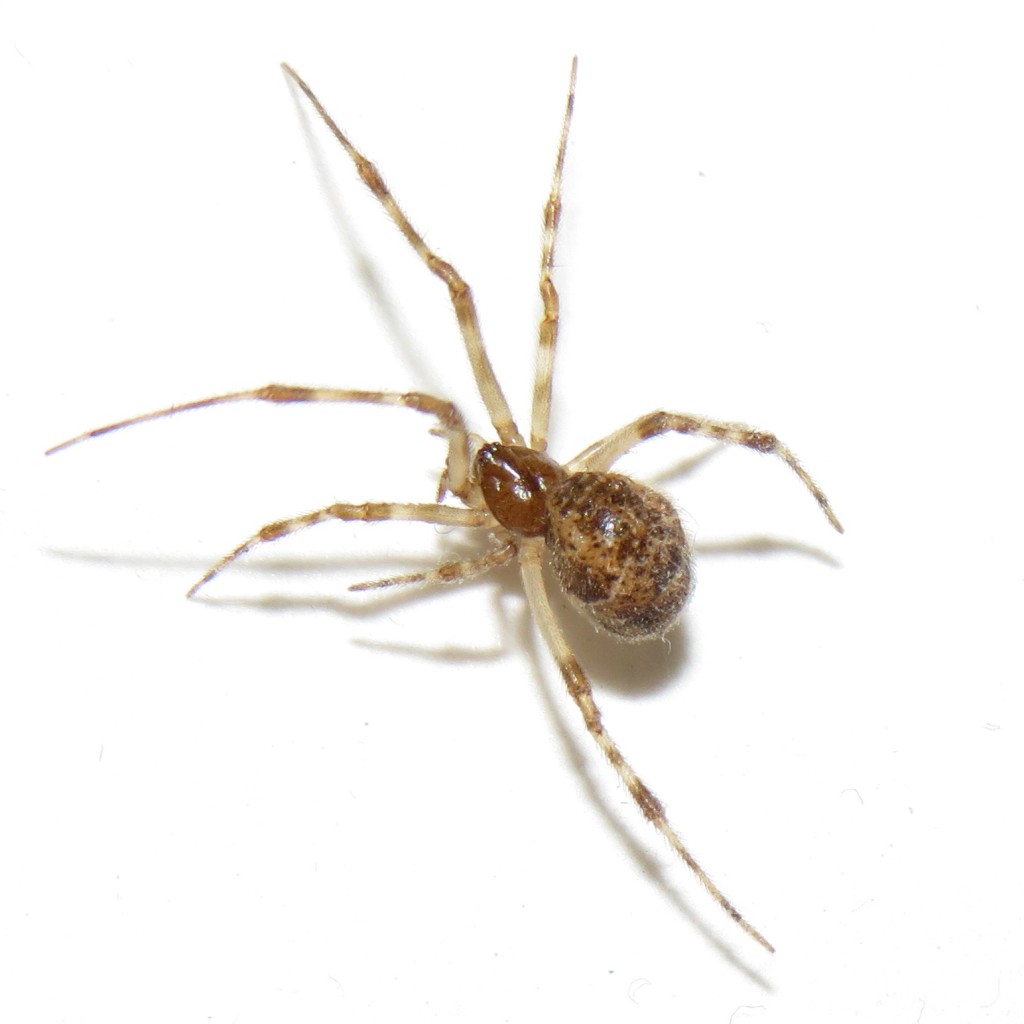
The common house spider (Achaearanea tepidariorum), found all over the world, keeps insects from taking over our homes. Photo: Fyn Kynd, flickr.com
Before you tear out that web in your garden or squish the spider on your living room ceiling, do remember that spiders are beneficial to gardeners, eating insect pests and thus keeping your plants healthier. And, it turns out, they are surprisingly intelligent, the Einsteins of the arthropod world, largely due to their huge brains.
The brain of adult humans only makes up about 2 to 3 percent of our body weight. In some spiders, especially the smallest ones, it can make up almost 80 percent of their total body cavity, spreading into their legs.
Little spiders need big brains to build their complex webs and, in the case of spiders that feed by hunting, to track and surprise their prey. Hunting spiders can easily find their way through complex obstacle courses, putting rats to shame. This imitates how, in real life, they plan out intricate routes and detours to reach their quarry. Plus, web makers fine-tune their web, adjusting the strands like a piano tuner, so they vibrate just the right way. Some spiders also have excellent vision, akin to that of mammals and birds, much better than most insects, and it likely takes intelligence to coordinate the images captured by their (usually) eight eyes.
Why not turn that brain power to your advantage by letting spiders live, both among your houseplants and in your garden? Who knows, maybe you can start a conversation with one!