


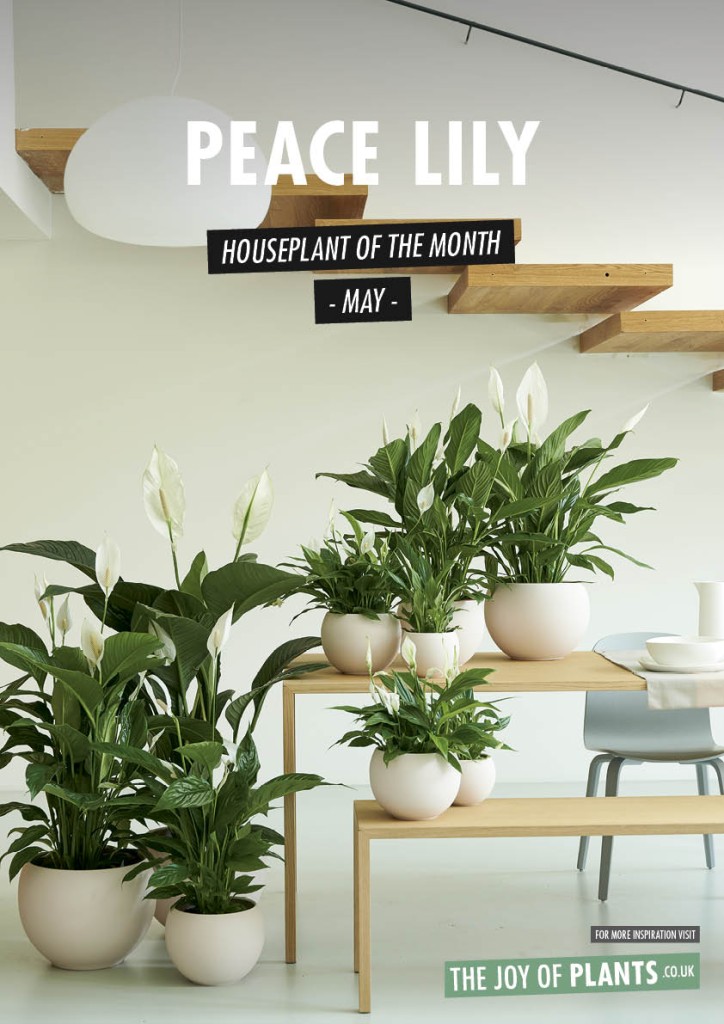
The peace lily is a popular houseplant, one often recommended to beginners. It’s a dual-purpose plant, grown both for its attractive foliage and stunning flowers. And it is widely available: any shop selling houseplants will have it.
The peace lily’s official name, Spathiphyllum, is derived from the Greek words for spathe and leaf, referring to the leaflike white spathe that is part of the plant’s inflorescence.
Origin of the Peace Lily
The peace lily originates from the tropical rainforests of Central and South America. In the wild, it likes a warm, damp environment and often grows in deep shade, although it only blooms in forest openings. The plant was first introduced to Europe in 1870 and has enjoyed a rapid development since then. As recently as the 1980s, there were only a few varieties derived from Spathiphyllum wallisii on the market, but the genus has since undergone extensive selection and hybridization, so much so that today there are now over 50 cultivars among which to choose.
What to Look for When Buying Peace Lilies


- Dimensions and appearance: When buying peace lilies, look particularly at the pot size, the diameter and density of the plant, the size of the spathe, the plant’s growth (compact or open) and the number of buds or flower stems.
- Health: It is also important that plants be healthy without pests or diseases.
- Damage: If the inflorescence or the foliage is damaged or flawed, often the result of shipping or storage, it’s best to pick another specimen.
- Foliage and flowers: Watch out for wilted flowers or plants showing yellow foliage, the latter a sign of past mistreatment. Spots on the leaves caused by cold damage or scorching by the sun are also possible.
- Moisture: If the plant has wilted leaves, the potting soil is too dry. Never buy a wilted peace lily!
Assortment


With over 50 different peace lily cultivars, you might wonder what the differences are.
First, they all have white flowers (some may be slightly greenish) and shiny green leaves*, so the difference lies mainly in the size of the plant, its leaves and its flowers. Older varieties tended to have only a fewer flowers, while recent cultivars have more or larger blooms. Peace lilies can range in size from no bigger than a coffee cup to almost 2 m (6 feet) in height, notably the giant cultivar ‘Sensation’.
*One variety, ‘Domino’, differs from the others because of its variegated leaves.
The number of flowers and size of the flower should be in proportion to the plant’s foliage.
If ever you see peace lilies with blue, fluorescent orange or shell pink flowers, you’re being taken for a ride. They’ve been dyed to boost sales. When the plant blooms again, its flowers will be the traditional white.
Care Tips


The peace lily is quite easy to grow, as long as you keep it evenly moist.
- Peace lilies are often sold as “shade plants” and indeed, will grow reasonably with no direct sun at all. However, to bloom well, they require bright light, even very bright light, including a few hours of morning sun.
- Indoors temperatures around 18–22 °C (65–72 °F) are fine.
- Water regularly with tepid water. If the leaves droop, the soil has dried out, so place the plant in a large bowl of warm water and let the root ball soak for an hour or so to help it rehydrate. Don’t allow this to happen often: each time you let the plant wilt, it will lose leaves and weaken.
- Remove faded flowers.
- The plant enjoys humid air, but avoid misting the leaves. That can result in stains and leaf diseases.
- Fertilize regularly with a diluted all-purpose fertilizer from spring through fall.
- If your plant becomes reluctant to bloom over time, give it a shock. In winter, place it in a brightly lit spot for 6 to 8 weeks at a temperature of only 15 °C (60 °F). This is a near-lethal temperature for this very tropical plant and the near-death experience can result in it flowering vigorously again once it is moved back into the warmth.
- Your plant can also be placed in the garden or on the patio in the summer, but avoid bright sunlight.
Clean Air Machine?
The air-purifying properties of the peace lily have made it very popular.
The NASA Clean Air Study of 1993 highly praised the peace lily for its above-average air purifying qualities and this resulted in a surge in popularity that has remained steady to this day. There is even some research suggesting it may help filter human diseases, like cold and flu viruses, from the air.
Display Tips


This easy-to-grow plant also has calming effects thanks to its simple flowing leaf shapes. Place it in a pot made of natural material, ceramic or (artificial) resin. The plant looks even more serene behind a matte or semi-transparent screen.
Enjoy your peace lily!
For more information on the peace lily, read Making Peace with your Peace Lily.
Text and photos adapted from a press release by Thejoyofplants.co.uk.
Styling by Elize Eveleens, Klimprodukties