


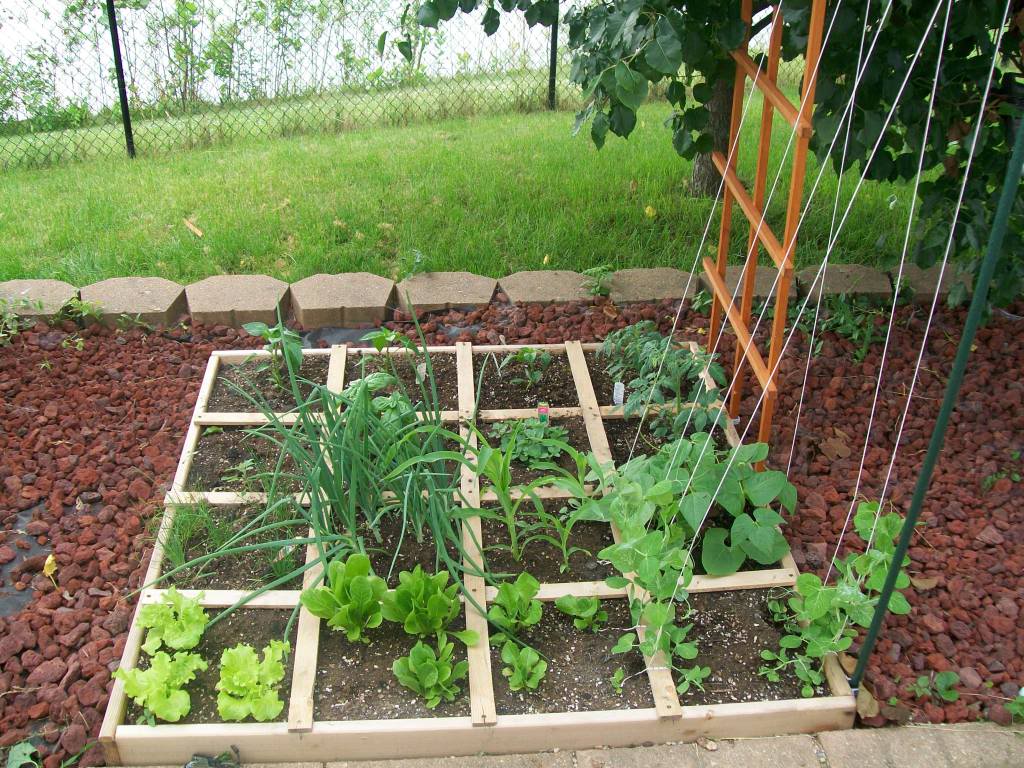
Typical square foot garden. Photo: ingunowners.com
The late American garden writer, Mel Bartholomew, really made a splash with his concept of the square–foot garden, now adopted by home gardeners all over the world. The idea is to concentrate plantings to get the most vegetables possible in a limited amount of space. Gone are rows, designed more for walking in than gardening and great wasters of space. In a raised bed 4 feet by 4 feet square (1.2 m x 1.2 m), you can reach all the plants from one side or the other, so you never need to put a foot in the garden. So, bye-bye rows! With them gone, it means all the space can be used for vegetables.


To better use all the space, he recommended planting by squares one foot (30 cm) long and wide. Thus “square foot gardening.” Each square would contain 1 extra–large vegetable, 4 large ones, 9 medium ones and 16 small ones.
I personally don’t follow square–foot gardening by the letter, but I have been densifying my plantings for decades, based on an older and less precise system called the French intensive system, generally with longer beds. Still, Bartholomew’s square foot calculations come in very handy.
Here is a list of recommended spacings based on his method with a few personal modifications. You may find them handy in planning your own vegetable garden. I’ve also included the height of the plants (based on their height at normal harvesting time), as you also need to know which ones might be shading out their neighbors.
Square Foot Spacing for Vegetables
| Vegetable Type | Plants per Square | Height |
| Amaranth | 4 | 4–8 ft (1.2–2.5 m) |
| Annual flowers | 4–9 | 9–60 in (25–150 cm) |
| Arugula | 4 | 9 in (25 cm) |
| Asian greens | 4 | 9 in (25 cm) |
| Asparagus | 1 | 5 ft (1.5 m) |
| Basil | 2–4 | 12 in (30 cm) |
| Bean (bush) | 9 | 12–18 in (30–45 cm) |
| Bean (pole) | 9 | 5–7 ft (1.5–2 m) |
| Beet | 9 | 12 in (30 cm) |
| Baby vegetables | 9–16 | 6–8 in (15–20 cm) |
| Bok choy | 4 | 1–2 ft (30–60 cm) |
| Bok choy (baby) | 9 | 6–8 in (15–20 cm) |
| Broccoli | 1 | 18–24 in (45–60 cm) |
| Brussels sprout | 1 | 2 ½ ft (75 cm) |
| Cabbage | 1 | 12–18 in (30–45 cm) |
| Carrot | 16 | 12 in (30 cm) |
| Cauliflower | 1 | 18–24 in (45–60 cm) |
| Chinese Cabbage | 4 | 1–2 ft (30–60 cm) |
| Celery | 4 | 12–16 in (30–40 cm) |
| Chives | 16 | 6–12 in (15–30 cm) |
| Cilantro (coriander) | 9 | 12 in (30 cm) |
| Collards | 1 | 2–3 ft (60–90 cm) |
| Corn | 4 | 5–6 ft (1.5–2 m) |
| Cucumber | 2 | 4–6 ft (1.2–2 m |
| Dill | 4 | 3 ft (90 cm) |
| Eggplant (aubergine) | 1 | 24–36 in (60–90 cm) |
| Endive | 4 | 10 in (25 cm) |
| Fennel | 4 | 30–72 in (75–180 cm) |
| Garden huckleberry | 1 | 24 in (60 cm) |
| Garlic | 9 | 18–24 in (45–60 cm) |
| Kale | 1 | 10–24 in (25–60 cm) |
| Kohlrabi | 4 | 18–24 in (45–60 cm) |
| Leek | 9 | 2 ft (60 cm) |
| Lettuce (leaf) | 6 | 6–12 in (15–30 cm) |
| Lettuce (head) | 2 | 6–12 in (15–30 cm) |
| Lettuce (romaine or cos) | 4 | 10–20 in (25–50 cm) |
| Melon | 1 per 2 squares | 1–2 ft (30–60 cm) |
| Mint | 1–4 | 1–3 ft (60–90 cm) |
| Mustard greens | 16 | 20–24 in (50–60 cm) |
| Okra | 1 | 3–6 ft (90–180 cm) |
| Onion | 9 | 12–18 in (30–45 cm) |
| Onion (green) | 16 | 12 in (30 cm) |
| Oregano | 1 | 2 ft (60 cm) |
| Parsley | 4 | 6–12 in (15–30 cm) |
| Parsnip | 9 | 10–15 in (25–40 cm) |
| Peanut | 4 | 12–18 in (30–45 cm) |
| Peas | 9 | 3 ft (90 cm) |
| Pepper (bell) | 1 | 12–24 in (30–60 cm) |
| Pepper (hot) | 1 | 12–24 in (30–60 cm) |
| Potato | 4 | 12–24 in (30–60 cm) |
| Pumpkin | 1 per 2 squares | 18–24 in (45–60 cm) |
| Quinoa | 9 | 4–9 ft (1.2–115 cm) |
| Radicchio | 2 | 6–12 in (15–30 cm) |
| Radish | 16 | 6–12 in (15–30 cm) |
| Rhubarb | 1 per 4 squares | 3 ft (90 cm) |
| Rosemary | 1 | 1–4 ft (30–120 cm) |
| Rutabaga | 4 | 12–24 in (30–60 cm) |
| Sage | 1 | 12–30 in (30–75 cm) |
| Shallot | 4 | 8 in (20 cm) |
| Sorrel | 2 | 3 ft (90 cm) |
| Spinach | 9 | 6–12 in (15–30 cm) |
| Squash (bush) | 1 | 18–24 in (45–60 cm) |
| Squash (running) | 1 per 2 squares | 18–24 in (45–60 cm) |
| Strawberry | 1 | 8–12 in (15–30 cm) |
| Sweet potato | 1 | 12–15 in (30–40 cm) |
| Swiss chard | 4 | 12–18 in (30–45 cm) |
| Tarragon | 1 | 2–3 ft (60–90 cm) |
| Tomato (determinate) | 1 | 3 ft (90 cm) |
| Tomato (indeterminate) | 1 | 6–8 ft (2–2.5 m) |
| Turnip | 9 | 12–16 in (30–40 cm) |
| Thyme | 4 | 8 in (20 cm) |
| Wasabi | 1 | 2 ft (60 cm) |
| Watercress | 1 | 6 in (15 cm) |
| Watermelon | 1 per 2 squares | 2 ft (60 cm) |
| Zucchini | 1 | 18–24 in (45–60 cm) |