


Beware of little freeloaders this summer
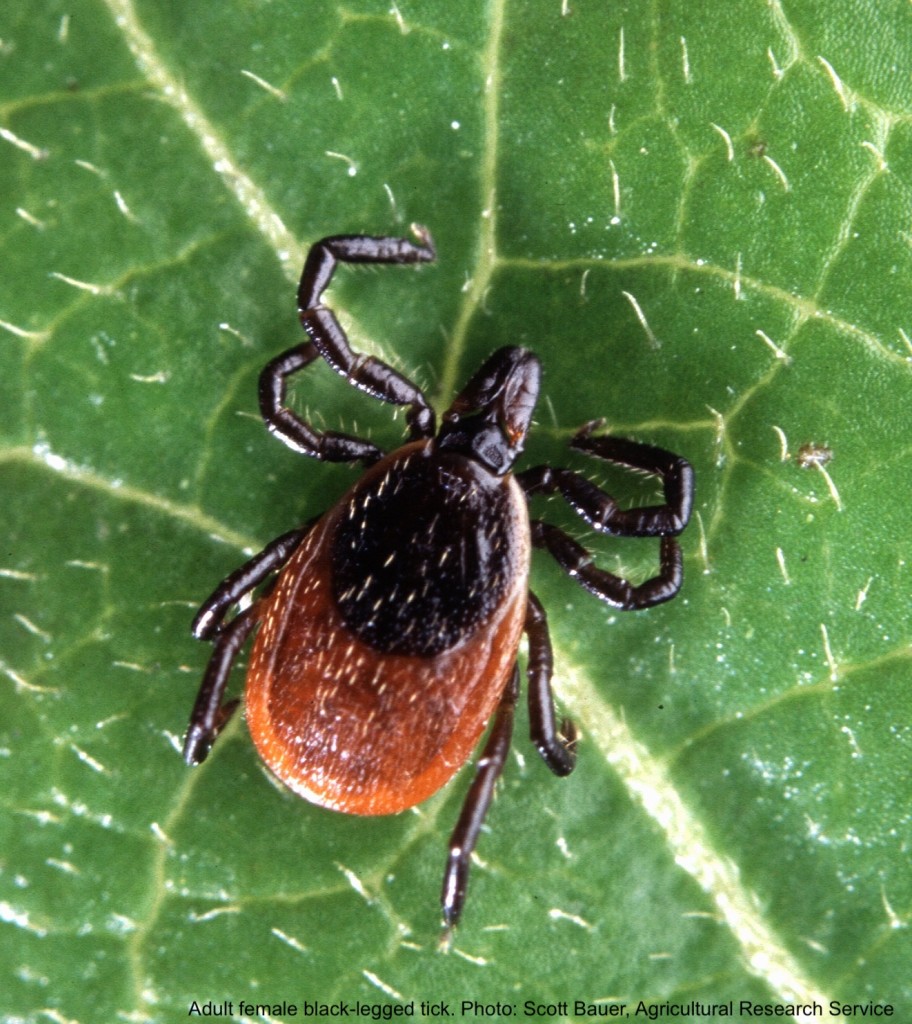
Many people are making plans to enjoy the rest of spring and summer outdoors. With tick season running from now until October, the Nature Conservancy of Canada (NCC) is urging people to take precautions on trails and in forests against little freeloaders. Black-legged ticks, also called deer ticks (Ixodes scapularis) can carry various bacterial diseases that are harmful to humans. Lyme disease, for example, is an infectious disease spread by black-legged tick bites.
Reports of Lyme-carrying ticks are spreading in Canada. These ticks are becoming more common in Ontario, Quebec, Nova Scotia, New Brunswick, and Manitoba*. They hide in the shade, in wooded areas and in long grasses, and can be carried from place to place by migratory birds.
*They’re also found in Europe and throughout much of the United States. For maps showing the distribution this pest in both Europe and North America, read the article A Gardener’s Guide to Avoiding Ticks.
Claude Drolet is the NCC stewardship manager in Quebec. He says people shouldn’t be afraid of going outdoors and that spending time in nature is good for our physical and mental well-being. At the same time, Drolet recommends that people who live, work or visit these areas take steps to minimize the risk of exposure from tick bites.

“Wear bug repellant containing DEET, long sleeves, light-colored clothing, tuck everything in (including your pants into your socks), stay in the middle of trails, take a bath or shower after a hike and always check your clothes and body for ticks after a hike because they can be as small as a poppy seed,” said Drolet.
NCC has prepared a question-and-answer sheet to help people in advance of nature trips. Here are some general reminders:
- Be aware of areas where ticks live and thrive. When hiking, try to walk in the center of the trail. If you need to take a break, sit on a rock instead of on the ground.
- Wear long-sleeved shirts and long pants to keep your skin protected from ticks. Cover your head with a hat, tucking in any long hair, and wear high boots if you have them. Ticks are found in grasses and shrubs, so tucking your pants into your socks or boots may provide extra protection from ticks looking to hitch a ride. You should also make sure there aren’t any gaps in your clothing that ticks could get into. Wearing light-colored clothing can help you see ticks more easily and give you time to brush them off before they become attached to your skin.
- After spending time outdoors, check your body, gear and pets for ticks before coming indoors.
- Tick bites can easily go undetected. The first sign you may see is a black lump. A more serious one is a rash near the site that may look like a bull’s-eye target. Infected people may also develop flu-like symptoms. The disease is treatable with antibiotics, and early treatment almost always results in full recovery.
Tick removal and preparation: Dos and don’ts

- Using tweezers, gently grasp the tick’s head and mouth parts as close to your skin as possible.
- Slowly pull the tick straight out. Do not jerk or twist it.
- Try not to squash it.
- Do not apply matches, cigarettes or petroleum jellies to the tick as these may cause an infected tick to release bacteria into the wound.
The Government of Canada encourages people to submit their ticks to a public health laboratory for testing, if possible. To learn more, visit the Canada Public Health Agency.
To collect a tick for testing:
- Place the tick on a piece of tape, making sure to trap it so it doesn’t escape. Place the tape in a container and keep it out of the reach of children.
- Call ahead to the health office or veterinarian to submit your tick.
- Do not wait for test results before seeking medical attention. If you suspect a black-legged tick has been embedded for several hours (12–24) seek medical advice immediately, and request antibiotics.
Reminder: Please check your first aid kits to ensure they contain the materials listed above for tick removal and storage.
About

Nature Conservancy of Canada (NCC) is the nation’s leading not-for-profit, private land conservation organization, working to protect our most important natural areas and the species they sustain. Since 1962, NCC and its partners have helped to protect 14 million hectares (35 million acres), coast to coast to coast. To learn more, visit natureconservancy.ca.