


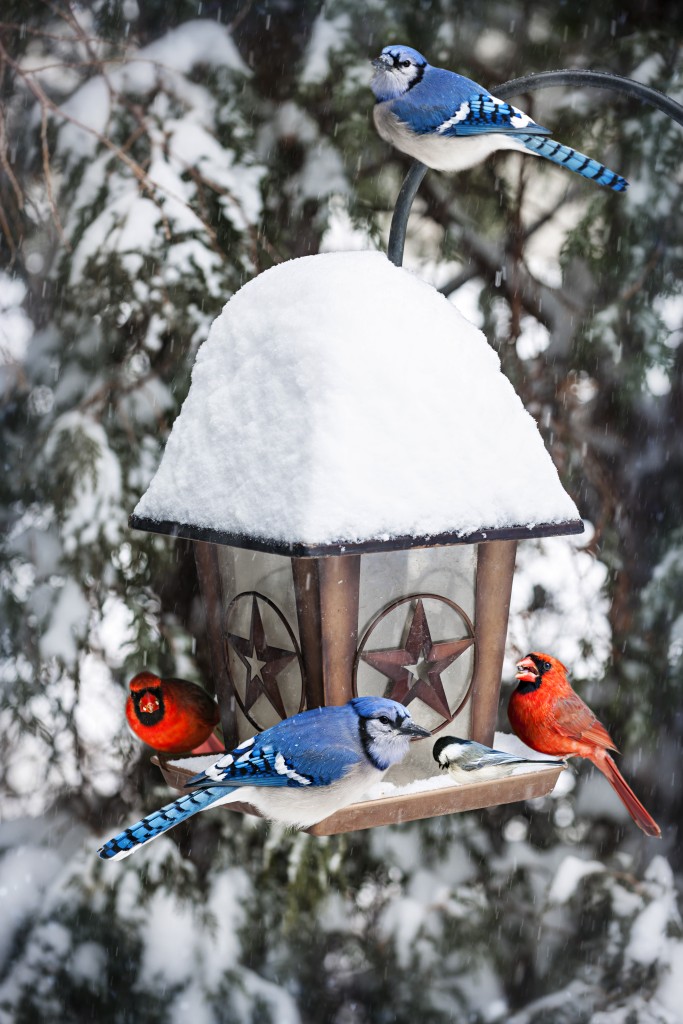
Photo: elenathewise, depositphotos
By Larry Hodgson
Did you know that February is National Bird-Feeding Month?
Well, at least it is in the United States, where the month was officially so proclaimed in 1994 by the National Bird-Feeding Society. But I figure gardeners around the world can share such a wonderful concept, which also happens to correspond, at least in the Northern Hemisphere, to the most difficult time of the year for backyard birds.
By February, birds have often managed to burn off much of the extra fat they stored up the previous summer and fall in view of the winter and are struggling to find enough to keep themselves alive. A bird feeder or two or three in your home garden can make a huge difference in their survival.
With that in mind, here are some tips on feeding birds from the National Bird-Feeding Society:
Top Ten Bird Feeding Tips

1. Bird feeding is for people who love watching birds—Always place your bird feeders in places where you can readily and frequently see the birds you are feeding.
2. Start with the basics—Black-oil sunflower in a tubular feeder is a very effective combination for attracting a large number of birds to your yard.
3. Attract more species by adding additional types of feeders and seed—Try nyjer (thistle) in a tube feeder, and mixtures of black-oil sunflower, hulled sunflower and whole peanuts in hopper and platform feeders.
4. Don’t forget about alternative foods and water—Suet, fruits, mealworms, nectar and water may attract species of birds not found at traditional offerings.
5. The bird species in your yard change with season of the year— The birds visiting your feeders in summer may be very different than those in winter. Provide the feeders and food best suited to your seasonal suite of birds.
6. Make your yard bird-friendly—Provide birds with habitat, food, water and nest boxes so birds will use your yard year-round. Bird feeders near larger trees and shrubs often have more bird visits.
7. Keep the birds safe—Reduce window collisions, keep birds safe from outdoor cats and clean your feeders. Move feeders to within 3 feet (90 cm) of windows (they’ll therefore be flying slowly and unlikely to hurt themselves if there is a collision), remove hiding places of cats and keep feeders free of debris and contamination and filled only with seeds birds will eat.
8. Use binoculars and a backyard bird guide to learn more about your birds—Learning more about birds by using the tools of the birdwatcher provides you with a greater appreciation for your feathered friends.
9. Take your hobby to the next level—Explore your local, state/provincial and national parks and refuges. You will see bird species you can’t see in your yard!
10. Enjoy feeding the birds! —Contact the National Bird-Feeding Society anytime you have questions about bird feeding or for assistance in enhancing your bird feeding experience!