


By Emila Smith
You may want to think twice about automatically destroying all caterpillars, spiders, or insects in general that you find in your garden. Not every garden insect is necessarily bad news for your vegetable or flower garden.
Damaging Pests vs. Beneficial Bugs
While many types of insects and mites will be considered pests because of the damage they can do, there are lots of bugs that are actually quite beneficial to home gardens.
Identification
Separating the good from the bad when it comes to garden insects can be challenging. It’s a good idea to familiarize yourself with garden pests and then try to identify those in residence in your garden. For very small bugs, you can use a 10X magnifying lens for easy identification.
Checking gardens twice weekly will help you intervene in a timely matter to protect your plants. Take time to inspect underneath foliage, inside fruits, along plant stems, and at the base of plants or on the crowns. Note if damage increases from week to week.
Identifying Garden Damage
There are two very common types of damage found on plants: sucking damage and chewing damage.

Chewing damage will be evident, because chewing insects tear off pieces of leaves or the stems to chew on, often leaving very large holes in the foliage. They will also defecate leaving traces of green, brown, or black excrement on the plants. Holes in fruit and deformed foliage are also indicators of infestation. Typical pests that love to chew include grasshoppers, caterpillars and beetles.

Sucking damage is perpetrated by pests with mouthparts that pierce foliage and suck the sap from the plant. When they defecate on the plant, you will find sticky honeydew on foliage. Leaves will turn yellow and eventually brown, becoming necrotic. Sucking insects include stink bugs, aphids, and squash bugs.
Identifying Garden Insects
Take the time to consult color photographs of typical garden pests to assist you in their identification.
Principal Pests and Their Main Meals
Insects that will feed on the part of your plant to be harvested are those that do the most damage. However, some bugs and mites will simply feed on foliage and stems that don’t figure in harvesting. This type of insect can be beneficial in low numbers because it will attract predatory pests that feed on insects that damage your gardens. Nonetheless, if these numbers are uncontrolled, such as in the case of aphids or spider mites, they too can cause plant damage such as leaf curl.
Pest Infestation and Control
The best kind of control is prevention. Choosing plants that are ideal for the local environment and climate can render plants more vigorous. Small infestations should be removed immediately upon discovery. Monitoring your garden is a fundamental tool in prevention. Proper pH levels and the correct amount of moisture will help some garden plants to even outgrow some insect damage.
Environmental Intervention
- Identifying, Eliminating, and Disposing of Plants with Pest Infestations
Dispose of any plants that are infested as well as of materials where pests hide. Cultivate the soil bed to expose any insects living there and eliminate them.
- Weeds
Weeds often host insects, so keep garden borders trimmed and keep the weeds out of your garden bed.
- Pests Favorite Seasons
Some pests like squash bugs will grow in numbers as the season progresses. If you plant early, you may be able to avoid significant damage.
- Natural Pest Control Instruments

Devices that collect pests should be placed in the garden bed and checked often. Collected pests need to be destroyed. Barriers such as floating row cover can be used to block pests, but allow sun, rain and air to enter. Small insects like mites can be washed away by spraying a stream of water. Larger pests can be removed manually.
- Biological Control: Beneficial Bugs

Predatory insects attack vegetable pests and can protect your garden. These beneficial bugs include lacewings, spiders and ladybugs. Often, despite being released in formidable numbers, they do not achieve the desired result. This is because they, themselves, fall prey to bacterial or fungal pathogens especially in wet climate conditions.
- Good Caterpillars vs. Bad Caterpillars
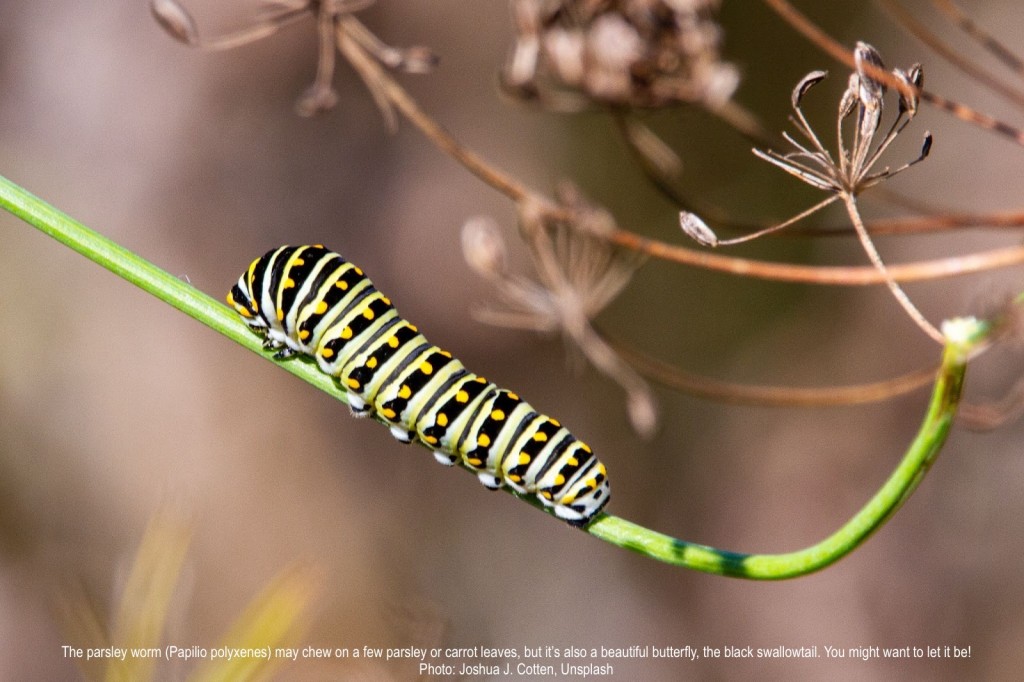
Bad caterpillars will wreak havoc on your garden and most morph into nondescript moths. Good caterpillars are those that will eventually become butterflies that are not only beautiful, but that also pollinate your flowers. If you find a caterpillar, take a photo to identify which type of caterpillar it is.
- Spiders to the Rescue

There are literally thousands of species of spiders found in gardens and all are beneficial. They prey on beetles, moths, wasps, and most flying insects. While you may not want them in your shed, playhouse or children’s outdoor playground, think twice before trying to get rid of those that are just roaming freely.
- Pesticides
Common organic pesticides from natural sources include insecticidal soaps, mineral or vegetable oils such as neem oil, and sulfur dust. While they are harmful to pests, they are usually not toxic to animals or humans. Do not use insecticidal soaps together with oils or dust. Also, avoid allowing oils to come into contact with fungicides. Synthetic pesticides are pesticides that are manufactured or are processed from natural sources.
Tips for the Use of Pesticides
Any pesticide you use should have approval from the Environmental Protection Agency or a similar governmental authority. Select a registered pesticide and follow manufacturers’ recommendations. Consider alternating pesticides to avoid allowing pests to develop resistance. Wear neoprene gloves to avoid any irritation deriving from exposure.
Common Pests and Tips for Managing Them

- Aphids: For large infestations spray insecticidal soap or horticultural oils. Row covers can be placed over new plants in gardens.
- Beetles: Row covers or general insecticides are efficient solutions.
- Caterpillars: Plant collars placed at the base of plants can protect from cutworms. For leaf-eating caterpillars, use an insecticide such as BTK.
- Leafhoppers: Neem oil or general insecticides are effective. These bugs migrate, so repeat treatments may be called for.
- Soil Insects: Prevention is the better solution. The soil should be thoroughly worked and without sod for a year. A general granular insecticide can be worked into the soil before planting.
- Spider Mites: Insecticidal soaps or oils are efficacious as are washing with streams of water.
- Thrips: Broad-spectrum insecticides or repeated neem oil treatments can be used.
- True Bugs: Row covers, traps and neem oil are good biological options.
Conclusion: Aids from Mother Nature
Mother Nature provides a variety of aids for combatting pest invasion in your garden. Healthy soil, resistant plant varieties, the correct amount of light, beneficial bugs and alternating the types of plant you cultivate can all contribute to controlling pest infestations without having to resort to chemical pesticides.
If you need extra organic help, row covers, insecticidal soap, and horticultural oils can be applied. As a last resort, broad-spectrum or specific pesticides can be used to protect your garden.