


At the beginning of the summer, a message spread like wildfire on social media near my home town. A concerned citizen claimed observers had seen a “golden eagle” near his home. (In fact, it would have been a juvenile bald eagle: there are no golden eagles in this neck of the woods.) But the claims he made terrified a lot of people. He warned it was vital to keep our children and pets indoors to protect them from a dangerous bird of prey that could snatch them away!
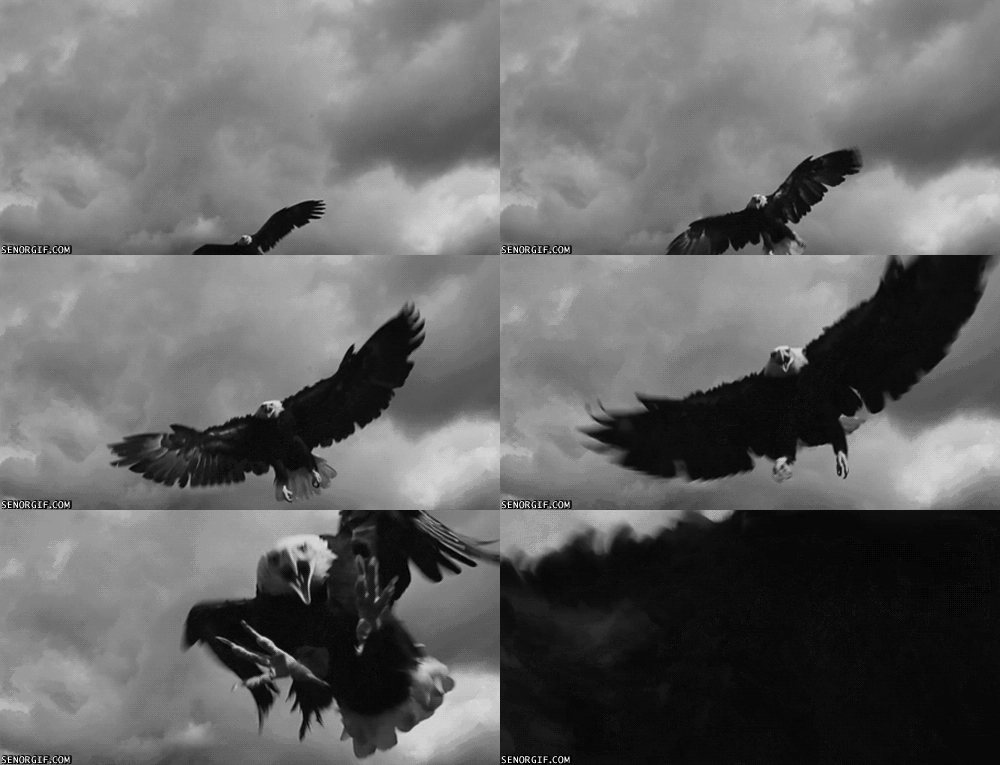
Oh no, not again!
It would be such a shame to deprive you of enjoying your yard all summer for fear of such birds, so the goal of this article is to reassure you and explain what the situation with birds of prey really is.
A Hoax That Sparked the Imagination
You almost certainly saw a video of a bald eagle flying away with a baby in its clutches. It went viral in 2012 and a lot of people still remember it. And have maybe forgotten what the conclusion was. Because it turned out to have been a project by prepared as a prank by Montreal high school students, ones skilled enough to produce a video that seems utterly believable. Several major news media of the day even picked up the story … only to recant the next day.
Here it is again:
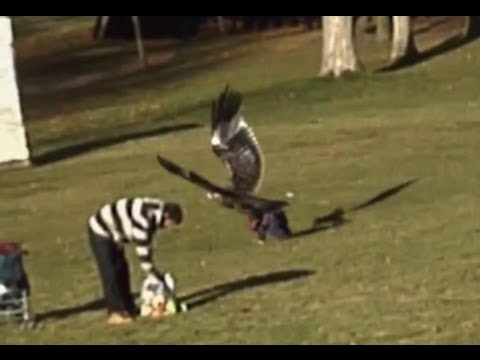
But did that really happen?
The answer is no.
Do birds of prey represent a constant danger for us?
The answer is still no!

A Few Facts About How Birds of Prey Really Feed
- A bird of prey can’t fly with a weight heavier than itself.
- If it eats something too big, it can’t fly away until it has digested it.
- The largest bird of prey in North America, the California condor, weighs 30 lb (14 kg) … but it won’t harm babies or pets.
- As with most of the large birds of prey, the condor is a scavenger and feeds on already dead or weakened animals … or even on garbage!
To sum it up: unless you leave your 3-pound (1.25 kg) chihuahua puppy or a pet mouse or guinea pig in the garden unattended, the chances of a bird of prey attacking a member of your family are practically non-existent.
The Role of Birds of Prey in the Garden

Now that it’s clear birds of prey are not something you need be afraid of, how do these majestic birds rate when it comes to their place in the garden?
The answer is that the role of these carnivores (and scavengers!) is essential in controlling pests.
Owls, owls, eagles, buzzards, falcons, kestrels, etc. feed on small mammals and insects that damage crops, not human babies and house pets. Without them (and other predators such as snakes and foxes), mice, voles, grasshoppers and other pests would become far too numerous, devouring our crops and laying waste to our gardens.

It feeds mainly on large insects that it often manages to catch in midflight. That’s thanks to its ability to unwaveringly fix its prey with its eyes and not let it out of its sight for even a second.
Notice at how this one manages to maintain its fixed stare even as its handler moves it about. Now, imagine it perched on a small branch tossed about by the wind with its eyes glued to a cricket or a mouse. I wouldn’t give much for their survival!
Considering that birds of prey aren’t a threat to us, you shouldn’t let having the chance to see or hear one near you worry you. In fact, it’s quite the contrary! It’s an excellence opportunity to observe all the power of nature … although sometimes an animal’s behavior can seem pretty odd!