

Every gardener lives with the illusion that the ground surrounding his property belongs to him and that he can dispose of it as he sees fit. In other words, that you can plant anything you want, anywhere you want. Unfortunately, this isn’t always the case. Several cities have rules of good citizenship that limit the height of your hedges, the height of your lawn and even what you can or can’t grow in front of your house.

If such rules exist, it’s because at some point, zealous citizens have lodged complaints and the city responded with legislation. Laws and regulations often emerge from the abuses of a minority. But with the great environmental movement that we are experiencing, it is time to question some of these plant constraints.
A Little Story
About ten years ago, vegetable gardens in the front yard made the headlines. Indeed, many cities in the province of Quebec prohibited them and they even went so far as to hand out hefty fines to those who dared to grow a few tomatoes and a few carrots in the plain sight of their neighbors.
Since then, the situation has taken a turn for the better and more and more cities have changed their regulations to authorize the cultivation of edible plants in front of urban and suburban homes. It’s important to note that citizen mobilization has driven this change. With petitions and demands at town council meetings, gardeners made their point. And they were heard loud and clear!
In the province of Quebec, Drummondville made the first step. Then, the cities of Quebec, Victoriaville, Sherbrooke, Lévis and Gatineau, to name a few, followed suit.
Why Such Opposition?
Fans of edible plants and urban agriculture find it natural to plant vegetables and herbs all over their property. Moreover, those who follow the principles of permaculture know that no square inch of land should be left without vegetation.
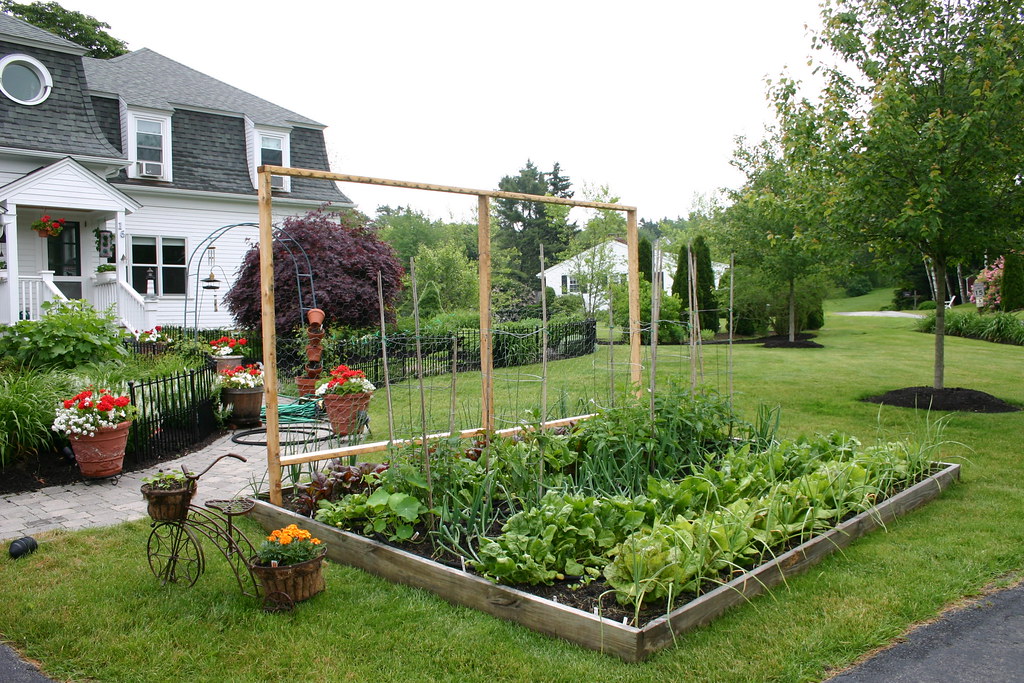
On the other hand, non-gardeners see things quite differently. In general, bans on vegetable gardens in front of the house were justified for aesthetic reasons. The perfect green lawn strikes again! We dream of beautiful suburban houses, all identical, tastefully landscaped, with a few beautiful shrubs and a large open space covered with lawn that highlights the architecture of the house. Beauty and harmony above all! It’s this fear of losing our beautiful suburbs in a jungle of vegetation that has motivated cities to draw the limits of what is and what isn’t aesthetic and acceptable.
Another reason that has limited front yard gardens is public safety. And I must acknowledge that I see the validity of this argument. Vegetation planted along roads can affect visibility, especially on street corners, which can cause accidents. This is the reason why some cities, which allow vegetable gardens on front yards, will ask for a parcel without crops near the street. Some will even dictate the maximum height of growing containers and plants.
Why Should you Grow Veggies on your Front Yard?
I suspect the readers of this blog to be plant lovers rather than detractors. I don’t really need to explain all the benefits of a front yard vegetable garden to you.
For a more global vision, the cultivation of a vegetable garden, in front of your house or in the back, supports food sovereignty. It is agriculture at its smallest scale. There isn’t more local than your yard (or front yard)! A vegetable garden generates savings in transport and over-packaging. And it guarantees that our food is fresh and pesticide-free. Well, it’s not 6 carrots and 12 tomatoes that will turn around a ship of vegetables arriving from Central America or that will stop the use of neonicotinoids, an insecticide that endangers bee populations. But thousands of gardeners growing 6 carrots and 12 tomatoes can make a difference. Yes, I know, it’s my hippie side is showing. I’ve always been a fan of “think global, act local”, and I believe in the power of little actions.
Also, even if personally I like “messy gardens”, a front vegetable garden can be laid out according to the principles of rhythm and harmony. It can be well structured, with mulch paths and structured flowerbeds. That said, I feel it is high time to redefine aesthetics and what is considered beautiful. Messy is beautiful.
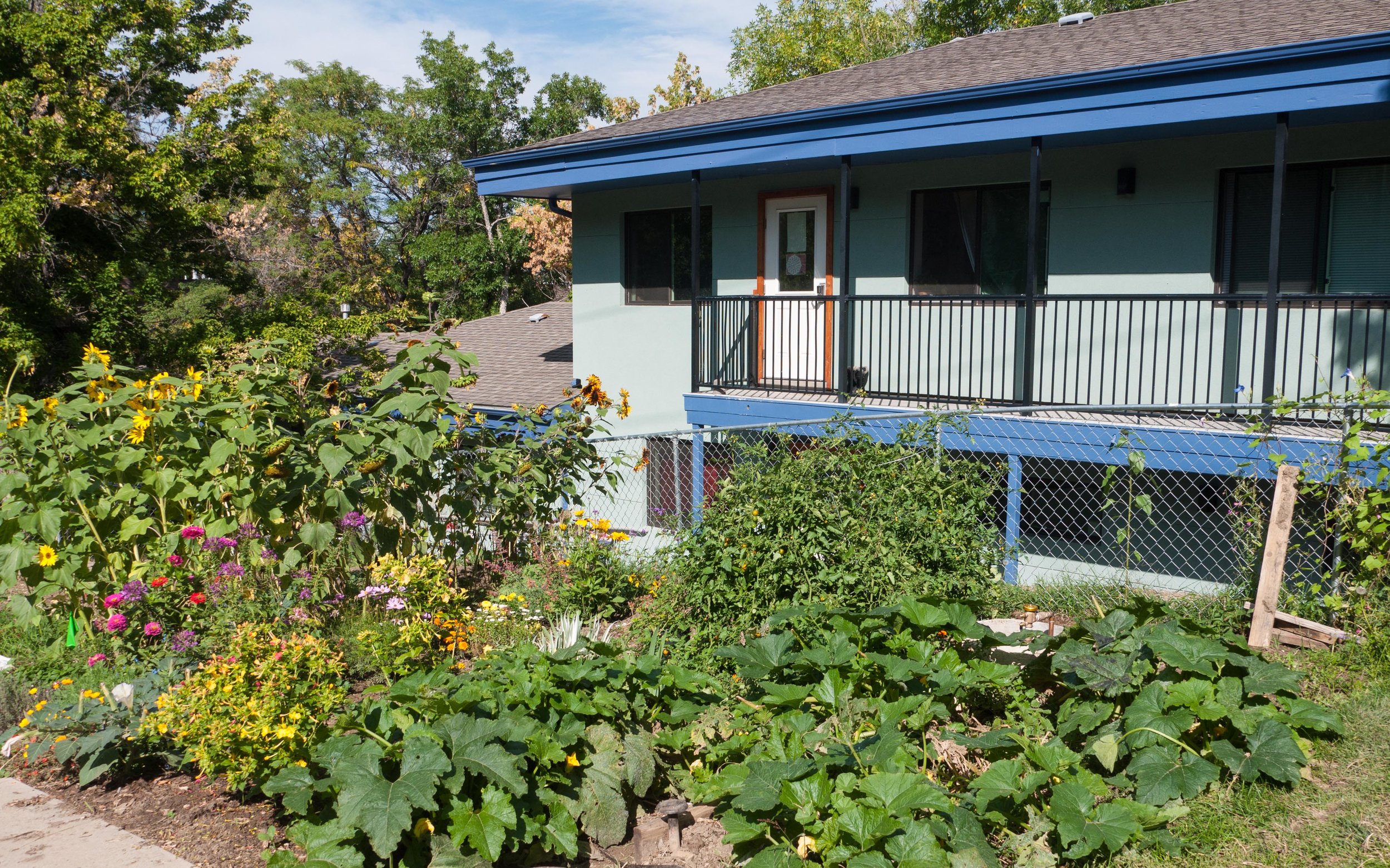
Most of all, whether in the front, in the backyard or on a balcony, there is nothing more satisfying than biting into a carrot barely cleaned of its soil, making a tomato sandwich with your own tomatoes and basil or impressing friends with your very first cantaloupe! What happiness and satisfaction!
So, I pay tribute to these cities where it is possible to cultivate a vegetable garden in the front yard of your house. They are working for the greater good of their citizens, but also in their own way, contributing to the necessary and urgent shift for the greater good of the Planet. When a citizen takes action, it’s great. But when a city or municipality takes a stand, wow! What an impact!