


Larry Hodgson has published thousands of articles and 65 books over the course of his career, in both French and English. His son, Mathieu, has made it his mission to make his father’s writings available to the public. This article was originally published in the newspaper Le soleil on November 21, 1992.
In mid-January, when it’s so cold that it hurts to even breathe, it’s hard to believe that plant life can survive a climate as harsh as ours. But the proof is in the pudding: many plants do just fine. Here’s how.

Different Reactions
Each plant has its own way of resisting the cold. Some, for example, react… by dying! This is the case with so-called annuals: the adult plant dies, but not without having produced seeds that are often very resistant to the cold. When the warm sun returns in the spring, the seeds, which were previously in a deep sleep, germinate and quickly produce an adult plant which, in turn, will produce seeds, and the cycle continues.
Another way for plants to resist the cold is to let their aerial parts die, but not their crowns (growing point) or their roots. Under the ground, especially if there is a thick layer of snow, the temperature barely drops below freezing (and it is easier to survive at 25°F (-3°C) than at -25°F (-30°C). Perennials react this way, and so bulbous plants.

Woody Plants
Woody plants (trees, shrubs and vines) don’t have it so easy. Their aerial parts remain exposed to the cold wind throughout the winter. To survive, they will have to go through a gradual acclimatization period. As the nights get colder, different physical and chemical reactions occur to prepare the plant for the cold to come. Each species has developed different techniques to protect itself from the cold during its evolution.
Deciduous plants, for example, lose their leaves. Exposing the large surface area of their leaves to cold winds would cause too much water loss. Conifers, on the other hand, keep their leaves because they are in the form of thin needles (very small surface area) covered with a thick cuticle that reduces water evaporation.
Plants also reduce the amount of water in their tissues as a result of increased cold. The cells of a well-watered bud would burst in the cold, but if they are almost dry at the time of freezing, the damage is limited.
There are also various chemical reactions, often still poorly understood, that protect plants from the cold. It’s as if the plant produces its own antifreeze.

Variable Resistance
The cold hardiness of most plants is only valid if the plant has time to prepare for it. Normally, the mild, cooler days of fall bring a gradual increase in cold hardiness. Thus, even a very cold-resistant plant like spruce would be severely damaged by even a light frost in midsummer, whereas it would have easily survived a -30°F (-35°C) frost in mid-winter. Thus, an abnormally warm late autumn will often cause greater damage to plants than a chilly autumn: in the first case, the plants won’t have had time to harden to the cold and when the Siberian temperatures arrive overnight, they won’t yet be ready to face them.


Uneven Resistance
The same plant can have different levels of cold hardiness. The buds that produce the leaves, for example, are often more resistant than the flower buds. This explains why some plants, such as forsythia and rhododendron, survive a particularly cold winter well but do not flower the following spring. In addition, the roots of plants are usually less resistant to the cold than the aerial parts. This is why a perennial that is very resistant to the cold may not survive the winter if it is grown in a flower box. Because the container is more exposed to the cold than the garden itself, the roots would freeze more deeply and could die.

The Best Protection
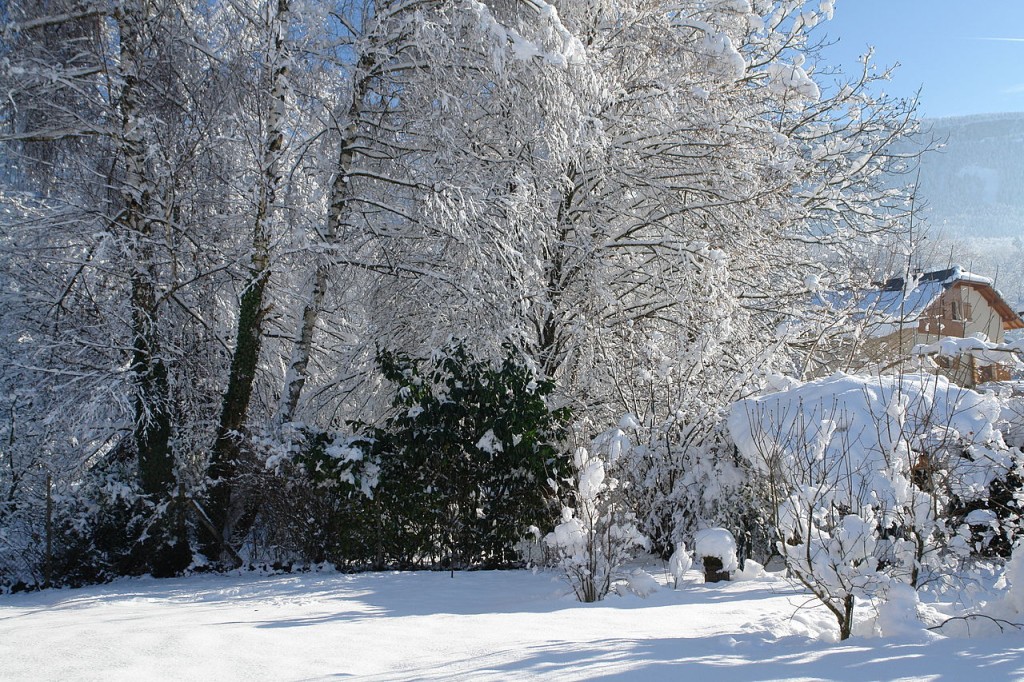
The best natural protection for plants is a good snow cover. Generally speaking, the earlier and more abundant the snow falls, and the later it stays in the spring, the more beautiful our gardens will be. This is why gardens in eastern Quebec are generally more attractive in the spring than those in the warmer Montreal area.
So, gardeners, let’s hope for lots of snow, and as soon as possible!