


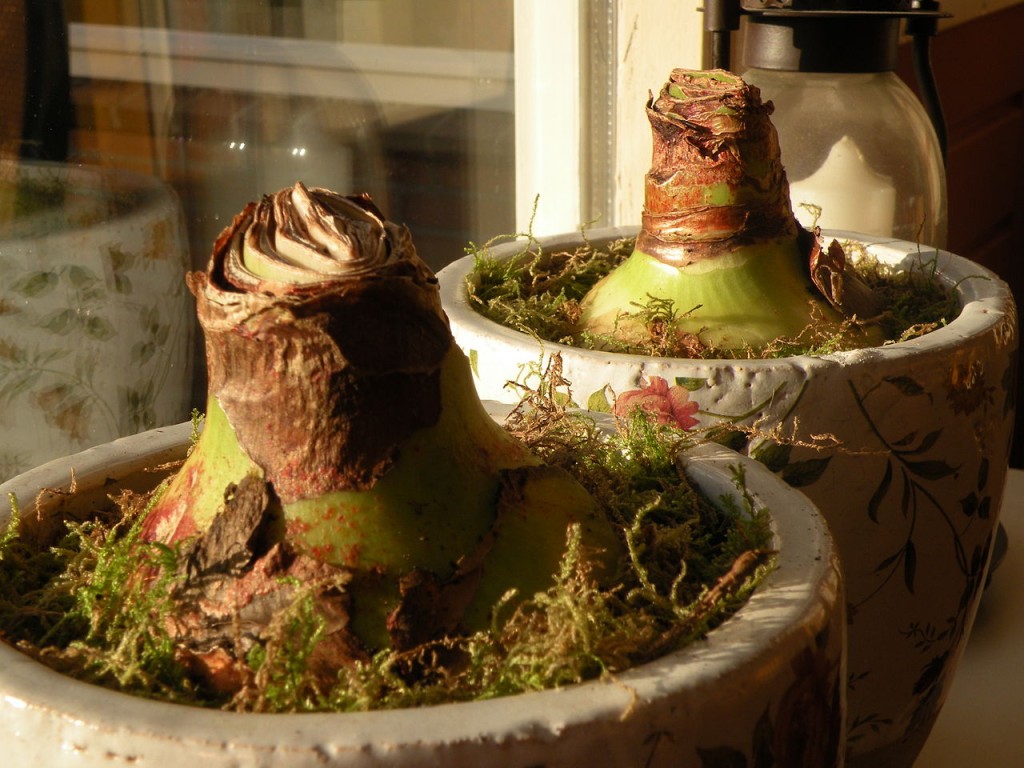
I’ll wager you bought an amaryllis bulb around the holidays. Technically, the plant is in the genus Hippeastrum but is commonly called amaryllis. The backstory here can get a little complicated so let’s stick with the common name.

Christmas Plant?
The plant is marketed as a Christmas plant but they can be grown any time of the year. You’ll see them in the stores around the holidays but can be found online any time. In the spirt of the Laidback Gardener, grow amaryllis any time you want. I keep several from year to year and they bloom whenever they want, so just enjoy the show as it happens.
They will likely be on sale after the holidays. In the north, if ordering online, ask about a heat pack to keep the bulb from freezing during shipment.
The plant is native to Peru . The genus name Amaryllis comes from the Greek word amarysso, which means “to sparkle.” Bulbs were brought to Europe in the 1700s and have been known to bloom for up to 75 years!

Planting Your Amaryllis
The bulbs you see in gift boxes are often either 1) blooming in the box, 2) totally dried up, or 3) or they will definitely tip over if planted in the supplied tiny plastic pot and peat moss. Open the box in the store to check the bulb. If you can get these on sale, buy a couple if they are firm and have some weight to them. Then repot them in a slightly larger container. Fill the pot about half-full of soil so the roots have plenty of room to grow. Fill in around the bulb, leaving 1/3 of the top above the soil. I plant mine in heavy ceramic or clay pots with a mix of potting soil and cactus mix soil so the 2–3 foot stalks don’t tip the pot over. The pot should be just a little bigger than the bulb itself and not too tall. Remember to have support stakes on hand for when the stalks start growing tall. You can add decorative moss to cover the soil around the bulb if you wish. I like to use an azalea pot, which is not as tall or “tippy” as a standard clay pot.

Drainage
Make sure you have a drainage hole in the pot, and a plastic drip tray. Water when the first stalks appear. Water sparingly after that. Keep in a cool, sunny location until blooms emerge. Turn the pot to keep the stalk growing straight. To extend the duration of ther flower, move out of direct sun.
All-Inclusive?
A better idea than the box is to purchase the “bare root” bulbs from a local nursery. These are large bulbs that have not been planted, and generally produce multiple stems and blooms. I bet you can still find some. Call ahead to nurseries.
A newer trend you may see is an amaryllis bulb in wax. Here’s a link to the Iowa State Cooperative Extension Service on growing the waxed bulbs:
How do I care for a waxed amaryllis bulb? | Horticulture and Home Pest News (iastate.edu)
Save Your Amaryllis for Next Year
Since amaryllis bulbs can last many years, you may want to save the bulb for next year (except the waxed type). Once the flowers have faded, cut off the flower stem-NOT the leaves—so they are about 1” above the top of the bulb. Continue watering. Keep the soil barely moist. The bulb will send out long, strappy leaves that will grow for several months and produce the energy the bulb requires to form next year’s blossoms. Fertilize monthly, using a standard houseplant fertilizer. In Spring, after any danger of frost is past, put the pot outdoors in a partially shaded location. Continue to care for your amaryllis as you would a houseplant, watering and fertilizing as needed. The bigger and fatter the bulb gets, the more flowers it will produce.

When Fall approaches bring the pot indoors before the first frost. Put it in a cool, relatively dark place (garage or basement) and stop watering. This will tell the bulb that it’s time to rest and initiate flower formation. After a 6-to-12-week rest, gently remove the bulb from the pot and pull off any dry leaves. Replant the bulb in fresh potting soil and care for it as you would a newly purchased bulb.
And yes, you can plant the seeds if you don’t deadhead the spent blooms and cut back the stalks. They will grow, but they may take several years to flower.