



INT. SIMONE ST-LAURENT AND CLAUDE CAYER’S APARTMENT
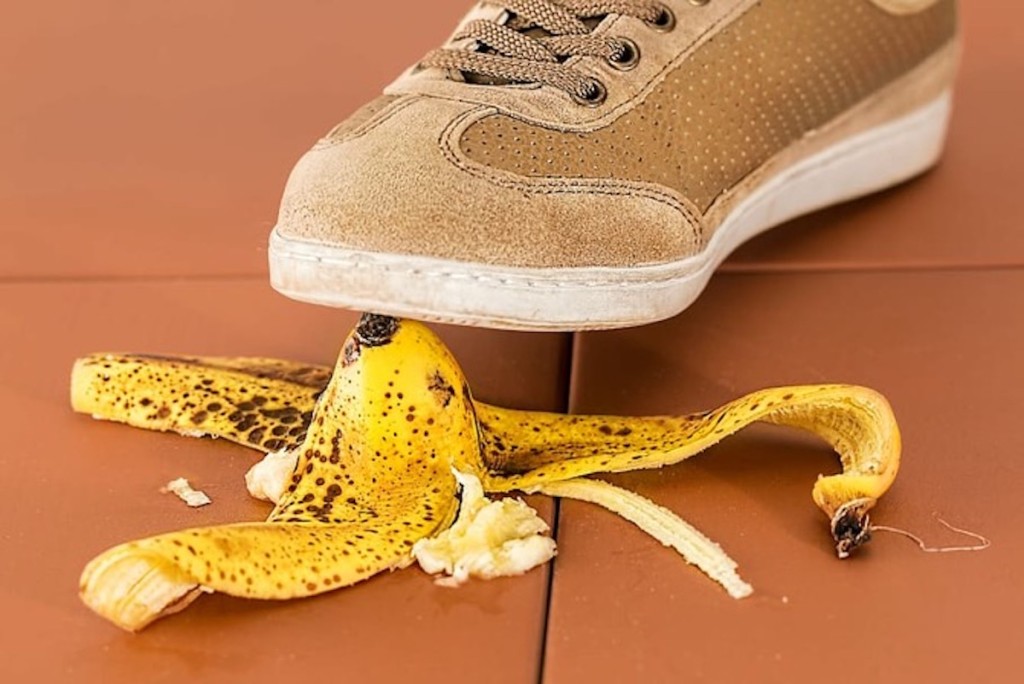
CLAUDE is in the kitchen. He cuts banana peels into small pieces and places them in a glass jar before filling it with water and fastening the lid. As he places the container on the kitchen counter, SIMONE enters and leaves a bag of groceries on the table. She walks over to CLAUDE, and they hug.
SIMONE
Hello darling!
They kiss.
CLAUDE
Did you find everything you wanted?
SIMONE
Almost, but… what’s that smell?
Simone takes a step back and looks around, searching for the source of the smell.
CLAUDE
Don’t worry about it my love! I’m making banana peel fertilizer. It’s for our plants!
SIMONE
But why? Our plants are doing very well!
CLAUDE
Well, rather than throwing away our banana peels, I thought we’d reuse them. It’s very simple and ecological: we let the banana peels macerate in water for a week and then we use the water to fertilize our plants. Bananas are full of potassium, one of the essential nutrients for plant life. It’s the year 2023, Simone, we have to recover our table scraps, not throw them away!
SIMONE
Claude… Throw this away immediately. I don’t want your old banana peels stinking up my kitchen.
CLAUDE
… our kitchen…
SIMONE
Right away!
Claude takes his jar of banana peels and leaves the kitchen with his head down.
END
But who is right Simone or Claude? Is it a good idea to make fertilizer with banana peels? There is no shortage of recipes on the Web!
Banana Peel Fertilizer, What For?
Before we examine the usefulness of banana peel fertilizer, let’s first look at its alleged benefits. It’s true that bananas and their peels contain potassium and that this element is one of the basic nutrients that plants need. Other minerals such as calcium and magnesium can also be found in banana peels. One of the methods we hear about regularly is to macerate banana peels in water for a few hours, days or weeks, depending on the technique. This would be a free source of nutrients for our plants and a good way to put to good use what would otherwise end up in the landfill.
Does It Work?
Yes and no. In my research, I could not find any studies that showed that macerating banana peels in water would extract nutrients. From a chemical standpoint, however, it is theoretically possible for potassium to leach into the water, but I can’t tell you how much. Unfortunately, most of the other elements, because of their composition, will remain in the banana peel.
On the other hand, the important question is whether your plants really need potassium and, if so, how much. There is no doubt that plants need this element, but it is likely that there is already some in your soil or potting mix. Before applying this fertilizer, I suggest determining if your plant needs it. A potassium deficiency shows up as yellow, curled leaf outlines. Be careful, as there may be another reason for these symptoms. Since we don’t know the amount of potassium in the fertilizer you are making, it is difficult to determine the necessary dose. If you use this type of fertilizer, I suggest you dilute it and experiment before applying it to all your plants.

Other Methods
In my opinion, the banana peel maceration method is not ideal. There are other ways to do this. The most accessible is to dry the banana peels, either in the sun or in the oven, and to grind them as finely as possible. This banana peel powder could be used dry or diluted in water. It is important to understand that in this case, for the potassium to be assimilated by the plant roots, the powder must be broken down by microorganisms in the soil or potting soil, as with any organic material. So it’s essential that there is microbial life in your soil, which isn’t always the case, especially for houseplants.
To make a banana peel fertilizer that can be directly assimilated by plants, the process is much more complex. You have to clean the peels well, dry them, cook them at 350°C until they are calcined, let the powder macerate in water for 24 hours, separate the solids from the liquid and boil at 100°C until small crystals are created. If any of you dear readers manage to do all this, I promise to try your fertilizer in my garden!
Another interesting avenue would be to ferment the banana peels, which would extract the nutrients more efficiently than maceration. This method is used in industrial production, but at home you could try bokashi, a fermented compost process.

Potential Problems
If all of this doesn’t sound too complicated, there are a few other issues with peel fertilizer, the first being the presence of pesticides used in banana farming. So be sure to use only organic bananas.
Also, since the amount of potassium in these types of fertilizers is not known, there is a possibility of overdosing on this nutrient.
Just in case I haven’t told you enough already, remember that putting fertilizer containing banana or sugar particles into your houseplants or seedlings could attract undesirables, like fruit flies, for example.

To the Compost Bin!
But I have a solution that will solve all these problems and turn making banana peel fertilizer into a charm: compost it!
Whether it’s home compost, municipal compost, or even vermicomposting, the best way to reuse your table scraps, banana peels included, is to let the microorganisms and fungi break them down for you. They will make the nutrients they contain available to plants and feed your soil. Why make it complicated when you can lay back and let nature do the work for you? You could even put a banana peel on your garden soil and let it decompose.
I have to admit something to you. Although bananas contain a lot of potassium, other foods contain as much, if not more. Potatoes, for example, have 40% more potassium. So there is no reason to make fertilizer from banana peels rather than other fruits or vegetables. I understand the importance of reusing rather than throwing away, but composting is by far the best method to revalue our food waste.
Stay tuned for the next episode!