


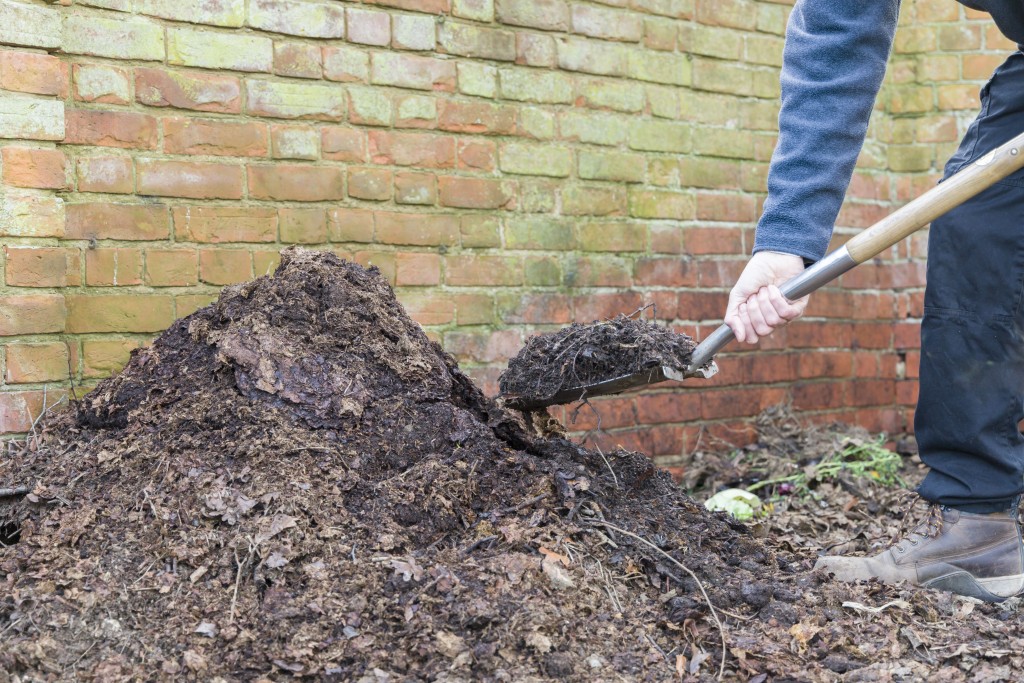
Homemade compost really is compost… but what about the other products sold under that name? Photo: Paul Maguire, depositphotos
It’s not easy to find “real compost,” that is decomposed plant and food wastes converted into a soil amendment product. At least, not in stores.
It’s easy enough to find in your own backyard, though: the stuff that comes out of your own compost bin, that you made yourself by mixing table waste and garden waste and letting them rot. That is, in my opinion, and in the opinion of many gardeners, true compost.
Or maybe your region or municipality has a “brown bin” program, where you can put out organic wastes that it then turns into compost and shares with its citizens. (My city certainly doesn’t!)
But the stuff sold in bags in stores and clearly labeled compost… is that really compost?
Compost?
Well, maybe such products are compost according to some people’s definition. Especially in Great Britain, where “potting compost” (which often contains no true compost at all) is the term for what we North Americans would call potting soil or potting mix.
Obviously, soil producers agree. They sell all sorts of “compost” that wouldn’t come anywhere near to meeting my definition of the product. They do include composted plant material as an ingredient, but… how much?
I must admit that I’m always disappointed when I open a bag of commercial compost. It just doesn’t smell like compost. Compost has a delightful earthy odor, like humus, that “forest after a rain smell.” I just love breathing it in! And it is dark and brown and… it just sort of feels rich. You feel like plunging your hands into it and trying to soak up its blatant energy through your fingers.
Commercial “Compost”

But not that’s not the smell that comes out of a typical bag of commercial compost, at least not where I shop for garden products. It smells dry, itchy, dusty… just like peat moss. You feel like putting on mask to keep it out of your throat. And wearing gloves when you have to handle it. In fact, it even looks like peat moss, with the same small reddish fibers and the same textures. And that’s because these so-called composts really are mostly peat moss.
These days, garden soil manufacturers are being obliged by various governments to actually list on the label what their products contain. And the label lists products according to their abundance in the product. Almost all of the store-bought products labeled “compost” in big letters these days list “peat moss,” a product harvested from bogs and derived from decomposing mosses, as their main ingredient. Not compost. Not something recycled. Something harvested fresh strictly for this use.
Compost Comes in Second
Compost is usually only the second product mentioned on the labels of these products. So, essentially, you’re buying peat moss, a product considered very inferior to compost, to which a relatively small amount of compost has been added. Doesn’t that seem wrong to you?
In much of the world, but not everywhere, the peat moss used in these compost blends will be sphagnum peat moss. It’s a rather long-fiber moss abundant in peat bogs in cooler climates. And the resulting peat is called sphagnum peat.
It’s the same peat that companies use to manufacture potting soils. And there is often not a big difference between commercial compost and potting soil.
I’m not saying that a “compost” mostly made of peat moss can’t be a quality product … as a soil amendement. But this “diluted compost” simply doesn’t have the richness in microorganisms and minerals and nor the effectiveness of a complete compost.
Where Does the Added Compost Come From?
So, commercial compost is mostly peat moss – so much so it even looks, smells and feels like peat moss! – to which a certain percentage of “true compost” has been added. The real compost is usually composted farmyard manure, in other words, cattle manure, which is an agricultural waste product. However, other products are often added: maybe something to contract the acidity. (Real compost is nowhere near as acidic as peat-based compost.) Maybe some fertilizer, as peat-based compost is very poor in minerals.

For example, “cow manure compost” contains mainly peat with a small portion of farmyard manure. “Sheep manure compost” contains mostly peat, a portion of farmyard manure and a tiny bit of sheep manure.
Locally, we can find “shrimp compost.” It sounds very exotic, but it’s still mostly peat to which composted farmyard manure has been added. So, it’s very like cow manure compost. However, the supplier then adds a small amount of ground up shrimp shells and the product magically becomes shrimp compost. Amazing what a little shrimp can do!
Useful, Yes, But Is It Compost?
Now, I’m not saying that these peat moss/compost blends are not good products. I see them as soil amendments. They’re interesting for lightening soil that is too heavy, for example, or helping soil that is too sandy to retain more water. But I find them very diluted compared to true compost, which is much richer in minerals. And especially diluted when it comes to microorganisms. Also, I don’t want to use peat, a product whose harvesting has an environmental impact, without a good reason. I mean, to be nasty about it, the peat moss is really just filler, isn’t it?
Maybe I’m picky, but when I buy compost, I want compost, not a compost substitute!
Finding Real Compost
It turns out that I can’t produce enough homemade compost to meet the needs of my garden. This is true even if I blatantly steal the bags of dead leaves my neighbors put out for municipal pickup and convert them into that extremely rich organic matter that is compost.

But I haven’t always been able to find “compost” locally. So, for the last few years, I have gotten into the habit of buying vermicompost, also called worm castings, worm manure or worm compost. This compost uses earthworms—usually red worms (Eisenia fetida)—, having them digest garden and kitchen waste and turn it into oh-so-rich worm castings (worm poop). Vermicompost has a reputation for stimulating even better growth than homemade compost, especially because of the extra microorganisms it adds to the soil. And it has the right smell, color and texture, too. Like homemade compost without the stones and plastic forks.
But unless you make your worm compost (which I did for a while with great success before my wife banished worms from the house), vermicompost is pretty expensive. In addition, it is often difficult to find locally. I know that where I live, it comes and goes. It will be abundant for a while, then disappear, only to reappear on the market a year or two later.

A Real One
I recently found a new compost – yes, a real one! – on the market. Well, new to me, anyway. Called Bionik Marine and Forest Compost, I didn’t notice it at first, yet it’s been around for about 5 years now. I figured it was just another peat-moss-based fake compost like all the others. I’m sure I walked right past it a dozen times in my local garden center. Then reader told me about it. And yes, it did say 100% natural compost on the label. I had to turn the bag over to read that it contained no peat moss. No peat moss! Well, that was a shocker… of the right kind!
It turns out it is manufactured locally from seafood wastes (shells, fish bones, etc.) and forestry industry wastes, mostly bark of deciduous and coniferous trees, then reduced into finished compost by earthworms.

Use Less Real Compost
If you’ve never used “real” compost before, if your only experience with compost is the “peat moss with compost flavoring” sold everywhere, you do have to realize that it is much more concentrated than commercial composts. Use less of it, even on poor soils, as there really is such a thing as too much of a good thing when it comes to compost. Perhaps at a quarter or even less of the rate you’ve been using the fake stuff. But do check the product’s label: it should have application suggestions. Each brand will certainly be different!
The product sold has several advantages, according to the label.
- It offers the richness in minerals you’d expect from real compost. Indeed, the label guarantees:
- 0.5% nitrogen;
- 1.8% phosphorus;
- 0.1% potassium;
- 14% calcium;
- 0.2% magnesium.
- It improves the structure of all types of soil (sandy, clay or loam);
- It revitalizes the soil thanks to red worms, which deposit a wide variety of beneficial bacteria, useful fungi and various other allies;
- It promotes plant nutrition;
- It contains no peat (sphagnum moss) or cattle manure;
- It reduces soil acidification (due to high calcium levels);
- It’s an organic product.
Well, it pushed all my buttons. However, I don’t think you’ll find it outside of Quebec and parts of Ontario and New Brunswick. But maybe someone near where you live is doing something similar. Taking a waste product no one knows what to do with and converting it into rich compost that will make all your plants so much happier!
So, keep your eyes peeled! There may be true composts hiding out about the compost wannabes!
Let’s hope that this kind of local compost producer starts popping up in more regions. We all need more compost in our lives!