


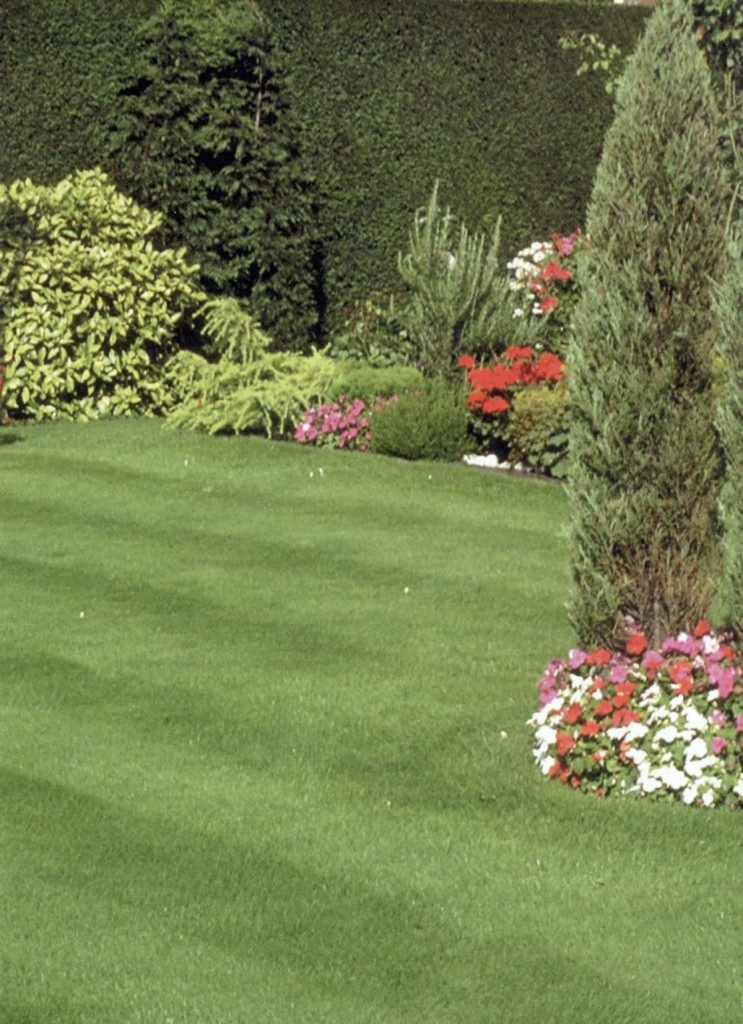
With Low Mow May gaining popularity over the past few years, fans of the perfect lawn are becoming a minority. Many have realized that uniform lawns are not very environmentally friendly, as they are almost impossible to maintain without products of all kinds. In fact, to maintain a monoculture of Kentucky bluegrass, you have to use selective herbicides that kill all the broad-leaved plants: clovers, dandelions, violets, etc. Unless, of course, you spend hours pulling out the “intruders”.

Pesticides in Canada
Some counter that all pesticides currently used in Canada are government-approved. But that doesn’t mean they’re safe for our health and the environment. Glyphosate, too, is still permitted, yet it is clearly linked to serious illnesses such as cancer, cognitive disorders and Parkinson’s disease.
In Canada, pesticide registration is overseen by the Pest Management Regulatory Agency (PMRA). But the government doesn’t conduct tests. It relies on data supplied by the industry. The federal government has even given the industry carte blanche to regulate itself when it comes to managing new GMOs! In other words, the government is going to rely on the biotech industry to tell it which GMOs are on the market. Thus jeopardizing the integrity of organic farming!
In Quebec, the Pesticide Management Code regulates the use and sale of pesticides. Only twenty or so pesticides were banned, and only on public lawns in 2003 and private lawns in 2006. This provincial regulation is currently under review and is intended to apply to all landscaping. The list of banned products is also set to grow.
Towards Stricter Regulations
Fortunately, many cities, like Montreal, have already adopted stricter by-laws banning the application of all pesticides except for a short list of low-impact products, such as insecticidal soap. But are these regulations really enforced? Cities react to complaints, and it’s often very difficult to prove that a banned product has been applied.

It’s Up to Us!
So it’s up to us citizens, to be vigilant and ask questions of the contractors who look after our lawns. First of all, it’s not a good idea to sign a contract in the middle of winter when the snow is still covering the ground. A good contractor should diagnose our lawn and give good maintenance advice, such as: cutting the grass no lower than 4 inches, grasscycling, overseeding bald spots, etc. Next, they should use 100% natural fertilizers or compost. Pesticides should only be used when absolutely necessary (not to kill dandelions), and low-impact pesticides should be preferred.
Have a great summer away from chemicals!