


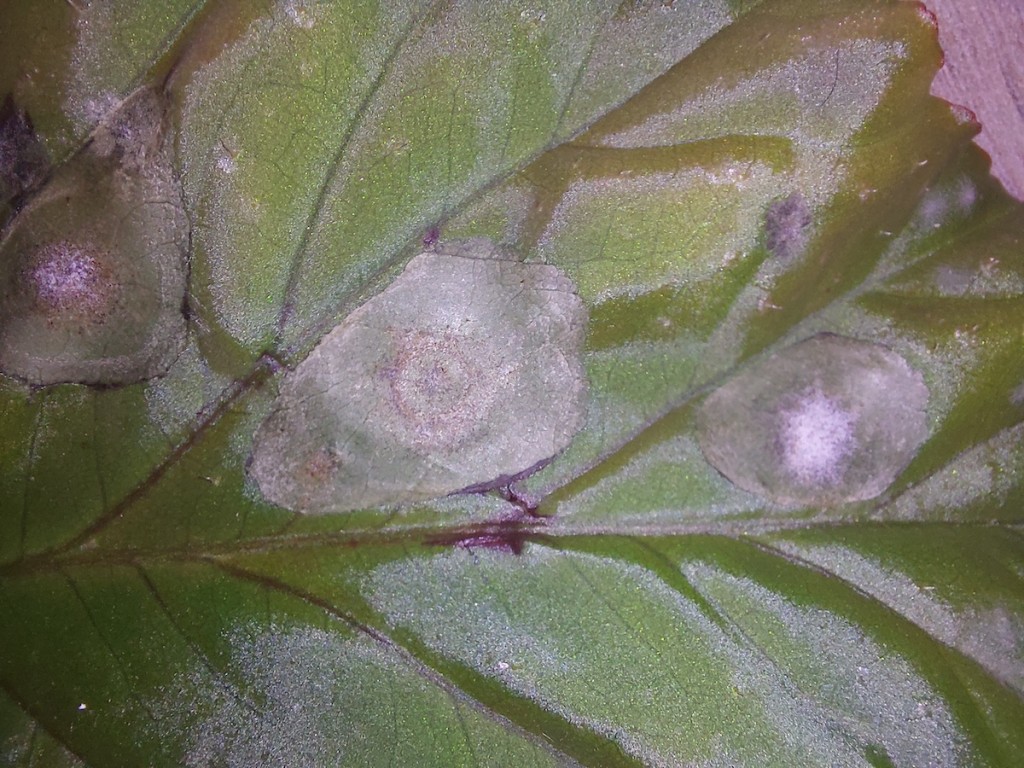
I have fungus.
Well, yes, that’s how intimate we get, I’ll tell you when I’ve got bugs, but also when I’ve got fungus!
Unfortunately, fungus can’t really be cured; you have to remove the infected part and wait for healthy parts to grow back, treating them to prevent the fungus from contaminating those parts too.
… What?
Stop looking at me like that! I’m talking about fungi that attack plants! What were you thinking?

Houseplant Fungi
This is the first time it’s happened to me in several years, and unfortunately I didn’t react quickly enough. The truth is that the appearance of powdery mildew on houseplants is quite subtle at first. That is, until the leaves fall, just like in autumn!
For me, it happened when I brought my plants into the house at the end of the summer. They went from a sunny, airy balcony to a dark corner of the house. I procrastinated about installing my lights, and the warmer weather meant I didn’t turn on the ventilation or heating, but opened the windows instead. And bam! The humidity in the house rose, the plant lacked light and ventilation, and fungus settled on the leaves.


Where does this mushroom come from? There’s no real answer to that. It’s a very small fungus that can be found just about anywhere, waiting for the right opportunity to develop. An plant could therefore be the only one in your collection to be affected and never contaminate the others, or, on the contrary, if your plants were all in a “weak” situation they could be contaminated by the tiny spores floating in the air.
Prevention
There’s no point in isolating diseased plants in the same way as unwanted insects, for example. Spores are too volatile to remain confined to a room. The best way is to ensure good air circulation and light to give the plants energy.
Clean up any dead leaves that fall on the soil, ensure good drainage and water only when necessary (when the soil is dry in the first inch for most plants). That’s all there is to it!
Healing
Have you ever had nail fungus? There’s nothing you can do to heal it: the affected nail has to grow back. To prevent the fungus from taking hold, treat the healthy nail for regrowth, and wait patiently until you can cut the affected part. It takes a long time: it can take a year before your nail has grown back enough to remove all the fungus!
For plants, you can cut off ALL the affected parts at once. It hurts, but that’s what it takes! Because, in fact, it’s like fingernails: the parts that have been affected won’t heal, and can only contaminate the other leaves…
So arm yourself with scissors (and courage) and… cut!


Did I cry when I fleeced her? Pfff! No, it’s just a plant!
…
…
OK, yes, a little, I admit it…
After the massacre, it’s time to treat the plant to prevent other spores from taking hold: air, light and fungicide. A spoonful of bicarbonate of soda from your kitchen in a liter of water, sprayed on the leaves, will do the trick.
WARNING: Moisture stagnating in the soil or on the leaves encourages the proliferation of powdery mildew. After spraying, be sure to place your fan directly on your plant. Repeat the treatment as new leaves grow, removing any that show signs of infection.
That’s it… I’m going back to inspect the baby leaves again, just in case!