


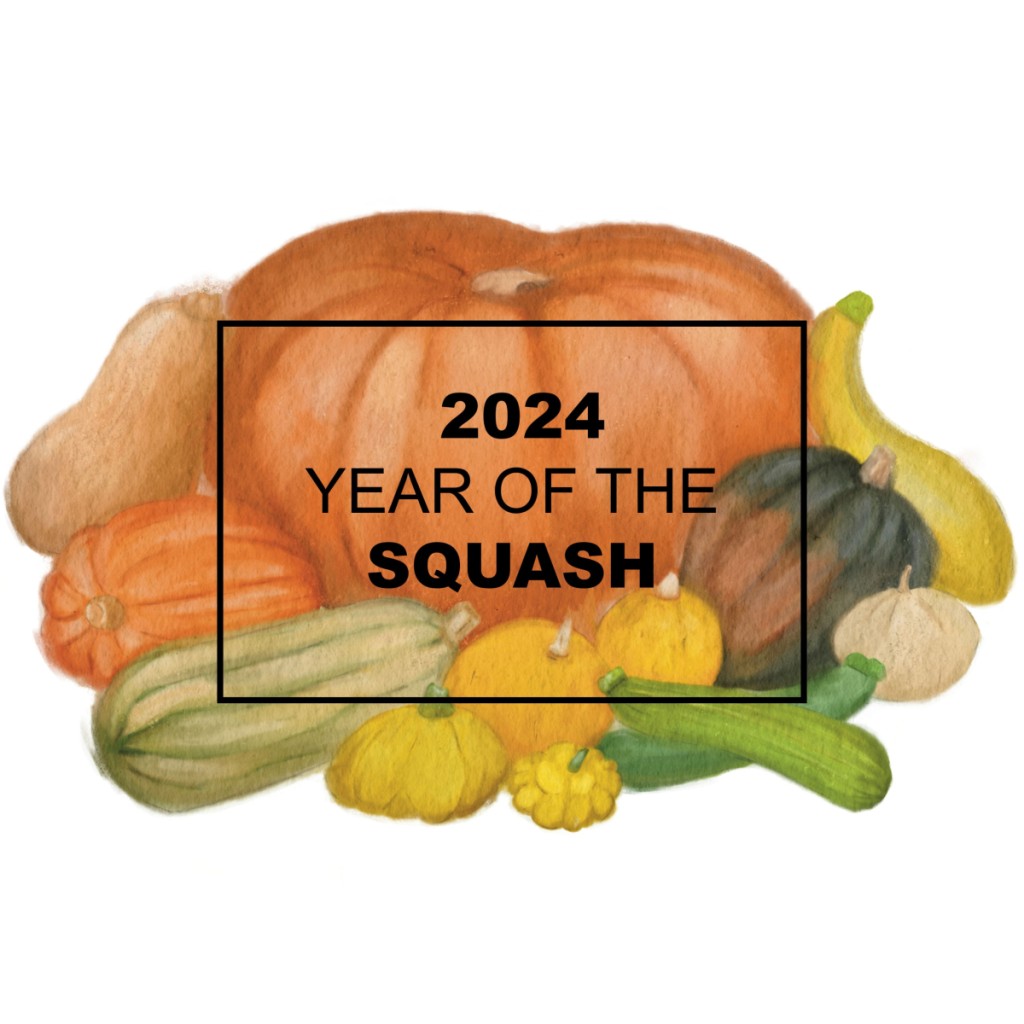

A versatile and delicious vegetable with a rich history
Overview and History
Pumpkins, squash, and gourds have enchanted gardeners and foodies for generations with their diversity in shapes, colors, and flavors. Collectively referred to as “squash,” the Cucurbita genus has a rich history dating back over 8,000 years to Central and South America and 4,000 years later it was considered the primary agricultural crop of the ancients.
The indigenous people of the Americas included squash as a central component of the “Three Sisters” or “Trinity” planting system, which combined maize, beans, and squash to create a mutually beneficial ecosystem.
Squash was introduced to Europe in the late 16th century, and it quickly became a popular food crop there as well. Today, squash is enjoyed all over the world in both sweet and savory dishes.
Some squash varieties are grown primarily for their ornamental value, while others are used for a variety of practical purposes and delicious dishes.


Popular Squash Species and Categories
Hybridization of squash over the centuries has provided us with a wealth of squash to choose from. Five edible species are in cultivation and grown for their flesh and seeds – C. pepo, C. maxima, C. moschata are the most popular. C. argyrosperma and C. ficfolia provide some interesting novelties.
Squashes can broadly be grouped into two categories – Summer and Winter squash.
- Summer Squash are quick growing, early to harvest and usually eaten before the seeds mature. Their thin, soft skins make it possible to enjoy raw or cooked. C. pepo provides us with a wide range of interesting summer squash. Zucchini, Yellow Crookneck, Chayote, Cousa, Pattypan, Pumpkin, and Tromboncino are common types of summer squash.
- Winter squash are harvested later, can have odd shapes, oftentimes with tough or warty skins, and exhibit long shelf life. The flesh is traditionally enjoyed cooked, baked, or roasted due to its tougher and more fibrous flesh. Winter squash comes primarily from C. maxima and C. moschata. Acorn, Butternut, Kabocha, Spaghetti, and Turban are popular types of winter squash.


Summer Squash Varieties Include:
Sunburst F1 – C pepo, AAS Winner – A pattypan or scalloped type known for its earliness and productivity. Can be harvested at 2-3 inches (5-7.5 cm) as a baby squash or grown larger. A buttery flavor makes this perfect for stir-fry.
Eight Ball F1 – C. pepo, AAS Winner – The first dark green round, zucchini squash. Easy to grow, the baby squash is ready about 5 to 6 weeks after planting. Leave the ball to get larger and use it as a bowl.
Easy Pick Gold II – C. pepo – A parthenocarpic golden zucchini that doesn’t need bees for pollination! An open habit and nearly spineless make it easy to harvest without pain and less scarring on the fruit.
Spineless Perfection – C. pepo – An improvement on Spineless Beauty with the addition of powdery mildew and virus resistances. Produces attractive high-gloss fruit on open, truly spineless, upright plants.
Bossa Nova F1 – C. pepo, AAS Winner – The beautiful dark and light green mottled exterior of this zucchini sets it apart and makes the fruits easier to see during a long and prolific harvest. Smooth flesh texture and sweet, mild taste.
Black Beauty – C. pepo, AAS Winner – This early and prolific variety has been exceedingly popular for its very dark green skin and creamy white flesh. Fast-growing plants will produce abundantly all summer long if picked continuously.
Early Prolific Straightneck – C. pepo, AAS Winner – An early, prolific straight neck summer squash that produces creamy-yellow, tender fruit early in the season.


Winter Squash Varieties Include:
Sweet Jade F1 – C.maxima, AAS Winner – A cute, single-serving-sized kabocha type. Sweet, earthy, and nutritious, the high-yielding plants produce 1-2 pound (1/2-1 kg) fruits.
Bush Delicata – C. pepo, AAS Winner – Also known as Sweet potato squash, Bush Delicata is so sweet itself that butter and brown sugar are optional. The sweet flesh is fine textured without coarse strings. Skin is edible.
Sugaretti F1 – C. pepo, AAS Winner – A spaghetti winter squash produced on semi-bush vines that spread only about 2 feet (60 cm) wide/long. Making it perfect for small urban gardens. The nutty sweet flesh can be used as a pasta substitute. Hard shells protect the flesh for a long shelf life.
Honey Bear F1 – C. pepo, AAS Winner – A flavorful and sweet, high-yielding acorn squash that tolerates cool, moist temperatures and continues to ripen squash while other varieties succumb to mildew. Compact, bush habit.
Goldilocks F1 – C. pepo, AAS Winner – A golden-orange acorn squash that has high yields, disease tolerance, and a sweet, rich nutty flavor. Vigorous plants produce 10+ fruits each weighing about 1 pound.
Waltham Butternut – C. pepo, AAS Winner – It has a hard, yellow-to-tan exterior with a deliciously sweet, orange flesh inside. Exceptional quality, no stringiness. This long-lasting squash stores all winter.
Bonbon – C. pepo, AAS Winner – Has an upright, semi-bush habit needing less garden space. The squash has thick orange flesh and when cooked delivers a sweet flavor (hence the name Bonbon) and creamy texture.


Pumpkin Squash Varieties Include:
Blue Prince F1 – C. maxima, AAS Winner – a beautiful blue flattened pumpkin that is perfect for display AND eating. Vigorous vines produce 7-9 pound (3-4 kg) fruits with non-stringy, deep orange flesh with savory sweetness.
Hijinks F1 – C. pepo, AAS Winner – Offers loads of seasonal fun for kids. Weighing 7-9 pounds (3-4 kg), the smooth deep orange skin is ideal for fall décor, painting, or carving. Powdery mildew resistant and high yielding on vines up to 15 feet.
Pepitas F1 – C. pepo, AAS Winner – Pepitas is named for its hulless or naked seeds (pepitas) that lack the tough outer hull making them easy to eat after slow roasting. Each high-yield plant produces numerous, uniform medium-sized (9 – 12 pounds, 4-5 kg) pumpkins on healthy, disease-resistant vines.
Wee-B-Little – C. pepo, AAS Winner – The first miniature orange pumpkin weighs about 8 ounces to a pound each. The plant is a bush type so it needs less garden space to grow your pumpkins.
Super Moon F1 – C. maxima, AAS Winner – A lovely eye-appealing ghostly white pumpkin that is grown for its size, up to 50 pounds (22 kg). Their stems are tough, hardy, disease-resistant, and unstoppable!
Cinderella’s Carriage F1 – C. maxima, AAS Winner – This bright reddish-orange pumpkin is the first hybrid Cinderella-type pumpkin on the market which results in a higher yield as well as Powdery Mildew resistance in the garden.
Orange Smoothie F1 – C. pepo L., AAS Winner – This dark orange, smooth skin pumpkin weighing only 5-8 pounds (2-4 kg) with a strong, long handle is the perfect choice for children. The semi-determinate habit requires less space in the garden.


How to Grow Squash in the Garden
1. Sowing Seeds
Squash is fast and easy to grow from seed.
- Direct sow into the garden once soil temperatures are above 65 F (18 C). Germination will not occur if soil temperatures are below 60 F (15 C).
- Avoid the temptation to sow too early as squash are a warm-season crop. Raised beds and mulch will help keep the roots warm.
- Seed Depth: 1/2 – 1 inch (1-2.5 cm)
- Days to maturity: Usually shown for direct sow. Subtract 2 weeks if transplanting.
2. Summer Squash Growing Tips:
- Plant Spacing: 12-24” (30-60 cm) (read labels for specifics on your variety)
- Row Spacing: 5-6 feet (1.5-1.8 m)
- Harvest: Most summer squash has the best fruit quality when harvested at 5-8” or smaller. Some varieties are suitable as baby vegetables. Frequent harvesting will keep the plant productive. Squash will increase in size rapidly. Inspect plants frequently for harvestable fruit.
- Storage: Summer squash is very perishable. Store in the refrigerator for 3-4 days.
3. Winter Squash Growing Tips:
- Plant Spacing: Bush types: 18-24” (45-60 cm); Vining types: 24-36” (60-90 cm)
- Row Spacing: Bush, semi-bush, and short vine types: 6 feet (1.8 m); Vigorous vining types: 9 feet (2.7 m).
- Harvest indicator: Fruits are full-sized, have a deep rich color, and hard rinds that can’t be dented easily with a fingernail. Another indicator is that the ‘ground spot’ changes color from yellow to cream, gold, or orange
- Harvest and Curing: cut the stem at least 2”-4” (5-10 cm) from the fruit. A short or broken stem can lead to rot. Cure after harvest by keeping in a warm (80-90F, 26-32 C), dry location for a few days. Curing time will be dependent on the type. Delicata and Acorn squash do not need curing but will not store as long as other types. Gently wash in a sanitizing solution such as 10 parts water to 1 part bleach.
- Storage: Store at 50-60F (10-15 C) with 50-75% humidity and good air circulation.
4. Pollination:
Squash requires bees to move pollen from the male to the female flowers.
- A monoecious plant, squash can produce male and female blooms, and both produce nectar which attracts the bees.
- Male blooms are borne on long, narrow stems.
- Female blooms are found close to the stem of the plant.
- It takes as many as twelve visits to a female flower by pollen-laden bees to complete the pollination process.
- Timing is everything and there should be both male and female blooms open for pollination to occur.
- Incomplete pollination results in the appearance of fruits that turn from green to pale yellow and never size up.
- Oftentimes the immature fruit appears shriveled or woody.
- Remove these from the plant as soon as detected.
- Incomplete or lack of pollination can occur under windy conditions which make it difficult for the bees to move about productively or under cool, wet conditions which discourages bees from foraging.
- Planting ornamental flowers near squash can help attract bees to your vegetable garden.
- Most bees tend to fly within 30 feet of ground or tree level. If growing squash on a high balcony or rooftop, you could be out-of-range to attract bees. It may be necessary to hand-pollinate in this situation.
- Learn more about How to Boost Pollination in Your Garden.
5. Common Pests and Disease Info:
- Spotted and Striped Cucumber Beetle – the use of a floating row cover can be effective in controlling cucumber beetles. Remove all crop debris to discourage overwintering populations and practice crop rotation.
- Squash Vine Borer – causes plants to look wilted even when moisture is adequate. If possible, slice open the stem, remove the borer, and destroy it.
- Squash (Stink) Bugs – feed on plant sap and fruit juices. Make sure to harvest often and remove overgrown fruit. Neem oil, Insecticidal soap, and homemade soap or coffee ground sprays work against adult squash bugs. Or if you are fast, handpick the bugs and drop them in a pail of soapy water. Crush the bronze to brick red colored eggs found on the stems and undersides of leaves. Remove old vines and leaf litter from the garden where adult squash bugs overwinter.
- Powdery Mildew – create good air circulation by providing wide spacing and eliminating weeds. Choose resistant varieties. Remove severely infected leaves. Squash will releaf.
- Fruit rots – such as scab, fusarium fruit rot, and anthracnose are common under wet conditions. Space plants apart, avoid wetting foliage and water early in the day so leaves can dry by nightfall.
- Bacterial Wilt and Virus – infections can be controlled by removing and destroying infected plants to prevent further spread. Choose resistant varieties.


Top 12 Gardening Tips for Squash
- Air movement around squash plants is critical for reducing disease and pest pressure. Don’t underestimate how large your squash plants may get. If planting in raised beds, plant squash on the ends or corners to allow them extra room.
- Squash plants require full sun, sufficient moisture, and fertile, well-drained soil containing high amounts of organic matter. Water squash plants deeply and often.
- End-of-season clean-up including removing plant debris and leaves will reduce insect pressure from squash bugs and beetles the following year. These insects overwinter on leaves and plant debris.
- Squash requires bees for pollination. Plant bee-attracting ornamental flowers near or in your squash beds to increase bee activity.
- After planting, add a thick layer of mulch to help the roots stay cool and moist. Water plants deeply and allow time for foliage to dry before nightfall.
- To keep summer squash plants tidy and clean, cut off and remove any damaged or yellowing leaves at the point of attachment. This will not hurt the plant. Squash will releaf in a short period.
- Controlling insects on squash can be challenging if you wait till the populations are large. Actions taken early in the summer will be rewarded later with improved harvests. Floating row covers are very effective at preventing squash bugs and beetles from attacking your plants.
- Get in the habit of checking the underside of leaves every few days to scout for eggs. Crush these with a rub or swipe of your fingers. Insects feeding on squash plants will weaken the plants and reduce productivity. Soapy water will kill adult squash beetles.
- Everyone enjoys the excitement of the first harvest of zucchini. However, summer squash are prolific producers and harvesting can get away from you quickly. For a small family, 1-2 squash plants are sufficient. You may wish to consider planting a wider range of varieties and types of squash to enjoy the diversity the squash family offers in the garden and kitchen.
- When leaving on vacation, remove any zucchini fruit beginning to develop otherwise you will return to oversized fruit that is not the best eating quality.
- Squash plants can easily be grown in larger patio containers. Select bush-type varieties. Harvest often at the proper stage to avoid oversized fruit from tipping over the pot.
- Vining squash with smaller fruits can easily be grown vertically on trellises or tunnel panels. Simply direct the vines upward and allow their vines to wind through the structure then easily harvest as they ripen! Here is how to make a Squash Tunnel Reading Nook