


The subject is a bit taboo, I know! But even Larry talked about it in 2020, after much hesitation, following a question from a reader. In that article, the focus was on using diluted urine as a fertilizer, which is a very good idea, because the N-P-K formula, estimated at 11-1-2, is similar to commercially available nitrogen fertilizers. Larry also mentioned its use pure as a compost gas pedal. That’s great too, especially for carbon-rich compost such as leaf litter. If you sprinkle it with urine, it will balance the C/N ratio and stimulate the process.

Urine as a Fungicide
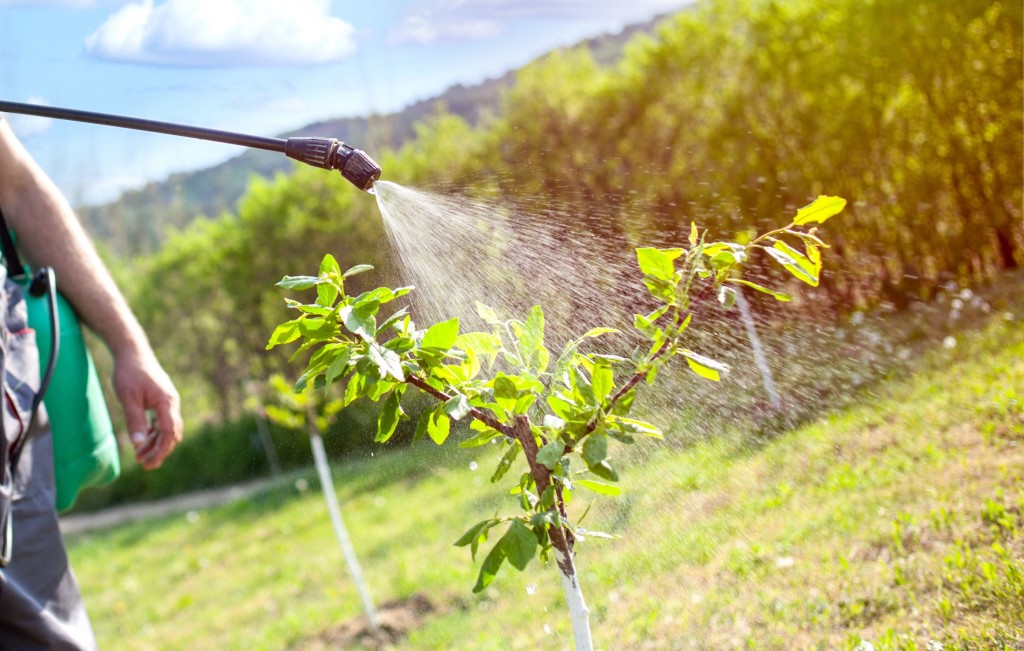
I use it every spring as a fungicide on my currant bushes. Urea is a natural fungicide; we produce it several times a day, and it’s free. However, it’s imperative to apply it at the dormant stage, i.e. in March or April (earlier in some areas), as the urine burns the foliage! I’m no plant pathologist, but I understand that urea destroys spores or remnants of diseases that have overwintered on shrubs. Ideally, you should use a sprayer to apply a fine mist to the branches and soil around the shrubs. After budburst, it can still be used in dilution (add four times as much water), but this is less effective. This treatment is useful against powdery mildew and anthracnose. But I’ve heard of apple growers using it successfully on apple trees to reduce scab. At home, if I miss this spring operation on my currant bushes, they lose all their leaves before the end of August.
How to Collect Urine
In the comments on Larry’s article, many people were concerned about how to collect urine, especially women. It’s simple: how do you provide a urine sample for medical purposes? A small plastic jar does the trick for me. I transfer my urine to a plastic bottle, which I keep in the fridge for a day or two before using it in the garden. Sometimes I freeze it for future use, on compost for example. Don’t forget to identify your container, as a family member might mistake it for apple juice!

Unfortunately, there’s a great deal of disdain for human waste, especially in North America. Here in Quebec, our own environment ministry, is still wary of composting toilets, also known as dry toilets.
Composting Toilet
Some twenty years ago, Nature-Action Québec produced plans for a composting toilet for outdoor use: a very simple little hut consisting of a toilet seat placed above an aerated box. Each time you go to the toilet, you add a little sawdust on top: one cup for #1 and two cups for #2. There’s no unpleasant odour. After 6 months, you can transfer the contents to the open air and, after a year and a half, everything will have decomposed perfectly. Of course, since we’ll also be composting faecal matter, it’s best not to use this compost on edible plants. A compsting toilet is a great option for places where there’s no access to water or electricity… but it’s forbidden in Quebec! I had one installed at a rest stop in my little town, but it had to be removed after a few years, as our government prefers the public to relieve themselves directly in the woods.


Dry Toilets
In France, dry toilets are permitted and even encouraged by ADEME (Agence de l’Environnement et de la Maîtrise de l’Énergie). A leaflet, with all the sanitary details, is available for those interested. Some companies even rent out portable dry toilets for events in Europe. This would be much better than our rather unpleasant-smelling blue portable toilets!
You’re going to tell me that I’m straying a little from the favorite topics of this blog, and yet: it’s a natural product that’s very useful in gardening!