


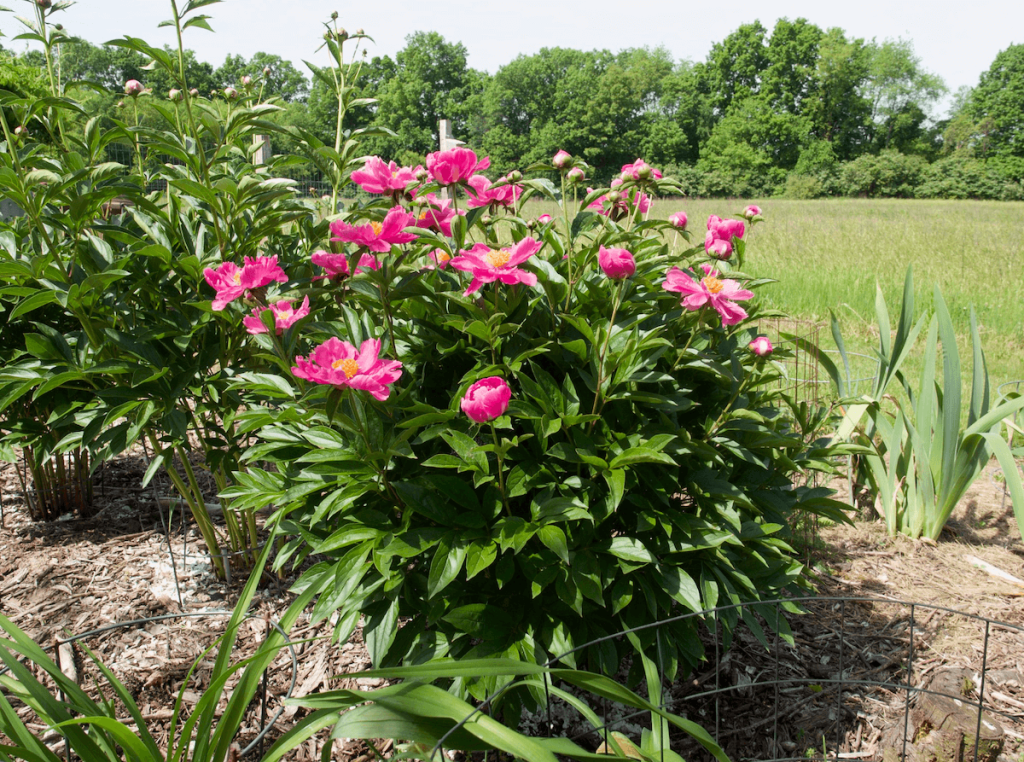
I remember the peonies (Paeonia lactiflora hybrids) of my childhood so well! Huge clumps of big, fully double flowers, fragrant as can be, with their little contingent of ants (they always accompany their peonies, but do them no harm). At the first heavy downpour, however, there they were, completely bent over, with their beautiful flowers dragging in the mud. It was sad as hell… but it’s no longer necessary.

Antique peonies had been developed in the 1800s and early 20th century for greenhouse production of cut flowers. There was never any question of planting them in the ground, as their flower stems were not strong enough to bear the weight of the enormous flowers. For mysterious reasons, however, these peonies, which were absolutely incapable of standing upright, became garden peonies in America. Generations of gardeners have learned that peonies must be staked to enjoy their beautiful flowers. These peonies, such as ‘Duchesse de Nemours’ (1856), ‘Félix Crousse’ (1881), ‘Festiva Maxima’ (1851), ‘Karl Rosenfield’ (‘Karl Rosenfeld’) (1908) and ‘Sarah Bernhardt’ (1906), are now completely outdated… but, curiously, are often still available from nurseries. Could this be because dealers also sell peony stakes?
Modern Peonies
Nowadays, there are hundreds of peonies with strong flower stems that stand proudly despite the worst weather. In fact, ancient peonies were often prone to diseases to which modern peonies are more resistant. This is particularly true of ‘Bowl of Beauty’, ‘Coral Charm’, ‘Krinkled White’ and ‘Crazy Daisy’, to name but a few.

Growing Peonies
In the past, peonies were only available in late summer, the best time to divide them, but not any more. You’ll have no trouble finding peonies in stores in spring, already potted, growing and ready to plant. Grow them in full sun (although a little afternoon shade is acceptable) in rich, well-drained soil. It’s important to plant a peony at exactly the same depth as it was originally: if you plant it any deeper, it’s likely to leaf out and fail to flower!
Mulch is highly recommended to keep the soil more evenly moist and, contrary to rumor to the contrary, helps prevent rot and disease, not cause it. And, yes, mulch can go right down to the base of the stems. Beware of hoeing: peonies only have a few leaves, and you mustn’t break them! With a good mulch, hoeing is a thing of the past anyway.
An annual application of compost on top of the mulch will help stimulate maximum flowering, but peonies are slow growers: it will take 3 to 6 years before they flower abundantly.
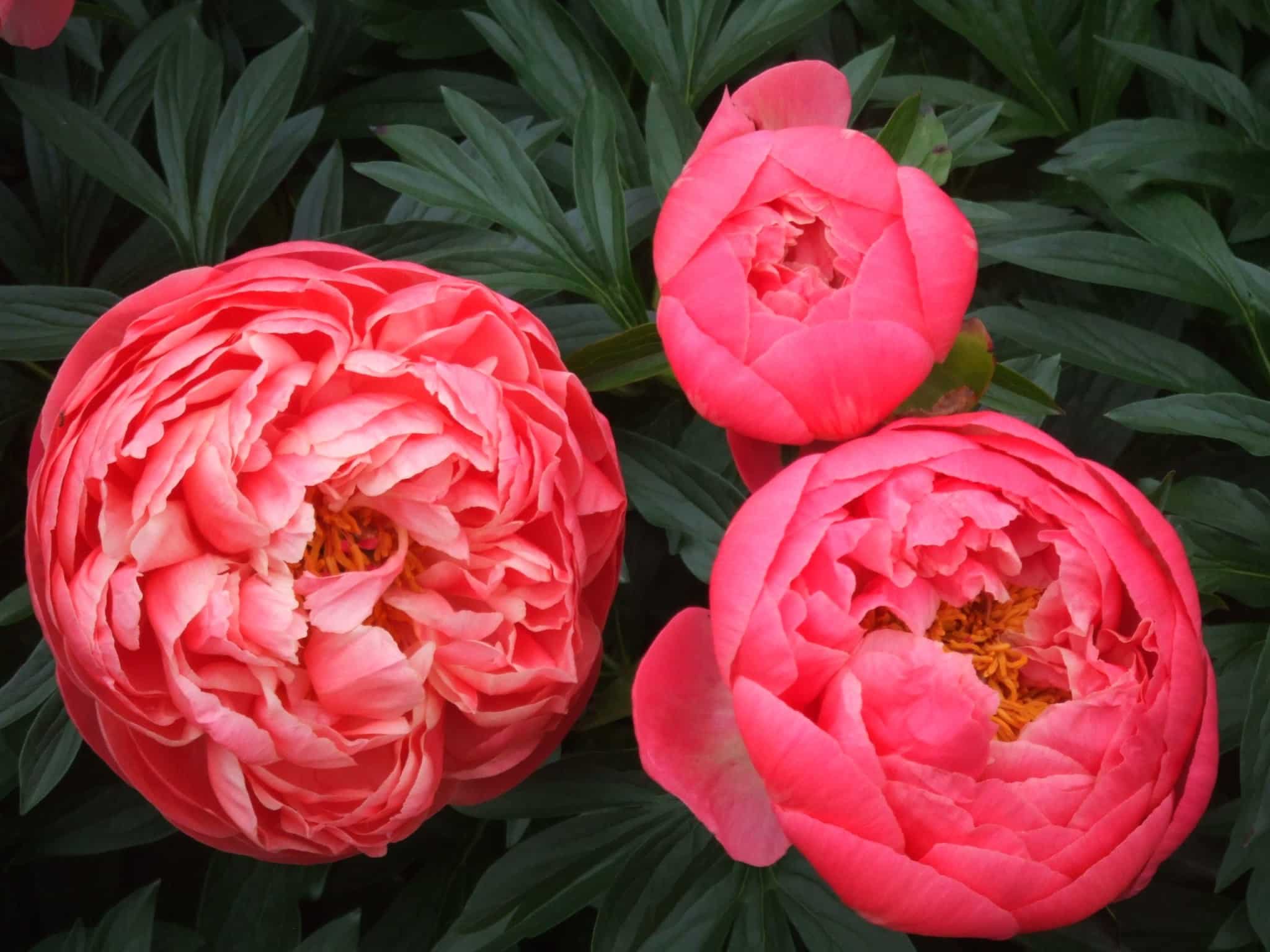
After flowering, remove the spent flowers if they bother you (leaving them on the plant does not weaken it, despite belief to the contrary), but the foliage should remain intact at least until early autumn. You can cut it back after it has reddened, if you wish.
As for dividing and transplanting peonies, the best time is late August or autumn.
Where to See Them?
If you’re looking for beautiful peonies, take a trip to one of the Quebec region’s public gardens. The Roger Van den Hende Botanical Garden and Domaine Joly de Lotbinière in particular have some very fine specimens. If you’re passing through Alaska, there are over 100 peony growers in the region.
Enjoy your visit!
Larry Hodgson published thousands of articles and 65 books over the course of his career, in both French and English. His son, Mathieu, has made it his mission to make his father’s writings accessible to the public. This article on growing asparagus was originally published in Le Soleil on June 2, 2007.