


In recent years, the decline of bees has awakened our collective environmental conscience to the danger of pesticides, but most people think of honeybees. We’re concerned about the impact on honey production, but also on the pollination of our fruit trees and other field crops that rent hives during the flowering of their crops.
Those most interested in this decline know that there are also native bees that are specific to each region, but most people think that all bees look alike, live in colonies, produce honey and can sting if disturbed. In fact, there are some 860 species of native bees in Canada, some with colors that differ from yellow and black, most of which don’t sting, are often solitary and none of which produce honey. But they all make an important contribution to pollination, provided they are given the right habitats.
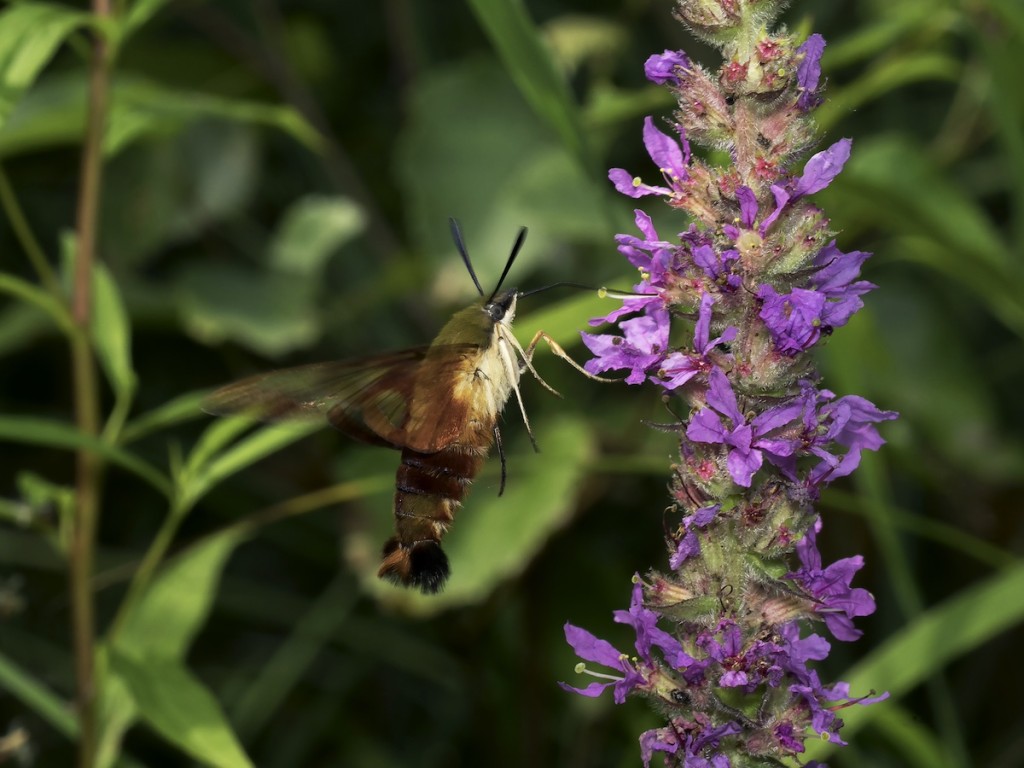
Seeing my friend Gilles Arbour’s magnificent photos inspired me to raise your awareness of the great diversity of pollinating species and the importance of providing them with sources of nectar and pollen from spring through to late autumn.


Incredible Diversity
In addition to honeybees and native bees, including bumblebees, there are a host of other insects capable of pollinating flowers, including flies such as hoverflies and bomb flies, wasps, butterflies, beetles, ants and more. All need flowers throughout the growing season, and some have a marked preference for native plants. Just think of the monarch butterfly, whose caterpillars eat only milkweed.

Favorable Environments
In rural areas: roadside verges, ditches and flower strips at the edge of fields are ideal environments for attracting pollinators, provided of course that there is no pesticide application or early mowing.
Windbreaks have a very positive effect on wind reduction in agricultural environments, and if they are diversified, they can also offer all kinds of flowers at different seasons and also cavities or hollow stems to hide in.
In urban environments: green spaces, islands of greenery and, above all, flowerbeds whose flowering period extends throughout the summer are of great interest to pollinators. Ideally, there should be connectivity between the various flowering areas and lawns with plant diversity.
Some magnificent photos by Gilles Arbour showing the incredible diversity of the world of pollinators:


Sites de nidification
Most pollinating insects need cavities and undisturbed soil to nest in for part of their lives. Insect nesting boxes have been appearing in urban parks and even in some shops. These nesting boxes can be made from a variety of materials, with holes of varying depth and diameter, but closed at one end. However, these installations need to be maintained, cleaned or replaced frequently, as they can also attract parasites or infections.
Personally, I prefer to create pollinator-friendly habitats with a wide variety of flowers throughout the year and let the insects choose where to live, without doing too much “cleaning” in my garden.
About Gilles Arbour
Gilles Arbour is a naturalist photographer in great demand. He is widely recognized not only in Quebec, but also in Canada and internationally. He has contributed to a number of books, scientific articles and North American guidebooks, including “Les araignées du Québec” (The Spiders of Québec) with Pierre Paquin, to be published this fall by Natureweb.. His mission is to help develop a visceral attachment to nature by exposing the public to the biodiversity of what’s around us.