


Question
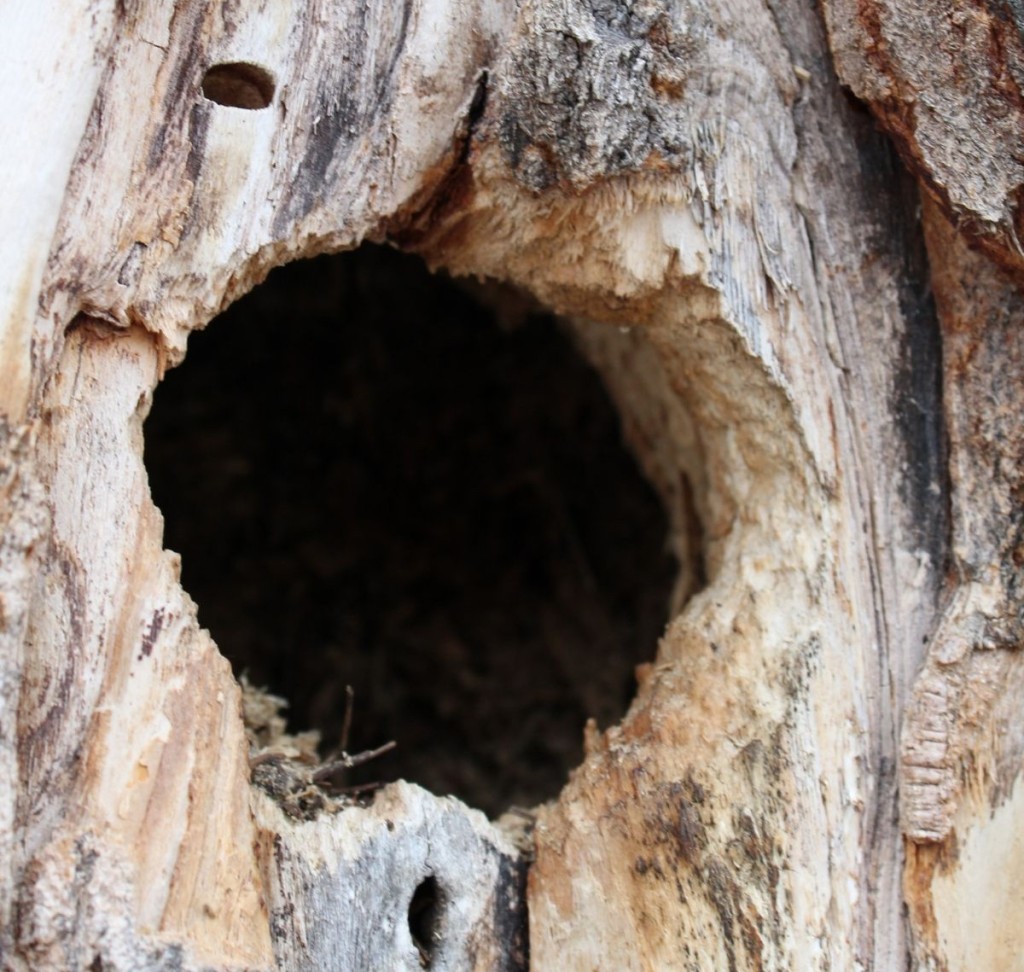
When I opened my summer home, I was surprised to see that 4 cavities had been dug into my most beautiful spruce, no doubt by woodpeckers. Am I going to lose my tree? Do I have to patch the holes?

Answer
When you discover woodpecker cavities in a tree, it can be alarming, but it’s important to understand that these birds play a natural role in the forest ecosystem. Woodpeckers often dig holes in living trees to search for food, such as wood-boring insects, or to create nesting sites. Although the appearance of these holes may worry you, their presence does not necessarily mean that the tree is doomed, at least not in the short or medium term.
At first, you may notice sap running from the wounds, which is the tree’s natural response to injury. This sap helps to repel pathogens and begin the healing process. The tree will set up a natural process called compartmentalization, where it develops a layer of calloused cells around the wound. This natural barrier isolates the damaged area and limits the spread of rot and other potential diseases. As a result, holes should not cause immediate damage to the tree.

Plugging Holes
As for the idea of plugging holes, this is strongly discouraged. The old practices of applying “pruning paints” or other substances to seal wounds have proved ineffective and even harmful. These products can hinder the natural compartmentalization process, making the tree more vulnerable to disease and decay. So it’s best to leave the holes open and allow the tree to heal naturally.
It’s also true that these cavities can structurally weaken the tree, making it more susceptible to damage from high winds or other environmental stresses. However, this does not necessarily mean that the tree will die, or that it must be felled immediately.
Finally, it’s important to note that these holes can play a beneficial ecological role. By leaving the cavities open, you provide a valuable habitat for a variety of bird species, beyond just woodpeckers. Many birds and small mammals use these cavities for nesting, contributing to the biodiversity of your environment.
Larry Hodgson published thousands of articles and 65 books over the course of his career, in both French and English. His son, Mathieu, has made it his mission to make his father’s writings accessible to the public. This text was originally published in Le Soleil on July 30, 2007.