


Some older gardening books recommend taking clematis down off their support for the winter, laying them on the ground and covering them with a thick mulch, the idea being to protect them from the cold. And in the spring, the same books recommend reattaching them to their support.

No Longer Recommended
Well, thankfully, this method is now outdated. Clematis experts no longer suggest this approach because, frankly, it’s not necessary—and it can even cause more harm than good. Clematis vines are known for being delicate, especially the stems. Trying to untangle them from their support, only to reattach them again later, can lead to breakage, and broken stems can reduce your blooms for the season. And all that work for nothing? Not ideal!These days, the only thing you really need to do in the fall is mulch your clematis. But don’t worry, mulching is easy! Just apply a nice thick layer of mulch—anything like shredded leaves, compost, or straw will do—around the base of the plant. This is especially important if you’re growing a clematis in a zone where it’s on the edge of its hardiness range. For example, if you’ve got a zone 5 clematis and you’re gardening in zone 4, this little extra bit of protection can make all the difference.
Mulch, Please!
But for those of us gardening within the clematis’s recommended hardiness zone, a bit of mulch is more than enough to get it through the winter. Mulch does a few other handy things too. It helps keep moisture in the soil, which is useful when the weather cools down and the ground starts to freeze. Plus, as the mulch breaks down, it enriches the soil, giving your clematis a nutrient boost for the growing season ahead.
Wait Until Spring
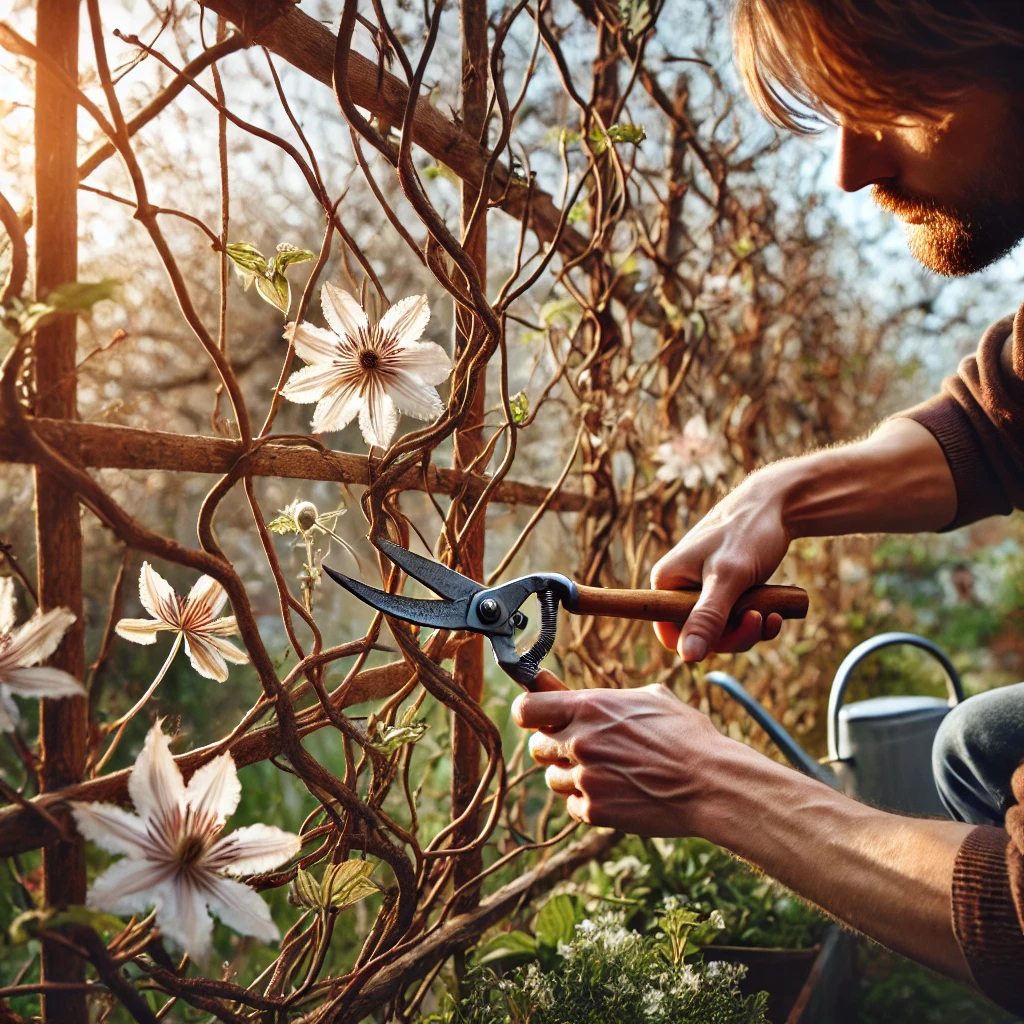
When it comes to pruning, save that task for spring. You’ll want to take a look at your plant and remove any dead or damaged branches then. And if your clematis belongs to group II (the types that bloom on new wood), you can prune it back pretty hard in the spring, since they flower on fresh growth. But for other types, like group I clematis that bloom on old wood, be careful not to go too wild with the shears. A light pruning is all you need, or you might cut off potential flowers for the season.
Still not sure what type of clematis you have? No problem! There’s a simple rule you can follow: when in doubt, wait it out. You can always prune after the first flush of blooms. And honestly, other than mulching, there’s really not much else you need to do for your clematis in the fall.So, put away the ladder, leave those stems where they are, and let the plant take care of itself. Come spring, it’ll reward you with a beautiful flush of flowers, and you’ll have skipped a whole lot of unnecessary effort in the process.
This text was first published on this blog on September 8, 2014. It has been revised and the layout updated.