


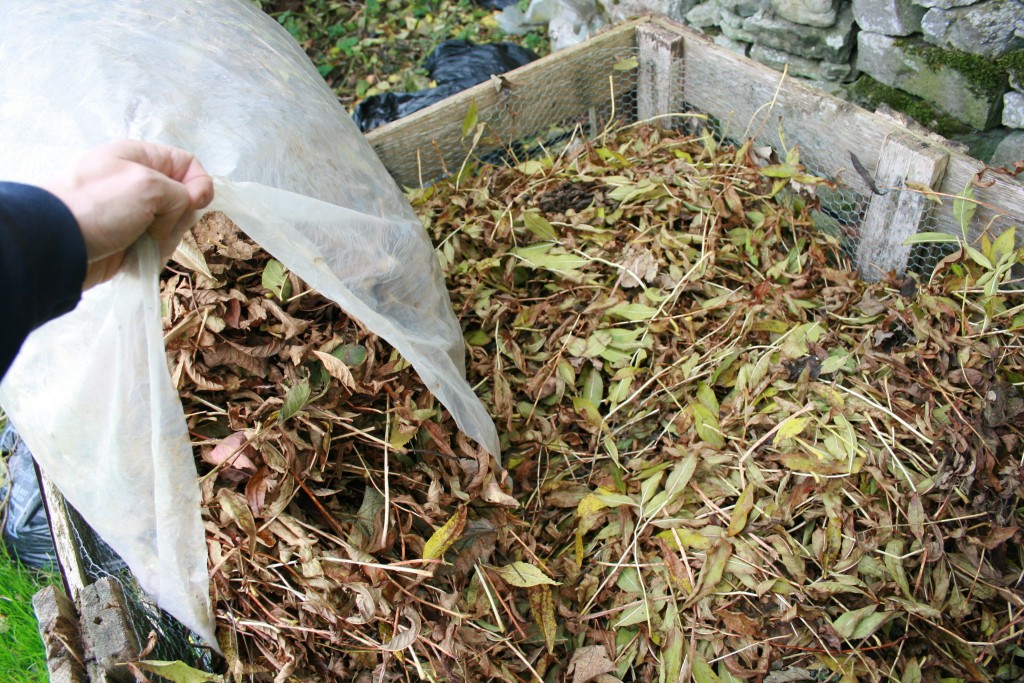
The leaves fall, fall, fall… and many gardeners still have the very bad habit of putting them in plastic bags and depositing them on the side of the road for municipal collection. It’s true that this is better for the environment than the old techniques of burning them or putting them in the garbage can and sending them to the incinerator or landfill, but it’s even better to recycle them at home. After all, autumn leaves are nature’s main source of plant fertilization: why throw away such a useful commodity?
There are 2 main ways to recycle leaves: you can either compost them, or use them as mulch. In both cases, however, you need to crumble them before using them. This is because whole leaves decompose slowly and are not very effective in compost. Whole leaves, especially large ones like maple or oak, don’t make the best mulch either, as they interlock to create a thick barrier that won’t let desirable plants through. To be effective, mulch must be thin enough to allow the stems of perennials, bulbs, shrubs, etc. to pass through. So you have to shred them. But how do you break them down into small pieces without too much trouble?


Commercial Shredders
Unless you already own one, commercial chippers aren’t very interesting for the ordinary gardener. Today’s chippers are big monsters designed more for shredding branches and wood than leaves, and are used mainly for commercial purposes: for arborists, lumber yards, forestry, etc. Their price, even just for rental, is astronomical. Their price, even just for rental, is astronomical. Yes, they’re very efficient, but…
There used to be (and still are) very inexpensive leaf shredders that sit on top of a garbage can and shred leaves, but we haven’t seen them on display in our regions for several years now. So unless you want to send for one by post…

The Mulching Lawnmower
Most motorized mowers make excellent shredders. Simply pass over the leaves spread out on the lawn to see them reduced to small crumbs. Afterwards, you can direct the machine’s blast onto a flowerbed to pour the shredded leaves into it, where they serve as mulch. You can also collect them from the mower bag and pour them into the compost, or spread them over the flower beds as mulch. It’s so easy and effective that I’m always surprised to see people still raking up leaves. For most people, the lawnmower is the ideal shredder.
There are also mulching mowers that differ from conventional mowers in that their blades are specially designed to finely shred leaves and small debris.
To reduce environmental costs, opt for electric or battery-powered mowers, which are also quieter than gas-powered ones.

The Leaf Vacuum Mulcher
Sure, it’s noisy, but the leaf vaccum mulcher is also very efficient… when you put it in “vacuum” mode, of course (pushing leaves in blower mode doesn’t shred them!). The leaves it swallows are crushed and deposited in the bag. It’s then easy to pour the contents into the compost or use them as mulch in flower beds. There’s the added advantage of being able to run it over inert surfaces, such as parking lots or patios, which you can’t do with a lawnmower. As with the lawnmower, electric or battery-powered models are preferable to gasoline-powered models.


A Homemade Shredder
You can also make your own shredder. Take a large plastic garbage can (metal garbage cans are too noisy) and pour leaves into it, filling up to a third at a time. Now take an electric trimmer with nylon cord, turn it on and lower it into the garbage can. It will tear the leaves very efficiently. Just use an up-and-down motion, as if you were making a huge milkshake, and you’ll soon have leaves ready to pour into the composter or flower beds.

Keep Shredded Leaves in Reserve
One last detail for those who use their leaves to make compost: in addition to putting shredded leaves in the composter now, it’s wise to keep some in reserve for next year. Composting works best when there’s an equal proportion of green and brown matter. In summer, however, we rarely have brown matter to offer the composter, as this is the season for green matter (kitchen scraps, fresh weeds, pruned stems, etc.). By keeping bags of shredded dead leaves in reserve, however, you can make very well-balanced mixtures that will decompose quickly.
Gardeners, to your arms: the time has come to make good use of autumn leaves by shredding them!
Larry Hodgson published thousands of articles and 65 books over the course of his career, in both French and English. His son, Mathieu, has made it his mission to make his father’s writings accessible to the public. This text was originally published in Le Soleil on October 21, 2006.