


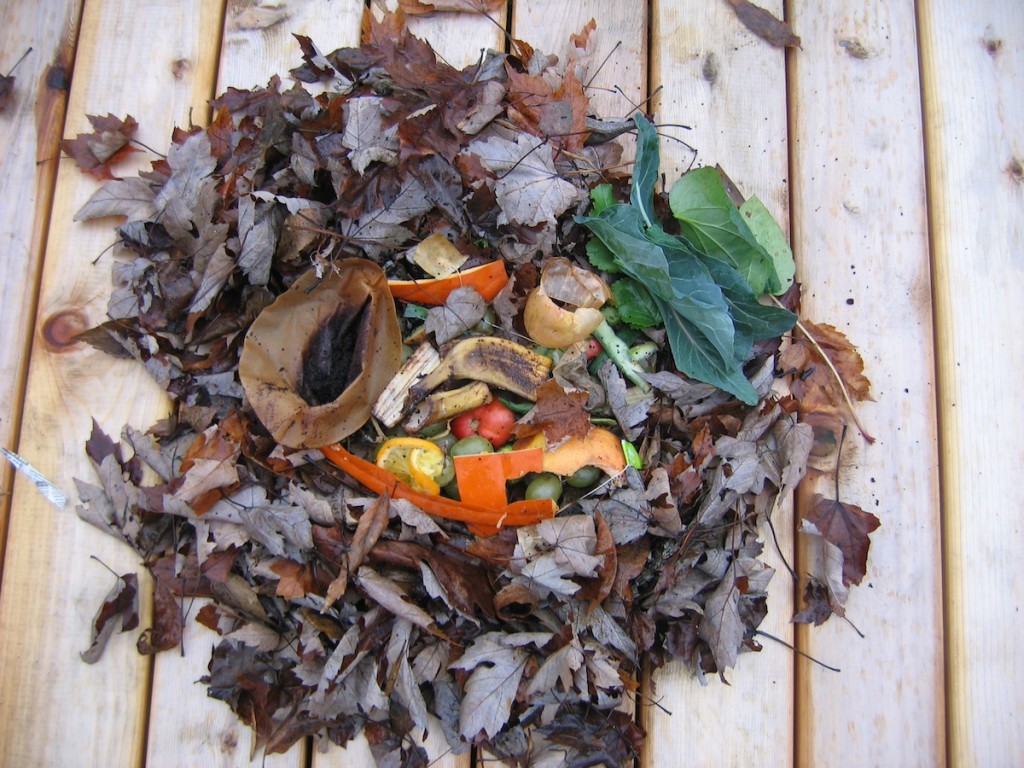

I started offering training courses in home composting in the early 1990s. Since then, I’ve trained several thousand people in this practice, which still fascinates me to this day. I remember giving a training session to just one person at the domestic composting demonstration site at Jardin Roger Van den Hende, but gradually more and more people became interested in the practice. In the early 2000s, home composting had its heyday. I sometimes had more than 150 participants at some of my training courses. Nowadays, my name is sometimes associated with tomatoes, but back then it was compost that was most important in my career. No wonder so many people nicknamed me ‘Mrs Compost’.

Unfortunately, the popularity of home composting has declined since organic waste collection was introduced in many municipalities. That’s a shame, considering the many benefits of home composting, especially for gardeners.
Making Compost… for Real!
These days, I sometimes meet people who tell me they’re making compost, when in fact they’re taking part in the collection of organic waste. While I’m delighted that people living in multi-unit dwellings can finally do something concrete for the environment by recycling their kitchen waste, I’m still annoyed to see that everyone who has a little patch of green space chooses not to manage their organic waste themselves. Personally, it wouldn’t occur to me to entrust this waste to my municipality, because I’m too aware of the many advantages of managing it at home.

Faire son compost… le meilleur choix pour l’environnement
When it comes to ecological practices, the shortest cycle is always the best choice: when you compost at home, you manage the organic waste you produce on site. This avoids the need to transport these materials. In Quebec, 43% of our greenhouse gas (GHG) emissions come from transport.

No matter how organic matter is managed on a large scale (usually by composting or biomethanisation), it involves energy and raw materials, which are often non-renewable. While most municipalities have opted for the brown (or green) bin, the contents of which are destined to be composted in large volumes, others have chosen to recycle organic waste through biomethanisation. This is the case in my municipality, which collects mainly kitchen waste (not garden waste) in purple plastic bags.

Since the service was introduced in my municipality, I’ve used four bags to dispose of chicken bones and fish waste… the rare organic matter that I agree to ‘donate’ to my municipality. Of course, I also keep my dead leaves in the autumn, as I explained in a recent article.

Another positive effect of home composting. Since the compost we produce doesn’t have to be bagged, we avoid using plastic bags.
Make Your Own Compost to Control Its Quality
Even though I’m an agronomist, I often find it difficult to assess the quality of compost sold on the market. That’s not the case when you make your own compost, because you control its quality. As long as you follow the basic rules, you control the quality of the finished product. I have no qualms about putting my compost at the foot of my tomato plants, because of course I know it doesn’t contain contaminants or other inputs I disapprove of. When you take part in your municipality’s organic matter collection, you have no control over the contents of your neighbour’s brown bin. As a result, you have no control over the quality of the resulting compost.

Compost to Save Money
Compost is the basis of fertilisation for most plants. It’s even essential for growing vegetables. Whether you’re gardening in the ground, in pots or in containers, it’s to your advantage to amend your soil (or potting soil) with compost. If you don’t make your own compost, you’ll have to buy some. If you don’t produce compost, you’ll have to buy it. Commercial compost of acceptable quality sells for between six and fifteen dollars a bag, and depending on the quantity you produce (don’t expect too much from the outset), you can save several dozen dollars a year.
Make Your Own Compost to Have Compost on Hand
When it’s time for a new planting, I appreciate the fact that I always have compost on hand. I don’t have to use my car to go to the garden centre or hardware store… another good thing for the environment.
Compost to Avoid Odours
Home composting has a bad reputation when it comes to foul odours. Organic matter that piles up in a closed environment like a brown bin produces biogas because it is deprived of air. On the other hand, when organic matter is properly managed in an aerated composter, it gradually decomposes through the action of micro-organisms, eventually producing an amendment that smells like good earth. In my experience, the bad reputation of home composting is associated with composting grass clippings, which give off nauseating ammonia smells. A good reason to use grasscycling instead, i.e. to leave the clippings on the lawn when you mow it.
Making Your Own Compost, to Set an Example
Composting at home is an excellent way of teaching our children and grandchildren how to become eco-responsible citizens. At the same time, why not teach them to garden? These are two legacies worth their weight in gold.
Composting for Satisfaction
When it’s time to harvest, I’m always fascinated by the result… knowing that I’ve been part of this ‘miracle’… which isn’t a miracle at all… To see things that were initially considered to be waste transformed before our very eyes into real ‘brown gold’ is truly satisfying. That’s where the term ‘recycling’ really comes into its own.

Composting… Because There Is No Organic Matter Collection Service
If you live in a municipality where organic waste collection is not offered, or if the collection is essentially reserved for kitchen waste (which is the case in my municipality), making your own compost is a more than sensible choice when you have a small piece of land. For those who live in multi-unit dwellings, there’s always vermicomposting or balcompost… but that’s another story.
Composting Can Be Simple
There are several ways of making compost. If you’re highly motivated and have a lot of time to put into the project, you can make compost in a few months. On the other hand, if, as I imagine, you’re more of a disciple of the Laidback Gardener, you should know that it’s very possible to make compost by devoting just a few minutes a week to it. You’ll just have to be more patient to see the results. In any case, remember that all organic matter decomposes whether you like it or not.