


In our house, it’s rare to see a Christmas tree in the living room. Since we usually spend the holiday season with our families, we don’t have the opportunity to enjoy it! However, a few years ago, during the COVID-19 pandemic, confined to our home away from our loved ones, my partner and I bought our very first Christmas tree.

It took me back to another time: when the cat knocked down the decorations, the cookies and glass of milk waited for Santa, and the presents were unwrapped in pajamas. A balm in these difficult times!
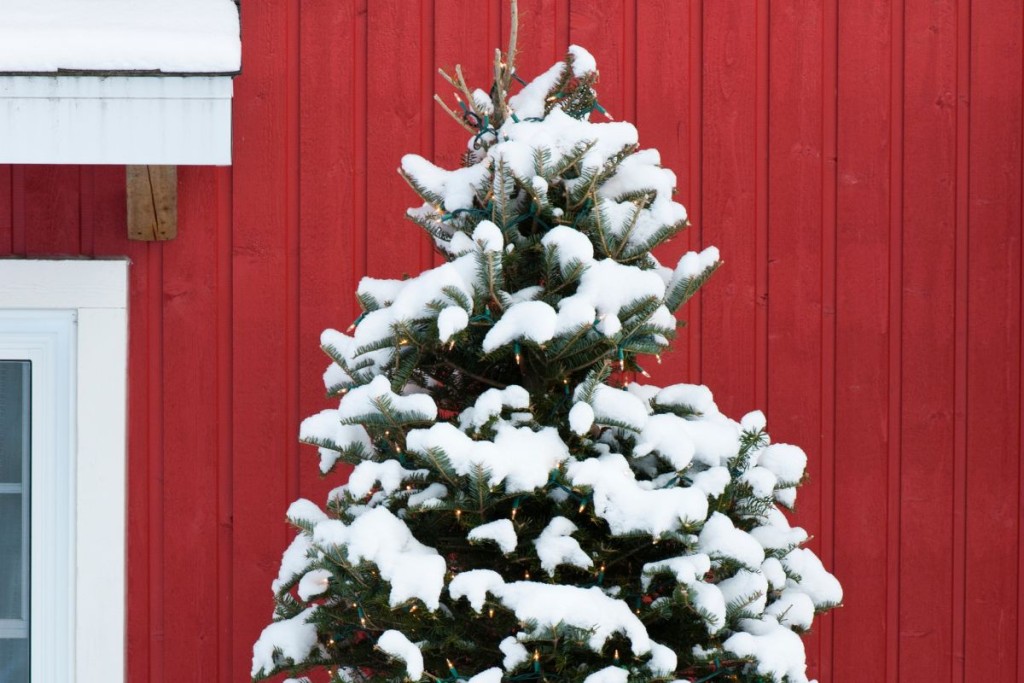
After New Year’s Day, the tree spent the winter in the yard, another family tradition handed down by my father. In fact, there are so many ways to reuse a Christmas tree that there’s no reason to throw it in the garbage after the holidays. Here are just a few.
Putting Your Tree in the Garden
The easiest way to reuse a Christmas tree is simply to plant it in the snow outside. If it lacks snow, leave it in its stand or plant it directly in the ground, provided it’s not frozen. Placing it in a large pot can also do the trick. Outdoors, your fir could stay green until spring, adding winter visual interest to your outdoor space.

It can also serve as a refuge for birds during cold spells. Add suet balls covered with seeds or other bird food: the tree will then become both a shelter and a food source for local wildlife.
You could also use your fir to protect fragile plants. Cut off the branches and place them as winter mulch on your perennials, bulbs and shrubs. These branches will help insulate your plants from the cold while promoting snow accumulation, which acts as a natural protection.
A Gift for the Soil
In spring, you don’t have to look far to find out what to do with your dried-out fir tree. Fallen needles can be left directly on the ground, where they transform into a natural mulch with multiple benefits. They protect the soil from bad weather, such as wind or heavy rain, reducing erosion. They also help conserve moisture by limiting evaporation. Over time, their decomposition gradually releases nutrients, helping to enrich and improve soil structure over the long term.

Cut branches into small pieces with pruning shears and scatter them between your garden plants. If you have access to a shredder, shred the branches to obtain a fine, uniform mulch, perfect for flowerbeds. You can also add them to your compost as brown matter. Although needles decompose slowly, they can be added to your composter in small quantities.
You’ll still have the trunk, which is more difficult to compost, but don’t despair: I’ve still got lots of ideas for using it! In the garden, you can plant the trunk directly in the ground, where it can serve as a natural support for your climbing plants, whether in the vegetable garden or in your ornamental beds. Need a stake for your tomatoes? Why not use a fir trunk?
Crafts
Have you heard of insect hotels? These small structures, made from natural materials, provide essential shelter for pollinating and beneficial insects such as bees, ladybugs and lacewings. You can build one yourself using the trunk of your Christmas tree! Cut the trunk into sections and drill holes of different sizes to attract a variety of insects. You can also add branches, pieces of bamboo, straw or pine cones to complete the structure. Placing your insect hotel in your garden can promote biodiversity and improve pollination in your vegetable garden, while helping to regulate pest populations thanks to natural predators.

The scent of fir can also be put to good use. You can make a homemade cleaner by macerating a few branches in white vinegar for two weeks. Once filtered and diluted with water, this natural mixture becomes an excellent product for cleaning windows and surfaces. If you wish to diffuse a pleasant fragrance in your home, mix the branches with citrus fruits and spices such as cinnamon, and simmer in a pan of water. This simple process will fill your home with a warm, comforting scent. Once cooled, the liquid can be filtered and poured into a spray bottle to freshen the air or scent fabrics such as cushions or curtains. As for the solid residues, they can be added to compost to enrich your soil, or placed at the foot of your houseplants as temporary mulch.
For DIY enthusiasts, cut the trunk into logs to create rustic objects such as coasters, ornaments and candle holders. Let your creativity run wild!

Recycle Locally
If you lack the space or time to reuse your Christmas tree, many municipalities offer a post-holiday tree collection service. These trees are usually transformed into mulch or compost, and used for landscaping or gardening projects. Before throwing your tree in the garbage, check with your local public services. A local horticultural society or community garden may even accept your donation!

Another original option is offered by Parc Safari in Hemmingford, Quebec: donate your tree to animals. According to Violaine Garant, head of the park’s enrichment committee, natural fir trees provide animals with valuable sensory stimulation and, for some, nutritional enrichment.
So, after brightening up your festive season, your tree can continue to offer gifts all year round! Do you have any other ideas for recycling a Christmas tree?