


Like plants in winter, the Laidback Gardener team will go “dormant” during January, to replenish its strength for the coming season. But don’t worry! Articles will continue to be published every day to keep you entertained, informed and dreaming of spring.
This year marks the 10th anniversary of the Laidback Gardener blog, and for the occasion we’ve compiled a list of the 30 most popular articles of all time. Some must-reads are a foregone conclusion, while others may surprise you. These choices reveal what has piqued our curiosity and fuelled our passions over the years.
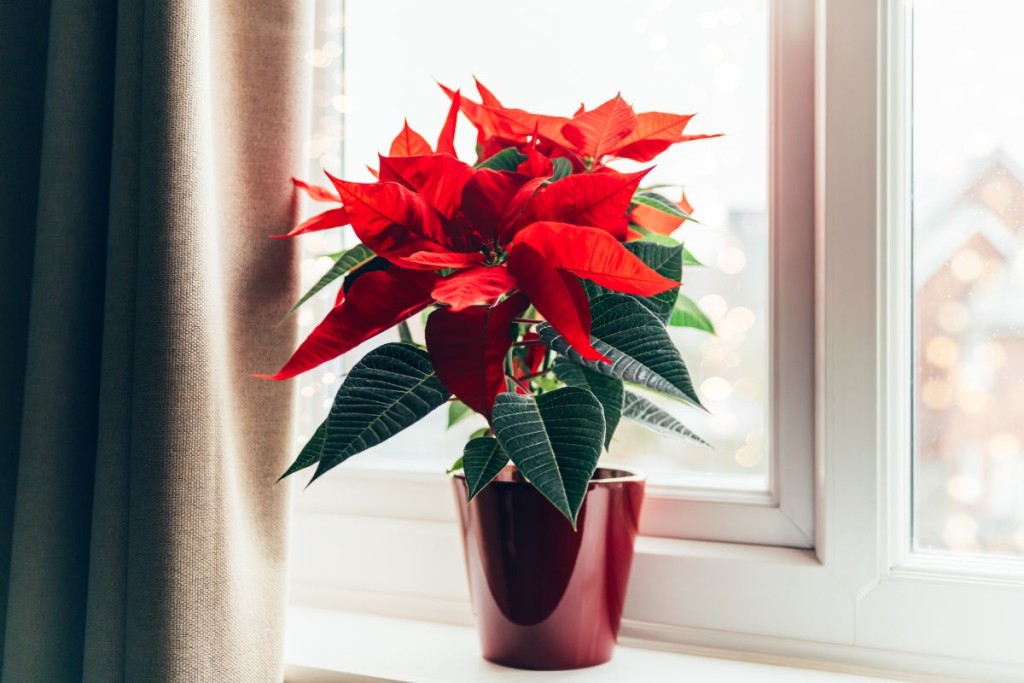
This classic on growing poinsettias, written by Larry Hodgson, climbs to number 27 on our list. Originally published on December 10, 2015, this article addresses one of gardeners’ common concerns: how to keep poinsettias healthy throughout the holiday season and beyond.

I’ve received several emails recently from gardeners struggling with poinsettias (Euphorbia pulcherrima) whose lower leaves turn yellow and drop off, often within days of purchase. Yet the poinsettia, while not necessarily the easiest houseplant of all, has the reputation of being able to “hold on” for at least a month or two if given reasonable care. Why then is yours losing its leaves so soon after you bought it?
A Symptom of Stress
Leaf drop in the poinsettia is a symptom of stress. The plant is not happy and shows its displeasure by dropping leaves. Usually, it’s the lower leaves that are sacrificed first. They turn yellow and off they fall. Then, if the cause of stress isn’t corrected, the leaf drop will gradually progress up the plant until it appears nearly naked, with only the colored bracts and a few green leaves on the top.
So much for the symptoms, but what causes this stress? Here are 10 possibilities.
Problem #1: The plant was exposed to cold

In most areas, Christmas is the coldest time of the year, so when you purchase a poinsettia, just bringing it back from the store can stress it severely. Even a few minutes of exposure to temperatures below 12°C (53) can cause leaves or bracts to fall off.
Solution: Always insist the salesperson carefully bag your poinsettia before you leave the store. And don’t place a poinsettia on a frozen seat in an icy car, but instead heat your car in advance.
Problem #2: It has been kept wrapped too long
Poinsettias releases ethylene, a natural gas produced by many plants. As long as it grows in the open air, this gas diffuses rapidly and there are no after-effects. But if you keep your plant locked up in its packaging for a few days, the concentration increases and the leaves and bracts start to drop.
Solution: Remove the poinsettia from its wrapping as soon as you get home. If you intend to wrap your poinsettia as a gift, do so just before you need it, not days ahead.
Problem #3: The air is too dry
Poinsettias tolerate dry air relatively well, especially compared to so many other indoor plants, but there is a limit. When the air is exceptionally dry, remaining at less than 30% almost all the time, the leaves begin to drop off, often browning at the margins or at the tip before they fall. If the soil dries out very quickly after a good watering, say in only 2 or 3 days, that’s another symptom that the air is very dry.
Solution: Increase the humidity using a humidifier or place the plant on a humidifying tray.
Problem #4: Insufficient water

When you find your poinsettia wilting, with all its the leaves and bracts hanging limply like lettuce in the sun, and its soil is dry to the touch, it’s pretty obvious that it lacked water. Usually the foliage will recover its turgidity after a thorough watering, but… a few days later, the lower leaves begin to turn yellow and drop off. Do note that this leaf loss due to a lack of water is not necessarily your fault. The stress may have occurred in the store before you bought the plant, then, when you buy an apparently healthy poinsettia, leaf drop sets in a few days later. Note that box stores and supermarkets, especially, are not known for their proper maintenance of the plants they sell.
Solution: Water any poinsettia whose soil is dry to the touch and whose leaves have wilted to at least save it. Once it has recovered, learn how to water your poinsettia properly so it won’t happen again. Whenever the soil is dry to the touch, water deeply, enough so that the excess water flows into the saucer. Just to make sure the plant really did get enough water, even let the plant soak in the excess water for 15 to 20 minutes, then empty the saucer.
Watering Tips
It’s important to understand that you can’t force a poinsettia to adapt to a specific watering schedule. The typical “I water once a week” method can never be counted on. At some point, you’ll almost always end up under- or overwatering the plant, depending on the conditions. This is because the same plant may well find a weekly watering quite adequate if it’s gray outside and fairly cool indoors, but then can wilt terribly the following week because it’s suddenly sunny and the window ledge became extra hot. And yet a week later, when the weather is exceptionally gray and cool, the potting mix might still be almost soaking wet a full week after the plant was watered. If watering needs vary so widely, it’s because indoor conditions change constantly.
Ideally you should check the soil every 3 or 4 days, pressing your index finger into the soil up to the 2nd joint: if the soil is dry, water well. If it is still wet, come back 3 or 4 days later and check again, watering only when needed. That is the key to successful watering almost any plant, not just the poinsettia! You may well find that the same plant can sometimes need watering after only 4 days under some circumstances and, at other times, only after 10 or 12 days.
Finally, note that mini-poinsettias, which are actually young cuttings grown in small pots and forced for early flowering, are especially susceptible to underwatering. Their tiny pots dry out quickly and it is best to check their growing mix every two days.
Problem #5: The plant was overwatered

It seems illogical, but a poinsettia will react the same way when it’s overwatered as when it’s underwatered: the foliage wilts and drops off. Why? If the potting mix remains overly wet for a long time, the roots begin to rot due to the lack of oxygen and when this happens, the foliage wilts, despite the abundance of water, since the roots are no longer there to absorb it.
Solution: It’s not easy to recuperate a poinsettia whose roots have begun to rot, because rot is a disease (Pythium) that spreads from dead or dying roots to living ones. It is probably best to simply replace any poinsettia suffering from rot.
Problem #6: It’s too hot or too cold in the room where you keep your poinsettia.
And an unhappy poinsettia will start to lose its leaves.
Solution: The ideal temperature for a poinsettia is between 15 and 24?. If it’s colder or warmer than this, especially over a long period, it’s best to place it elsewhere at a more appropriate temperature. What’s more, sudden changes in temperature or exposure to cold draughts can cause thermal shock and lead to leaf drop. It is therefore advisable to maintain a stable temperature and avoid draughts.
Problem #7: Lack of light


This problem is usually seen only in the long run, because a poinsettia can usually take 7 or 8 weeks in the shade or partial shade before reacting negatively and starting to lose its lower leaves. That’s why you can use a poinsettia almost anywhere in the home over the holidays, even in a dark corner. But if you want your poinsettia to remain in good condition until spring, it will need good light.
Solution: After Christmas, place your poinsettia in a spot where it will receive adequate lighting, including at least a few hours of sun a day, such as near a sunny window.
Problem #8: Insect infestation


Whiteflies love poinsettias, piercing the leaves to lap up their sap, thus causing their foliage to slowly turn yellow and then drop off. Spider mites, mealybugs and scale are other sap-sucking insects that also sometimes infest poinsettias and give similar results.
Solution: Usually, the plant was already infested in the store, so the first solution is of course to carefully inspect the plant before you buy it. Look especially under the leaves and at leaf axils, as that is where pests often hide. Different treatments, including sprays with insecticidal soap, neem oil, horticultural oil, rubbing alcohol, etc., can be used to control the invaders. And keep the plant isolated from your other houseplants so the infestation won’t spread.
Problem #9: Aging leaves
It is perfectly normal for a poinsettia to lose a leaf or two from time to time. That’s its way of getting rid of older, less functional leaves.
Solution: Just pick up the dead leaves!
Poinsettias Really Aren’t That Difficult
I hope the above list of problems and solutions didn’t scare you off, because, in fact, the majority of people who water their poinsettia correctly have no problem keeping it in good condition for at least a month or two. And those who, in addition, make sure it give it adequate light can even expect it to hold onto its beautiful bracts until May or even June for a full 6 months of beauty!
As for how to get your poinsettia to bloom again, an entirely different subject, here are some tips.
No, the poinsettia isn’t difficult to maintain, but like any plant, it still needs at least a bit of basic care to be happy. Give it what it needs and your poinsettia will repay you in spades!