


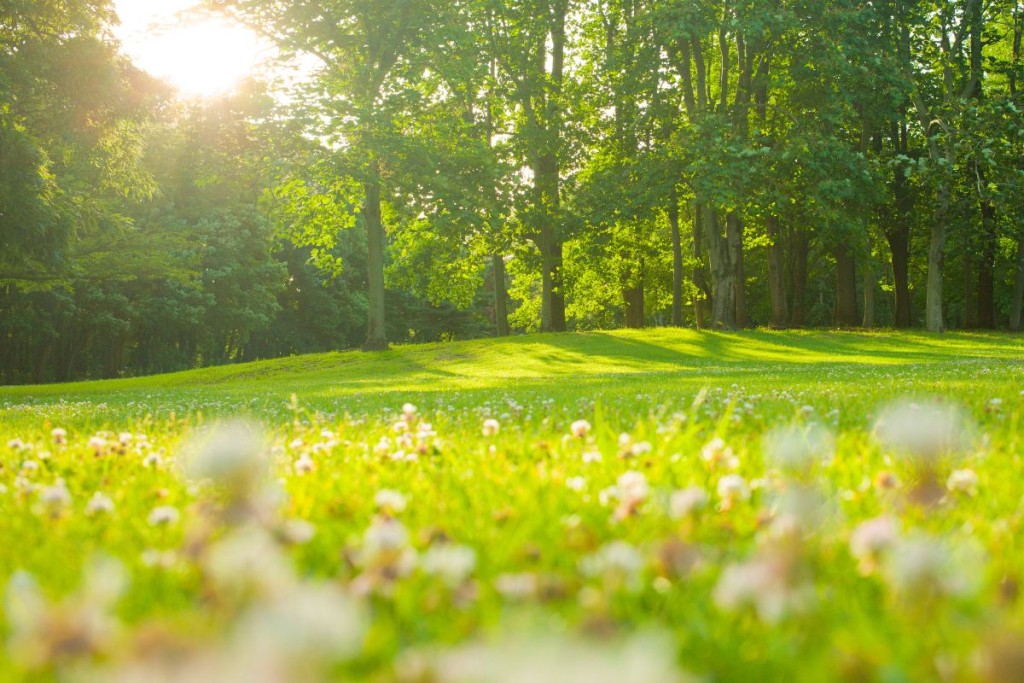
We often hear that lawns require a lot of water, fertilizer, and pesticides to maintain. This is true if you want a perfect lawn, as often valued by our neighbors to the south. However, in most Canadian provinces, attitudes are very different, largely due to regulations on pesticide use that have been in place for the past 20 years. In Quebec, the concept of sustainable lawns emerged nearly 15 years ago and was quickly adopted by municipalities, businesses, and consumers.

The Sustainable Lawn
But what exactly is a sustainable lawn? It is a lawn that:
- requires less human intervention following the adoption of environmentally friendly best practices during its implementation and maintenance;
- can support a variety of plants, whether naturally occurring, sown or planted intentionally;
- is more resilient to insects and diseases and limits the establishment of undesirable plants;
- is healthy and wholesome, whose overall appearance may not be perfect but which fully fulfills its intended functions (environmental, safety, etc.).
Obviously, maintaining natural spaces and creating diverse landscapes with three layers of vegetation (grass, shrubs, and trees) are key to getting the most environmental benefits from plants. Sustainable lawns are often an integral part of these developments and contribute to these benefits, especially when compared to other inert surfaces that replace them (paving stones, concrete, etc.).

The Benefits of Sustainable Lawns
First, lawns are an affordable and quick ground cover. They can be used to cover bare soil almost instantly, reducing the risk of erosion and weed growth. They also require little maintenance, especially if you want a sustainable lawn. However, soil quality, which is often overlooked, is essential for achieving satisfactory results without too much work. To establish a lawn, it is recommended to have at least 6 inches (15 cm) of good quality topsoil (such as loam) once it has been lightly compacted. For lawns already established on poorer quality soil, the soil can be improved by applying a thin layer (1-2 cm, 1/2″) of compost annually, but this process can take several years to produce results.
Second, lawns allow rainwater to infiltrate the soil, which helps recharge groundwater and reduce pressure on municipal sewer systems. The root system of grasses is highly developed, which also helps remove certain contaminants from the water and improve its quality.
The Environmental Aspect
One of the often underestimated benefits of lawns is their ability to sequester atmospheric carbon. Lawns are constantly renewing themselves, meaning that stems, leaves, and roots die regularly and are replaced by new growth. For example, it is estimated that 40% of a lawn’s root system is renewed each year. Plant debris falls to the ground where it decomposes and is incorporated into organic matter. This helps stimulate microbial life and soil structure, creating optimal conditions for plant growth.

This organic matter is also very rich in carbon: it is estimated that lawns sequester as much atmospheric carbon as natural grasslands. Some researchers even argue that the soil under lawns is the largest carbon sink in urban areas. Of course, certain lawn maintenance practices, such as mowing and fertilizing, release carbon into the atmosphere. However, research analyzing the overall carbon flows in lawns shows that they are generally net sinks, meaning they accumulate more carbon than their maintenance emits. This carbon sink effect is even greater when less intensive maintenance practices are used, such as adopting a sustainable lawn approach.
A Solution to Urban Heat Islands
Lawn also helps combat urban heat islands in two ways. First, by evaporating water from the soil, lawn cools the surrounding air through a process called evapotranspiration. Second, lawns are highly effective at reflecting energy from the sun; in more scientific terms, they have a high albedo. This prevents energy from accumulating in the soil in the form of heat and being re-emitted during the night, thereby reducing nighttime temperatures. Obviously, the use of large trees to provide shade remains the preferred method for combating urban heat islands, but choosing a lawn is still preferable to an inert surface such as artificial turf, concrete, or asphalt.

In conclusion, adopting sustainable lawn principles is beneficial both for citizens, who can reduce the time they spend maintaining their lawns, and for the population as a whole, who can enjoy the environmental benefits offered by this type of lawn.