


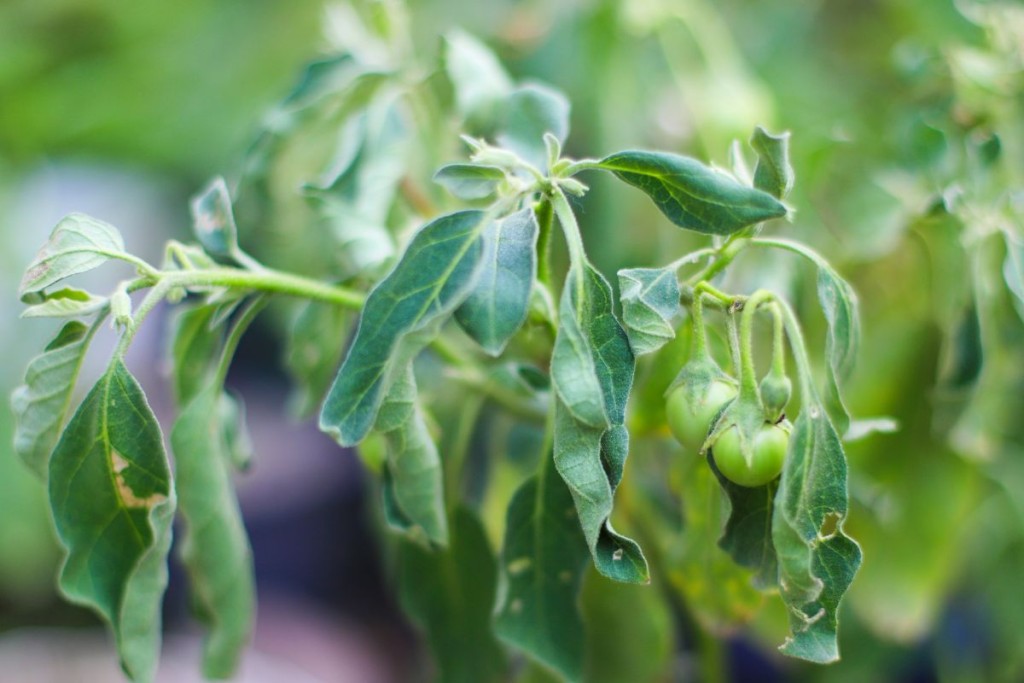
Are the stems of your peonies too weak and their flowers ending up with their heads in the mud? Are your yarrow plants producing lots of foliage but hardly any flowers? Is your rhododendron turning yellow despite all your care?
Plants in your garden can experience all kinds of difficult situations: yellowing leaves, brown or black spots, dried edges, weak or stretched stems, no or poor flowering, slow growth, repeated wilting despite watering, premature leaf drop… and the list goes on.

When faced with these symptoms, the instinctive reaction is often to look for a quick fix: what product should I use? What remedy should I apply? But in most cases, these visible signs are just the tip of the iceberg. They hide a deeper problem.
Before taking action, it is best to take a step back—sometimes literally—and examine the situation methodically. After observing the visible signs, but before trying to eliminate the symptoms, ask yourself this question: what is the real cause of the problem? And above all: is this plant really in the right place?
The Right Plant in the Right Place
We often hear the expression “the right plant in the right place”. This means choosing a plant based on the conditions in your garden—or, more precisely, each corner of your garden, as conditions can vary from place to place.

The main things to look out for are:
- hardiness (adaptation to winter cold)
- light (sun, partial shade, shade),
- natural soil moisture (dry, cool, moist, wet)
- soil drainage (well-drained, poorly drained)
- soil type (clay, sandy, loamy, rocky, etc.),
- organic matter content (rich, poor, average),
- soil pH (acidic, neutral, or alkaline).
In practice, this means first observing the existing conditions and then choosing plants that tolerate or thrive in them, rather than trying to modify the soil, light, or humidity to suit the needs of an unsuitable plant.
Verify Growing Conditions
The principle of “right plant in the right place” can also be applied to diagnose a problem. Simply observe the actual conditions where the plant is growing—light, soil type, humidity, etc.—and compare them to the conditions it prefers. If they don’t match, this could well be the cause of its symptoms. Taking a step back often helps you see if the plant is out of sync with its environment.

It’s not the solution to all garden problems, but it’s often the main one. That’s why you should always start with this step before looking for more complex (and sometimes unnecessary) treatments, products, or remedies.
Now let’s look at the most common symptoms for each growing condition: they may help you understand what is wrong with a plant that is losing leaves.
Hardiness
Hardiness refers to a plant’s ability to survive winter cold in a given region. Each plant is associated with a minimum hardiness zone, which corresponds to the coldest temperature it can endure without significant damage. These zones are established by government agencies to guide gardeners.
In Canada, hardiness zones range from 0 (coldest) to 8 (warmest), based on several factors: minimum winter temperatures, length of growing season, snowfall, winds, etc.

In the United States, the Department of Agriculture (USDA) uses a system based solely on average minimum annual temperatures, ranging from zone 1 (very cold) to zone 13 (very hot).
In general, a given plant should be grown in a zone equal to or higher than its minimum recommended zone. If planted in a colder zone, it may not survive the winter or may suffer damage that weakens its growth or flowering. Even within its zone, it may suffer if conditions are extreme (e.g., winter without snow cover, sudden frost at bud break).
Symptoms in a Non-Hardy or Marginally Hardy Plant
- Dead buds or branches in spring
- Stems cracked, blackened, or soft at the base
- Leaves absent or appearing very late in spring
- Significantly reduced or no flowering
- Shoots at the base and no growth on the main stems
- Slow or irregular growth, even in favorable seasons
- Sudden death after a particularly cold or snowless winter
Light Intensity
When a plant does not receive the right amount of light, its entire metabolism suffers. Light is the driving force behind photosynthesis, the process by which plants use light energy to feed, grow, flower, and defend themselves. If there is not enough light, the plant tries to compensate by stretching its stems in search of light, developing larger but thinner leaves, slowing its growth, and even stopping flowering or fruiting. Conversely, if it receives too much light, especially direct light that is more intense than it can tolerate, its cells can be damaged. It then tries to protect itself by closing its stomata (which slows down photosynthesis), reducing its leaf surface area, or producing protective pigments such as anthocyanins (reddish leaves). If the stress is too great, the tissues burn, dehydrate, or die outright.

Symptoms of excessive light exposure
- Leaves that turn pale or burn (brown spots, dry crusts)
- Leaf edges dried out or curled inward
- Rapid wilting in the middle of the day, even if the soil is moist
- Crisp or crackling leaves
- Leaves falling prematurely
- Discoloration or red/purple spots (light stress)
- Slow or stopped growth
Symptoms of a lack of light
- Long, thin, weak stems (etiolation)
- Plant leaning towards available light
- Little or no flowering
- Very late or incomplete flowering
- Flower buds abort or fall off
- Leaves larger than normal, thin and pale green
- Dense foliage, but soft and easily attacked by disease
- Slow growth or production of few new leaves
- Lower leaves turn yellow and fall off (as the plant becomes exhausted)
Soil Moisture
Water is essential for plant survival: it transports nutrients, keeps tissues hydrated, fuels photosynthesis, and regulates temperature. When soil moisture is not suitable for the plant, its system becomes disrupted. In soil that is too dry, the roots struggle to absorb water, the tissues dehydrate and the plant closes its stomata to limit losses, which slows down its growth. In soil that is too wet, the problem is just as serious: oxygen becomes scarce, the roots “suffocate” and then rot, preventing water absorption and creating stress… which looks very much like a lack of water!
Symptoms of overly dry soil
- Leaves curling inward
- Dull, limp, or brittle foliage
- Stems wilting at the end of the day, even if they recover at night
- Brown or crispy leaf edges
- Slow growth
- Premature flower and leaf drop
- Interrupted or aborted flowering
- Smaller than normal leaves

Symptoms of overly moist soil
- Yellow leaves (often starting at the bottom of the plant)
- Soft or blackened stems at the base
- Slowed or stopped growth
- Mold appearing on the soil
- Bad odors around the roots (sign of rot)
- Wilting, even if the soil is soggy
- Brown or slimy roots
Soil drainage
Don’t confuse natural soil moisture with drainage. Moisture describes what the plant receives on a regular basis: some plants prefer constantly cool or moist soil, while others tolerate dry periods better. Drainage refers to how quickly excess water drains away after rain or watering. Soil can be moist but well-drained (like rich forest soil), or dry but poorly drained (like compacted clay that remains waterlogged deep down). The symptoms can sometimes be similar—wilting, yellowing, slow growth—but the underlying cause is different. This is why it is important to observe the soil at depth, not just the surface.
Soil Type
Soil type mainly refers to its granulometric composition, i.e. the relative proportion of sand, silt, and clay. This composition determines the soil’s ability to retain water, allow air to circulate, store or release nutrients, and allow roots to develop properly. For example, very clayey soil will retain water but may be poorly aerated, which can cause root asphyxia. Sandy soil, on the other hand, dries out quickly and does not retain nutrients well, which literally starves the plant. When the soil is unsuitable for its needs, the plant is under constant stress. It absorbs water or nutrients poorly, has difficulty breathing through its roots, and may struggle to anchor itself. Its metabolism slows down: growth stagnates, flowering is delayed or fails, and the entire foliage often ends up withering.

Symptoms of a plant in unsuitable soil:
- Slow or stunted growth
- Little or no flowering, or flowering fails
- Absence or poor quality of fruit
- Generalized or localized yellowing of foliage
- Brown, dry, or burnt leaf edges
- Pale or discolored foliage (deficiencies)
- Weak, curved, or lying stems
- Wilting even after watering
- Poorly developed, curled, or rotten roots
- Plant difficult to establish or does not hold well in the soil
- Sudden death of the plant after a period of stress
Fertility
Organic matter is one of the key elements of soil health. Composed of decomposing plant and animal residues (dead leaves, compost, manure, etc.), it nourishes soil microorganisms, improves soil structure, increases its water and nutrient retention capacity, and facilitates the absorption of minerals by roots. Soil rich in organic matter is generally more alive, more stable, and better equipped to support plant growth… provided that the plants are suited to this type of soil.

Not all plants need the same level of fertility. Some species thrive in rich, deep, well-nourished soils, while others prefer poor, well-drained, even rocky environments. Excess organic matter can harm plants growing in dry or thin soil: their roots may rot, or the plant may produce too much foliage at the expense of flowering or fruiting. Conversely, a hungry plant placed in soil that is too poor will show signs of weakness and deficiency. There is therefore no such thing as good or bad soil: only plants that are well or poorly adapted to the richness of the soil.
Symptoms of poor soil
- Slow or stunted growth
- Small, pale or yellowing leaves
- Thin stems with few branches
- No flowers, few flowers or very short flowering period
- Few fruits, small or misshapen
- Plant quickly exhausts itself after flowering
- Sparse foliage or premature leaf fall
- Deficiency symptoms (discolored leaves, visible veins, etc.)
Symptoms of overly rich soil
- Abundant foliage, but no or very few flowers
- Long, brittle stems
- Increased susceptibility to fungal diseases (powdery mildew, downy mildew, etc.)
- Roots rot or growth slows if the soil remains too moist
- Plant droops or becomes unbalanced (excessive foliage growth)
- Leaves deformed or stained due to excess of certain nutrients
Soil pH
Soil pH directly influences nutrient availability. In acidic soil, elements such as phosphorus, calcium, and magnesium become difficult to absorb, while metals such as aluminum can reach toxic levels. In alkaline soil, elements such as iron, zinc, and copper become less accessible. Plants do not change their needs, but their ability to absorb nutrients varies depending on the pH. Some plants have developed strategies to function in specific conditions. In unsuitable soil, plants struggle to feed, grow, or flower, and often end up dying despite fertilizer inputs. It is therefore better to choose plants that are suited to the natural pH of your soil than to try to change it in the long term.

Symptoms of an unsuitable pH level
- Young leaves turning yellow between the veins (iron chlorosis)
- Leaves pale despite regular fertilization
- Slow or stagnant growth
- Rare or no flowering
- Poorly developed roots
- Appearance of necrosis (brown or black spots)
- Leaves falling prematurely
- Increased susceptibility to diseases and pests
When All Problems Look Alike
Have you noticed that many symptoms are similar regardless of the condition causing them? Whether it’s a lack of light, overly dry soil, a nutrient deficiency, or an inadequate pH level, the same signs are often observed: yellow leaves, slow growth, lack of flowering, leaf drop, etc.
This is because plants often respond to stress in the same way: they slow down photosynthesis, close their stomata, sacrifice older leaves to concentrate their resources, or produce protective pigments. These are general survival strategies—regardless of the source of the problem.

And since stress factors often combine, the effects add up and blur the lines. Poorly suited soil, for example, can interfere with water or mineral absorption, producing symptoms very similar to those of inadequate watering or overly acidic soil.
Symptoms alone are not always enough to make a diagnosis: you always have to go back to basics and check the growing conditions. That is where the real answer lies in most cases.
What Should You Do if a Plant Is Not in the Right Place?
If the conditions in your garden do not meet the needs of your plant, you have two choices: adapt the plant… or adapt the location. Sometimes, simply moving a plant is enough to change everything. A perennial that is suffocating in the shade can thrive in the sun. A shrub that turns yellow in chalky soil will regain its vigor in a more acidic spot. In other cases, you will have to make some compromises: lighten heavy soil with compost, improve drainage, install a watering system, etc.
However, I do not recommend changing the natural conditions of a location. You can cut a few tree branches to let in a little more light, but they will grow back. You can acidify chalky soil with sulfur, but the bedrock will continue to influence the pH, which will eventually return to its original level. You can enrich sandy soil with organic matter, but this will quickly be washed away by rain. In short, these are temporary adjustments that must be repeated over and over again.

That said, I wouldn’t blame you if you acidified your soil a little to plant one or two rhododendrons. But try to resist the urge to create an entire garden of acid-loving plants in alkaline soil!
Pursue the Investigation Further
What if, despite all this, your plant continues to wither even though everything seems to be in order? You’ll need to investigate a little further. Sometimes the problem isn’t the growing conditions, but invisible stress, a discreet pest, a developing disease… or a past mistake. Don’t panic: in the next article, we’ll help you examine these other possibilities with a magnifying glass in hand.