

In a recent post on this blog, I explain that combating Japanese knotweed is a difficult task and that you therefore need to choose your battles carefully. If you are determined to take it on, some methods yield better results than others, provided you are (very) patient and determined. Also, aggressive control only makes sense if you tackle the entire clone, not just the part that is growing on your property.
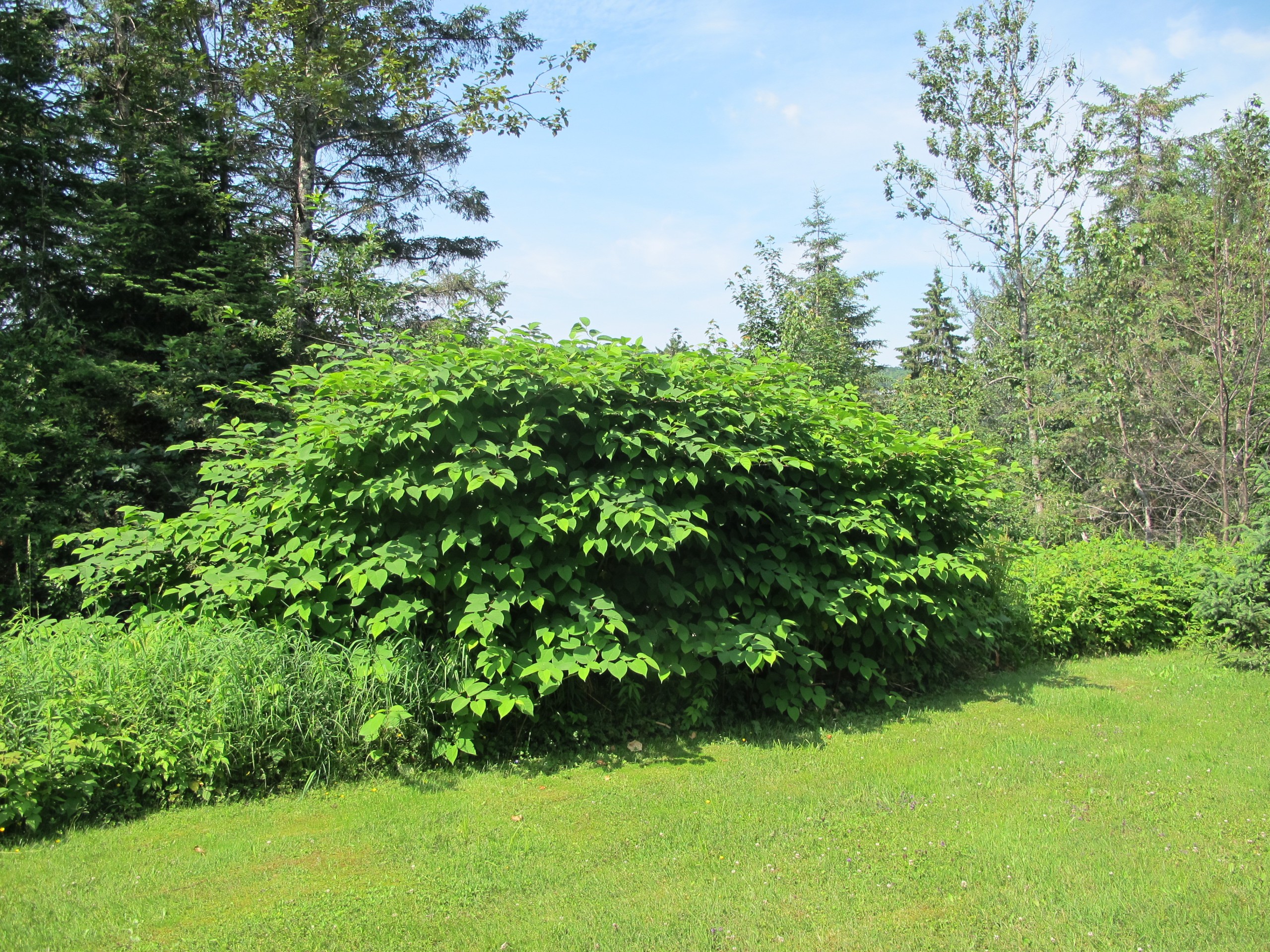
There will be no miracles
As a specialist in invasive plants, I am often asked about miracle methods of control. These methods often have the following in common: 1) they are technological (which makes them seem more serious), 2) they are expensive (so they must work), and 3) they solve the problem quickly and effortlessly (and that’s the miracle).
If these methods existed, we would know about them. In the case of Japanese knotweed, the “miracles” would come from machines that scald or electrocute the roots, microbes that remove oxygen from the soil, repeated mowing of the stems every week to deplete the rhizomes’ reserves, saline solutions that, when sprayed on the foliage, act as herbicides, or hungry goats that make short work of the plant.
These solutions sometimes have an immediate effect on the surface, but they do not effectively address the heart of the problem, which is the underground rhizomes that represent most of the summer biomass. Mowing or grazing can prevent a clone from growing and reduce its vigor, but neither can eradicate it. If that is your goal, you need to move on to something else.
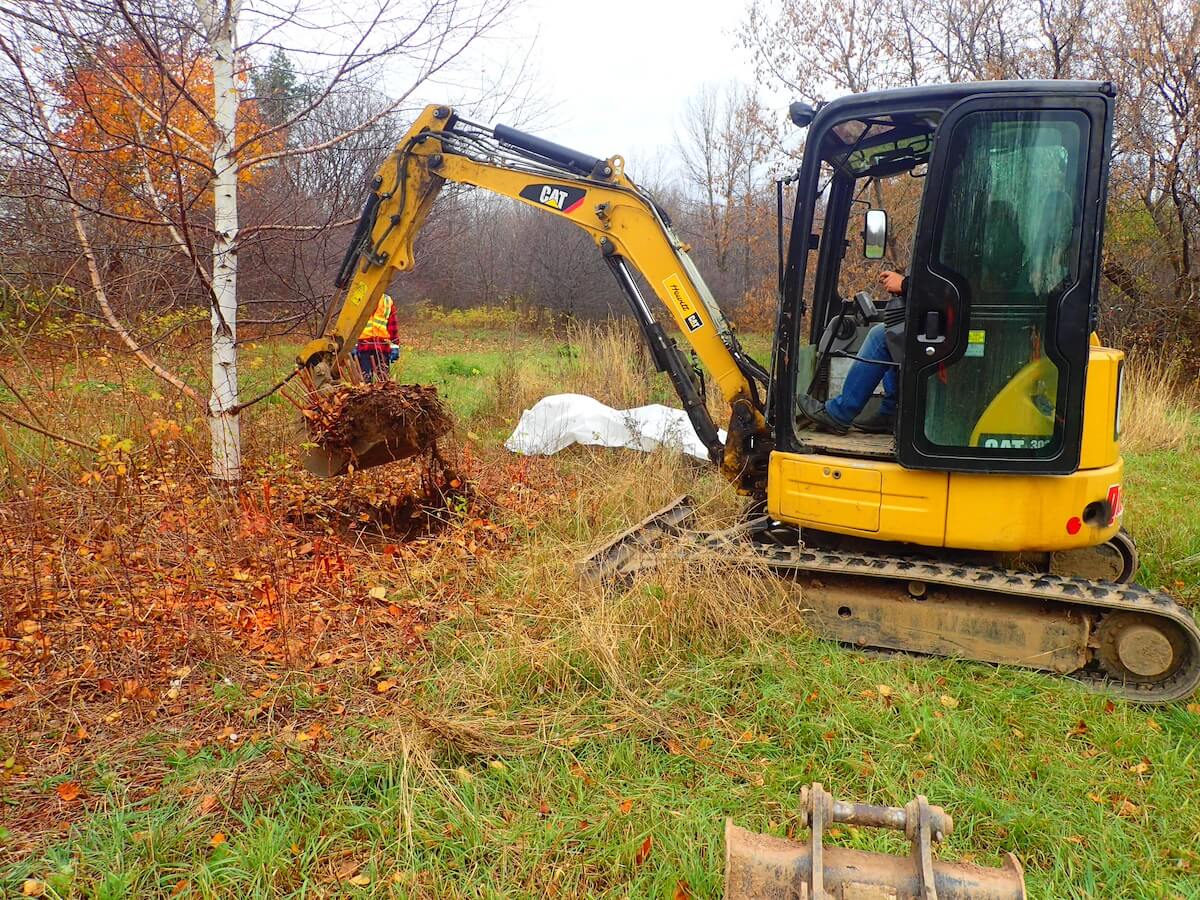
Excavation: Effective, but Expensive
The only sure and quick way to get rid of a Japanese knotweed clone is to excavate the soil where the rhizomes are located. A very recent Swiss study (not yet published) shows that in sandy loam, i.e., in more or less porous soil, these rhizomes are almost all concentrated in the top 60 centimeters of soil, and never more than 80 cm (32″) deep. They are probably even shallower in compact clay soil. However, Nicolas Trottier of Quadra Environnement points out that the rhizomes of a clone located near a foundation tend to penetrate a little deeper. In any case, in most cases, you need to remove about 1 m of soil under the clone, with a safety strip of 2-3 m beyond the clone to get the stray rhizomes.
With an excavator, it’s a breeze, although you have to be careful to clean the machinery afterwards. But be careful: you will have to dispose of the soil (a lot of it!), which, since it contains the rhizomes of an invasive plant, is legally considered contaminated material in Quebec. Since it would be irresponsible and illegal to dump it in nature (or at your neighbor’s house!), you will have to find a landfill site authorized to receive it and pay a hefty bill to get rid of it, not to mention the cost of transportation. Added to this are the costs of filling in the hole and redoing the landscaping.
In Practice
Very few people resort to this extreme solution, but it is relatively common on large construction sites (such as roadworks), where most of the time the excavated material is simply buried on site at a considerable depth.

Herbicides: A Heavy Blow, but Never the Final Knockout
For a herbicide to be truly effective against Japanese knotweed, it must be systemic. It must therefore penetrate the vessels and be carried by the sap to the rhizomes. The best known and legally authorized herbicide in Canada for Japanese knotweed is glyphosate. When sprayed at the right time (summer, fall) and several times, at the correct dosage and by qualified and certified personnel, glyphosate can eliminate more than 90% of the biomass. Injecting the herbicide into the stems does not give better results. It is tedious and requires more product than simple spraying, so it is not recommended.
Isn’t That the Miracle We’ve Been Waiting For?
Yes and no. Despite this impressive result, it is rarely possible to eradicate a large clone using glyphosate alone. The fight must then continue, in particular by pulling up the weeds, otherwise everything will have to be started again a few years later. Like all herbicides, even organic ones, glyphosate is a toxic product. However, if the clone is extensive, significant quantities must be used for several years (especially the first year) for its effect to be lasting. Synthetic herbicides are banned in several municipalities, which makes this solution obsolete. Finally, since it is necessary to hire a specialized company that uses commercial glyphosate solutions (domestic products are not powerful enough), spraying is expensive and is not always done properly.
In Practice
People are not always satisfied with herbicide solutions after use. Many question the environmental cost, not to mention the health cost. It only makes sense when used in combination with other methods. And please, leave homemade herbicides such as bleach, coarse salt, or hydrocarbons aside: they are illegal and worse for the environment than synthetic herbicides.
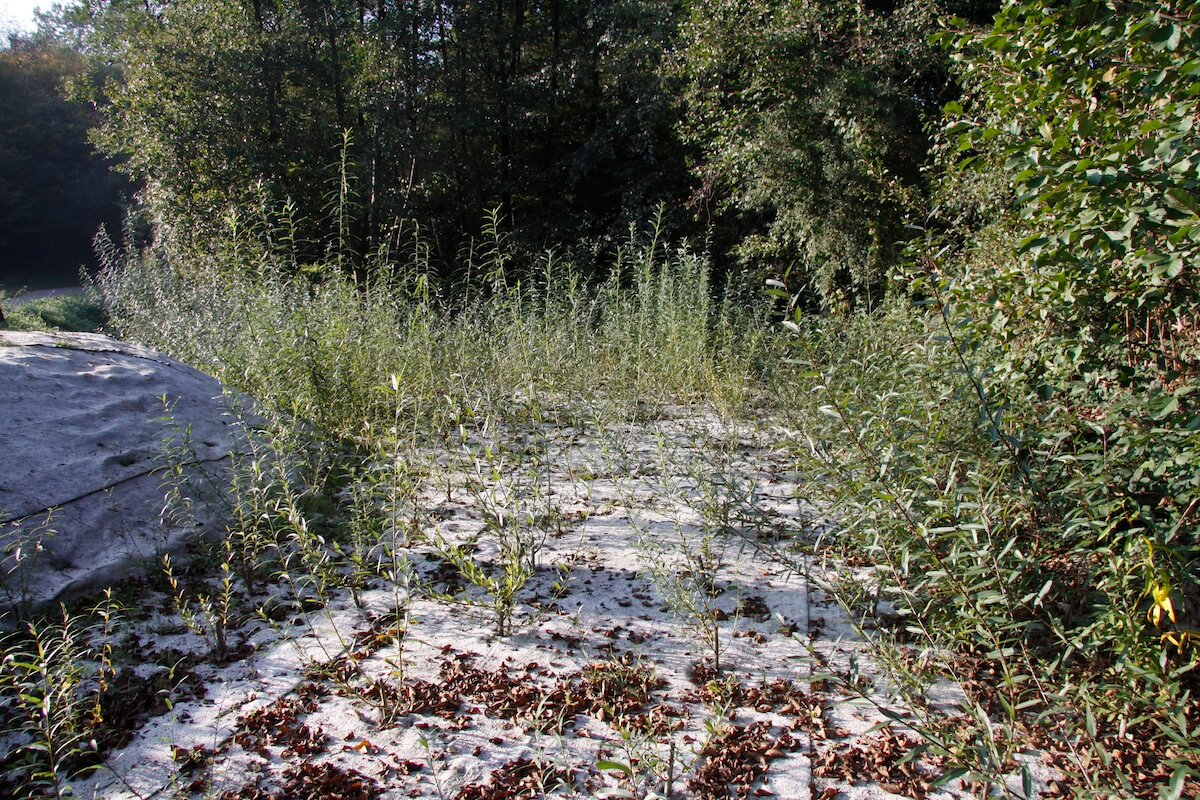
Tarping: For the Very Patient
I have already given my opinion in this blog on covering with geomembrane (waterproof plastic), a solution that I consider neither effective nor environmentally responsible in the case of Japanese knotweed. Covering with permeable geotextile is a little more interesting. After preparing the ground (repeated mowing in year 1), a thick geotextile is spread over the clone (year 2), then fast-growing willow cuttings are planted through it (year 3). Once the willows have reached their full height (year 5 or 6?), the geotextile is removed and plant competition is allowed to do its work to smother the inevitable regrowth of knotweed, which, as you can imagine, will not allow itself to be eliminated without fighting back.
In Practice
This demanding method has not yet been widely tested, although there are some convincing examples in France. It requires a great deal of care and regular monitoring to remove stems that infiltrate the geotextile or grow around the edges. High-quality geotextile is an expensive industrial product that will end up in a landfill. Fast-growing shrub willows are scarce on the Quebec market, and seedlings do not always survive planting, especially in dry conditions, so they must be replaced frequently. If you are interested in this solution, it is best to use the services of the few companies that have mastered its complexity.
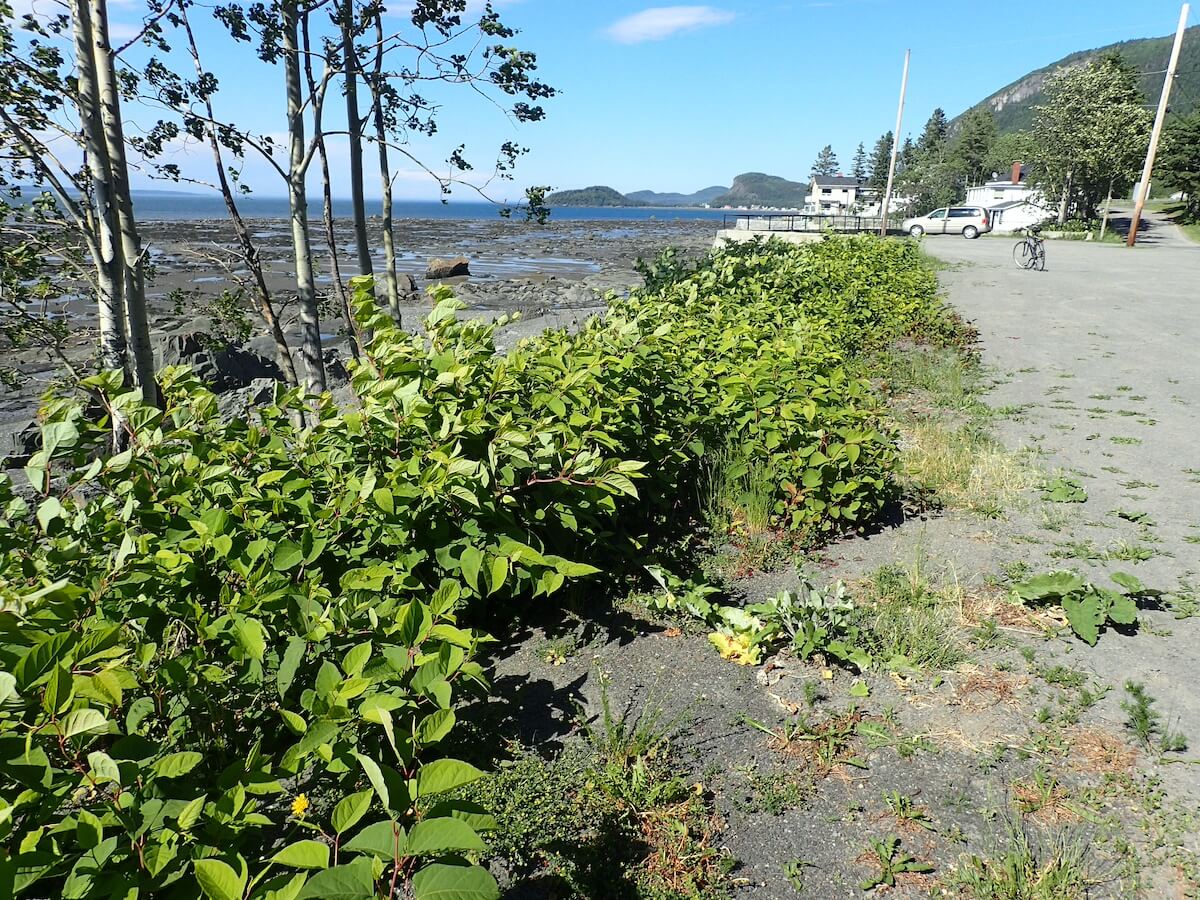

Uprooting: For the Very, Very Patient
Pulling up the stems that emerge in spring is not very effective if you only remove the above-ground part. However, removing the rhizomes near the surface with a shovel at the same time significantly improves effectiveness. If you continue this operation diligently during the warm season for many years, you will eventually eradicate the plant. I know it’s hard to believe, but I know of several examples of properties where persistent citizens have achieved this result.
In Practice
If it works, you have to be realistic. Unless you call on all your neighbors to help, the area of the clone to be eliminated cannot exceed a few dozen square meters, otherwise the effort becomes Herculean. The work is particularly arduous in the first two years, but then the effort decreases exponentially. An old clone requires a good ten years of work before the exercise can be completed, and you can never let your guard down. So think carefully before you decide to do it.
Confinement: A Solution to Be Tested
As we have just seen, eradicating a Japanese knotweed clone is an experience that may discourage many. Is your clone really that troublesome? If you simply want to prevent it from spreading, there are two ways to confine it to its location: either by planting a very dense belt of shrubs (dogwoods, willows) around its perimeter, or by inserting a thick, rigid membrane vertically into the soil to a depth of one meter to block the lateral spread of the rhizomes, or preferably both.
In Practice
Although I regularly suggest this strategy, I don’t know of many cases where it has been implemented. Rigid membrane is an expensive industrial product. To insert it into the ground, you have to dig a narrow trench with a small mechanical shovel, which is not that easy to do. Since the solution is experimental, we don’t know if it really works, even though the few trials conducted in Quebec are encouraging.
So, are you still interested in getting rid of your Japanese knotweed? Share your experiences in this blog to help improve this section.
Thanks to André Evette (National Research Institute for Agriculture, Food, and the Environment) and Nicolas Trottier (Quadra Environnement) for their comments on this section.