


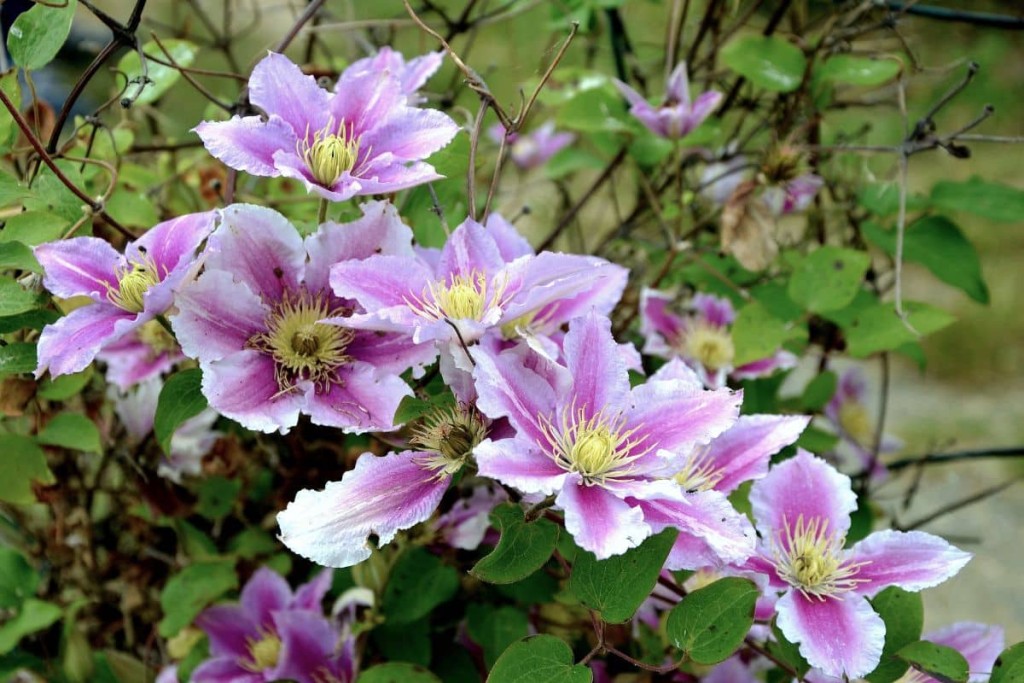
Clematis experts classify into three pruning groups. You’re supposed to prune group 1 and 2 clematis after they bloom in the spring, because their flower buds are formed the previous year. If you prune them in late fall or early spring, you’d be eliminating the next year’s first flowers. Group 3 clematis, on the other hand, bloom on new wood. You’re told to prune these severely in the fall or early spring. If you prune them too late in the spring, you’ll be removing stems with flower buds and therefore they won’t bloom.
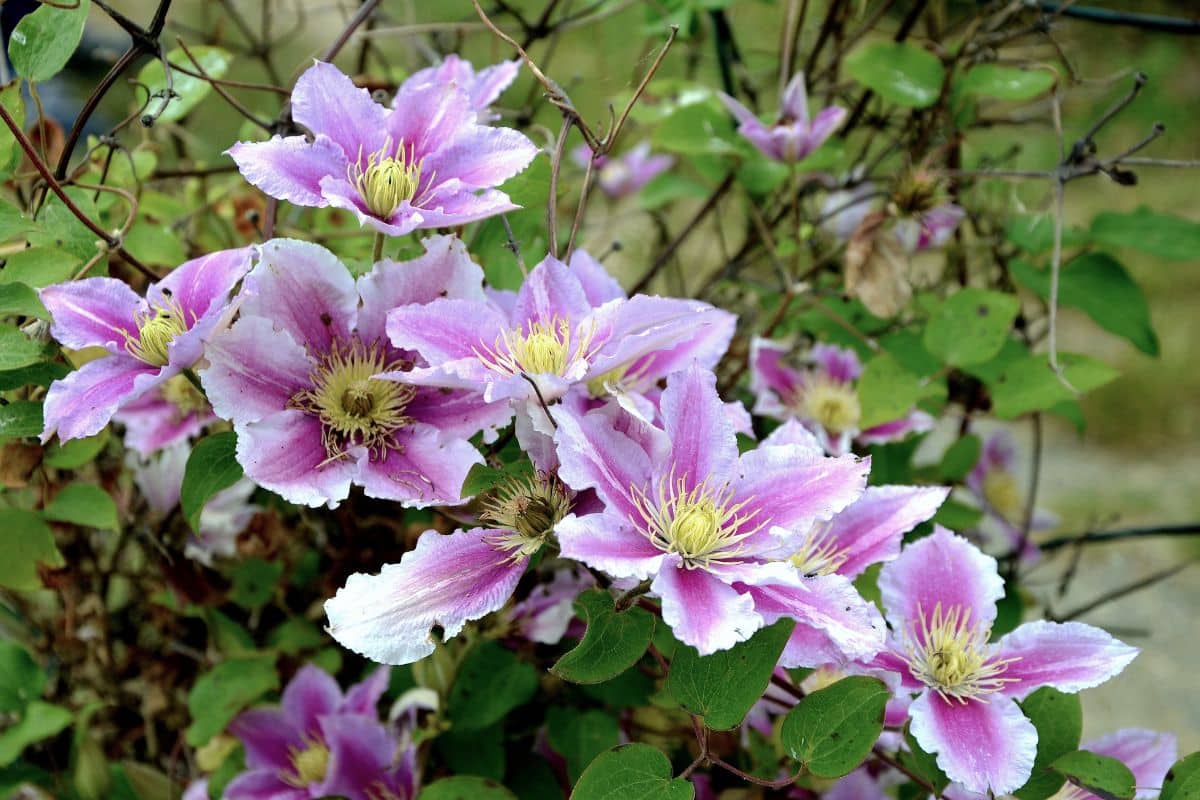
Which Clematis Should You Prune?
Fine enough, but what do you do if you don’t know what group your clematis belong to? I suggest taking a laidback gardener attitude towards the situation and not pruning at all! That way, whether they bloom on new wood or old, you won’t be accidentally removing their upcoming flowers.

Over time, though, dead stems will start to accumulate. If this bothers you, there is a period when it is safe to prune any type of clematis: in mid-spring, when the new buds begin to swell and the first leaves appear. It’s the only moment when It is easy to distinguish between living and dead stems. At that time, you simply have to remove any stem that shows no sign of life.
Simple, isn’t it?
This text was first published on this blog on October 7, 2015. It has been revised and its layout adapted.