
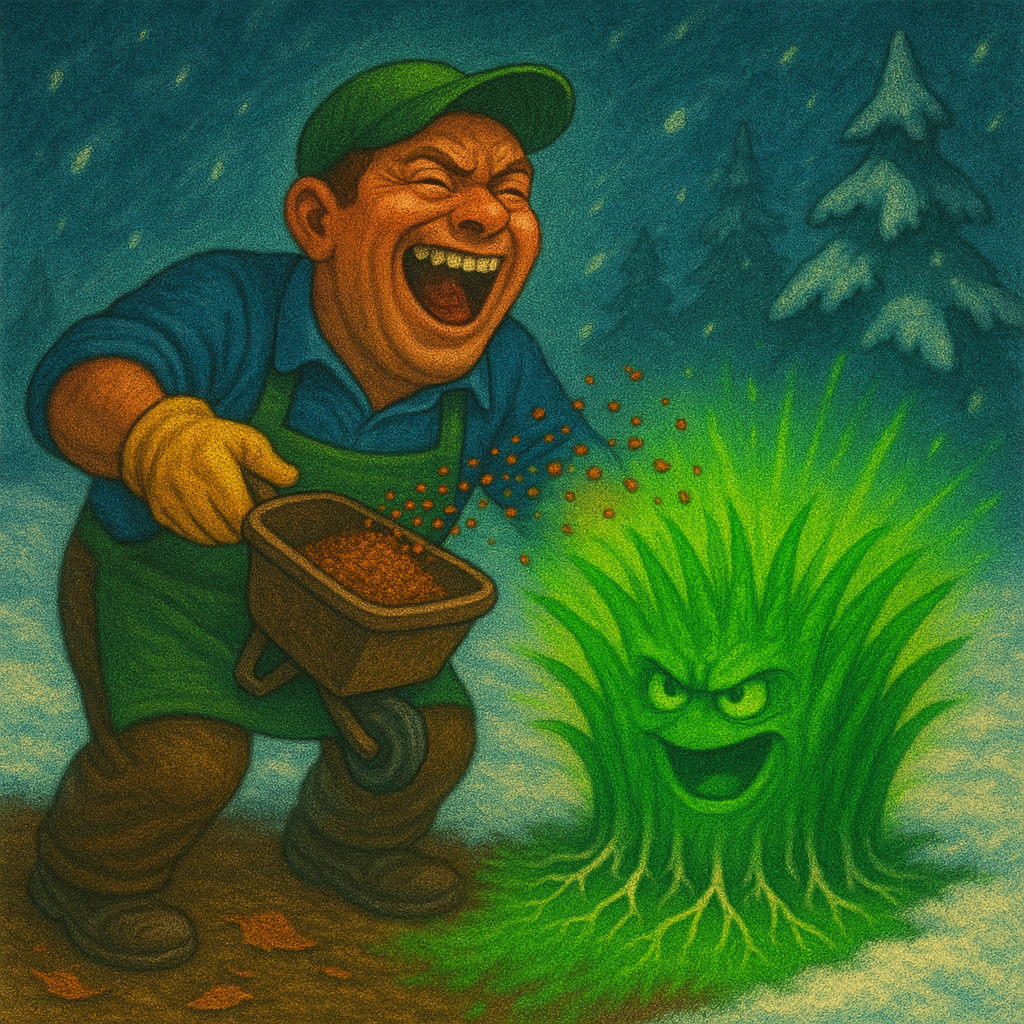
Prepare your garden now for a miraculous spring with fall fertilizer!
Why let nature do the work for free when you can pay to do it yourself?
This fall, your lawn and plants deserve the ultimate luxury:
- Turbocharged winter resistance!
- Super-strong root system!!
- A lawn so green it will melt the snow!!!
Fall fertilizer: because nature is great… but sales are better.
Does the beginning of this text sound a little sarcastic? Of course! But isn’t it a tad ironic that such a product exists? In the fall, most plants go dormant: their growth slows down, sometimes stopping completely. Do they really need fertilizer at this time?
The “Logic” of Fall Fertilizers
It is suggested that the potassium contained in fall fertilizers (the famous “K” in N-P-K) helps plants tolerate the cold better. After all, potassium does play a role in cellular function: it helps thicken cell walls, regulate water circulation, and improve overall tissue resistance. In theory, better hydrated and stronger cells should be less vulnerable to the repeated freezing and thawing of winter.
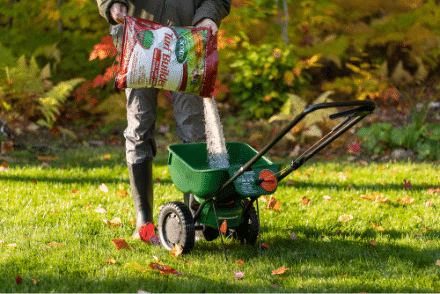
In addition, we know that most perennials, shrubs, and trees slow down their above-ground growth (leaves, stems, flowers) in the fall. Their energy is redirected to the roots, where they store reserves to get through the winter and restart in the spring. Since potassium is often associated with root development and is found in fall fertilizer formulations, it would be logical to believe that it helps strengthen root systems.
And who doesn’t want a bright green lawn in the spring, while the neighbors’ lawns are still yellow? If your plants are more resistant to stress and their roots are full of reserves thanks to fall fertilizer, they should inevitably restart faster in the spring… right?
Misunderstanding
All this seems logical, but when you dig deeper, you realize that it is actually a misunderstanding of plant physiology and the nature of minerals and soils.
Dormancy Blocks Assimilation
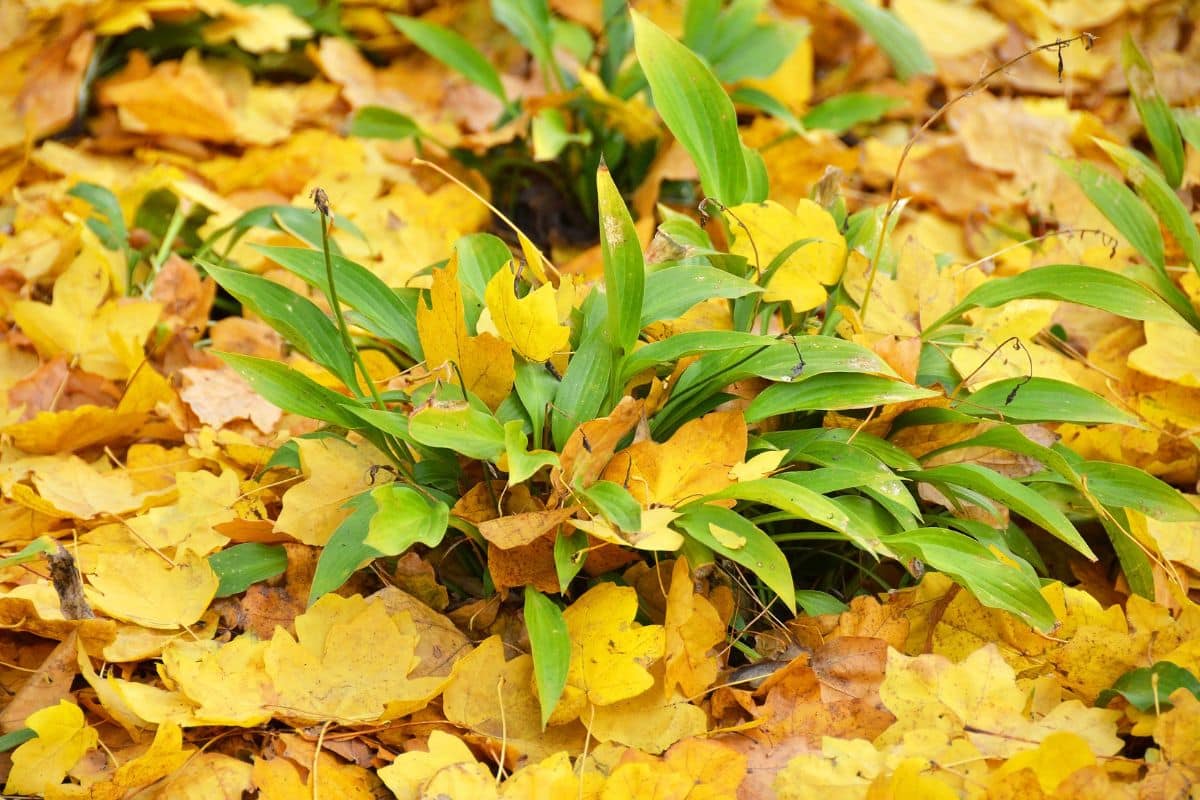
In the fall, when temperatures drop and days get shorter, most plants go dormant. Their metabolism slows down dramatically: they absorb very few nutrients, even if they are added to the soil. In other words, potassium remains available, but plants hardly use it.
The Real Mechanisms of Cold Resistance
Winter hardiness does not come from a bag of fertilizer, but from each species’ internal program. This is called hardiness, the genetic ability of a plant to withstand the cold in a given region. When the days grow shorter and the nights grow colder, the plant prepares for winter. They produce their own natural defenses: sugars and starches that act as antifreeze by lowering the freezing point of cells, as well as proteins and compounds (such as proline) that protect membranes from frost damage. Potassium can help keep cells well hydrated and strong, but it does not trigger these mechanisms.
What Plants Really Store
In the fall, plants take advantage of sunlight while it is available to perform photosynthesis. Leaves convert light energy into sugars (glucose), which can then be converted into starch, a more stable form of storage. These carbohydrates are the real “fuel” for plants: they are transported to the roots, stems, or bulbs, where they accumulate like provisions in a pantry. It is this stockpile that will allow the plant to survive the winter and restart quickly in the spring, even before its new leaves are fully active.
Potassium works behind the scenes: it helps transport sugars through the plant’s tissues (in the phloem) and contributes to the water balance in cells. In other words, it facilitates the movement and use of reserves, but it does not create these sugars. Without photosynthesis and without a seasonal trigger, the plant does not accumulate reserves, regardless of the amount of potassium available in the soil.
Most Soils Already Contains Potassium.
In the vast majority of garden soils, potassium is already present in sufficient quantities. True potassium deficiencies are rare. Adding a potassium-rich fall fertilizer therefore does not do much good: the plants were not lacking it.
Spring recovery driven by reserves and nitrogen
We often hear that fall fertilizer guarantees a lush green lawn as soon as the snow melts. In reality, plants don’t start growing faster because potassium or other nutrients were added to the soil in the fall. Their spring regrowth is dictated by light and temperature: they start growing again when conditions are favorable, neither before nor after. What they really store to get through the winter are sugars and starches produced by photosynthesis, not nutrients from the fertilizer bag. The idea of a miraculously greener spring is therefore more a matter of marketing than biology.

What if fall fertilizer contains nitrogen? In some cases, a small amount may remain in the soil until spring, but most of it will be washed away by rain, transformed by microbes, or lost before plants can benefit from it. In addition, most soils already contain enough natural nitrogen, released by the decomposition of organic matter. In short, if the lawn turns green again in the spring, it is primarily due to natural reserves and the activity of soil microbes, not a bag of fertilizer applied in the fall.
So, Is There Really Anything We Can Do to Prepare Our Garden for Winter?
In the fall, organic amendments such as compost and mature manure are at their best. While plants slow down, soil life remains active as long as it doesn’t freeze. Microbes, fungi, and worms begin to break down the material, a process that will continue throughout the winter. By spring, nutrients are already available and the soil is better structured, protected against leaching and erosion.
Compost can, in fact, be used in any season to improve the soil, not just in the fall. Manure, on the other hand, requires more caution: when fresh, it is too concentrated in nitrogen, can burn young roots, and may even contain pathogenic bacteria. That is why it is recommended to apply it mainly in the fall, well before harvest, or to use composted manure to reduce these risks.
Mineral Amendments
Fall is also a good season for mineral amendments such as lime, rock dust, or ash. Their action is slow and requires several months of rain, snow, and freeze/thaw cycles to be effective. However, these products should never be applied blindly: a soil analysis will determine whether the pH really needs to be corrected or whether a mineral is actually lacking. Applied in the right place and at the right time, these amendments will work throughout the winter and will be available as soon as spring arrives, without any risk to young roots.
Fertilizer Versus Amendment
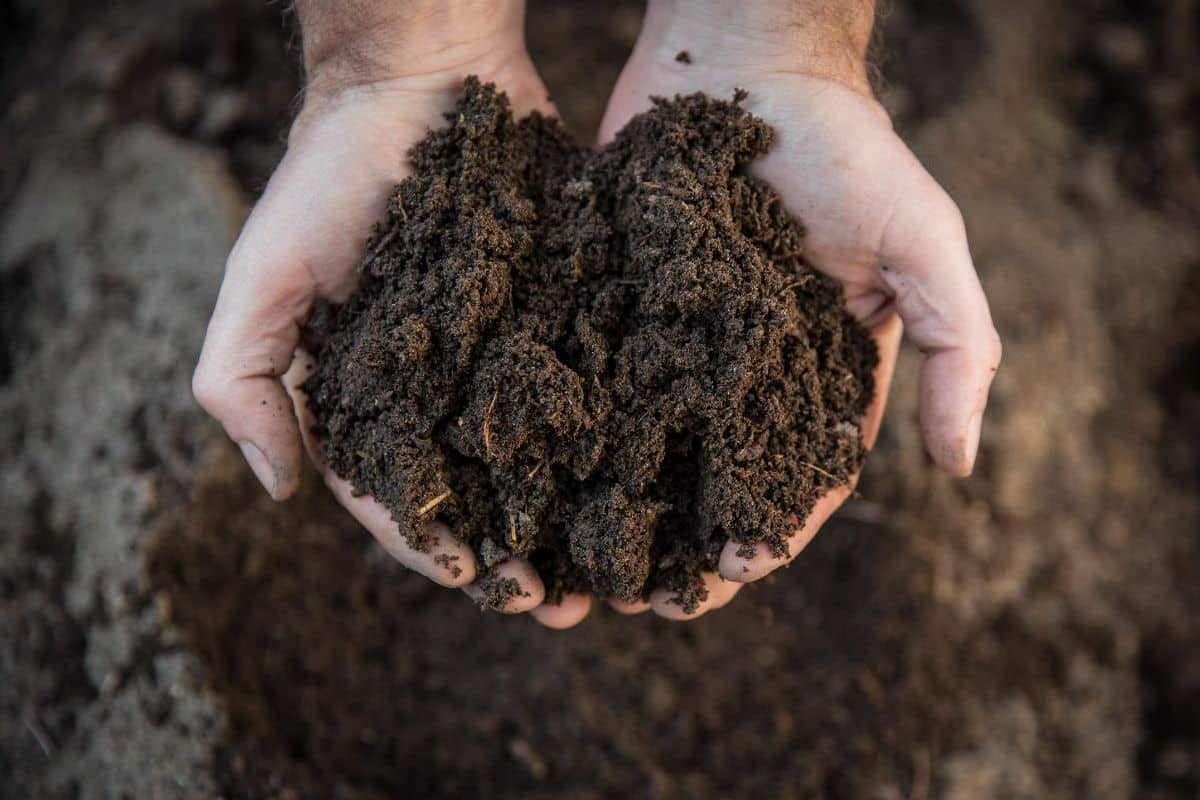
An amendment is primarily used to improve the soil itself. This includes compost, manure, lime, and rock dust. Its role is not to directly feed plants, but to correct soil structure, enrich microbial life, adjust pH, or increase overall long-term fertility.
Fertilizer, on the other hand, is intended to directly feed plants. Whether granular or liquid, it quickly provides nitrogen, phosphorus, potassium, and various trace elements to stimulate growth, flowering, or fruit production.
With ingredients such as composted manure, alfalfa, bone meal, seaweed, and leaf compost, many organic fertilizers fall halfway between fertilizer and soil amendment: they nourish both the soil and the plants, slowly releasing their nutrients while enriching soil life. However, according to the Canadian Food Inspection Agency, a product is called a fertilizer if it provides nutrients that can be directly assimilated by plants, with specific guarantees—the famous N-P-K numbers. Products that are intended to improve soil structure or life, whether organic or mineral, are classified as soil amendments. Thus, these natural products will be legally considered a fertilizer.
Laidback for a Better Winter Rest
Fortunately, we can avoid a lot of unnecessary work—whether it’s adding “fall fertilizer” or even soil amendments in many cases. In the vegetable garden, adding compost or manure is still beneficial, as crops are very demanding: they deplete the soil of minerals, which need to be replaced, and it may also be necessary to monitor the pH or correct certain deficiencies with mineral amendments.
But elsewhere in the garden, if you have chosen plants that are suited to the existing conditions, you can simply let nature take its course.
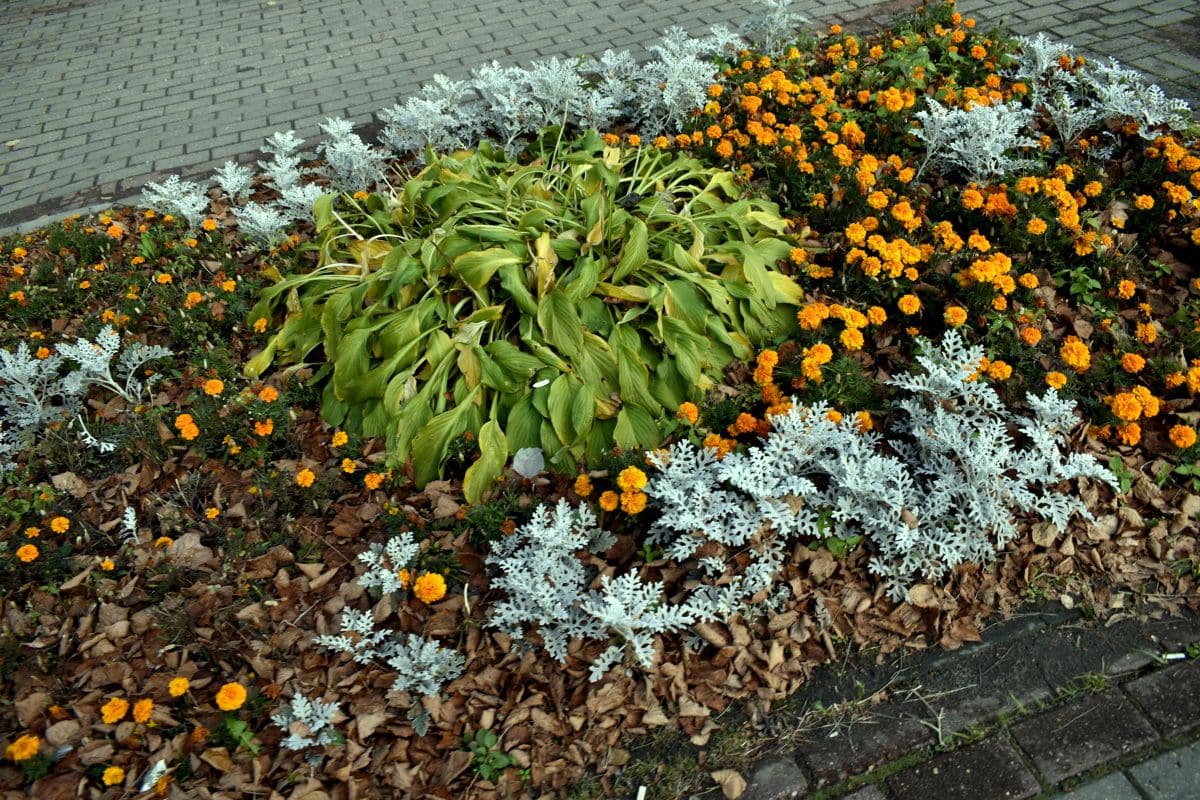
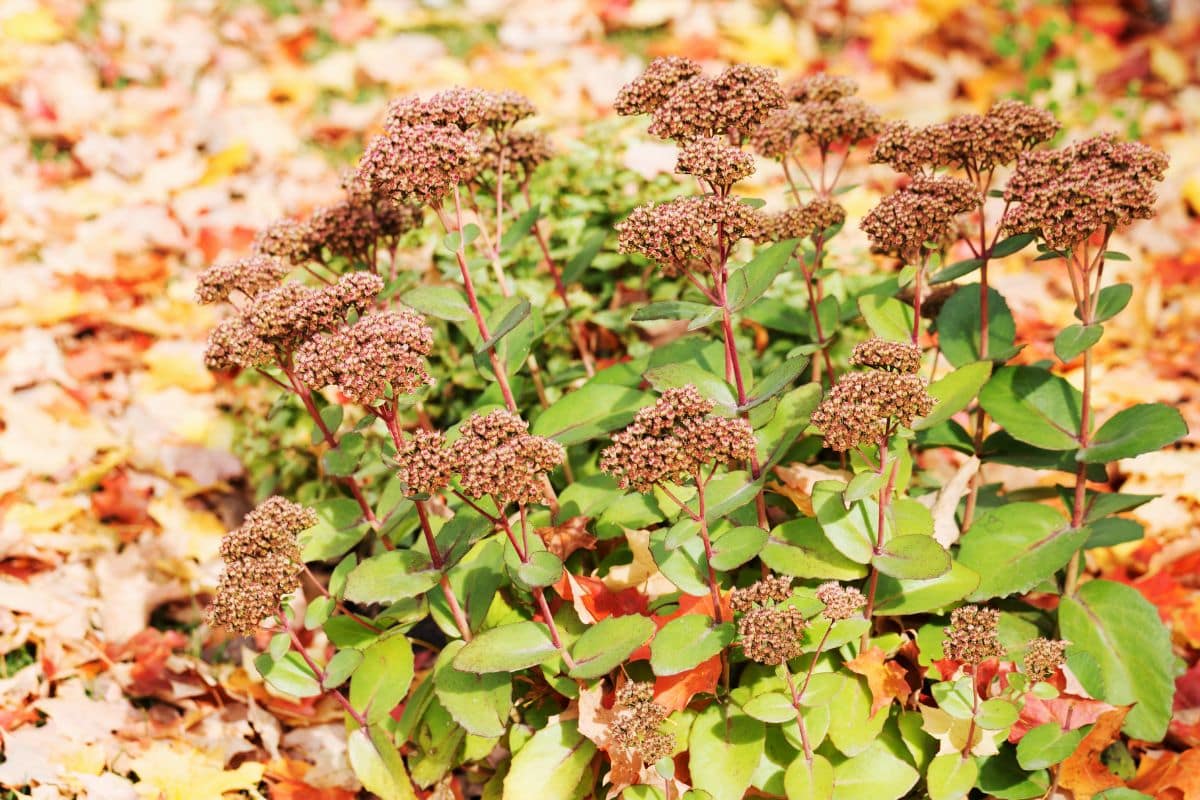
A laidback approach then becomes an asset. By leaving dead leaves, dry stems, and a layer of vegetation in place, we imitate nature. This organic cover acts as insulation: it protects roots from freezing and thawing, reduces erosion, and conserves moisture. It also provides shelter for a host of useful small organisms (pollinators, beneficial insects, spiders, etc.) that will resume their work in the spring.
The lawn also benefits from this approach. Thanks to grasscycling and leafcycling, the mowed grass clippings and shredded leaves left on the ground return much of the nitrogen, potassium, and other nutrients absorbed by the grass to the soil. In the fall, this natural recycling helps strengthen the lawn and better prepare it for winter.
Even in the middle of winter, under this blanket of leaves and stems, underground life does not completely stop. Insects, microorganisms, and fungi continue to quietly decompose the debris. By spring, the soil is already richer, better structured, and ready to nourish plants. In other words, by being laidback in the fall, you give your garden natural protection for the winter and free preparation for spring.
Be Laidback Now for a Miraculous Spring!
Why bother buying fall fertilizer when you can let the soil do the work naturally?
This fall, your lawn and plants don’t need much!
- Winter resistance provided by Mother Nature!
- Rooting ensured by photosynthesis!
- A lawn that greens up on its own when the snow melts, thanks to leafcycling and grasscycling!
Why spend money on “miracle” fertilizers when being laidback is better?
No soy de seguir tendencias, pero últimamente la inteligencia artificial empezó a aparecer en todas partes dentro de mi trabajo. Como hombre que siempre ha confiado en su experiencia, al principio pensé que no necesitaba cambiar nada. Sin embargo, noté que algunos compañeros empezaban a obtener mejores resultados en menos tiempo, y eso me hizo replantearme muchas cosas. Decidí investigar y terminé probando un curso de ia para marketing. No lo hice con grandes expectativas, más bien como una forma de entender qué estaba pasando. Lo que descubrí fue que no se trata de reemplazar habilidades, sino de potenciarlas. Aprendí a automatizar tareas repetitivas, a generar ideas más rápido y a analizar datos de forma más eficiente. Esto no solo mejoró mi productividad, sino también mi confianza en un entorno que estaba cambiando. Ahora veo la inteligencia artificial como una herramienta necesaria, no como una amenaza. Esta experiencia me ayudó a adaptarme sin perder mi estilo de trabajo.
With its engaging sound effects and lively music, head basketball immerses players in a vibrant basketball environment, enhancing the overall enjoyment of the game while keeping the atmosphere energetic and entertaining.
The beginning of this article was so funny. And it really made your point clear!
Great info to have. I do have a question. During the summer I keep deer away from my hostas by using Deer repellent. When fall comes i usually let them eat the hostas. They strip the leaves and most plants have nothing but stalks left. Is this a mistake? Should I continue the use of the repellent so leaves die down on their own to keep the photosynthesis going a bit longer?
Wow! Thanks for your wonderful article, you are my inspiration and “go to” source. My sister and I are seniors and we enjoy our garden in Val Morin. I read your articles every morning – I don’t care much about the news, who needs it when most of it is fake. When the spring knocks on my vegetable garden’s door, this time we will be ready to enjoy its demanding work.
Varty