

If there’s one plant that needs no introduction, it’s the snake plant (Sansevieria sp., now classified in the genus Dracaena). It’s the easiest plant to care for. It’s one of the few plants that can be grown indoors in shady spots. You can literally forget about it for a whole month without it dying!
In my opinion, it’s called mother-in-law’s tongue because of all these wonderful qualities. But, truthfully, it earned this name in honor of wicked mothers-in-law. The plant is also called “snake plant”, referring to the elongated, speckled shape of its leaves. Add to that the sharp edges of the flattened leaves, and the plant perfectly depicts the acerbic words of a nasty mother-in-law.
The most common variety is the classic snake plant (Dracaena trifasciata), which grows to about 18 inches tall and eventually forms a dense colony of slender, flattened leaves that are more or less variegated depending on the variety. It’s the one that’s everywhere! However, it’s interesting to note that there are over 100 species of snake plants, all of which have been reclassified into the genus Dracaena, which now contains 214 species.
Below are some species and cultivars that demonstrate how sansevierias can emerge from the “tacky” closet and shine as collector’s plants. They will pique the curiosity of beginners.
The ‘Laurentii’ Sansevieria
This popular variety, also known as Dracaena trifasciata var. laurentii, is simply a classic snake plant with a broad golden band on both sides of the leaf. This subtle fluorescent yellow band provides a beautiful contrast to the foliage and deserves to be showcased more effectively. It thrives when grown in a large rectangular container.
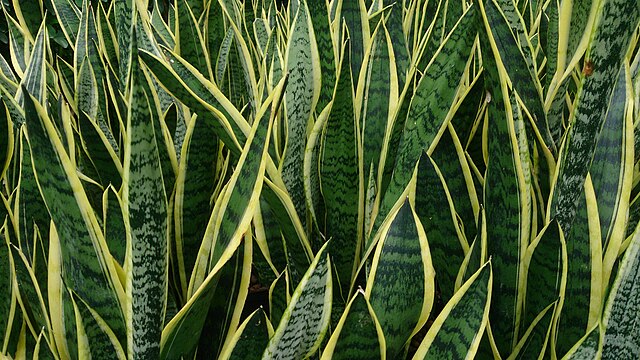
Under good conditions, the leaves can reach between 45 and 70 cm (18 to 28 inches) in height, and some specimens can exceed one meter (39 inches). Like most snake plants, it is slow-growing and reproduces by rhizomes. This cultivar has won the Award of Garden Merit from the Royal Horticultural Society.
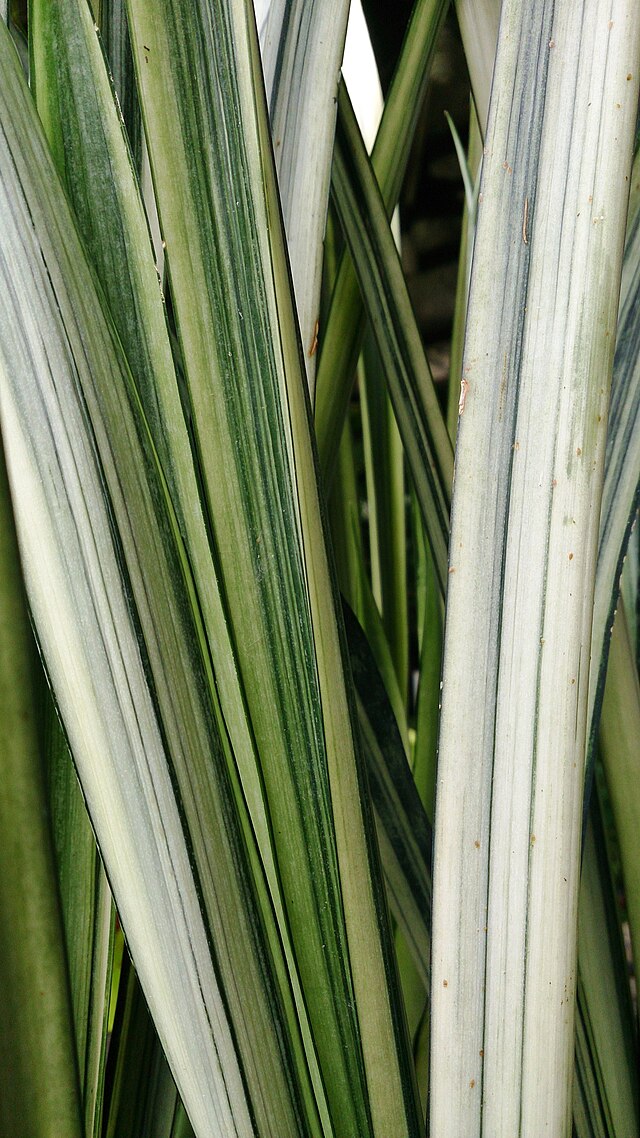
In addition to this lovely cultivar, the classic snake plant (D. trifasciata) has many variations. My current favorite is ‘Bantel’s Sensation’, a variety with narrower, upright leaves. The leaves are vertically striped with green and creamy white. In a large clump, the effect is quite striking. Another cultivar is ‘Silver Queen,’ whose leaves are primarily greenish-white. The ‘Moonshine’ cultivar is highly sought after because of its gray leaves.
The ‘Hahnii’ Sansevieria
Of the many varieties of the ‘Hahnii’ cultivar, the foliage unfolds as a rosette of broad, short leaves. For this reason, it is sometimes called a “bird’s nest”. The plant will reach a maximum height of 20 cm (8 inches).
It is an interesting variety suitable for coffee tables or windowsills, away from direct sunlight. The cultivar simply called ‘Hahnii’ has the same pale green speckles on a dark green background as the D. trifasciata species.
Among the fairly easy-to-find cultivars, ‘Golden Hahnii’ has a wide golden band along its edge, similar to ‘Laurentii’. If you’re looking for foliage with silvery stripes, ‘Silver Hahnii’ is the cultivar for you. My personal favorite is ‘Black Jade’, which has solid dark green foliage. Add a golden band to the edge of its leaves and you get ‘Black Star’! Those who appreciate rare gems will try to get their hands on ‘Solid Gold’, which has a gold center and green margin. The list goes on. In short, it’s easy to become a collector of these small, compact varieties.
The Cylindrical Snake Plant
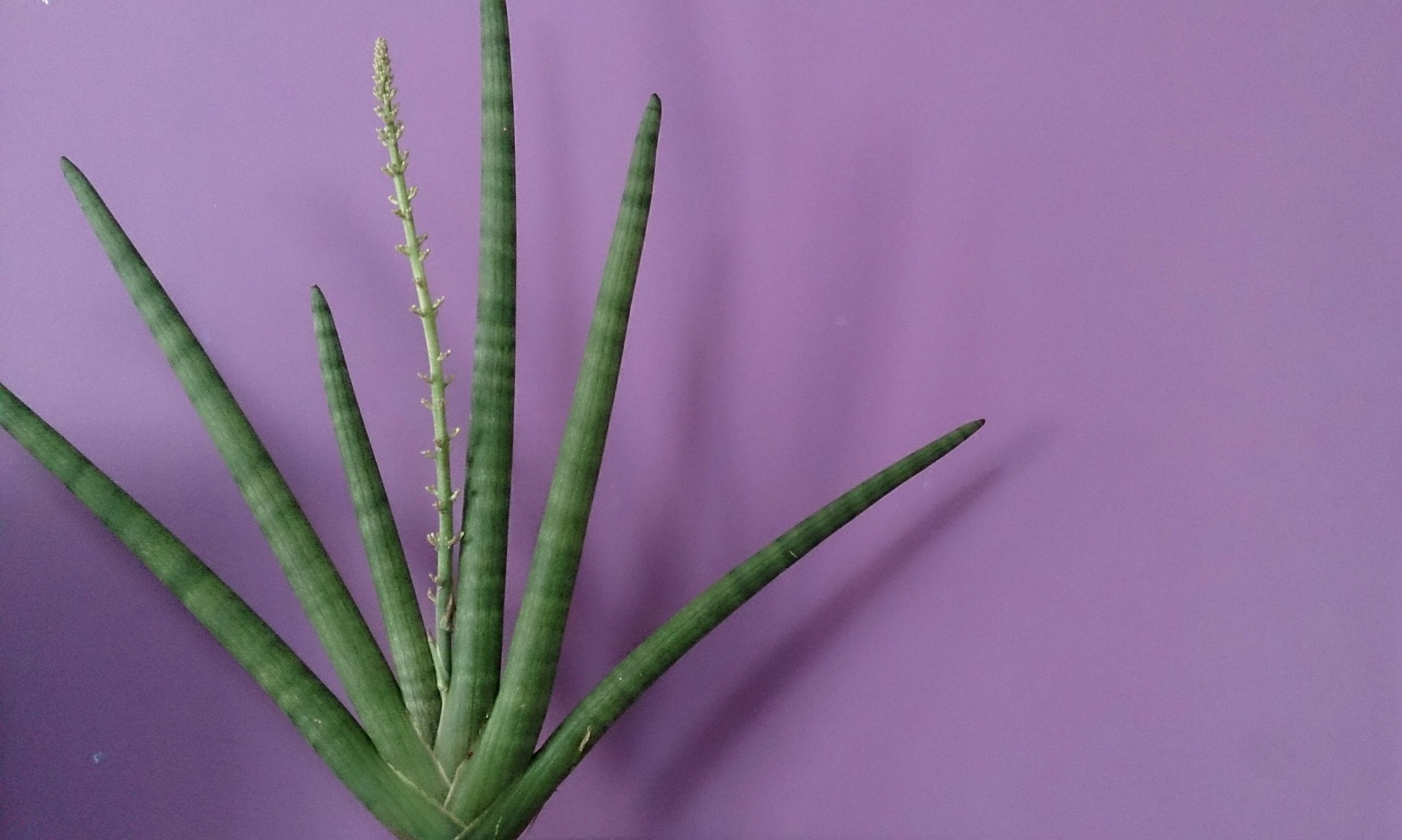
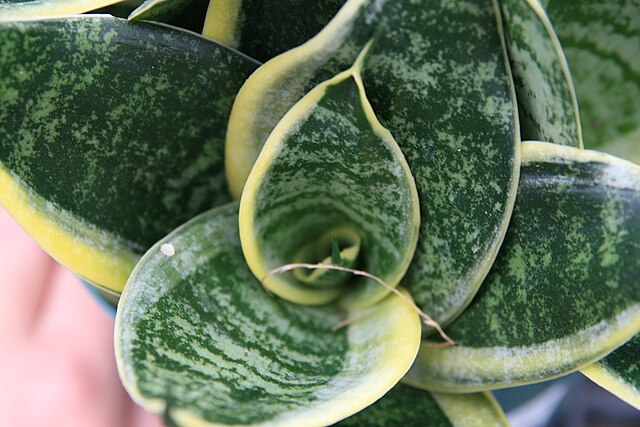
The leaves here are perfectly round and upright. They can grow up to 3 cm (1 inch) in diameter. The leaves can reach a meter in height, though the varieties available generally reach about 15 inches. This variety is becoming increasingly well-known, though it’s still a novelty to some. The leaves fan out, giving this plant a unique appearance. It’s not uncommon to see it sold in braids or with the tips dipped in paint.
I’ve been growing it for several years and finally repotted it in a slightly larger container after seven years. This confirms its slow growth and how easy it is to grow. A good, laidback gardener should forget to water their plants from time to time.
Several cultivars vary in shape and color. The ‘Starfish’ variety (sometimes identified as D. angolensis ‘Starfish’) has shorter, plump stems that give the plant a striking starfish-like appearance.
Francis’s Snake Plant…
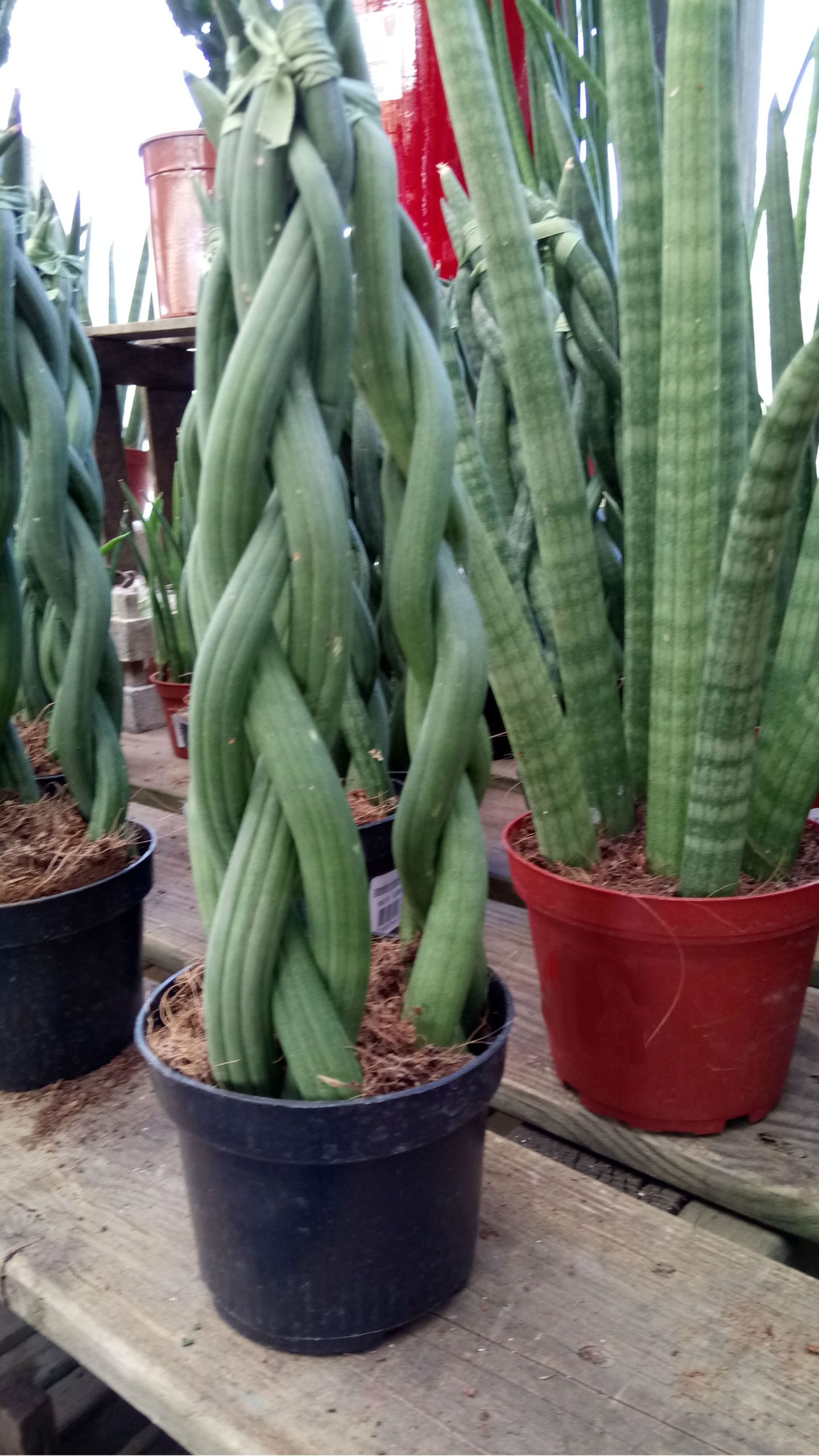
I couldn’t find an English name for this one, but since its Latin name is D. francisii, we can deduce that it was named after a Mr. Francis. In all seriousness, this species is quite recent, having been discovered in Kenya in 1995. It was named after the great explorer and collector of succulent plants, Francis K. Horwood (1924–1987).
It’s the smallest of them all. If your significant other insists that there’s no more room for plants, get this cute snake plant, which doesn’t grow taller than 10 inches. Actually, it can reach 75 cm, but it would take so long that it doesn’t really count!
It has a very small rosette of short leaves. Year after year—not to mention every decade—the rosette develops in its center, and the plant grows vertically.
Whale Fin Sansevieria
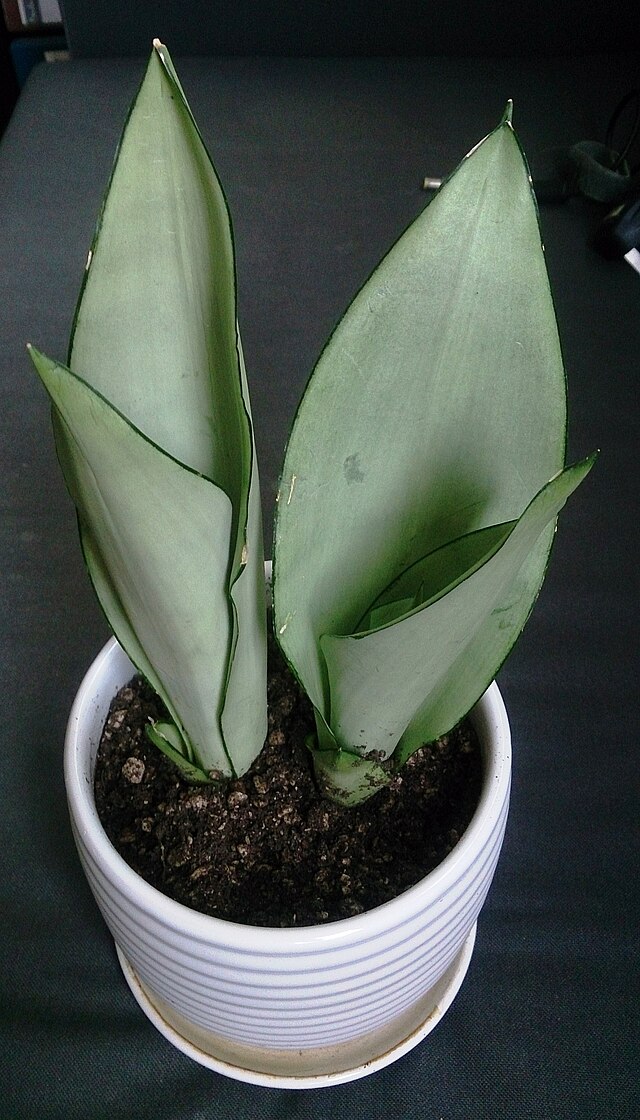
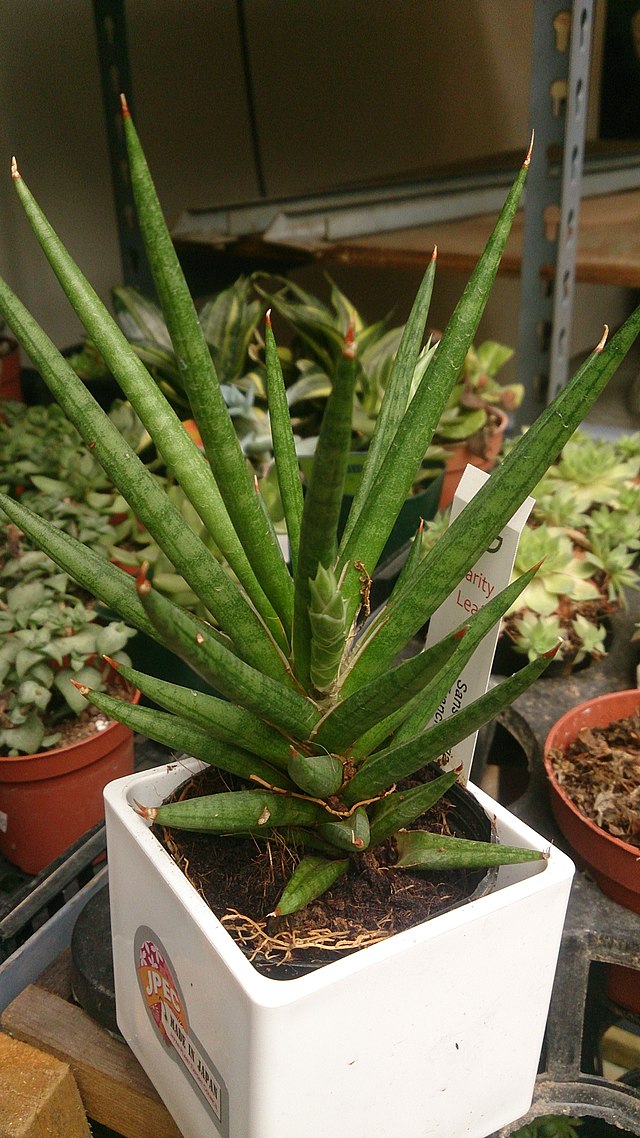
Finally, we must explore the cultivars derived from D. masoniana. These cultivars have broad leaves that resemble whale fins. I’ve never seen any quite so large, but reportedly, the leaves can reach 7 inches (18 cm) in width and over a meter in length. This plant was introduced recently, having been discovered in the Republic of Congo in 2000.
It’s not uncommon to have only one leaf per pot at the time of purchase! As you can imagine, it can take several weeks before a second leaf appears.
Fortunately, this species is just as easy to grow as other sansevierias. With a little patience, you’ll end up with a glorious quartet of leaves!
That’s just the tip of the iceberg! There are over a hundred snake plant cultivars available to enthusiasts of easy-care plants. Imagine finally being able to call yourself a serious collector and elevate yourself to the rank of horticultural enthusiast while remaining a laid-back gardener. A dream come true!