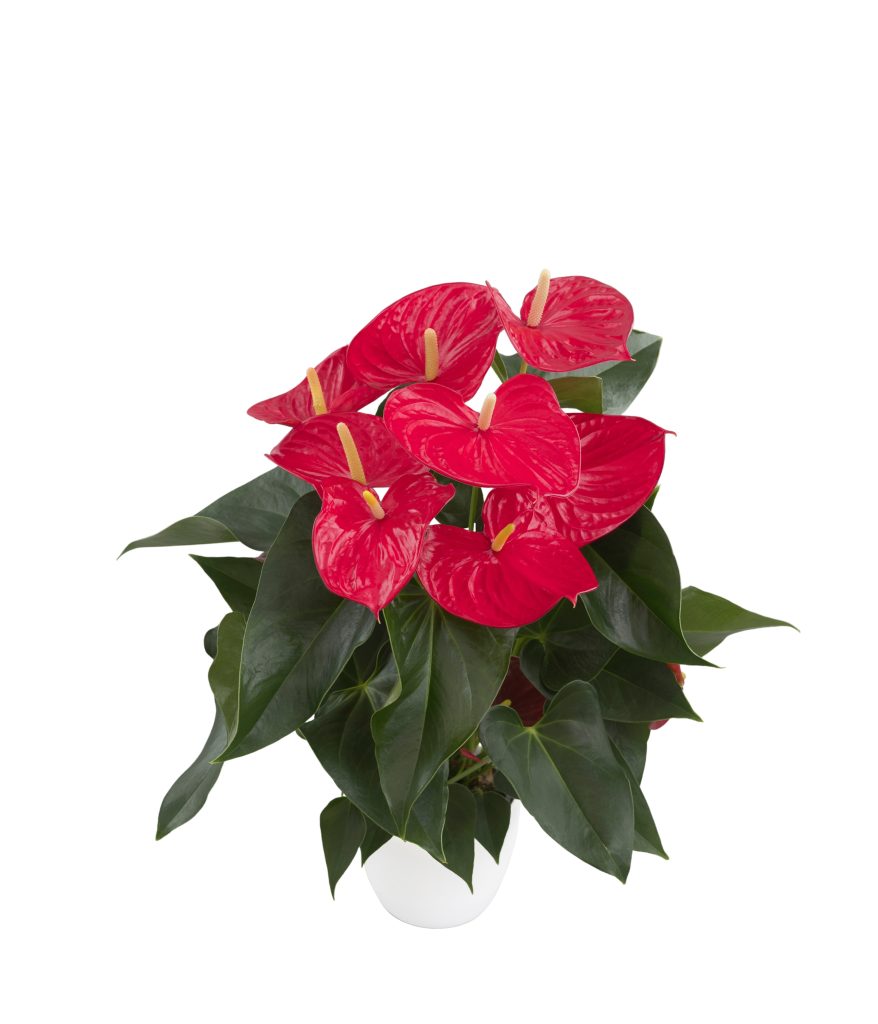
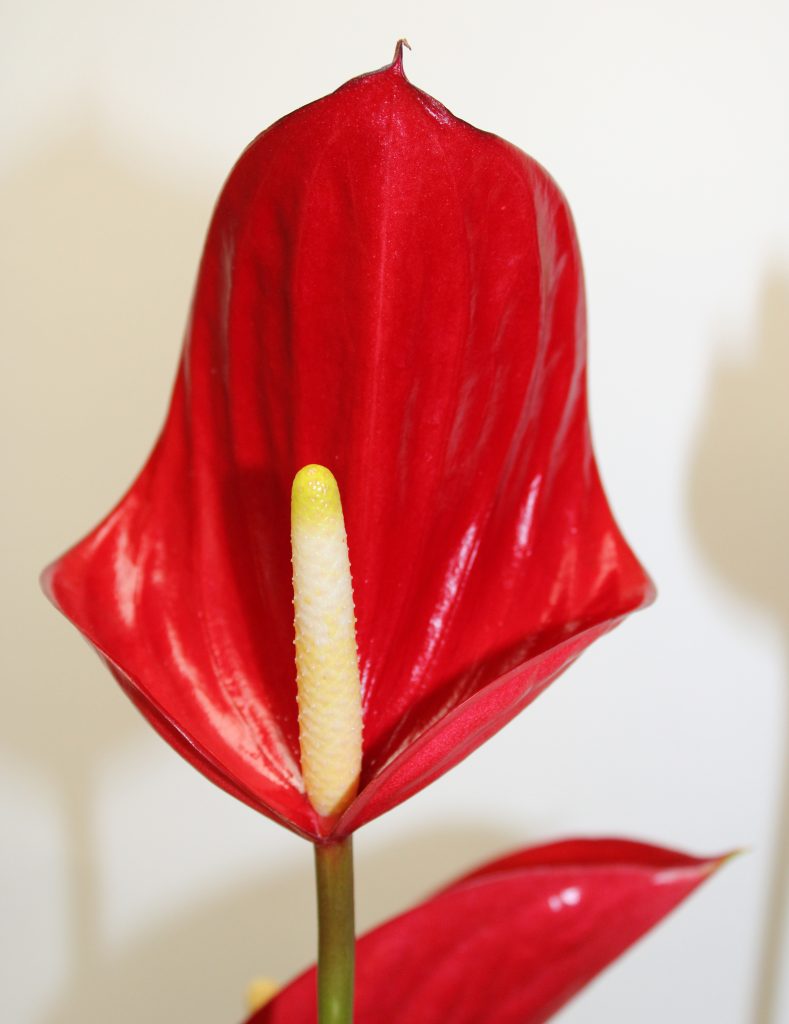
As Valentine’s Day approaches, heart-shaped plants quickly become the stars of tropical plant stores. The beautiful anthurium, also known as the flamingo flower, is a prime example. With its large, glossy, thick bracts and vibrant red color, it’s hard to find a better way to win over plant lovers’ hearts!

Our heart-shaped plants originated from two adorable species!
The two most commonly used species for creating hybrids are Anthurium andreanum, which is native to Colombia and Ecuador, and A. scherzerianum, native to Costa Rica. Both plants are epiphytes and grow on tree trunks without parasitizing them.
The plant thrives in warm, humid environments and grows in places receiving filtered or indirect light. This characteristic is probably what has made it an interesting plant for indoor cultivation over the years.

Like many tropical plants that are regularly grown in our homes, anthuriums first gained popularity during the Victorian era. This period was one of great exploration of South American countries. Many plants brought back to Europe at that time have stood the test of time. The Austrian botanist Heinrich Wilhelm Schott made a significant contribution to the discovery and popularization of anthuriums. It was also during this period that the first cultivars appeared.
A three-way hybridization
There are three different paths of anthurium hybridization, depending on the intended use. The first was oriented towards cut flowers. The goal was to produce large, brightly colored, long-lasting spathes. Sturdy flower stalks are also an important criterion in this category.
The second group of hybrids, flowering potted plants, interests us most. These plants are attractive because of their decorative foliage and generous, interesting blooms. Numerous species, including Anthurium andreanum and A. scherzerianum, were used to create these unique varieties.
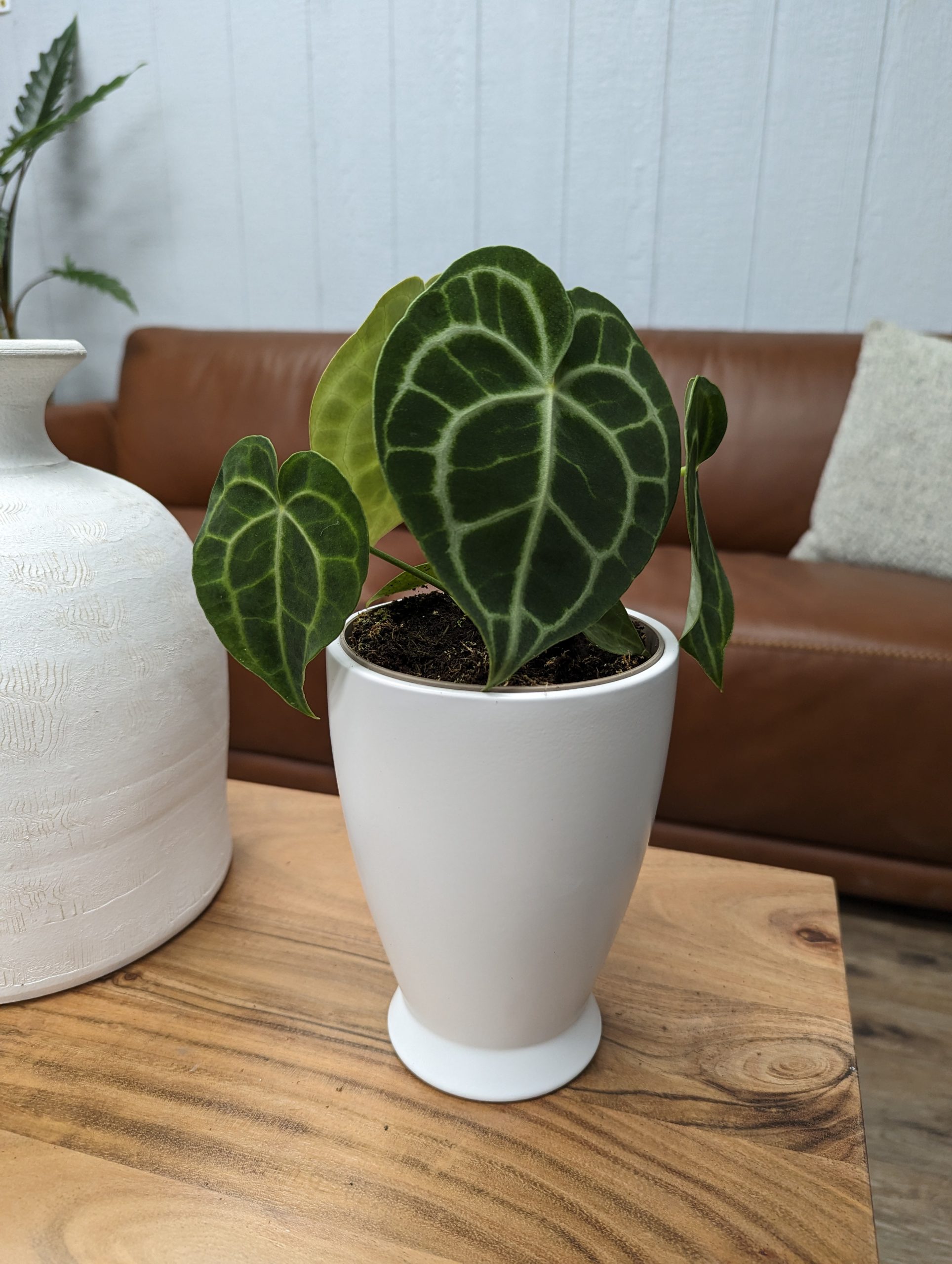
Finally, some anthuriums are selected primarily for their beautiful foliage. The star of this group is A. crystallinum. It’s easy to become hooked on growing anthuriums with decorative foliage when you consider that there are over 1,300 species of anthuriums worldwide! Imagine the possibilities with a cross here and another cross there.

Popular varieties for the home
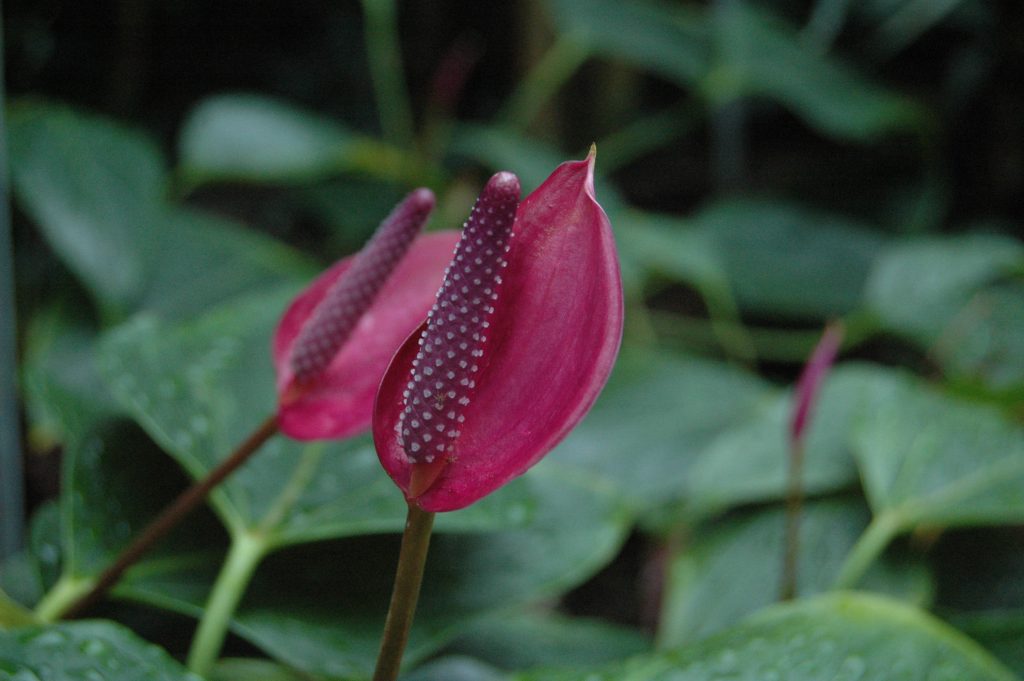
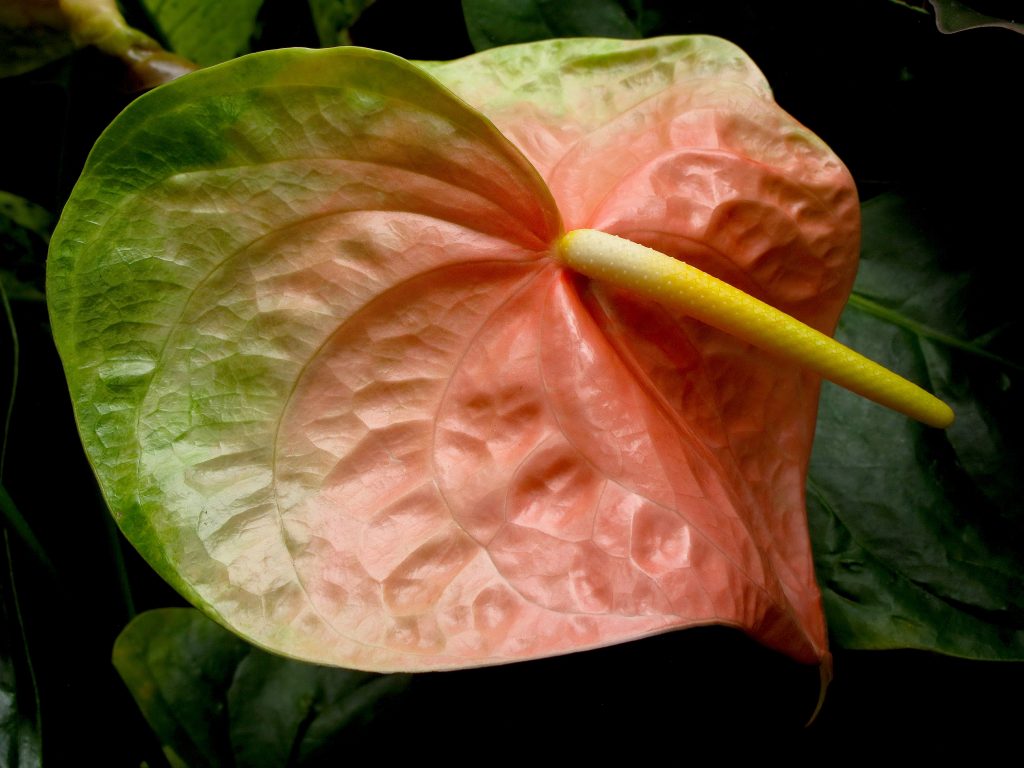
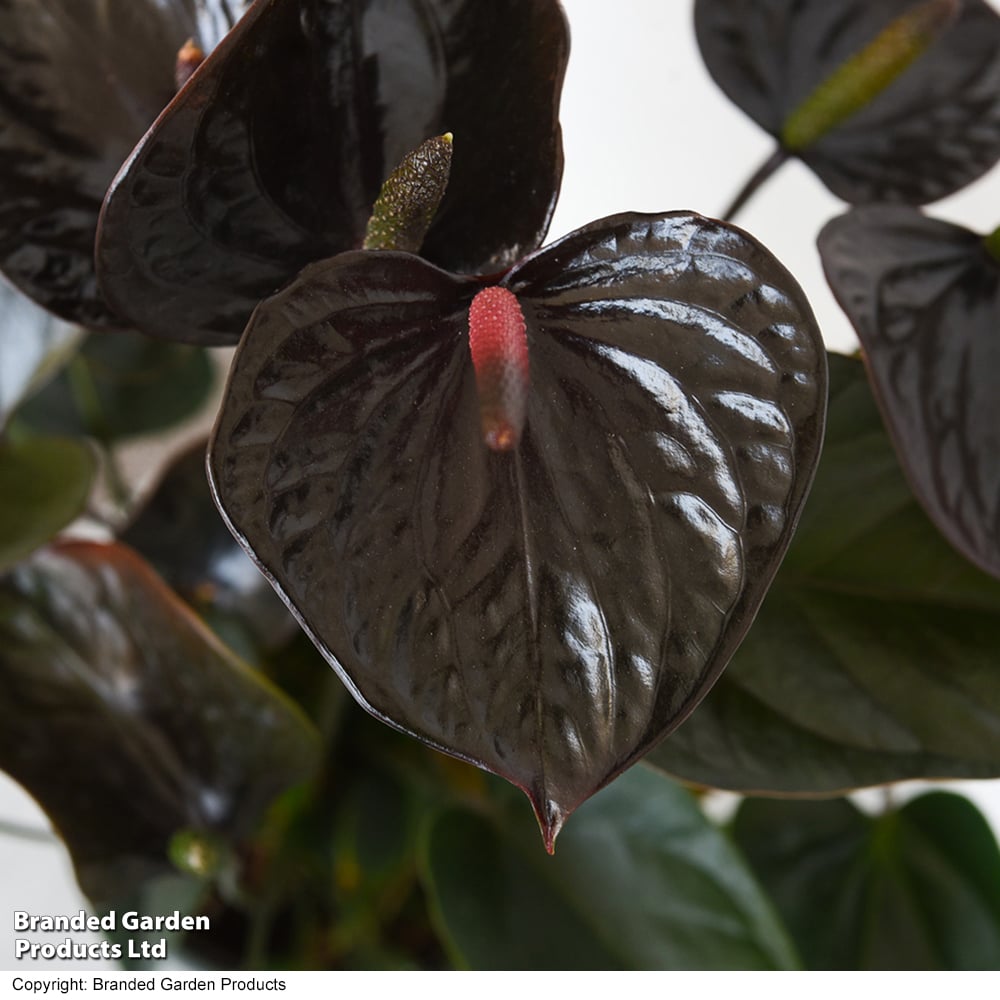
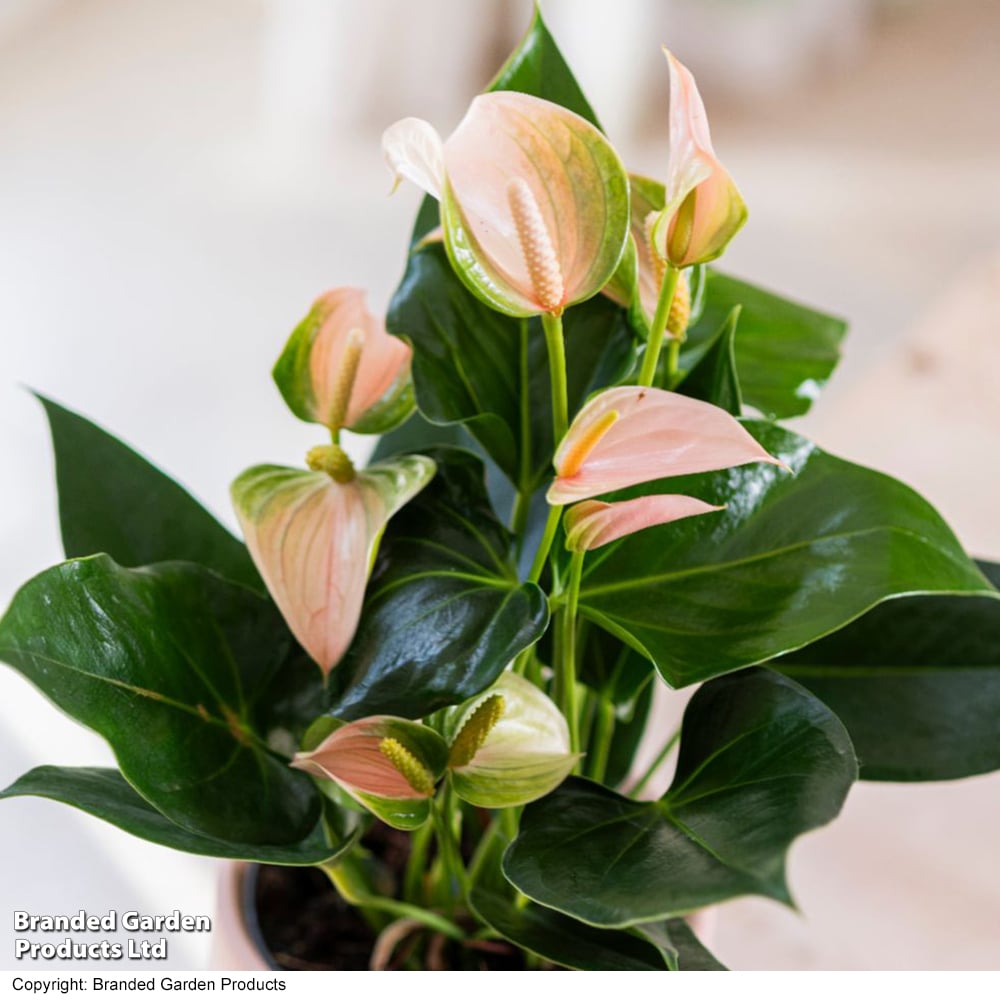
Generally, anthuriums sold on the market are an assorted mix of colors—red, various shades of pink, and white—and are not specifically identified. However, it’s possible to find cultivars that are properly identified. For instance, the cultivars ‘Casparo’, ‘Felicita’, and ‘Delicata’ have bright red flowers. The ‘Maine’ cultivar has dark pink flowers; the ‘Purple Plum’ cultivar has purple flowers; and the ‘Midori’ cultivar has flowers that range from green to white to pink. There are even sumptuous varieties with striped spathes that are commercially known as “candy cane” flowers! These are actually cultivars from the ‘Livium’ series. Finally, there are cultivars like ‘Black Love’ with nearly black flowers and ‘Fiducia’ with lime green flowers.

Growing requirements for anthuriums
The key to successfully growing anthuriums indoors is providing them with warmth and humidity. These are essential conditions for their well-being. They are excellent plants for bathrooms that receive some light. They make superb companions for monsteras (Monstera deliciosa) and various philodendrons (Philodendron sp.).
They should be kept out of direct sunlight but should still receive some light. The temperature should fluctuate between 65 and 72°F (19 and 23°C). It can be slightly cooler at night, but it should not drop below 60°F (16°C).

During the active growth period, which may occur outdoors in the summer, keep the potting mix consistently moist. Indoors during the winter, allow the surface of the potting mix to dry out before watering again. Fertilize during the summer as well, using half the recommended dose.
Anthuriums benefit from being repotted every two or three years in a mixture of regular potting soil and orchid substrate. Soaking the plants in this type of mix is beneficial for rehydrating the coarser wood chips within the substrate.
Under optimal conditions, the plant should flower continuously. However, it’s generally not necessary to worry about a lack of blooms during the winter because it can be difficult to create the right conditions indoors to encourage flowering. The plant tends to become sparse during the winter, but there are tricks to reviving a neglected anthurium.