


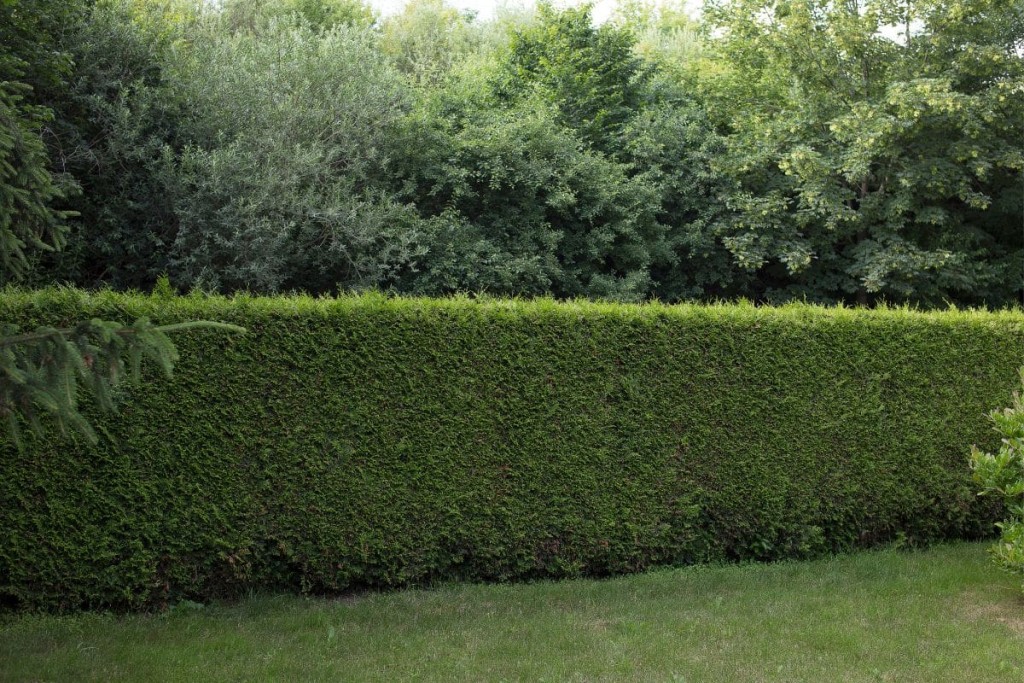
Should you trim a thuja hedge?
Our future property in a rural area is surrounded by a beautiful hedge of cedar trees that are over 10 years old and seem to have been meticulously trimmed every year. Do I have to keep trimming it, or can I let it grow freely and naturally? I’m the laidback type, but I love things that are “natural.”
Answer
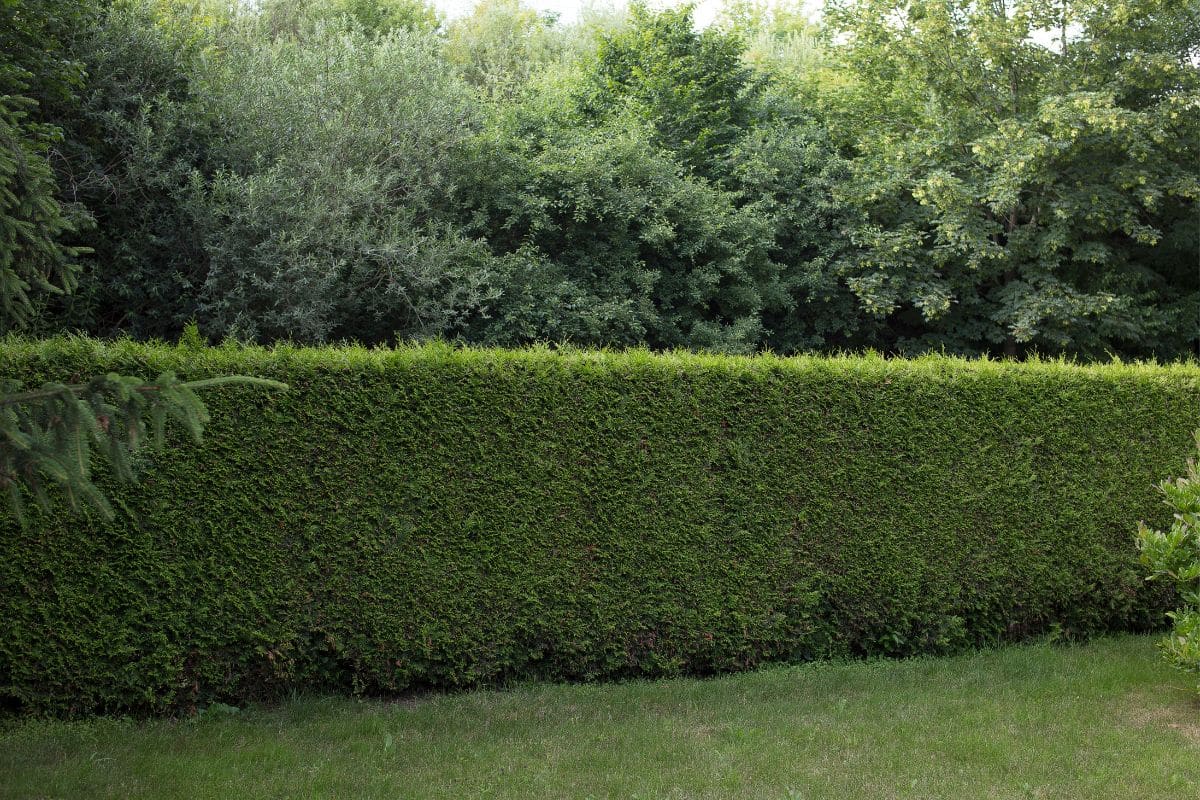
It all depends on the effect you want to achieve. The thing is, thuja trees (Thuja occidentalis) are not shrubs, but trees. If you stop pruning them, they will grow quickly and you will no longer have a hedge, but a 10-meter-high (33 feet) or taller screen of vegetation. In addition, thuja trees are probably planted very close together, which is perfect for a hedge but less suitable for large trees, which will suffer from being so close together. So, if you want the hedge to remain a hedge, you have to prune it.
However, it is possible that the previous owners pruned more than once a year to give the hedge a “knife-cut” effect or pruned it into a rectangle. If you prefer a more natural look, prune only once a year. Ideally, wait until the end of the bird nesting season. Thuja hedges are often used as nesting sites in the spring and early summer. Trimming too early can destroy nests or cause broods to be abandoned.

By mid-July, most broods have left the nest, making this the best compromise between protecting birds and maintaining the health of cedar trees. Pruning even later, around mid-August, is even safer for wildlife. However, in cold regions, pruning in September can stimulate slight regrowth that will not have time to harden before the first frosts, which can lead to winter browning.
Laidback gardeners only plant shrubs for hedges. Unlike trees such as thuja, shrubs have a maximum height that they do not exceed. Therefore, no pruning is necessary to control their growth, and an unpruned shrub hedge (called a free hedge) will naturally take on a rounded shape.
Albino roses?
I was surprised when I went to get some wood from my garage: the rose bush that we had pruned and stored had produced white stems topped with red roses. No light, no water since October, a damp location, and a temperature maintained at 10°C (50°F). How can this phenomenon be explained? What should I do now?

Answer
There is nothing particularly surprising about this happening. Rose bushes go dormant when temperatures approach freezing, but grow at temperatures of 7°C (45°F) and above. The temperature in your garage is high enough to stimulate growth. However, without light, the plant cannot photosynthesize and therefore does not produce chlorophyll, the green pigment that gives leaves and stems their usual green color. Without chlorophyll, the stems remain pale and become etiolated (abnormally elongated), producing pale yellow leaves. The red pigmentation of the flowers is not dependent on light, so the flower itself takes on its normal color.
I suggest you cut the flowers and use them to decorate your home. Then cut back the remaining stems to 5 to 10 cm (2 to 4 inches) from their starting point and water the plant lightly (since it has grown, it will have drawn on its reserves and will be “thirsty”). If possible, place the rose bush in a cooler location, but do not expose it to outdoor temperatures. In the spring, plant your rose bush outside in a sunny spot. It may be a little “tired” from its winter experience, but it should recover fairly quickly.
Salt damage
A high tide swept across the Lower St. Lawrence and Gaspé Peninsula. The results were disastrous for many residents, while others saw their land flooded and heavily saturated with salt water. For my part, I had sand and rocks overflowing, along with a lot of water, of course.
The question on many people’s minds is: what will become of the lawns and perennial flowers in the spring—rudbeckias, crocuses, tulips, sedums, and certain shrubs such as pea shrub?

Fortunately, everything was dormant in December, but when it wakes up, the roots will certainly draw up the salt that has remained in the sand and soil, so… what treatment could we apply to save some plants and shrubs?
Nature may provide its own rescue by washing the soil with spring rains…
Answer
Indeed, it is fresh water that will come to the rescue of your plants. Heavy rainfall can help, but so can watering during thaws. This treatment is called “leaching.”
Some plants tolerate salt better than others. This is the case for caragana, rough rose, and shepherdia among shrubs, and sagebrush, Spanish grass, sedums, hostas, and daylilies among perennials. Grass and most perennials are not very resistant to salt and may be slightly damaged in the spring, but a good washing will greatly help them recover.
Larry Hodgson has published thousands of articles and 65 books during his career, in both French and English. His son, Mathieu, has made it his mission to make his father’s writings accessible to the public. This text was originally published in the newspaper Le Soleil on February 8, 2012.