


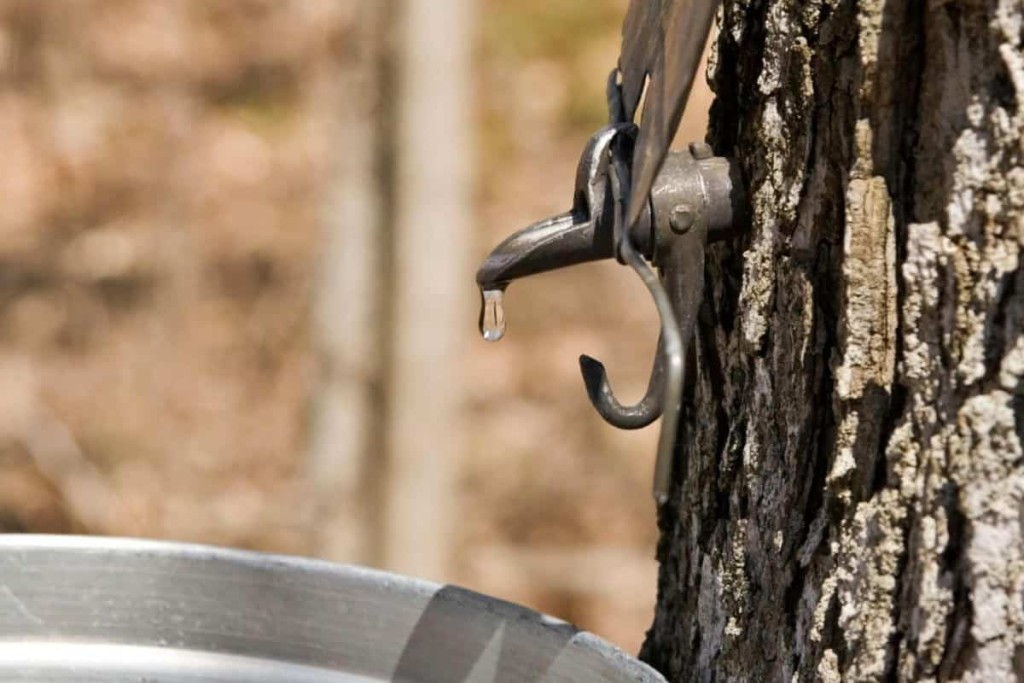
I live in Montérégie, in a former sugar maple grove, and my trees are very tall and have a large diameter (averaging about 2 feet). For the past 15 years or so, we have been tapping our maple trees in the traditional way, purely for pleasure.
That said, I am concerned about the impact of climate change on sugar maples. Already, with the arrival of the emerald ash borer, our majestic ash trees have died. Last summer, probably due to the drought, a large maple tree gradually lost its leaves during the summer and its bark split in a few places.

I am therefore hesitant to tap my maple trees next spring. Would it be better not to tap them, or to reduce the amount of tapping, in order to help them better withstand periods of drought?
I have looked for references on the impact of tapping on the health of maple trees, but I have found very few. Do you have any links you could suggest?
Answer
Sugar maples are indeed affected by climate change. Hotter, drier summers, extreme weather events, and unstable winters are putting maple groves under increased stress, especially in the southern part of their natural range, such as in the Montérégie region. The summer of 2025 was particularly dry in some parts of Quebec, with record low precipitation levels in several regions. Sugar maple trees remain well adapted to our region, but they are increasingly finding themselves at the limits of their ideal conditions, which reduces their ability to recover quickly when another stress factor is added.
Explanation of symptoms
The gradual loss of leaves in midsummer and the appearance of cracks in the bark are two typical signs of water stress. In prolonged drought conditions, maple trees can reduce their leaf surface area by dropping some of their leaves in order to limit water loss through evapotranspiration. This summer defoliation is a survival mechanism and not a disease in itself. The cracks observed on the bark can be caused by rapid changes in the water content of the trunk: after a period of drought, a period of heavy rain can suddenly restart sap circulation, creating internal tensions that lead to bark cracking, especially in older trees.
These symptoms indicate that the tree has undergone significant stress, but do not necessarily mean that it is doomed. Rather, they suggest a temporarily reduced capacity for recovery, which warrants a cautious approach to any additional intervention.
Is tapping harmful?
The question is therefore: in this context, is tapping harmful, and can you tap a maple tree that is already weakened without causing further damage? Available studies shed light on certain aspects of this question, but do not offer a simple answer that applies to your situation.
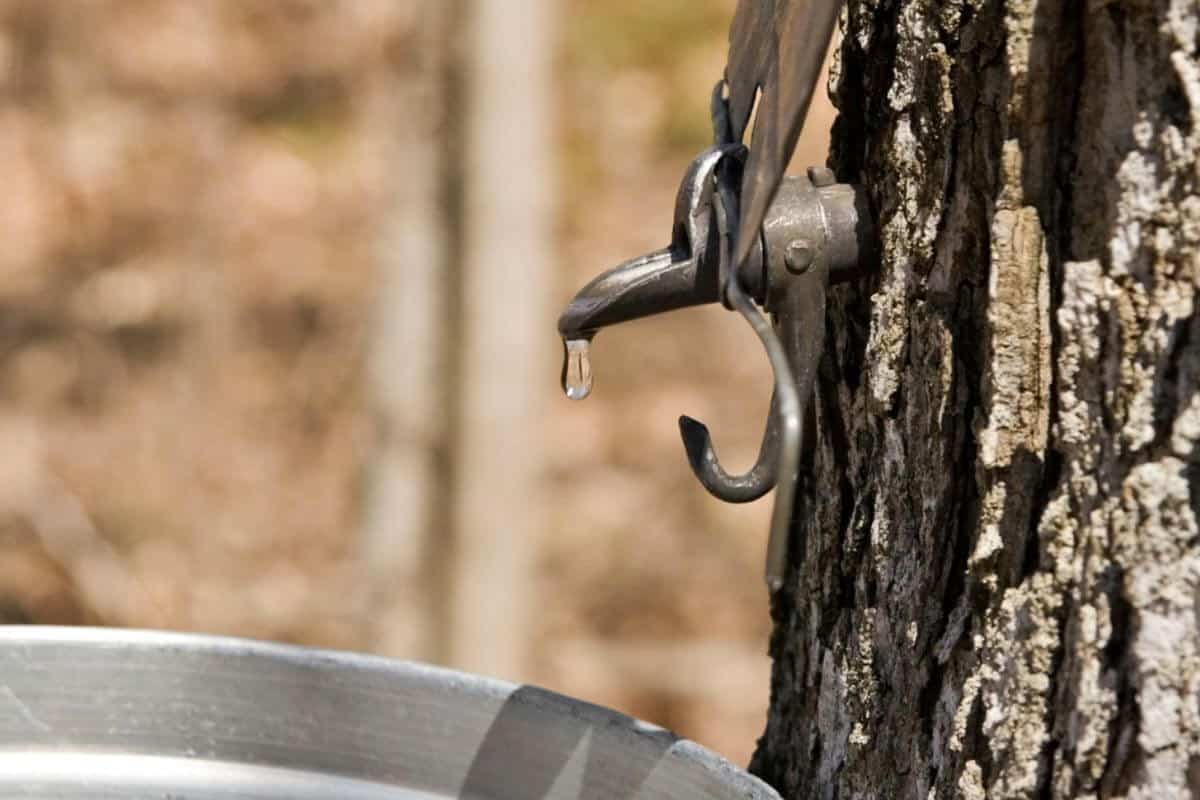
Notching is a localized, intentional wound of very small size. Sugar maple is a species well suited to this practice: it quickly compartmentalizes the notched area, which limits the spread of microorganisms and allows the rest of the tree to continue functioning normally (Shigo & Marx, 1977; Houston et al., 1990). Several studies show that under normal conditions, notching has no significant negative effect on radial growth or survival in healthy maple trees. A recent study conducted in eastern Canada and the northeastern United States concluded that, in vigorous maple trees, tapping does not result in a measurable reduction in long-term trunk growth (McNulty et al., 2023).
Tapping into a weakened tree
In other words, notching is not inherently harmful. It becomes an issue mainly when the tree is already under other significant stresses such as drought or crown dieback. Data are more limited when it comes to maples under repeated water stress. Forest physiology studies indicate that drought reduces photosynthesis and the tree’s energy reserves, which decreases its ability to effectively compartmentalize wounds. In this context, notching represents additional stress on top of already existing factors.
Scientific advice does not recommend systematically stopping tapping, but rather a selective approach: avoid tapping visibly weakened trees, adjust the number of taps, or consider a temporary pause when clear signs of stress are observed. If signs of stress are visible—such as marked summer defoliation or recent cracks—it is entirely reasonable not to notch the tree for a season. This approach simply aims to give a tree with reduced recovery capacity a break.

Observation remains an excellent decision-making tool: uniform bud break and dense foliage are good indicators of tolerance. Accepting a temporary pause is part of a long-term management approach where tree health takes precedence over yield. Allowing a tree to rest is never a bad decision when aiming for longevity.
To go further
McNulty, H. G., Silvestro, R., He, M., Gennaretti, F. et Rossi, S. (2023).
To flow or to grow? Impacts of tapping on sugar maple.
North American Maple Syrup Producers.
North American Maple Syrup Producers Manual, 3e édition.
University of Vermont, en collaboration avec le North American Maple Syrup Council.