


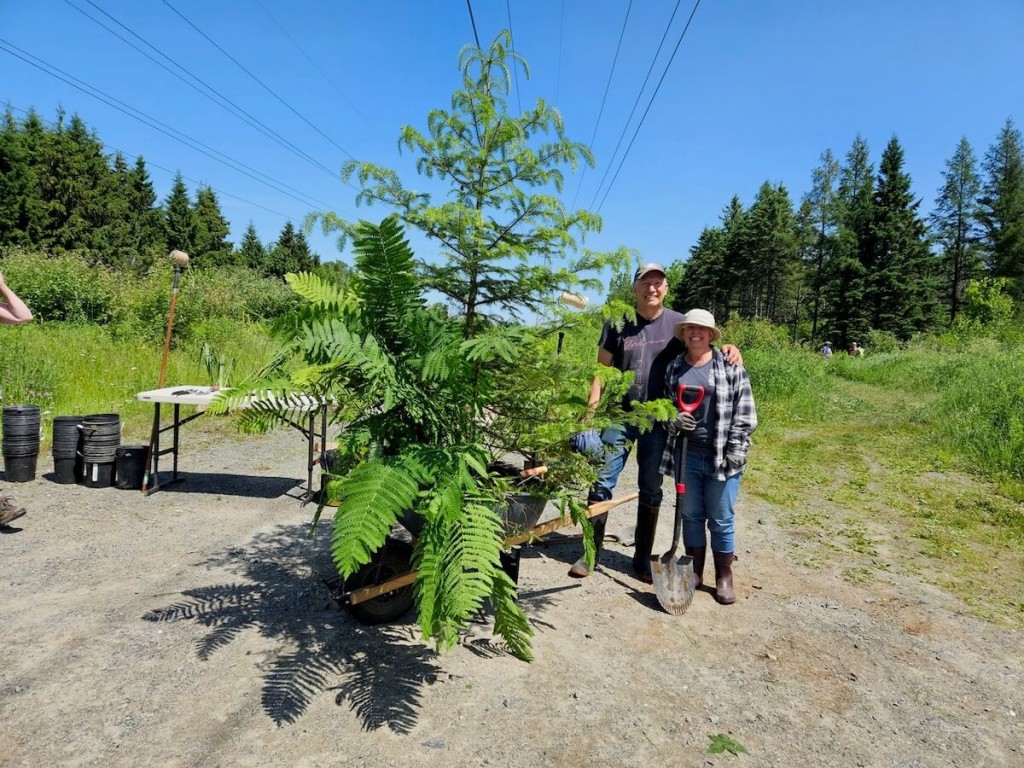
As I was finishing planting on my new property last fall, I was looking to fill in some gaps, especially in the natural wooded area where we had done a major clean-up with arborists to remove a number of gray birches and some trembling aspens. According to my new neighbors, our properties are located on a former sand quarry, and primary vegetation has been growing there for 10 to 20 years with these pioneer species. Gray birches are very pretty, but they have a limited lifespan and tend to bend and break under the weight of snow and ice. So I ended up with a small, sparse woodland where a few small pines and spruces were trying to make their way among all kinds of shrubs that I have not yet identified.
The walking forest
That’s when a friend told me about “la forêt qui marche” (French for The walking forest) because there was an event in mid-October very close to my home. What is it? In short, it’s a way to save native plants on land designated for construction by offering them to the public. The idea originated from the Quebec Association of Construction and Housing Professionals and more specifically in the Eastern Townships, where leaders realized the urgent need to take action to combat climate change and protect the environment.

In 2019, they began discussions with the mayor of Sherbrooke and tried to find solutions to reduce the impact of construction projects. One of the administrators of the APCHQ Estrie then discovered Nicole Comtois’ master’s thesis in environmental studies, in which she proposed a way to recover native plants before construction. The name “La forêt qui marche” (The Walking Forest) was inspired by the movie The Lord of the Rings, in which trees move to go to war against the evil wizard Saruman, who is destroying forests. But here, the idea is more peaceful!
Establishment of a nonprofit organization (NPO)
A non-profit organization was then created to carry out this project under the chairmanship of Nicole Comtois and with financial assistance from APCHQ Estrie and several local partners, including construction companies and citizen volunteers. Its mission is to recover and promote the use of native trees and plants before deforestation during infrastructure and housing development projects.
15,077 native plants saved since 2021!
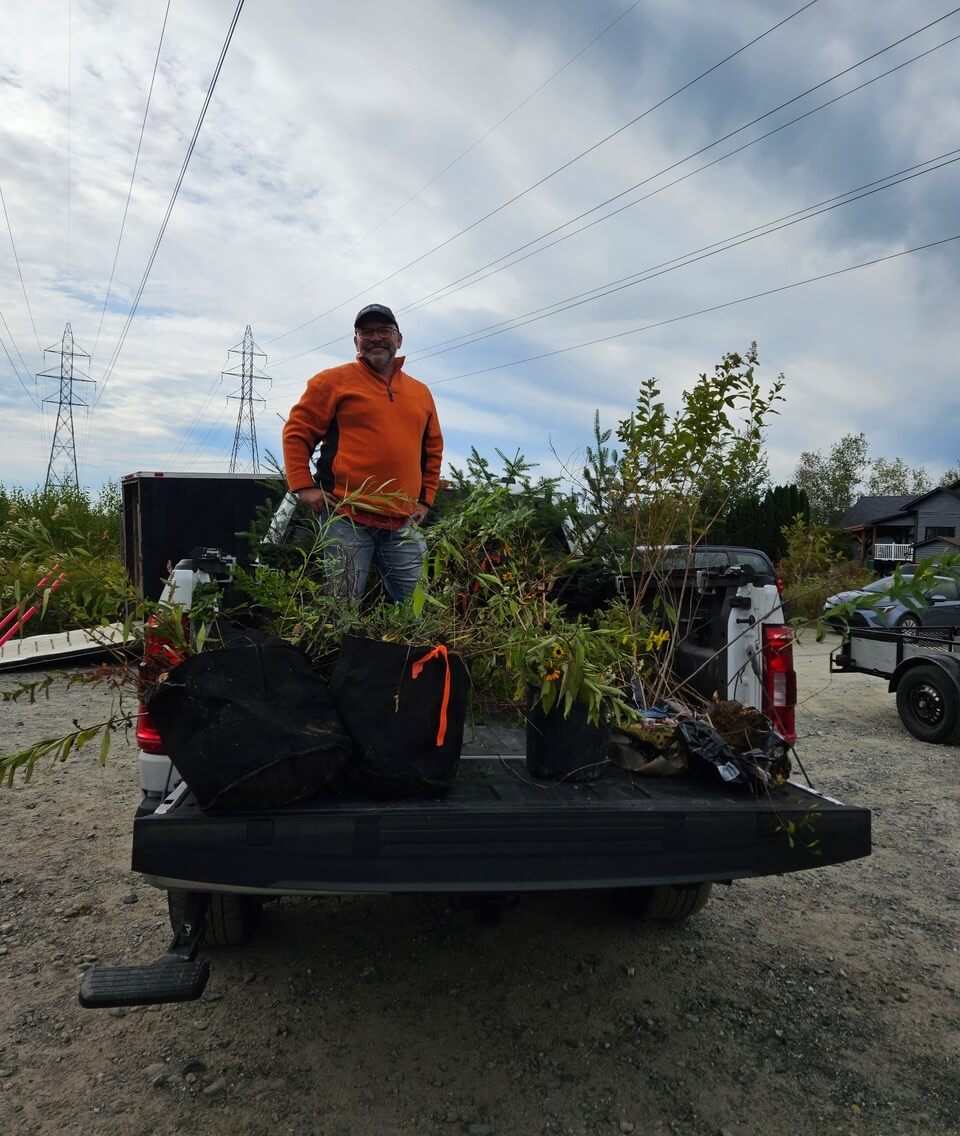
The main objectives of “La forêt qui marche” (The Walking Forest) are to save as many plants as possible and to improve public knowledge and use of them in public and private developments with a view to sustainable development. As a result, 15,077 native trees, shrubs, and perennials have been transplanted since 2021 and made available to citizens free of charge.
A very well-organized event!
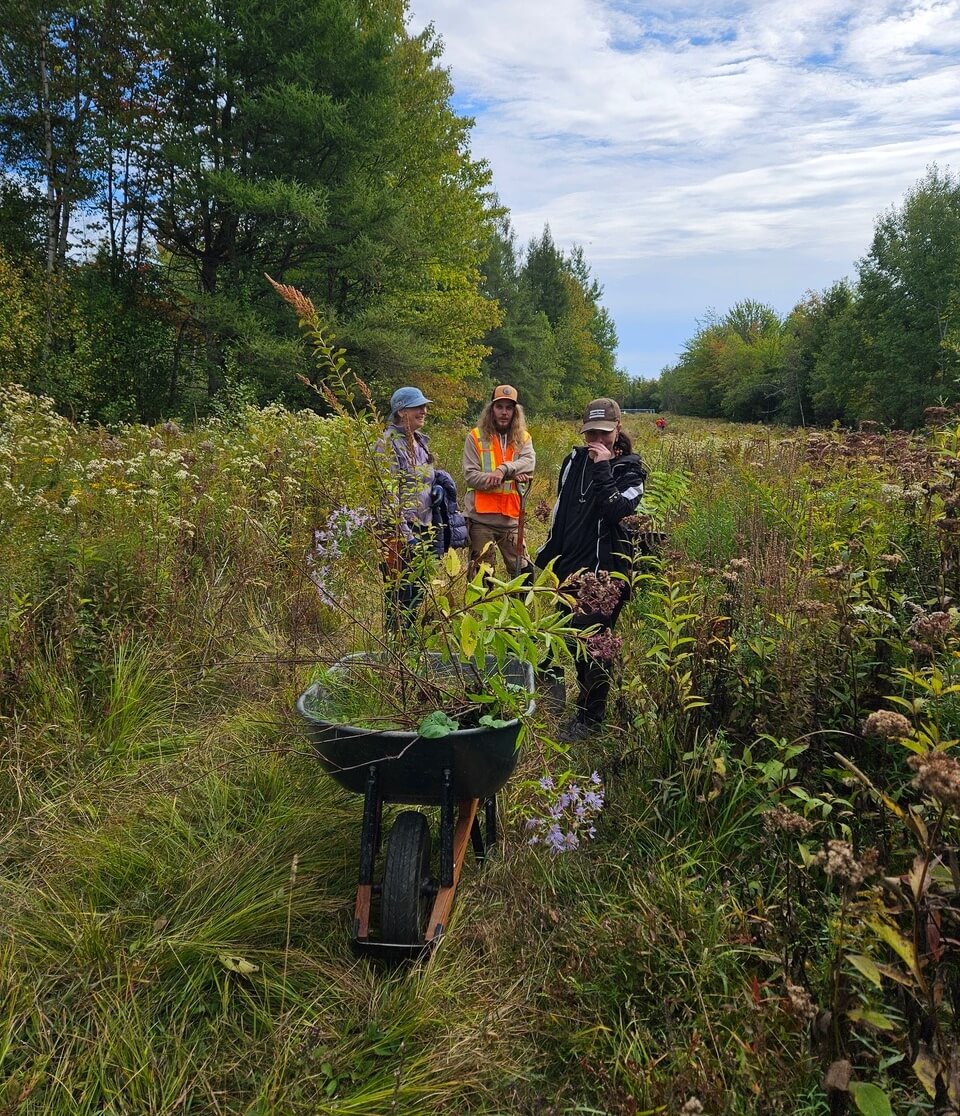
When I took part in the last collection of the year, on October 11, 2025, in Magog, I went with my shovel and fairly low expectations. To my surprise, there was a wonderful welcoming committee under a tent, shovels at my disposal (much better than mine), wheelbarrows, and even a professional to help me identify the plants. I left very happy with a dozen small red oaks, pines, and spruces that volunteers helped me wrap in burlap to avoid dirtying my car. Exceptional service!

Currently, there are about eight harvests per year in the Eastern Townships, beginning in early May. They are free, open to the general public, and supervised by professionals to ensure safety. I also learned that there is a new recycling program that allows local nurseries and the general public to obtain recycled forest mulch from development sites.
This is a great idea that deserves to be replicated everywhere!