


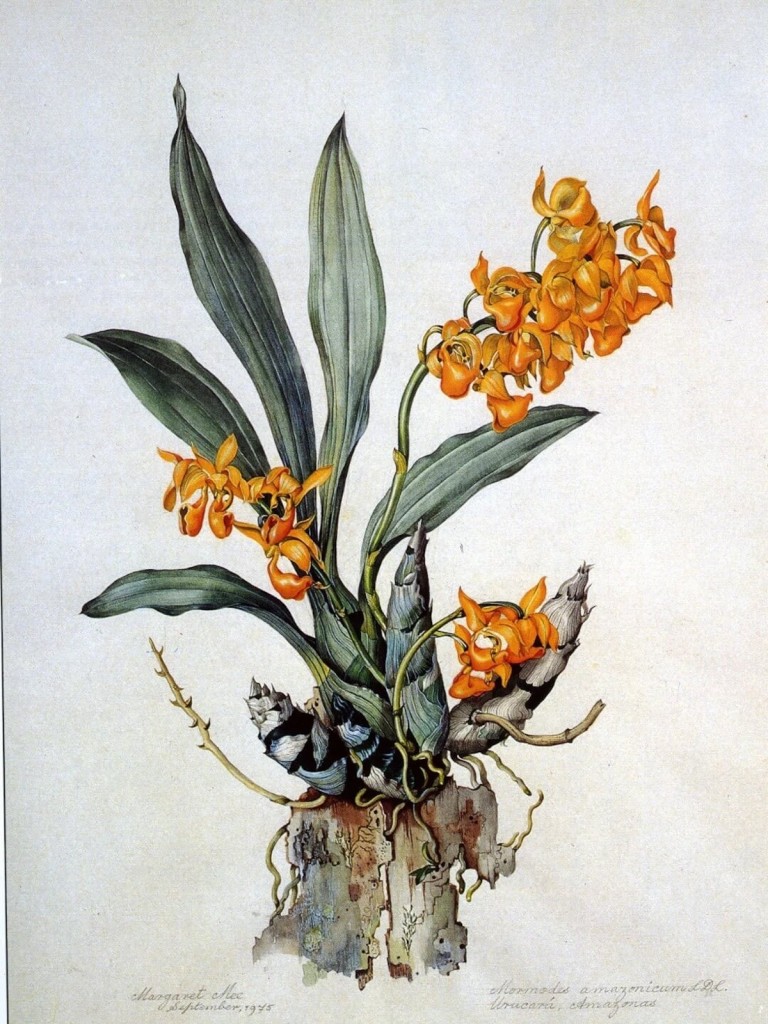
The history of orchidology is often associated with explorers, taxonomists, and great male figures whose names have stood the test of time. However, alongside these official accounts, other figures have worked tirelessly and delicately.
They did not always travel through the Amazon on horseback. They did not publish scholarly treatises or have their names attached to a botanical genus. But without their insight, patience, and talent, a huge part of the history of orchids would have been lost.
Illustrators, painters, gardeners, passionate observers. Women who studied, drew, cultivated, pollinated. Who devoted years to understanding and representing a flower as demanding as it is fascinating. Their contribution was decisive, even if history has often left them on the sidelines.
For a long time, scientific institutions were almost exclusively male domains. Women could participate… as long as they remained in the shadows. Few signatures, little official recognition, rarely any positions. But they watched. They worked. They created.
Their traces still exist, in botanical plates, horticultural archives, museum collections. Today, it is only right to name them.
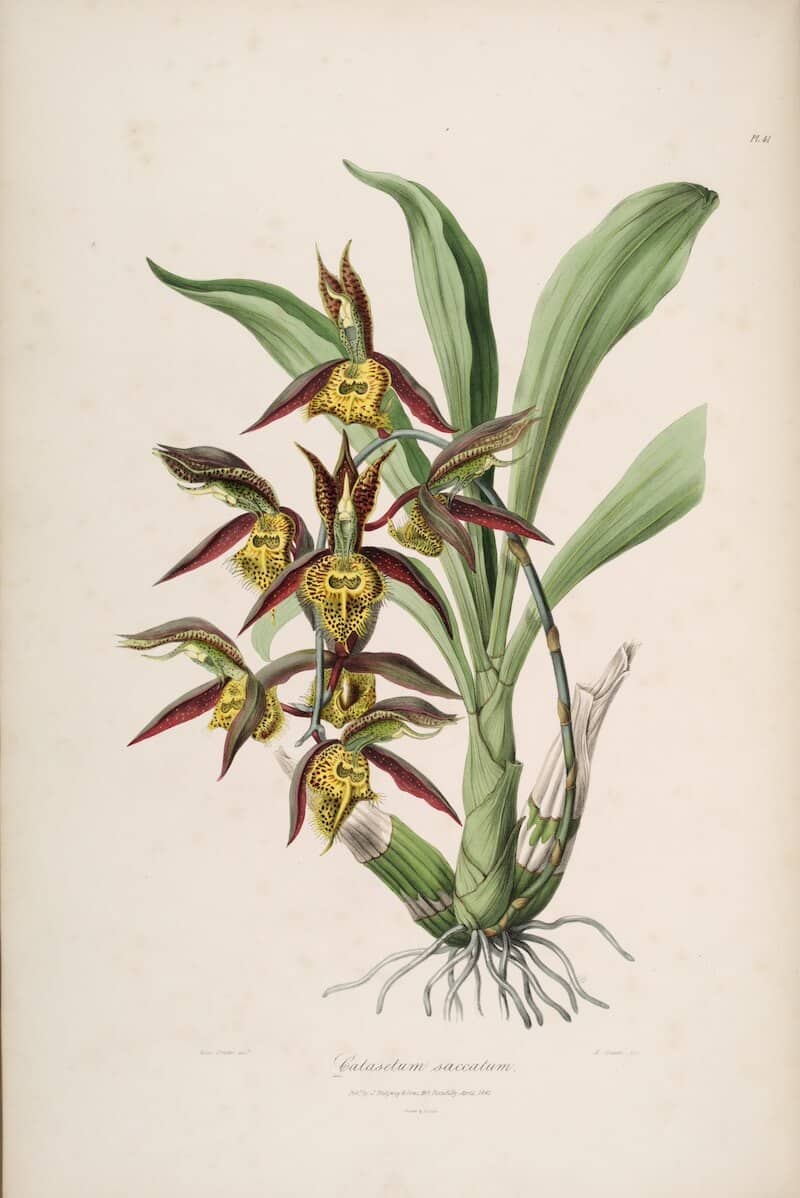
Sarah Anne Drake (1803-1857)
Sometimes referred to as “the Raphael of orchids,” Sarah Anne Drake was the preferred illustrator of John Lindley, one of the great botanists of the 19th century. She is credited with more than 1,000 plates, notably for Sertum Orchidaceum and Curtis’s Botanical Magazine.
At a time when photography did not yet exist, her brush gave visual reality to the new species she described. She was able to capture structural details that were invisible in written descriptions.
She rarely signed her works and received no public recognition during her lifetime. The genus Drakaea was dedicated to her, an Australian orchid with flowers resembling an insect. A discreet, almost symbolic tribute.
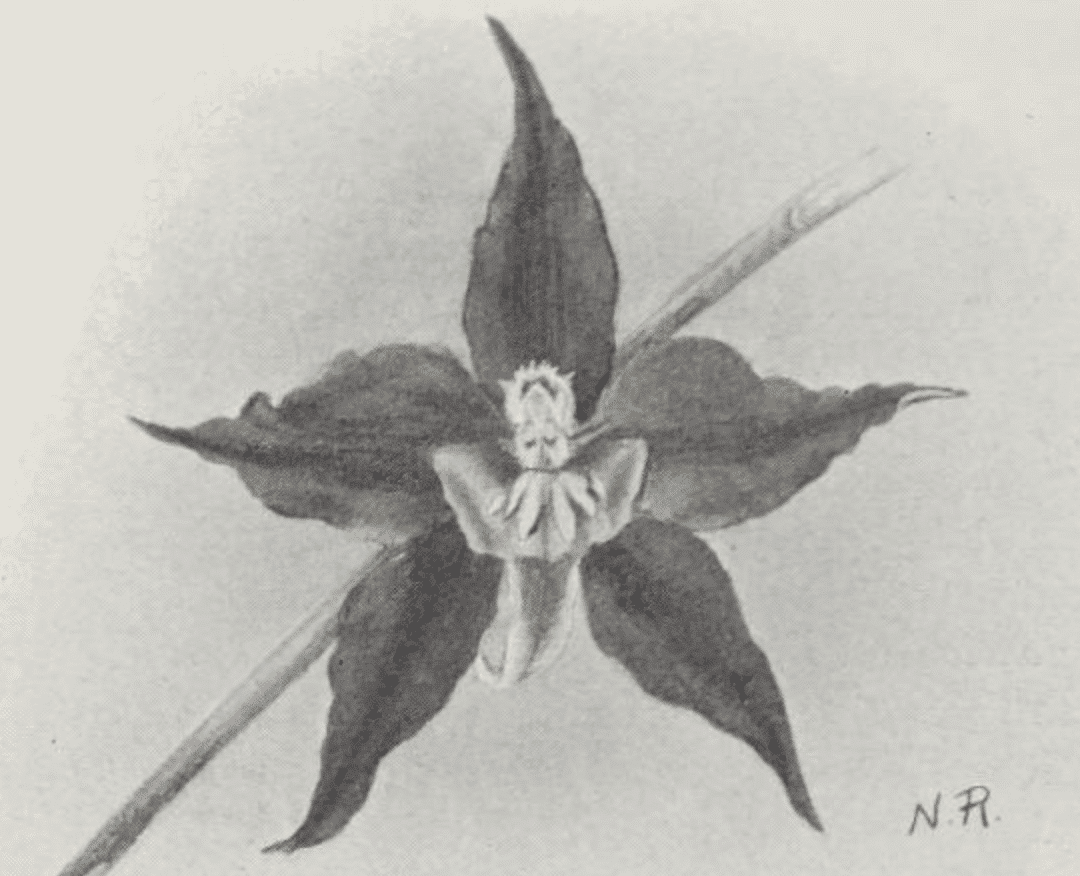
Nellie Roberts (1872-1959)
For more than half a century, Nellie Roberts worked for the Royal Horticultural Society. She produced nearly 4,500 illustrations of hybrid orchids for the RHS’s certificates of excellence.
At a time when photography was not yet capable of capturing the delicacy of floral textures, her work served as the official reference. Each illustration became an archive of a cultivar, sometimes unique.
Despite the importance of her work, she ended her life in anonymity. Her grave has no headstone. Two orchids, Cattleya Nellie Roberts and Odontoglossum opheron ‘Nelly Roberts’, bear her name. Discreetly.
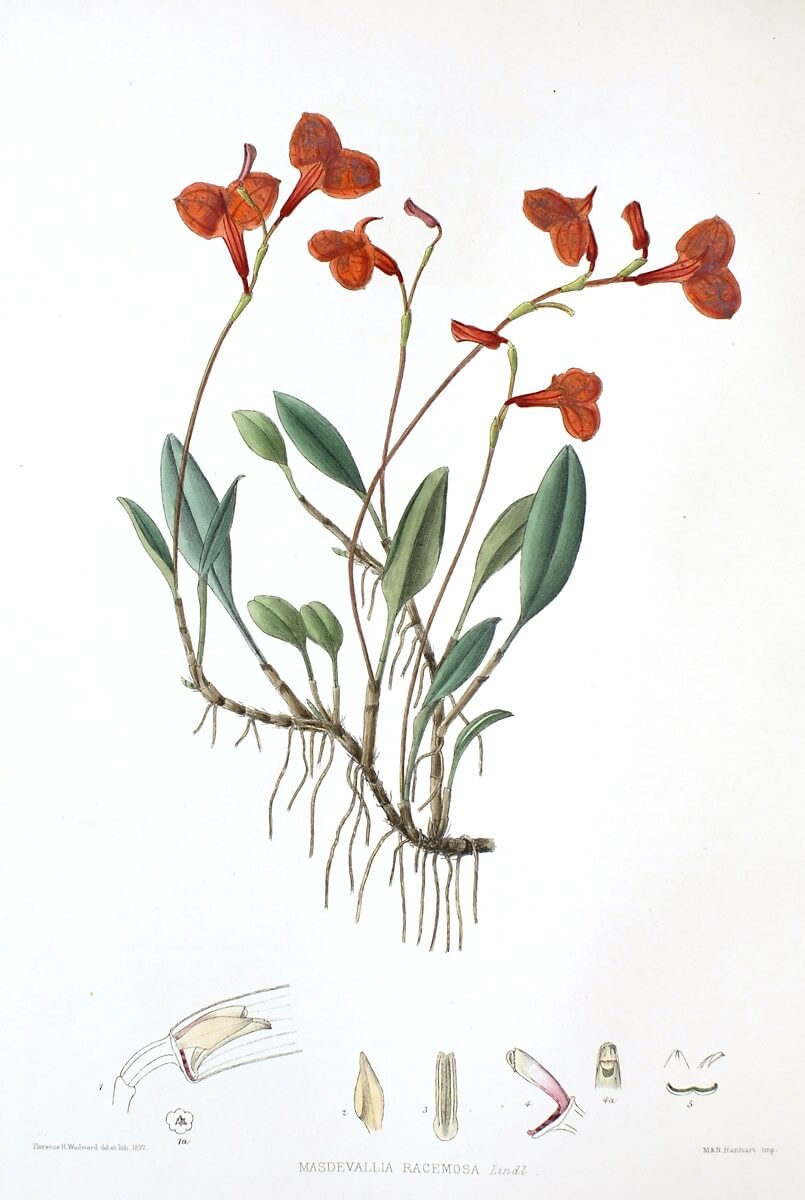
Florence Helen Woolward (1854-1936)
A self-taught artist, Florence Woolward was hired to document the Marquis of Lothian’s private collection of Masdevallia. Her work resulted in the publication of The Genus Masdevallia (1891), a book that is still consulted today.
Her drawings are remarkably precise. Without any formal training in botany, she produced documentation of impressive scientific rigor. Her work remains a bridge between art and science.
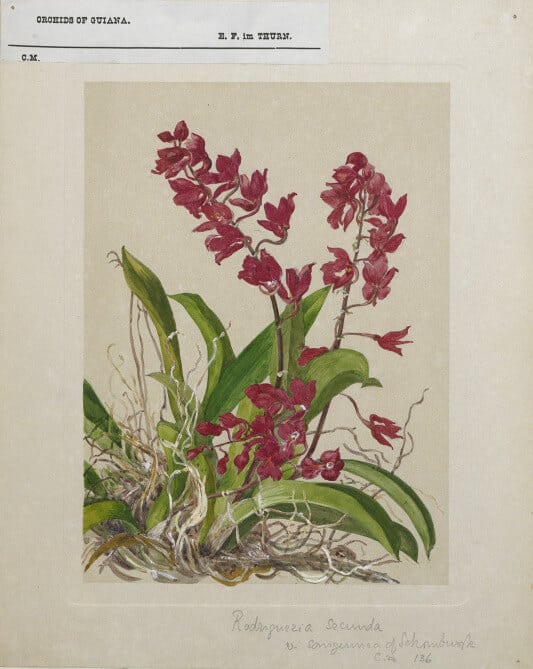
Lady Hannah Cassels im Thurn (1854-1947)
Born a British naturalist and artist, she produced numerous illustrations of orchids and tropical plants. Several of her works are now preserved at Kew Gardens.
Although not officially affiliated with any major scientific institution, she contributed to enriching botanical archives through the quality of her observations and the finesse of her work.
Margaret Mee (1909-1988)
Painter and explorer Margaret Mee traveled throughout the Amazon at a time when few women traveled alone in such conditions. She produced hundreds of watercolors of rare plants, including many orchids observed in their natural habitat.
Her work goes beyond illustration: she was also a pioneer in the conservation of the Amazon rainforest. Her journal combines science, poetry, and ecological commitment.

Marianne North (1830-1890)
A contemporary of Darwin, Marianne North traveled the world to paint tropical flora in situ. Her permanent gallery at Kew Gardens bears witness to the scope of her work.
She depicted orchids in their natural environment, providing a valuable visual record of tropical ecosystems long before the advent of color photography.
To learn more
Botanical illustration has long been one of the few areas where women could exercise a recognized scientific eye, even without official status. Through the rigor of their observations and the finesse of their lines, they have contributed to advancing our understanding of plants.
The Smithsonian Gardens offers a video clip dedicated to three illustrators who have marked the history of botanical art and transformed our perception of orchids.

And today?
The legacy continues. Deborah Lambkin, official illustrator of new orchids described by the RHS since 2005, continues this tradition of excellence. Winner of the Margaret Flockton Award in 2020, she embodies a living continuity between generations.
Female names associated with genera or species remain rare. But their presence in contemporary orchidology is very real.
A memory to cherish
This is not about rewriting history. It is about expanding it. These women were not secondary figures. They were the eyes, hands, and visual memory of a plant world in the midst of discovery. Without them, part of our knowledge of orchids would have been lost.
On this International Women’s Day, it is only right to remember that behind the big names in orchidology there are also patient eyes, precise brushes, and lives devoted to the beauty of living things.
Like a flower stalk sprouting where it was no longer expected, their story also deserves to blossom again.