


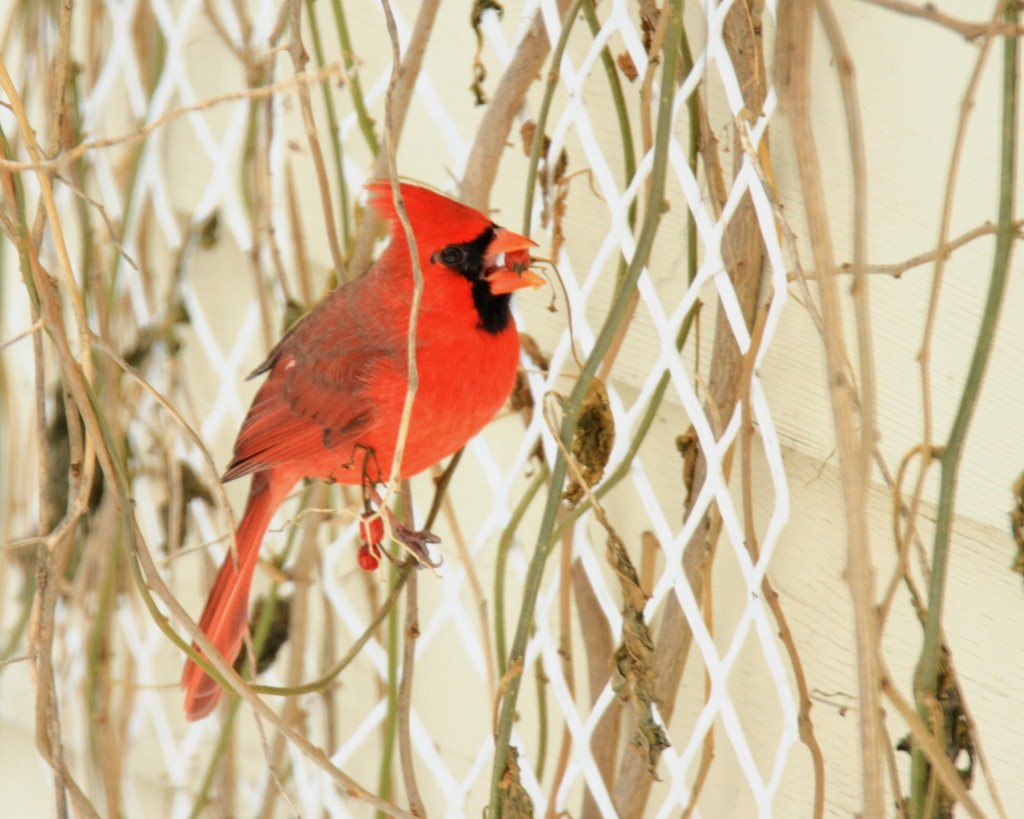
You love gardening and would like to have the cardinal, that distinguished guest, within your reach, but what can you do? Hmm… You need to take concerted action. You’ve seen your favorite bird in your environment. You’ve even heard it sing, but it refuses to come to your feeders! You’ve read somewhere that this charmer is tempted by safflower seed, but is that the solution? Is it your solution? I can’t comment on that, because I haven’t tried this so-called miracle seed.
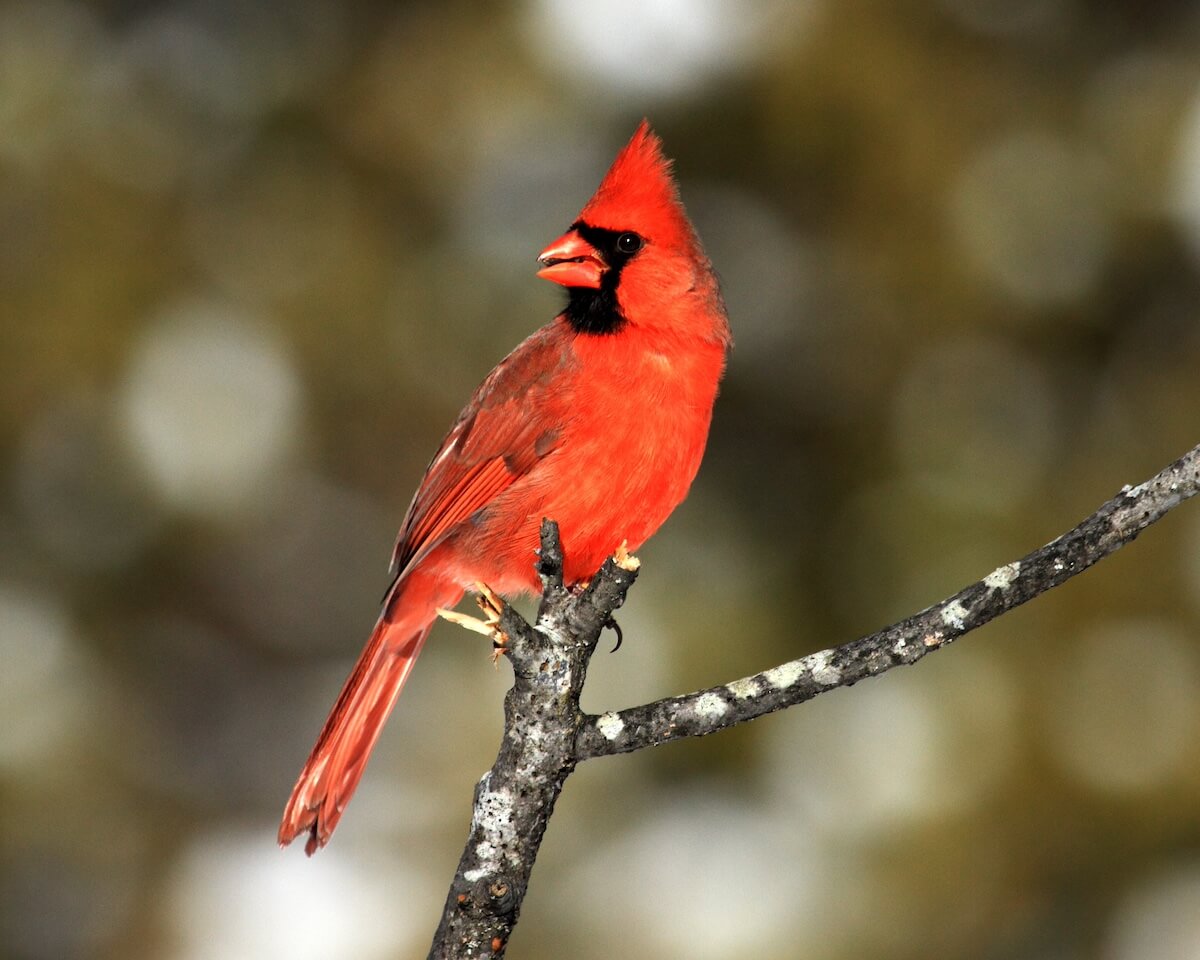
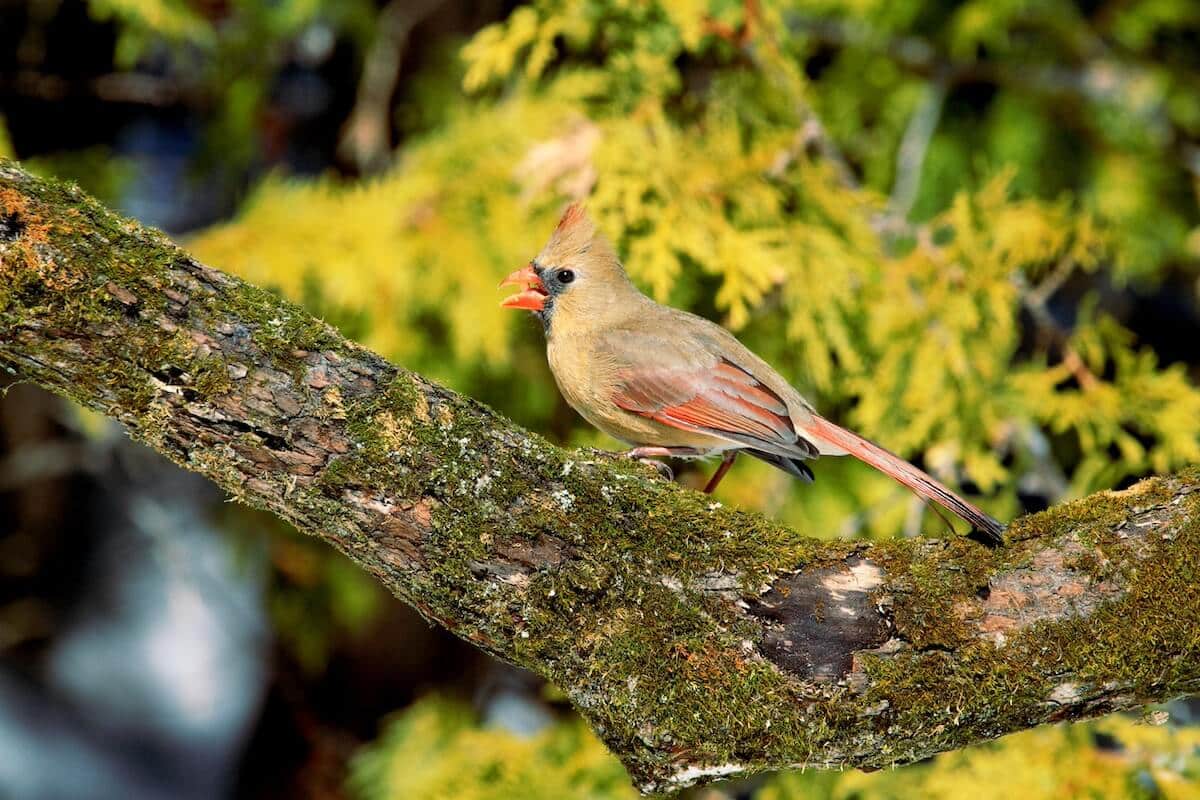
Safflower seeds do not attract squirrels that much is certain. As for me, I decided to set up a suitable feeding station and plant vegetation to attract cardinals. The male ruby-throated cardinal is red, as its name suggests, but the female has olive and buff plumage with a few red edges on her wings and tail. The male has a beautiful black bib. Both have a distinctive crest. The cardinal’s wingspan, with wings spread, is about 30 centimeters. It can live up to 16 years.
To convince it to settle in your yard, you need patience and a few little tricks.
Cardinal feeders and habitat
Cardinals like to have both feet firmly planted on a tray-type feeder, open or closed, or a controlled-flow feeder with enough space for them to perch easily and eat at their leisure. They can also be seen eating on the ground.
One important point to consider, and one that may require some serious thought, is whether cardinals are present in your area. A simple question, but an important one!
I live in the northern part of Quebec City, in a mountainous area. This means one thing: the higher you go, the colder it gets. So it could take our bird a few years to reach a colder climate. In my neighborhood, located 15 kilometers north of the national capital, the thermometer sometimes reads 4°C (7°F) lower than in the city center! Enough to make you shiver… It must be said that this territorial expansion may also be due to good breeding years, when young birds leave their area to find their own territory.
The cardinal’s expansion
Like the mourning dove, the northern cardinal has gradually expanded its range northward over the past few decades. Native to the southeastern United States, it is now increasingly common in several Northern regions. To date, it has been observed further and further north and may reach even more northern regions of the province in the coming years.
Want to see it in your neighborhood? Keep your hopes up! This beautiful bird may well make an appearance there.
Over the past 30 years, two “red waves” have swept northward across parts of North America. Yes, waves—periods when large numbers of cardinals suddenly appear in regions where they were once rare or absent. Observations show that the species has steadily expanded its range farther north and east.
Data from the Breeding Bird Survey (BBS) illustrate this trend clearly. In some northern regions, the number of breeding birds recorded has increased dramatically over recent decades. The Christmas Bird Count (CBC) also confirms this expansion, with counts rising from just over a hundred individuals in certain areas in the early 1990s to well over a thousand by the 2010s.
Occasionally, wandering individuals are spotted far outside the usual range, sometimes appearing in very remote northern coastal communities—likely birds that have strayed during dispersal.
One interesting point: the Northern Cardinal is a species that has actually benefited from the spread of urban areas, gardens, and agricultural landscapes, where bird feeders, hedges, and ornamental plantings provide food and shelter.
My bird garden
JI would like to remind you that I established my bird garden in the northern part of Quebec City. Started over 35 years ago, it changes from year to year. It progresses like any garden, with ups and downs, a sign of slow but planned progress. Even today, I am still discovering ways to enrich my bird garden and support my efforts to protect biodiversity. The cardinal is a wary, shy bird that is easily disturbed at first. Even though my garden is very attractive to them, I had to wait 32 years for them to arrive! It’s true that there were few or no cardinals in my immediate surroundings…
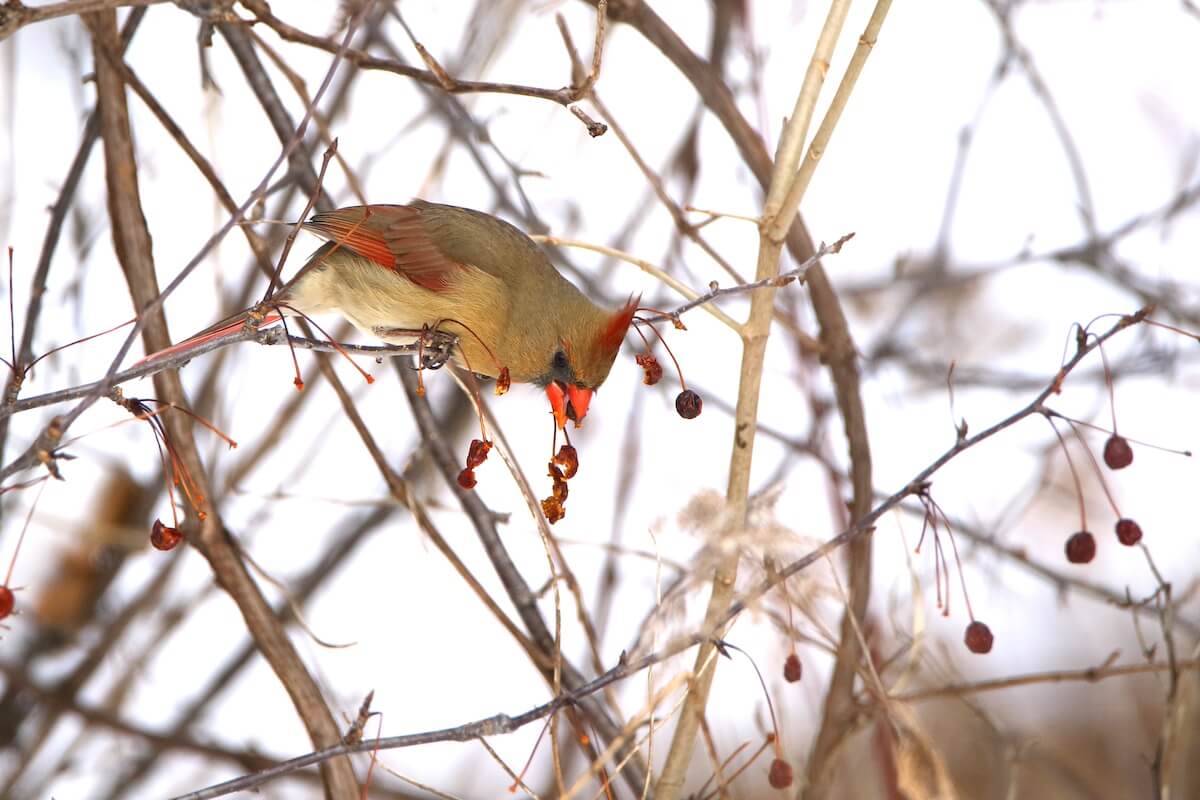
I saw my first cardinal at the Montreal Botanical Garden. It was magnificent! A beautiful male perched on a feeder in an area set up by the authorities to demonstrate “how to create a bird garden” as part of a program run by the Quebec Wildlife Foundation. The foundation wanted to encourage citizens to follow suit. I was about to take a picture of him when, suddenly, he flew away… A child had escaped his parents’ supervision and was playing under the feeders. Oblivious, the adults did not react. Cats aren’t the only thing that scare this bird…
How to attract a cardinal
If a cardinal appears in your yard and starts singing, stop what you’re doing, listen to its melodious song, watch it closely, and once it’s gone, put its favorite food in your feeder: sunflower seeds.
Earlier, I mentioned tray-type or controlled-flow feeders, but I would like to remind you of a basic principle that applies to all new birds. Birds locate their food by sight. So, if they are unfamiliar with your feeder, let them get used to it: put their food on a board, a porch railing, or a patio, etc., and be patient.
To encourage it to settle in your home, you need to provide shrubs or dense vegetation where it can build its nest in a sheltered spot.
Don’t believe what you sometimes read on the web: cardinals do not use closed nest boxes. That is completely false. However, they do occasionally build their nests on ledges or open structures, as do American robins.
Think about which plants to install
Like all fruit- and seed-eating birds, cardinals explore their environment and establish their territory where they can find food and shelter. I spent a long time “studying” different scenarios and reading extensively on the subject, but it was an interesting challenge and I was ready to take it on.
When I first started out, I probably did what many gardeners do: I planted and tried out several different species of plants. My ‘Indian Magic’ crabapple tree (Malus ‘Indian Magic’) proved to be good for him and many other birds. As a friend would say, I cast a wide net. Then I saw that our charmer also liked my black chokeberry (Aronia melanocarpa). He even ate the fruit.
Have I said everything?
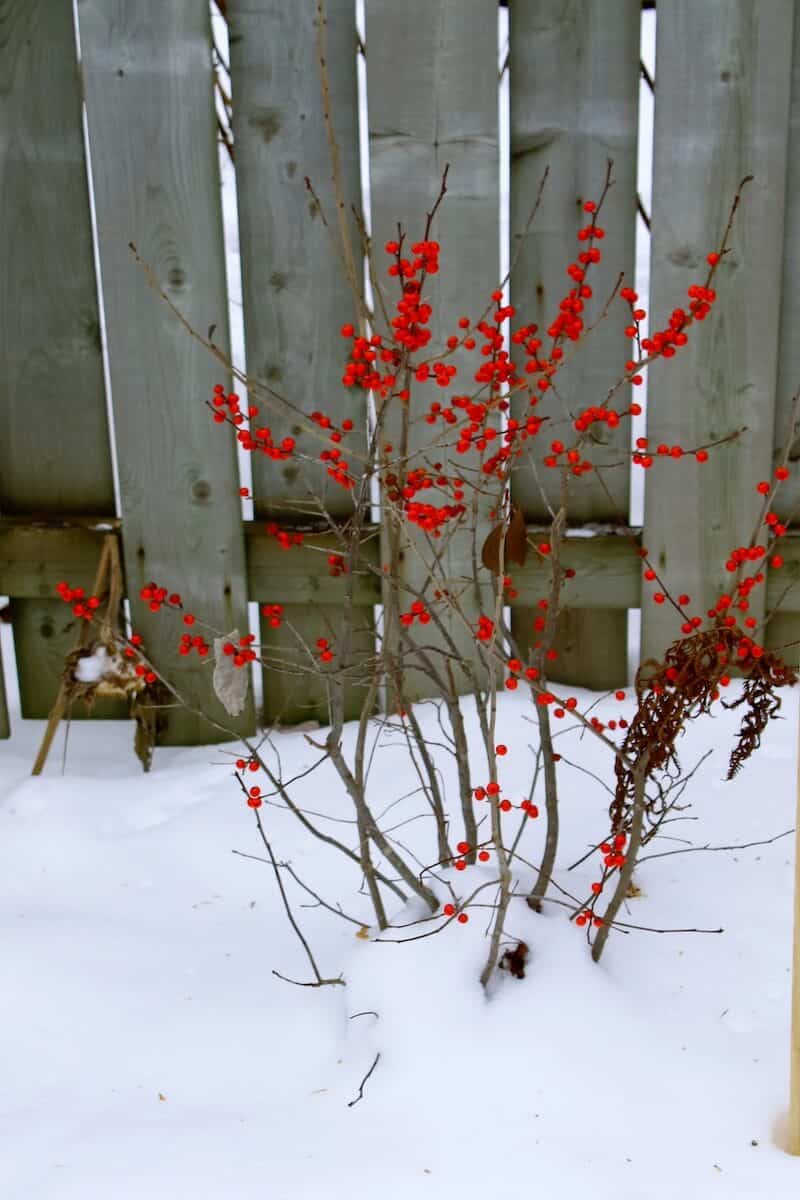
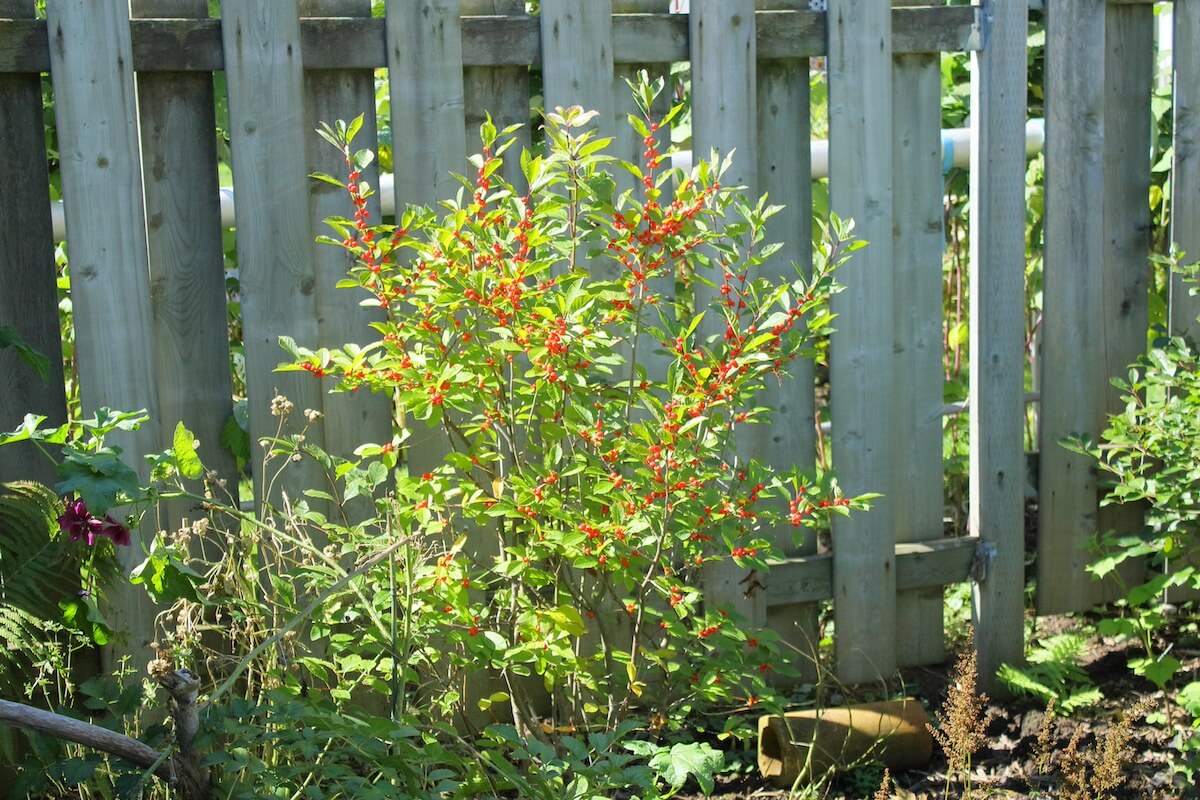
After thinking about it, I don’t think so. I want to help you avoid a pitfall. Someone sold me on the idea of planting winterberry (Ilex verticillata), zone 3b (USDA 3-9). Yes, I bought this beautiful shrub, but after reading up on it, I realized that this plant is dioecious, meaning that you need both a male and a female shrub to get fruit, and only the female plant bears fruit! So, I went to a nursery to buy my two plants. Whew! What a surprise! I was told that it was impossible to distinguish between male and female plants. I was advised to buy five plants and, with any luck, I would have both types. Then I would just have to wait and keep my fingers crossed. Imagine how much space that would take up!
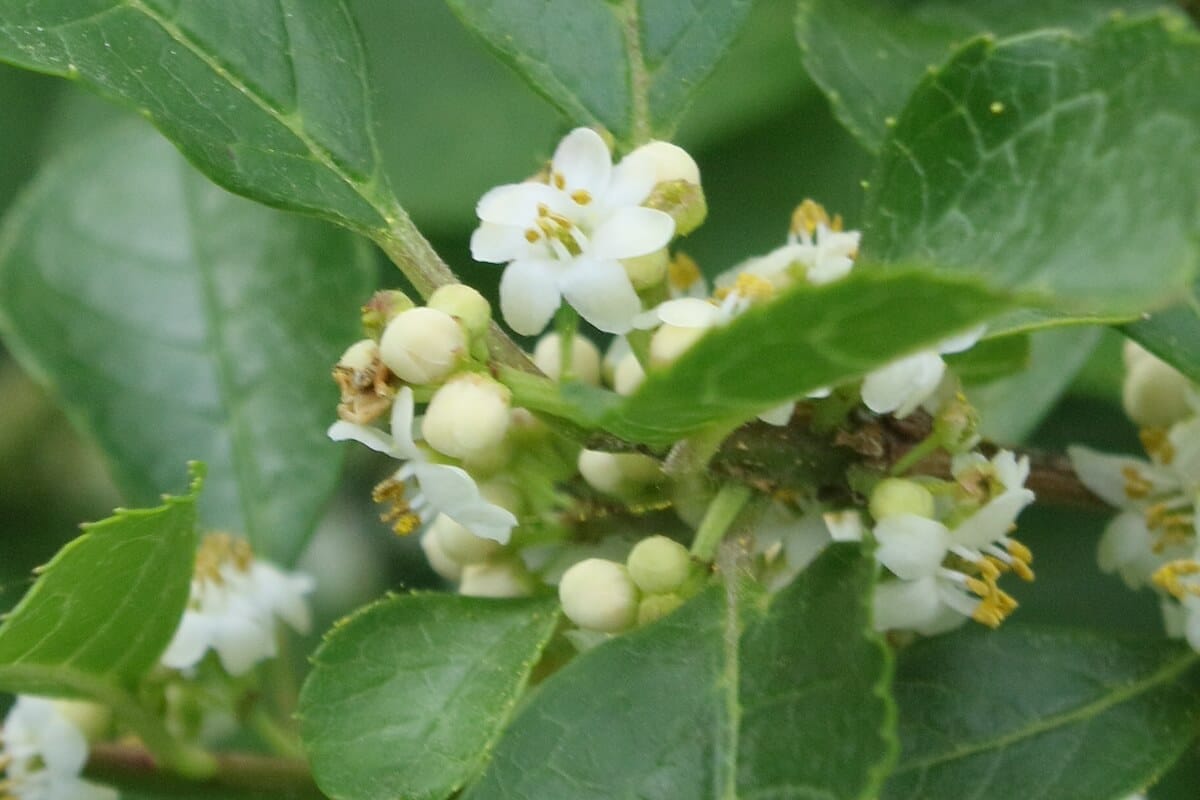
However, I discovered that you can differentiate between the types of shrubs based on the shape of the flower. To be successful with these shrubs, you need to plant them close together. Authors have different opinions on the subject: some say less than 15 meters apart, others less than 50 meters apart. That’s quite a difference! Some even suggest planting the two plants together.
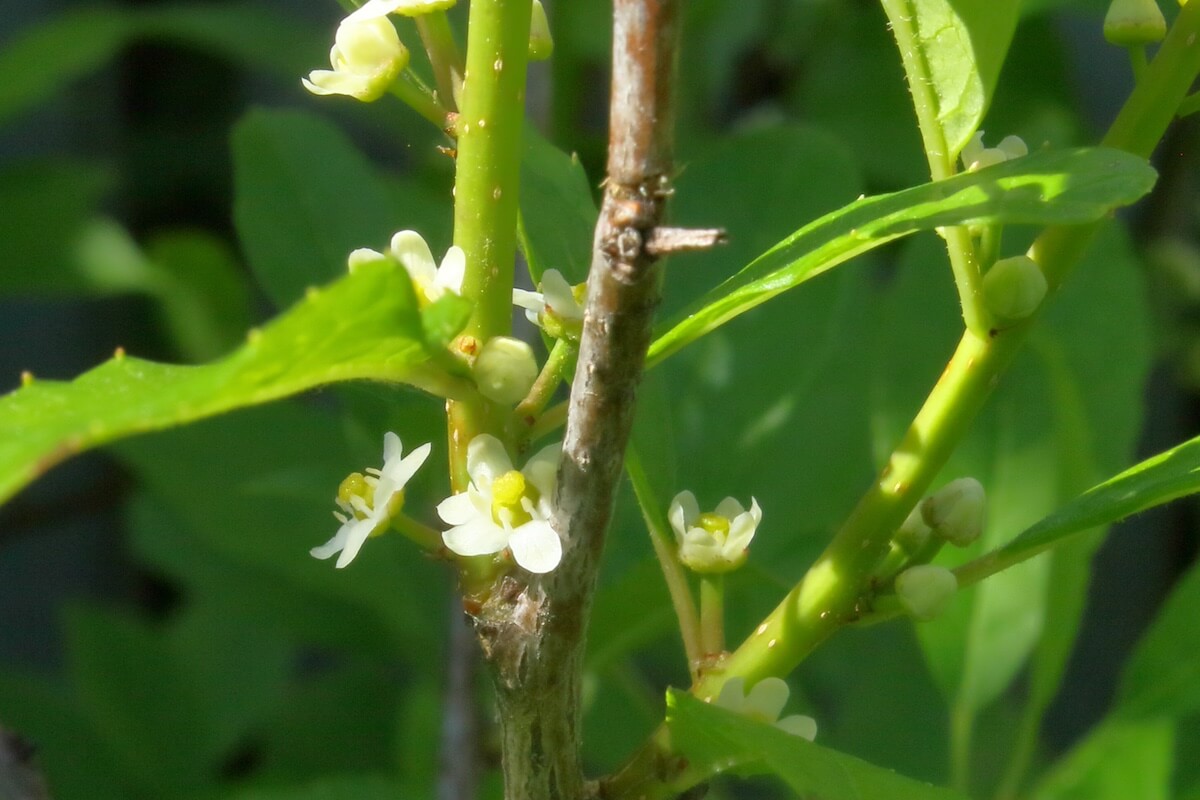
This shrub, native to North America, is often recommended for stabilizing riverbanks. It prefers moist, cool soil. I recommend placing organic mulch around its base to retain moisture. Its roots are shallow.
Other plants to attract cardinals
Here are a few plants to consider for attracting red cardinals. This selection is based on Richard M. DeGraaf’s research on the dietary preferences of red cardinals (DeGraaf, Richard M., Trees, Shrubs and Vines for Attracting Birds, University Press of New England, 2022). Cet auteur est l’un des rares à aborder les préférences des oiseaux.
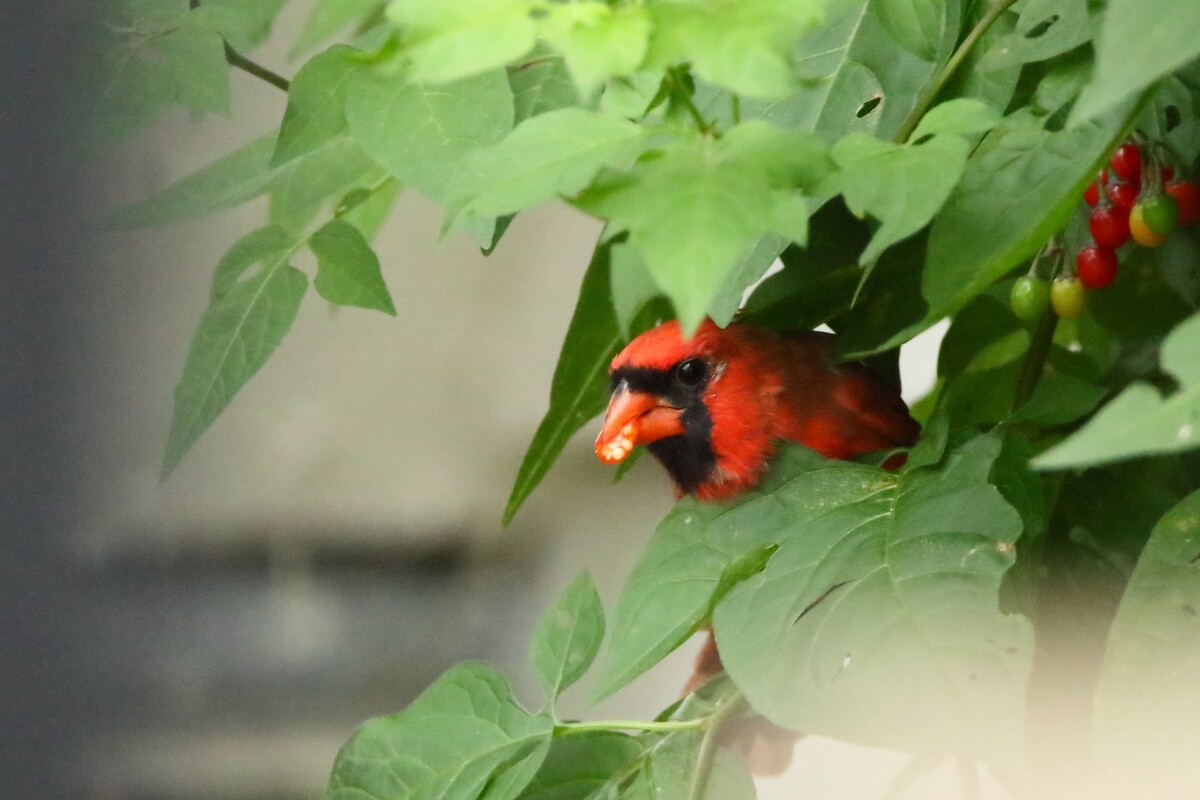
At home, I spotted a male cardinal feeding on the fruit of a hawthorn tree (Crataegus spp.) that I had harvested from a vacant lot. I had taken two seedlings, finding them small enough to plant on my property. You may know that there are more than 800 species of hawthorn in North America! It is impossible to improvise oneself an expert in identifying them, because different species can reproduce and hybridize with each other, which greatly complicates their identification.
Caution!
The two plants I collected from the wild are definitely not the same species. They differ in height and shape. What’s more, one propagates by numerous suckers that can appear up to 10 meters away from the mother plant, while the other does not! Be aware of this phenomenon.
You may have thought you had solved this problem by buying a horticultural variety such as the ‘Inermis Thornless’ hawthorn (Crataegus crus-galli ‘Inermis’). Well, don’t do as I did: I chose it for its beautiful thorns, which would protect the birds! That’s how I learned that in Latin, inermis means “thornless.”
DeGraaf also mentions oaks and pines in his diet. Be careful about their size: your property will thank you for it. Forty years ago, my neighbor planted three white pines (Pinus strobus) in front of his house. His property was shaded by these tall trees. The plants underneath suffered, and you couldn’t see the house anymore… He had to cut them down!
| Thimble berry, Black Raspberry, Blackcap | Common name |
| Pyracantha coccinea | Scarlet Firethorn |
| Carya spp. | Hickories |
| Cornus spp. | Dogwoods |
| Rubus occidentalis | Thimble-berry, Black Raspberry, Blackcap |
| Celtis occidentalis | Sugarberry, Common Hackberry |
| Morus spp. | Mulberries |
| Juglans nigra | Eastern Black Walnut |
| Pinus strobus | White Pine, Eastern White Pine |
| Rubus spp. | Brambles |
| Rhus spp. | Sumach |
| Sambucus canadensis | Canadian Elder, American Elder |
| Vitis spp. | Vines, Wild grape |