


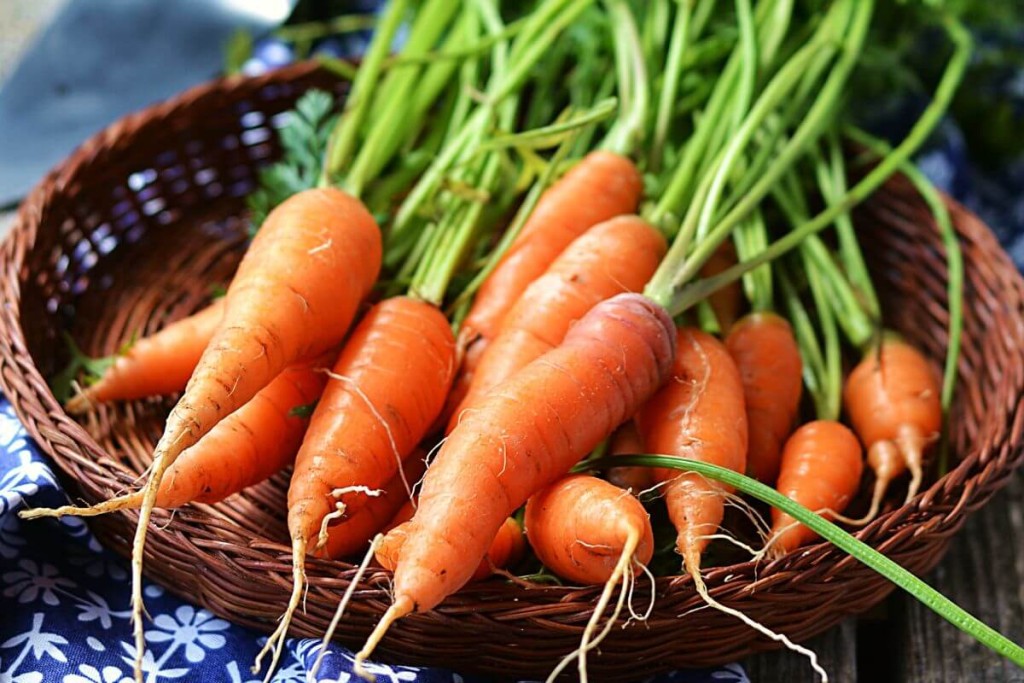
I’ve been growing carrots in raised beds for three years. I get a good harvest, but the carrots are always short, unlike the variety I’m growing, which is supposed to produce long roots. Why is that?
Answer
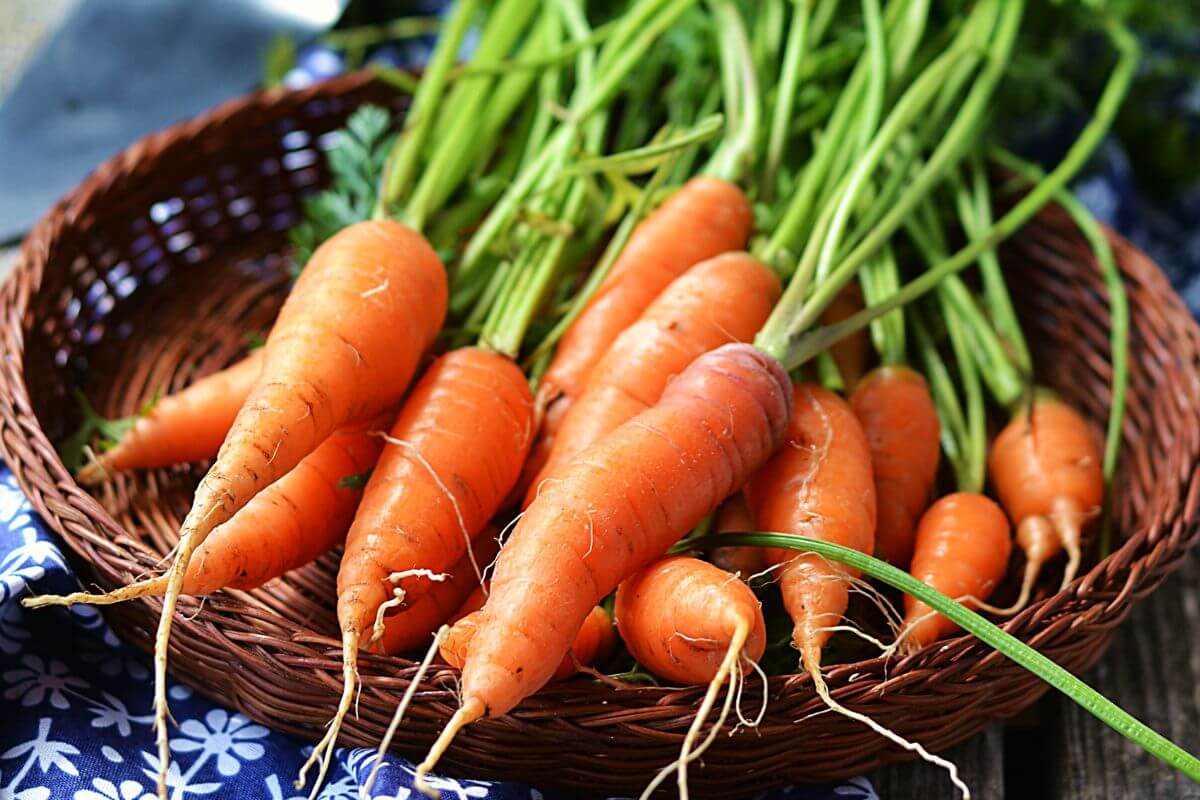
The length of a carrot depends primarily on the variety being grown. Some carrots are genetically programmed to produce long, slender roots, such as Imperator-type varieties, while others are naturally shorter and stockier, such as Chantenay-type carrots. There are even cultivars that grow to be almost spherical, such as the round Paris Market or Atlas carrots.
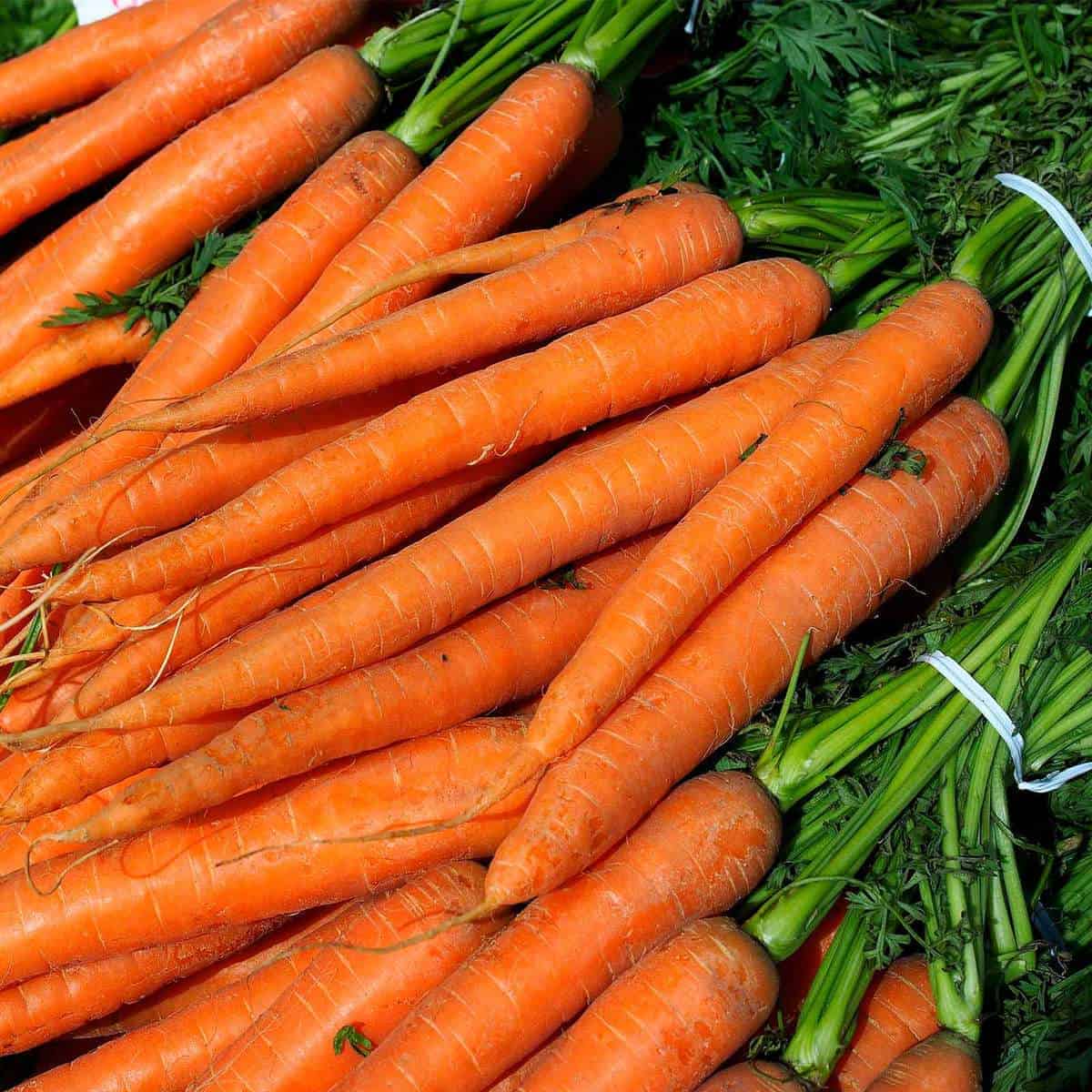
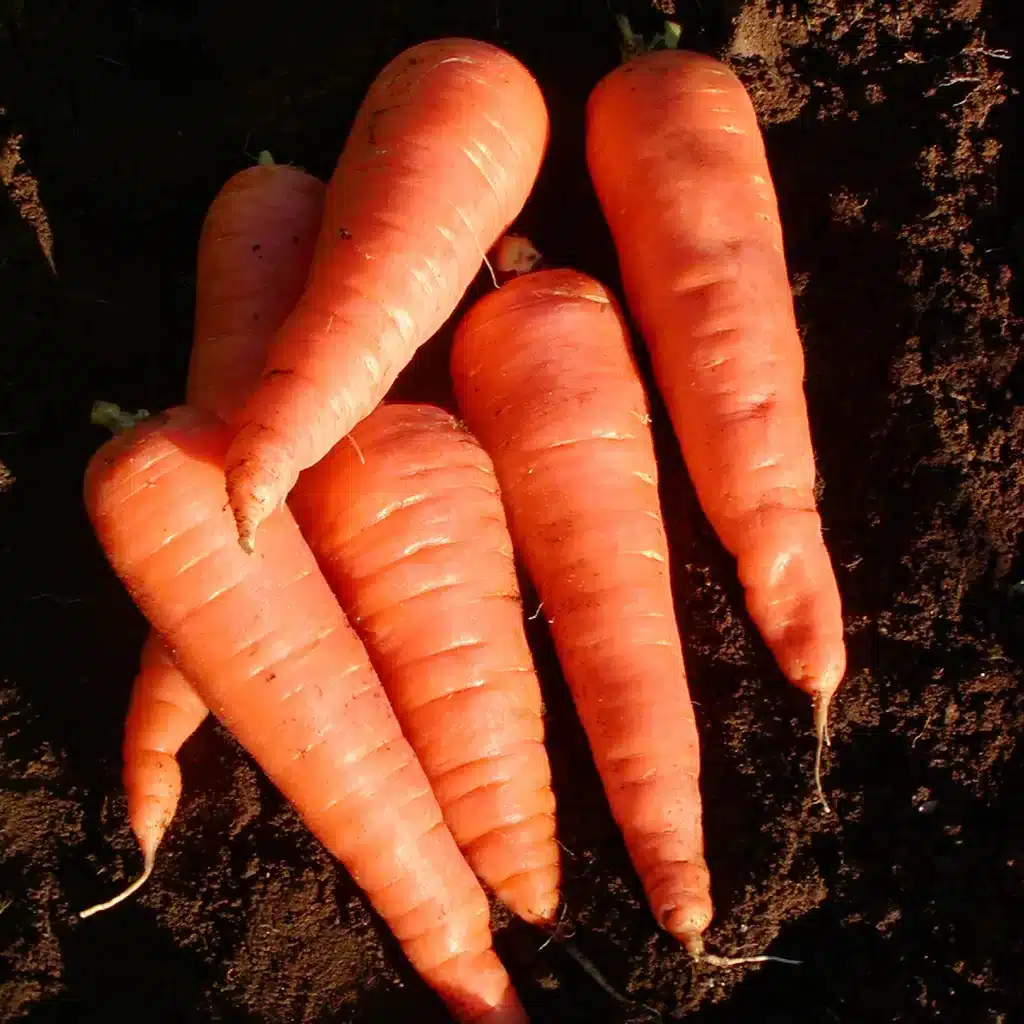
This difference stems from the way the root develops. In carrots, the shape is determined by the plant’s genetics. Genes control, in particular, the rate at which the root grows and the way cells divide and expand. In some varieties, growth favors downward elongation; in others, lateral expansion is more prominent, resulting in shorter, thicker roots.
Deep, loose soil
Another factor that influences the length of carrots is soil texture and depth. The carrot is a taproot; in fact, it is one of the best examples of this type of root. A taproot plant has a thick, vertical main root that grows straight down into the soil. At its tip is a very thin point called the root apex, which precedes the thicker part that we eat.
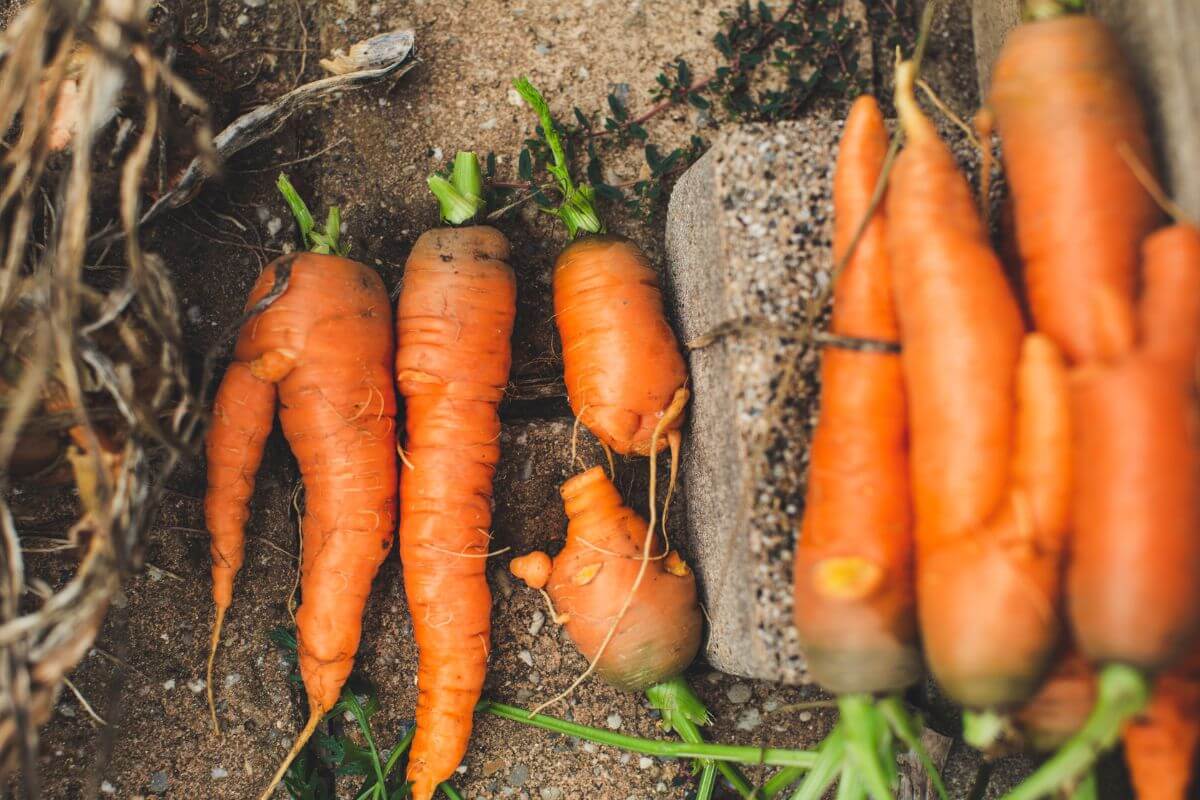
When this tip encounters an obstacle (compacted soil, a stone, a hard layer, or the bottom of a pot), downward growth slows down or stops. The pressure exerted on the root apex slows the elongation of the main root. The sugar produced by the leaves and transported to the root can no longer be used to make the carrot grow longer; it is therefore stored in the already formed tissues. The root thus continues to swell in diameter, resulting in shorter, often stubby, and sometimes even forked carrots.
Biologically speaking
Biologically speaking, the pressure exerted on the root apex leads to an accumulation of ethylene, a plant hormone involved in the response to mechanical stress. This hormone inhibits the elongation of the cells responsible for the lengthwise growth of the primary root. At the same time, ethylene stimulates the formation of lateral roots, allowing the plant to attempt to bypass the obstacle encountered in the soil.
This tip is always located slightly lower than the thick part of the carrot we eat. For the root to continue growing, there must therefore be some free space beneath the already formed carrot. This is why a soil depth of about one and a half to two times the length of the carrot is generally recommended.
For example, a 15 cm (6-in) carrot will grow best in about 25 to 30 cm (10 to 12 in) of loose soil, while a variety that can reach 30 cm (12 in) will need about 45 to 60 cm (18 to 24 in) of soil.
In a raised garden
There are two types of raised gardens: those that are in contact with the ground—typically a wooden frame placed directly on the soil and filled with potting soil—and those that are above ground, meaning containers or pots that rest on legs or on a hard surface.
In raised beds that are off the ground, the situation is fairly simple: the depth of the container directly limits the length of the roots. A carrot obviously cannot grow longer than the available soil depth. To produce carrots of good length, you generally need at least 40 to 45 cm (16 to 18 in) of loose soil, and ideally more for long varieties.
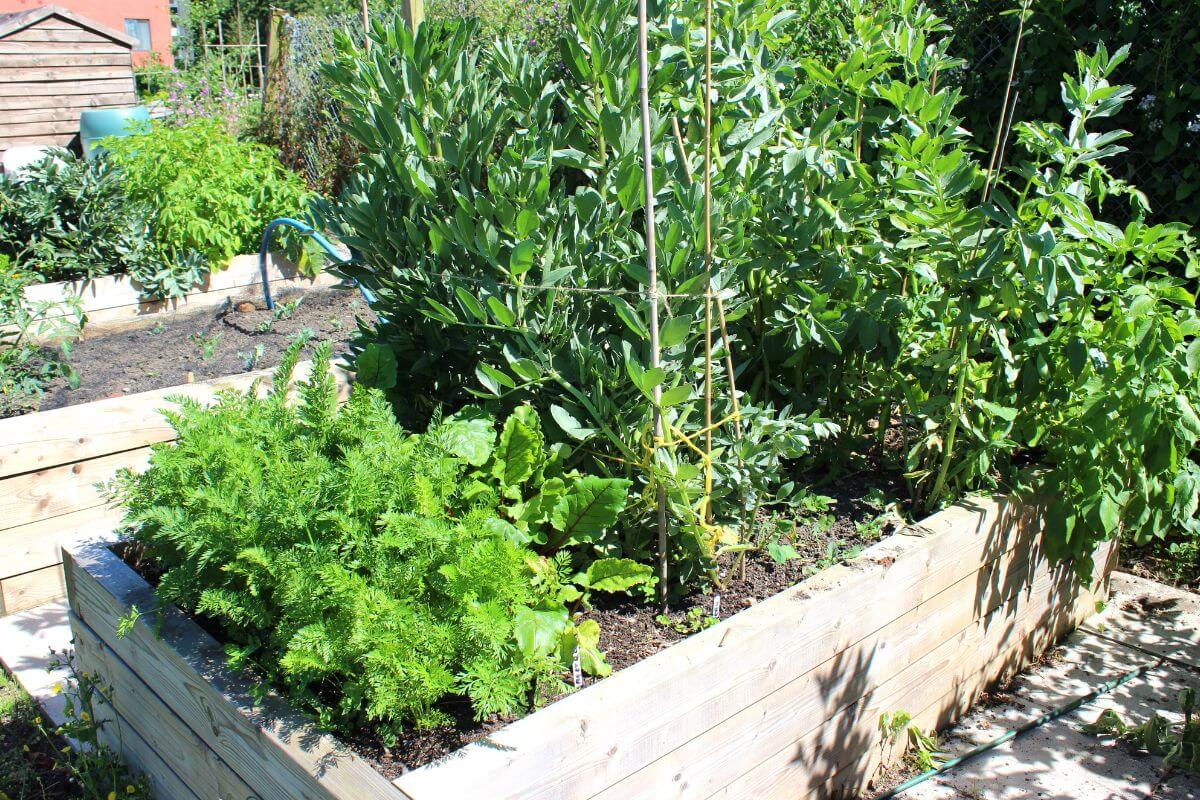
When a raised garden bed is placed directly on the ground, the situation may be a little different. In theory, the roots could continue to grow into the natural soil beneath the boards. However, several factors may prevent them from doing so.
Obstacle 1
First, people often lay down a geotextile or weed barrier under these boards to prevent tree roots or weeds from growing into the garden. This barrier also prevents the roots of our vegetables from growing too deep.
Obstacle 2
Second, even without a liner, the problem may simply stem from the soil beneath the planter. The potting mix added to the planter is generally light and loose, whereas the soil underneath may be much more compacted. When the root tip encounters this harder layer, its downward growth slows down or stops. Even without compacted soil, the abrupt transition from very loose potting mix to compact garden soil acts as an invisible wall for the root. In soil science, this is called a texture discontinuity. The simple change in density can stop or slow the root’s growth.
In both cases, the root stops growing longer and instead continues to thicken, resulting in shorter and sometimes stockier roots.
How do you deepen the soil?
You can certainly use a digging fork or a broadfork to loosen the soil, but this method generally only reaches a depth of about 25 to 30 cm (10 to 12 in). Loosening the soil to a greater depth is possible, but it requires a lot of effort, especially in clay soil. You can achieve this by working the soil several times and incorporating plenty of compost, or by using machinery.
But there’s a much simpler approach… and a much lazier one.
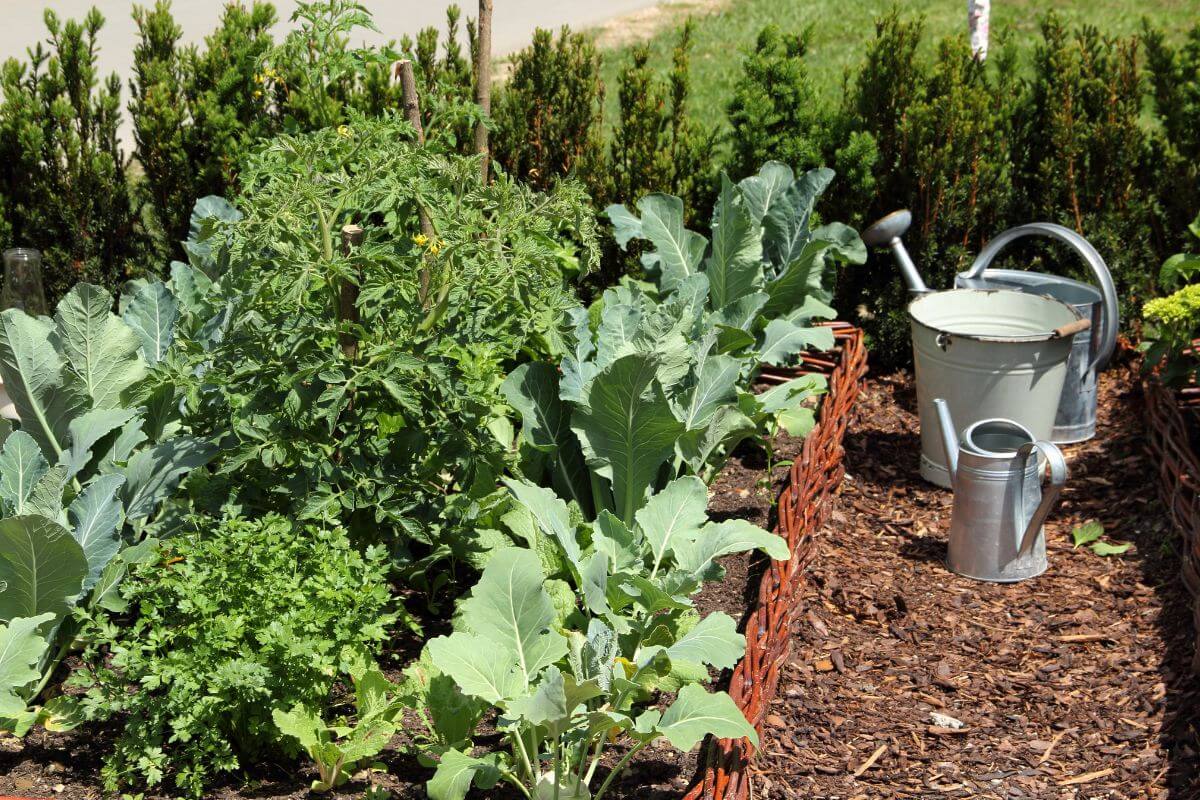
The easiest solution is to let plants do the work of preparing the soil for us. Over the years, the roots of various plants grow deeper and deeper into the soil. As they decompose, they leave behind small channels that improve the soil’s structure, aeration, and porosity. They also add organic matter deep into the soil, which gradually makes it looser. This is actually a good reason to leave the roots of your annual plants in the ground at the end of the season rather than pulling them out completely.
It’s also important to ensure deep watering of the soil. Roots seek out water. If you water the surface too often, the roots stay near the surface. By watering deeply, you encourage the taproot to grow longer in search of moisture, which complements the idea of seeking depth.
Compost and mulch
Adding compost annually and using a biodegradable organic mulch, such as straw or shredded leaves, makes this process even more effective. As they break down, these organic materials stimulate the activity of earthworms, fungi, and soil bacteria. All this underground life literally works the soil for you: it mixes organic matter, creates new tunnels, and gradually transforms compact soil into soil that is more structured, aerated, and fertile.
Over time, this biological activity allows plant roots to penetrate deeper and deeper into the soil and carrots to grow a little further down.
Why not choose shorter carrots?
You can also simply accept the limitations of your soil and choose varieties that are better suited to it. There are several short or round carrot varieties that grow very well in shallow soil or raised beds.
Ultimately, the secret is always the same: the right plant in the right spot. If your soil is shallow, choose short-rooted varieties; for deep soil, go for long-rooted ones.