


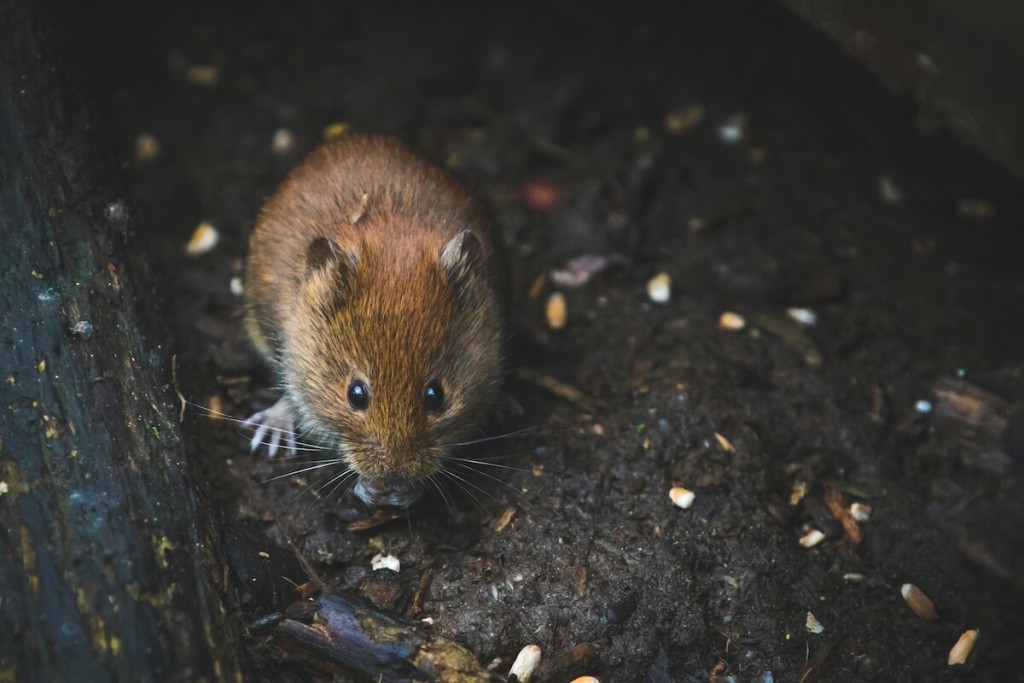
This winter, I told you about the mice in my house (by the way, NOT A SINGLE mouse since we blocked off the “highway.” The Airbnb is officially closed!), and I asked you what topic you’d like me to cover. Someone suggested I talk about the benefits animals bring to the vegetable garden.
Now is the perfect time to talk about this, because most of our little helpers are waking up and getting back to work. And here’s some good news: if you’ve taken good care of your garden this winter, nature is about to reward you for it!
So, what does it mean to extend credit to nature?
You’re probably familiar with the benefits of pollinators, slug-eating toads, and earthworms that enrich the soil. We often talk about them in the summer, when we see them at work. But what we sometimes forget is that these valuable allies need somewhere to spend the winter.
And that “somewhere,” if you want to maximize the benefits of these animals, is your garden!
Here’s how I see it: by providing them with a habitat this winter—uncut stems, piles of fallen leaves, undisturbed soil—you’ve given them a chance. You’ve “accepted” their presence; you’ve offered them a free home for the winter! And now, in March, they’re just starting to pay you back, with interest.
How? Well, the fact that they wake up right in the garden already has its advantages: they turn the soil and eat the larvae of harmful insects that have been hibernating in your garden! But it doesn’t stop there—let’s take a look at how this works for some of our best allies.

(I doubt a fox would spend the winter right in your backyard, but you never know!)
Shrews: they’ve never stopped
Let’s start with a winter star: while others have been hibernating, shrews have been working nonstop! That’s right: some animals stay active and work in the garden even in winter! These little creatures with pointed snouts look like mice, but they’re actually insectivores, not herbivorous rodents. Unlike our mouse friends I told you about this winter, there’s no risk of them damaging your lettuce and carrots! While everything seemed to be asleep in your garden, they were digging tunnels in the space between the snow and the frozen ground, feeding on larvae, grubs, and other hibernating critters.

A shrew needs to eat its own body weight in food every day to generate enough heat and stay awake through the winter. Needless to say, they’ve been busy, and as long as they’re going to hunt somewhere, I’d much rather they do it in my garden!
Another thing to consider: their droppings, scattered along their paths, have enriched the soil with nutrients all winter long. A free and silent fertilizer. (They aren’t exactly huge droppings, I’ll grant you that, but hey! It’s still a little boost of nutrients!) And their spring tunnels aerate the soil, which improves drainage when the snow melts. Good work done behind your back, basically!
To keep welcoming them during the warmer months: leave areas with thick mulch, piles of branches, and slightly wild corners. They’ll find shelter and food there all summer long.
Ground beetles: back on patrol
If you flip over a board or a rock in your garden and a large black beetle scurries away, it’s probably a ground beetle. These nocturnal predators are champions of pest control: an adult can eat its own weight in prey every day—slugs, snails, insect eggs, caterpillars, and May beetle larvae. Some species even feed on weed seeds. A real army!
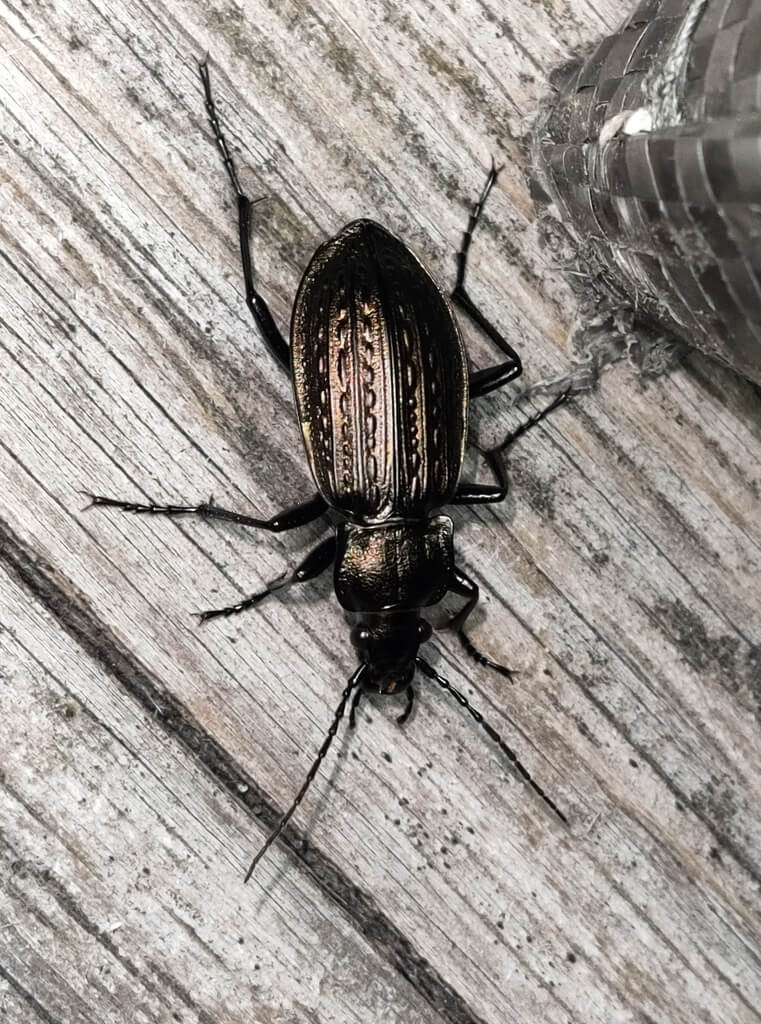
There are matte and metallic ones, smooth and textured ones; my favorite—because it looks like it was knitted—is the granulated carabid.
They spent the winter well sheltered in fallen leaves, under bark, in woodpiles, and also in garden mulch. Here’s one more good reason not to clear everything away in the fall! And now, as the ground gradually warms up, they’re back in action. The first adult ground beetles start hunting again as soon as the soil temperature exceeds 5–6 °C (10°F), sometimes as late as March in sunny spots.
Ground beetles can live up to 2 to 4 years. If you welcomed them last fall by leaving a few areas uncleared, those same beetles are now returning to patrol your flower beds. An investment that pays off!
Toads: business as usual in April
Ah, toads! A single American toad can devour between 50 and 100 prey items per night. Slugs, ants, beetles, caterpillars, flies… nothing is spared. It’s the ultimate security guard for the vegetable garden!
Unlike aquatic frogs that hibernate at the bottom of ponds, toads burrow underground. Thanks to small, hard spurs on their hind legs, they can dig more than 50 cm (20 inches) deep, sometimes up to 1 meter (40 inches)! If your soil is loose and rich in organic matter, there’s a good chance one or more toads spent the winter there. They usually don’t emerge until mid-April, when the nights are truly mild, but the time is approaching! Don’t worry: these holes fill in on their own and are VERY beneficial for your soil structure. We LOVE toads!
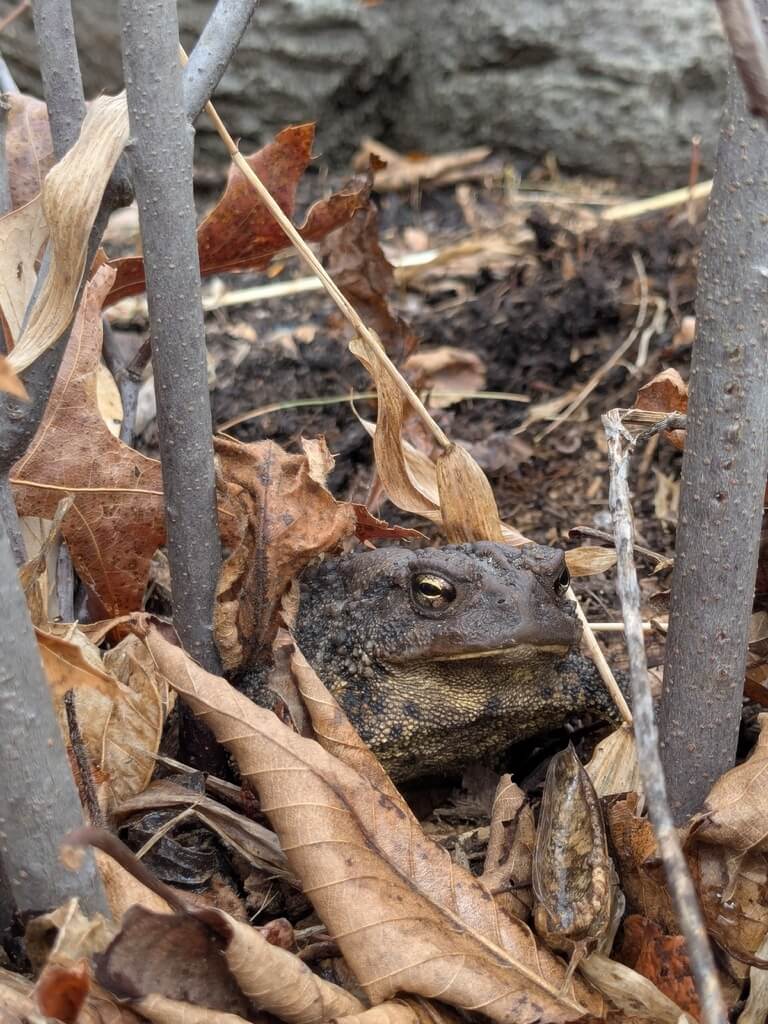
If you want them to come back year after year, the key is simple: keep your soil loose and avoid tilling it heavily. Compacted soil is soil where toads can’t burrow in for the winter, and if they can’t spend the winter in your yard, they won’t necessarily return in the spring. Mulch and organic matter are therefore your best allies for keeping the door open for them!
Earthworms: already hard at work beneath your feet
We’ll wrap up with the ultimate underground engineers. In winter, depending on the species, earthworms burrow deep below the frost line, either in hibernation or in the form of eggs. But their tunnels never disappear. These tunnels now allow meltwater to seep into the ground rather than run off the surface. It’s a natural drainage system that your plants will benefit from.
Fun fact: a study showed that up to 30% of soil respiration during winter is due to earthworms. Even when everything seemed dormant, things were happening down there! (Because, yes, soil needs oxygen for all those organisms and microbes.) And now, as the soil warms up, earthworms are gradually making their way back to the surface. If you see small spiral-shaped droppings on your soil right now, that’s a good sign: your worms are active and hungry for organic matter. They’re coming to help you do a little spring cleaning of your leftover debris from last fall.
The mulch you left on your flower beds serves a dual purpose: it protected the earthworms from the cold this winter, and now it provides them with food to help them regain their strength. Don’t forget to add another layer this summer!
The four-season laidback garden
As you can see, the main idea here is not to clean up too much in the fall. If you’re a laidback gardener, you’re starting to see the benefits of this little “mess.”
It’s a bit counterintuitive in our society, which values “tidy” gardens, but a garden that’s too perfect is a wasteland for biodiversity—and a wasteland for biodiversity is a garden where you’ll have to do all the work yourself! Oh, and while I’m at it: yes, even right in the heart of Montreal, all these animals can (and should) be found in your garden!
By the way, wait a little longer before you start cleaning up—it’s too early, and if you disturb your tenants, they might not be able to give you any interest this year!