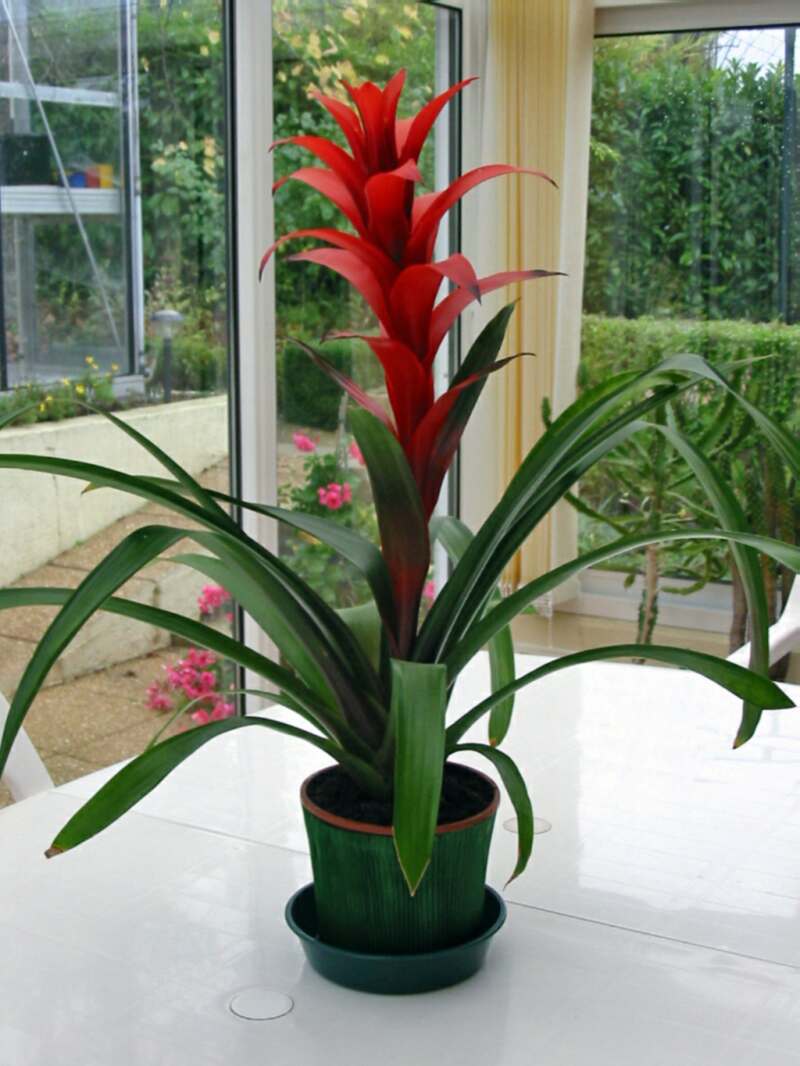
Don’t start throwing stones at me yet! Yes, guzmanias (Guzmania sp.) are fascinating, like many bromeliads. Their flowers are truly unique and spectacular. You can also cultivate a guzmania at home for several months or even a few years. However, from the moment the plant arrives, in full bloom, in a reputable store, it begins its slow descent toward its inevitable demise.
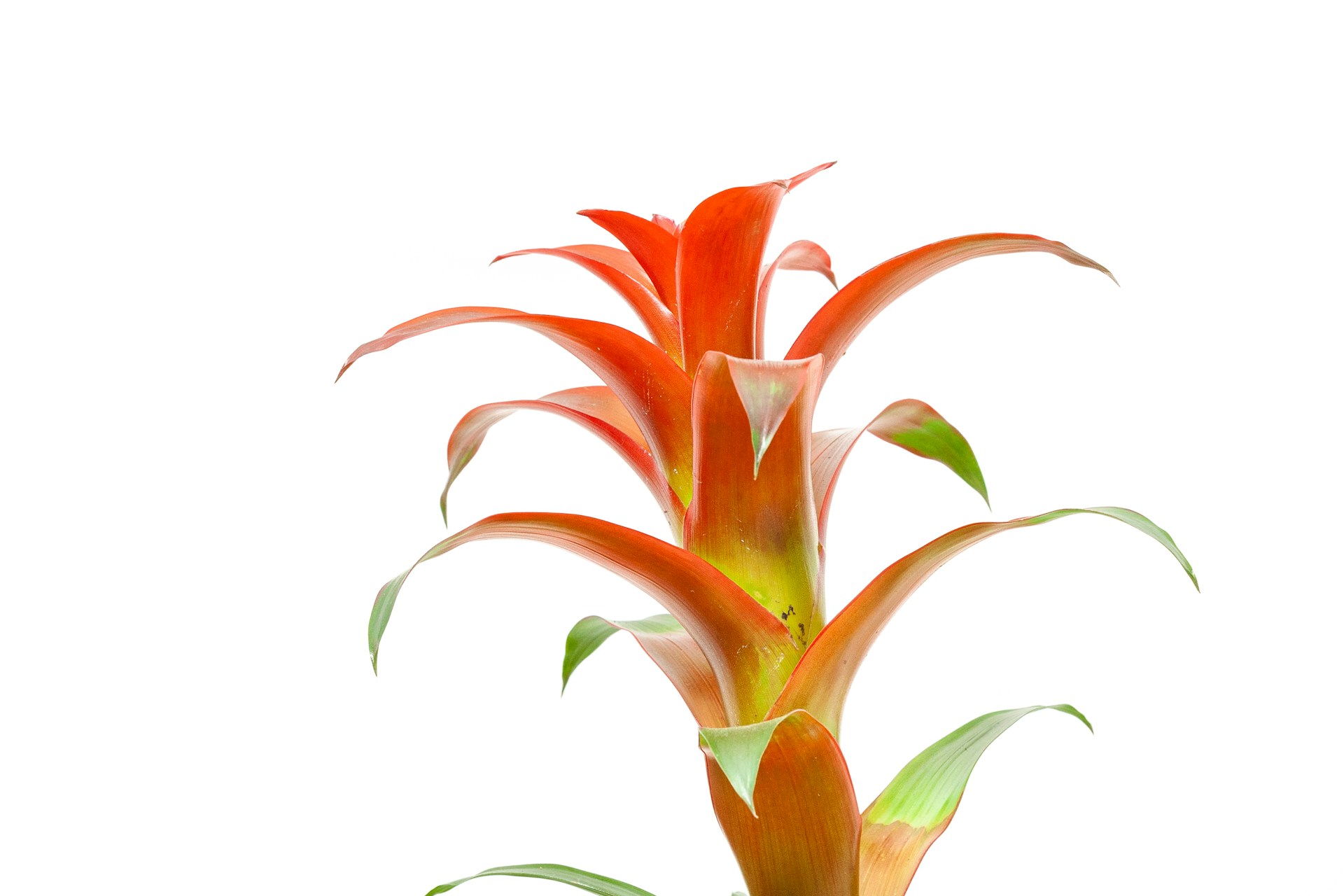
Monocarpy is the culprit
Monocarpy is a reproductive strategy in which a plant dies after flowering. This is a perfectly normal life cycle. Once seed production has begun, the plant’s mission is accomplished. Farewell! Goodbye! Guzmania isn’t the only plant to behave this way. Most Agaves, some echeverias (Echeveria sp.), sempervivums (Sempervivum sp.) and some palm trees also exhibit this behavior.
This is the complete opposite of polycarpic plants, which can produce flowers and fruit repeatedly. Imagine an apple tree that died after bearing its first crop of apples. How sad that would be! But thanks to polycarpy, apple trees produce fruit every year!
Therefore, the guzmania lives its beautiful life as a rosette of leaves for years. Clinging to a tree in the Brazilian tropical rainforest, it waits for the right moment. When the conditions are right, it blooms!
Can we deceive the inevitable?
It’s not precisely known what triggers the plant’s death. Is it the start of the flowering process? Or flower pollination? Or a certain stage of seed maturity? Several hypotheses circulate. Some believe that cutting the flower stalk before seed formation would prevent the plant from dying. Others claim that removing the true flowers with tweezers would solve the problem. It’s impossible to know for sure!
Doctor, how long?
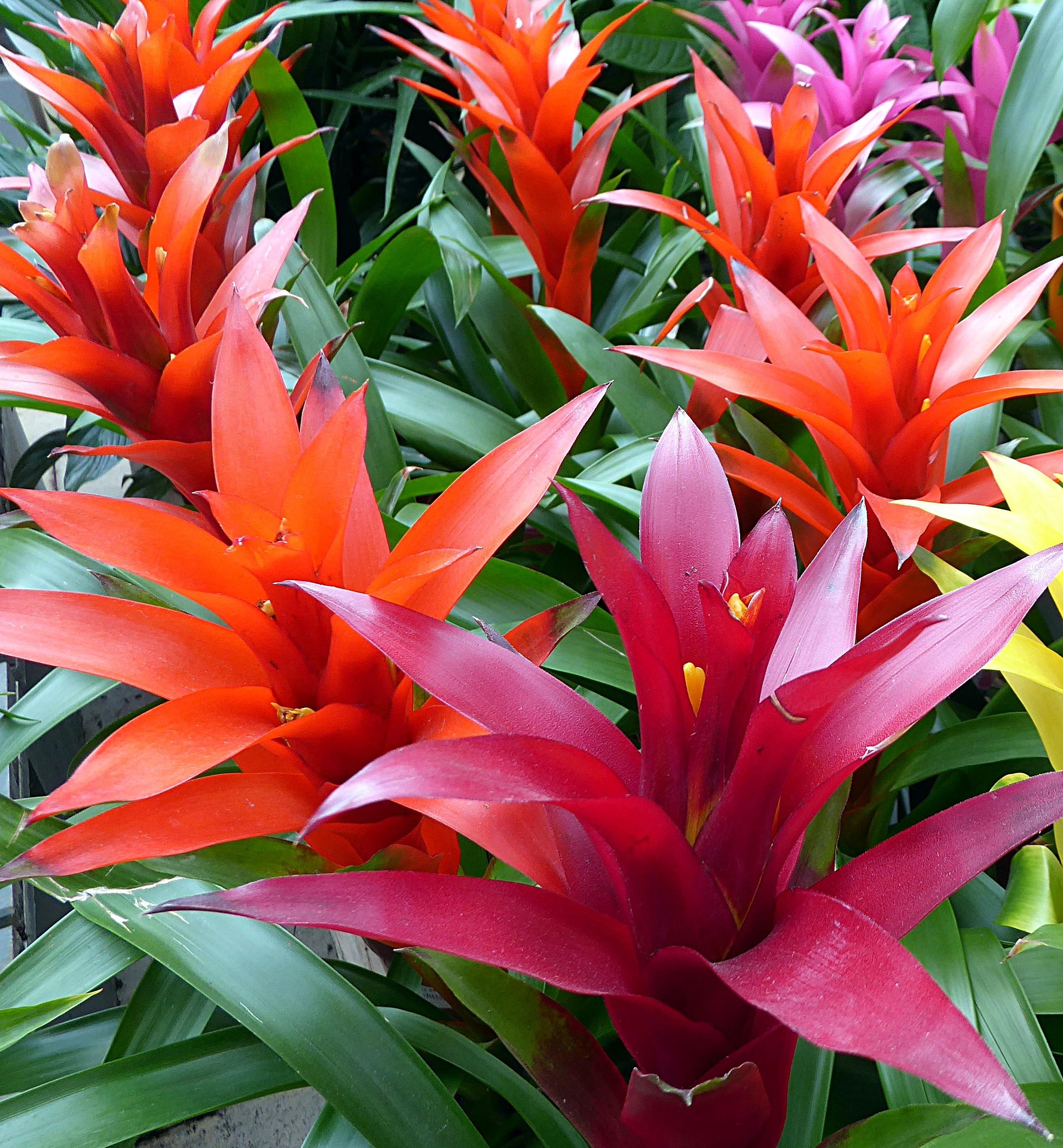
Just because the guzmania’s death is inevitable doesn’t mean it will wither immediately after flowering. In fact, the bracts can remain brightly colored for several weeks, sometimes up to six months or even longer. Once the flower stalk has been cut back, the rosette of leaves can persist for some time. Some gardeners claim to have kept their beautiful rosette of leaves for two or three years after flowering.
Until then…
Since their is a passing written in the sky, let us consider the one we could do without! After all, poor care can also lead to an avoidable death.
For sunlight, guzmanias prefer very bright spots, but without direct sun. Large, east-facing windows are ideal. The answer to your next question is yes! Water the cups of the leaves! It’s important to know that bromeliads which can receive water in their leaf cups have a root system which is less tolerant of overwatering. There’s an art to watering guzmanias. Firstly, do not fill the cups completely with water, only about halfway. Then, you still need to water the potting mix, but be careful not to overdo it.
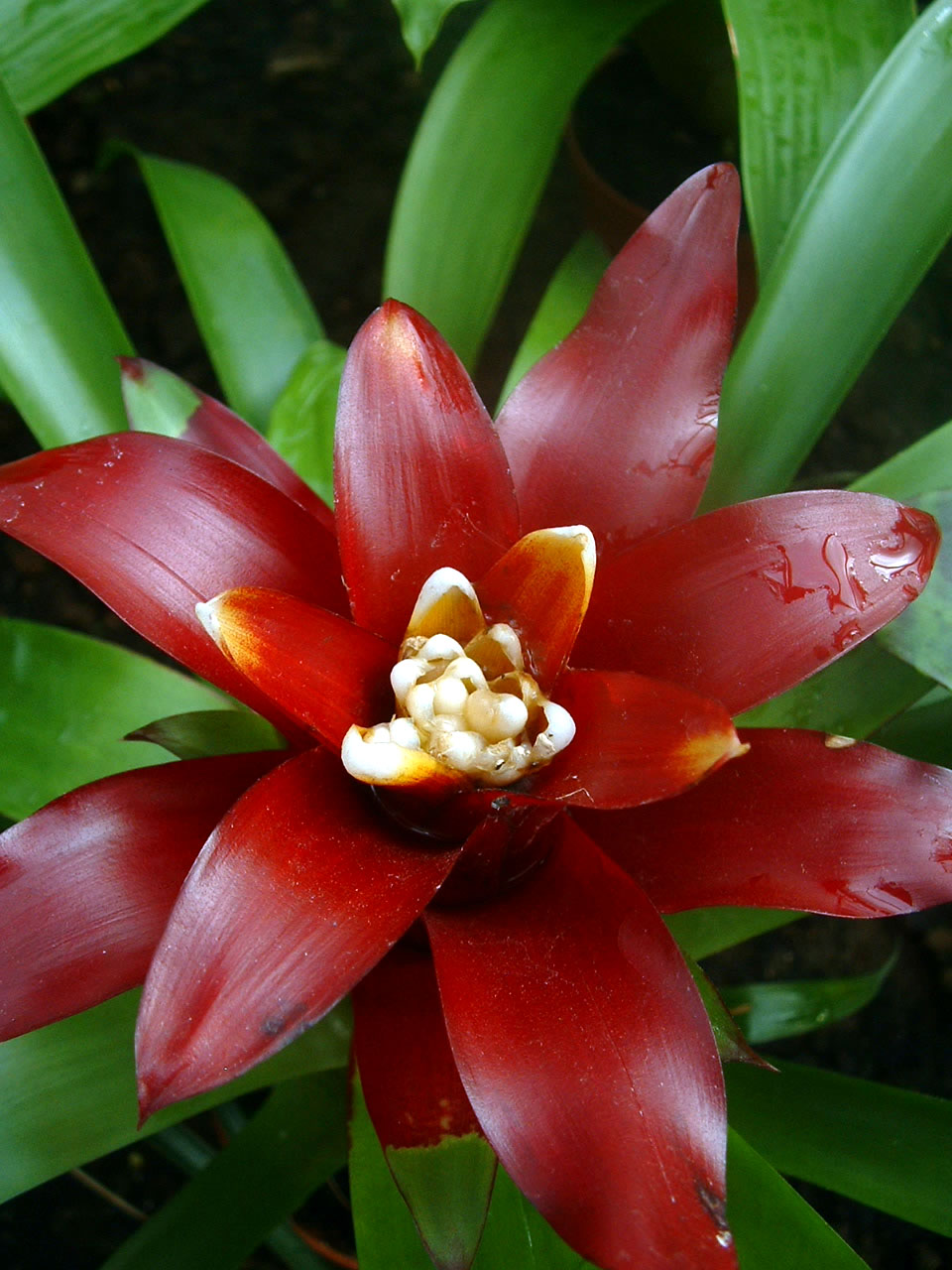
Therefore, the choice of growing medium is crucial, as guzmanias need to grow in a potting mix that doesn’t retain water for too long. There are as many recipes as there are gardeners, but a mixture of moss and bark, or the addition of sand, are often cited as winning combinations.
Tap water is usually fine for watering. However, if the water is too hard or mineralized, it’s best to use rainwater or demineralized water. Brown leaf tips are often a sign that the water isn’t suitable (they are also a sign of insufficient humidity, so it is important to consider both).
Of course, being a plant native to tropical rainforests, the guzmania prefers high humidity. This makes it an ideal plant for the bathroom. However, this isn’t essential, and the guzmania can be grown in a regular room with lower humidity.
The same goes for temperature! It’s paradise when it’s between 24 and 26°C (75–79°F), but 21°C (70°F) is fine, too. Avoid going below 15°C (59°F).
And that’s how you prevent the guzmania from dying prematurely. You’ll certainly never find this plant on a list of easy-to-grow plants. However, many gardeners manage to extend its flowering and leafy life by several months, and sometimes even years. Before dying, the Guzmania will produce one or more offshoots, often called ‘pups’, which will ensure the survival of the species. Simply detach these offshoots from the mother plant and repot them to start a new life cycle!