
I have a dream. A modest dream, to be sure, but a dream nonetheless: a row of cute little plants on my bathroom counter. Not big ones, mind you! Small ones. Tiny ones. A mini-jungle next to my sink, like on those beautiful Instagram accounts where everything is bright and green and where no one ever seems to have hard water in their faucets. The kind of meditative little plants you can gaze at while brushing your teeth, instead of stressing about the day’s to-do list.
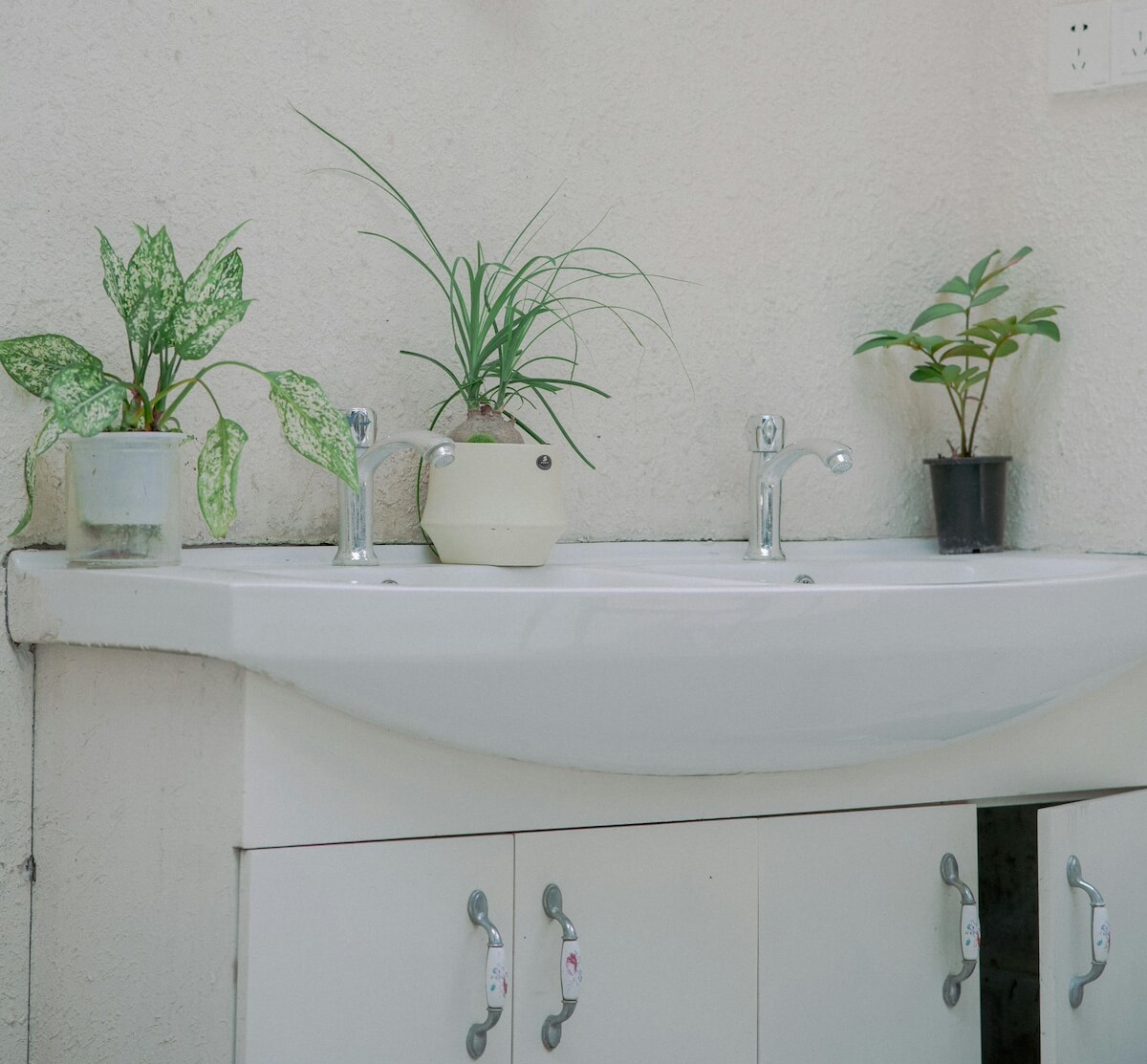
In my head, it’s charming. In reality, it’s… a little pathetic! I do have my little pots. I do have my little plants. Except they’re struggling. Really struggling. I don’t know how else to put it: my potted plants look like they’ve been trying to die for years without quite managing it.
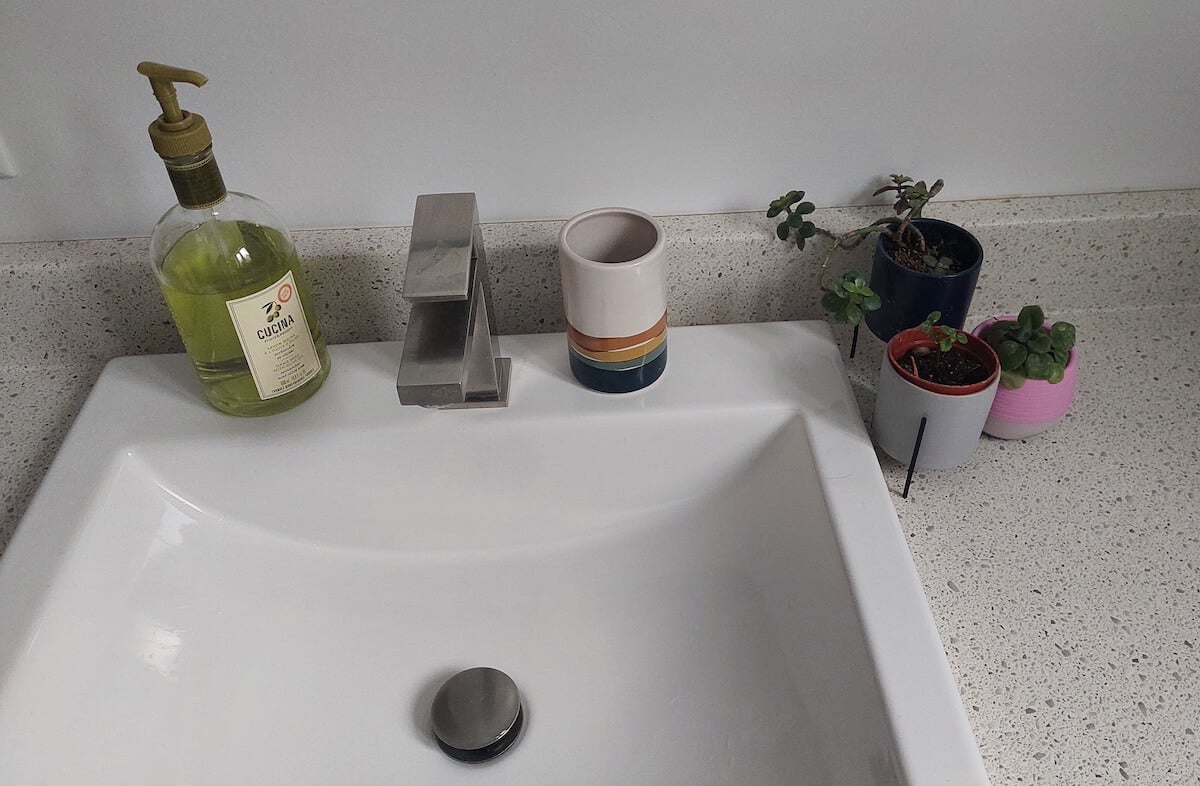
So, since curiosity is my biggest flaw, I did what I always do in these situations: I did some research. And what I found out was… well, that I hadn’t followed the most basic recommendations!
My initial hunch
Here’s what I was thinking: a small pot means less soil. Less soil means less water retention. So the soil dries out faster, and you have to water more often. This line of reasoning was especially stressful for me because, in my little windowsill garden, I have a jade plant and an African violet, which have different needs.
Confession: A nursery employee once told me that the African violet was like a jade plant—that they needed to dry out between waterings and that was that. While writing this article, I learned that, in fact, these are two plants with very different needs… (We’re lucky to have a great team, and thankfully my articles are proofread by experts!) I often warn you against taking Paulette’s advice on social media, but I never thought a nursery employee could be a Paulette! So I’ll say it again: do your research using reliable sources! Me? I’m not a reliable source for this—I’m a biologist, not a horticulturist: trust me for shrews, not for caring for violets!
I have a mental block when it comes to succulents: I’ve heard “let them dry out completely, but water them like there’s a flood!” so many times that I find myself looking at them with preemptive guilt every time I reach for the watering can. And as for the poor violet, well… It’s dried out way more often than it should have, and my ignorance is the only reason!
Anyway, here’s my theory: I don’t water often enough because I’m afraid of overwatering, and the plants suffer from drought in their little pots that dry out too quickly. Makes sense, right?
But that’s not really my problem!
The Great Reversal
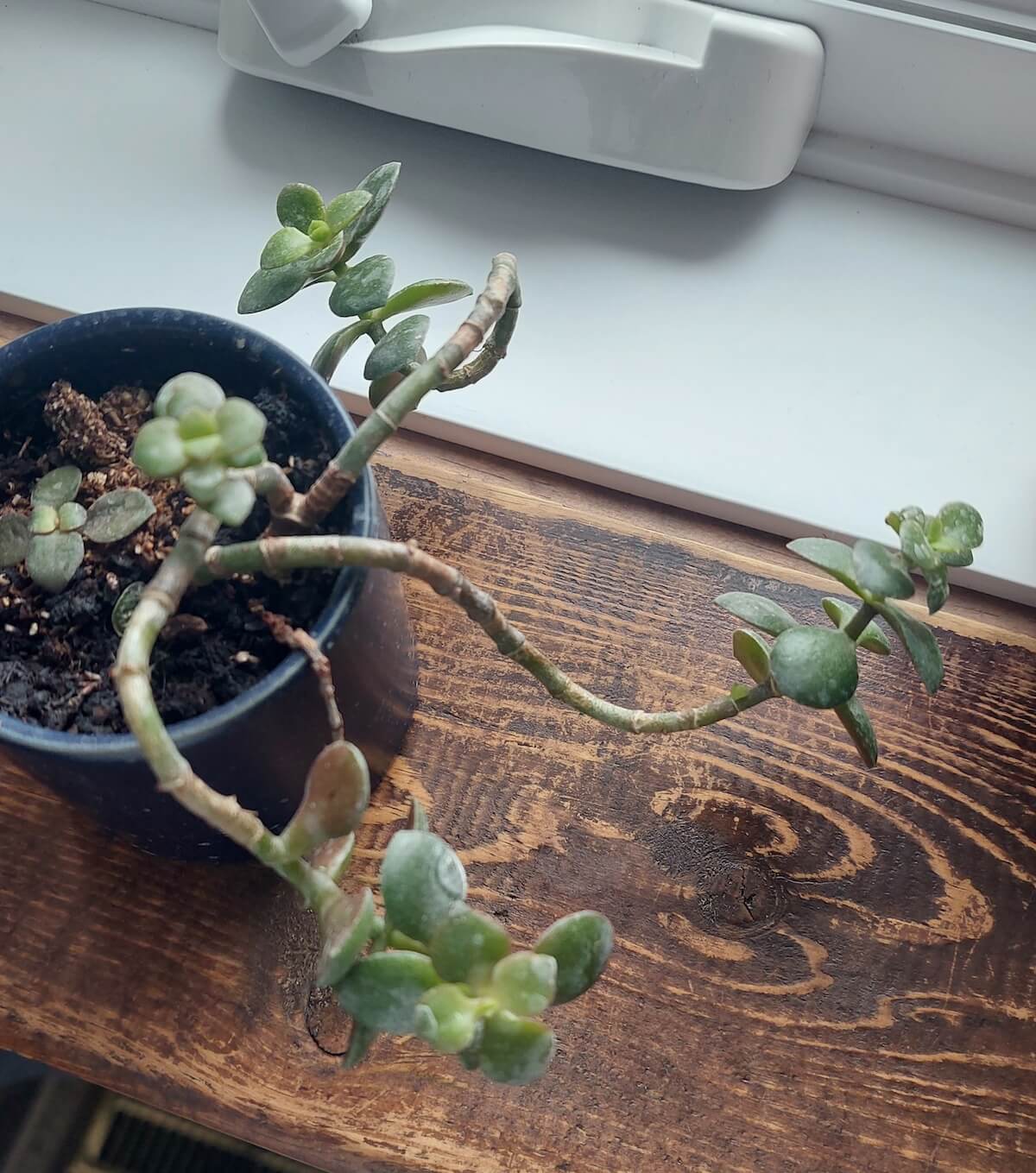
First finding from my research: for succulents like Crassula, small pots aren’t a problem—they’re actually recommended. That’s because the small amount of soil dries out faster between waterings, which is exactly what these plants like. (And then I look at it and yell: SO WHY ARE YOU DYING THEN?) In their natural habitat, they often grow in rock crevices, in sparse soil that drains instantly after rain. A small pot that dries out quickly is their “normal” habitat. Not to grow huge (which isn’t the goal here), but to survive and thrive.
African violets also prefer to be a bit cramped in their pots. These little ladies from the tropical forests of Tanzania and Kenya like to feel their roots nice and snug. (But I’ll say it again because I need to remember this too: nice and snug, but NOT DRY, Paulette!)
So if the problem isn’t the size of the pot, what is it?
Soil that repels water
That’s where it gets interesting (and a little embarrassing), because the answer had been right under my nose the whole time—or rather, right under my fingers every time I watered the plants.
The vast majority of commercial potting mixes contain peat. Peat is an excellent growing medium under normal conditions: it retains moisture well, breaks down slowly, and provides a nice, light, and airy texture. The problem? When it dries out completely, it becomes hydrophobic. It repels water.
Here’s what actually happens: you pour water into your small pot. Instead of seeping into the growing medium, the water slides down the inside walls of the pot and flows straight out through the drainage hole. The surface of the potting mix remains barely damp. The roots, however, haven’t absorbed any water. You think you’ve watered the plant. The plant, however, is still thirsty.
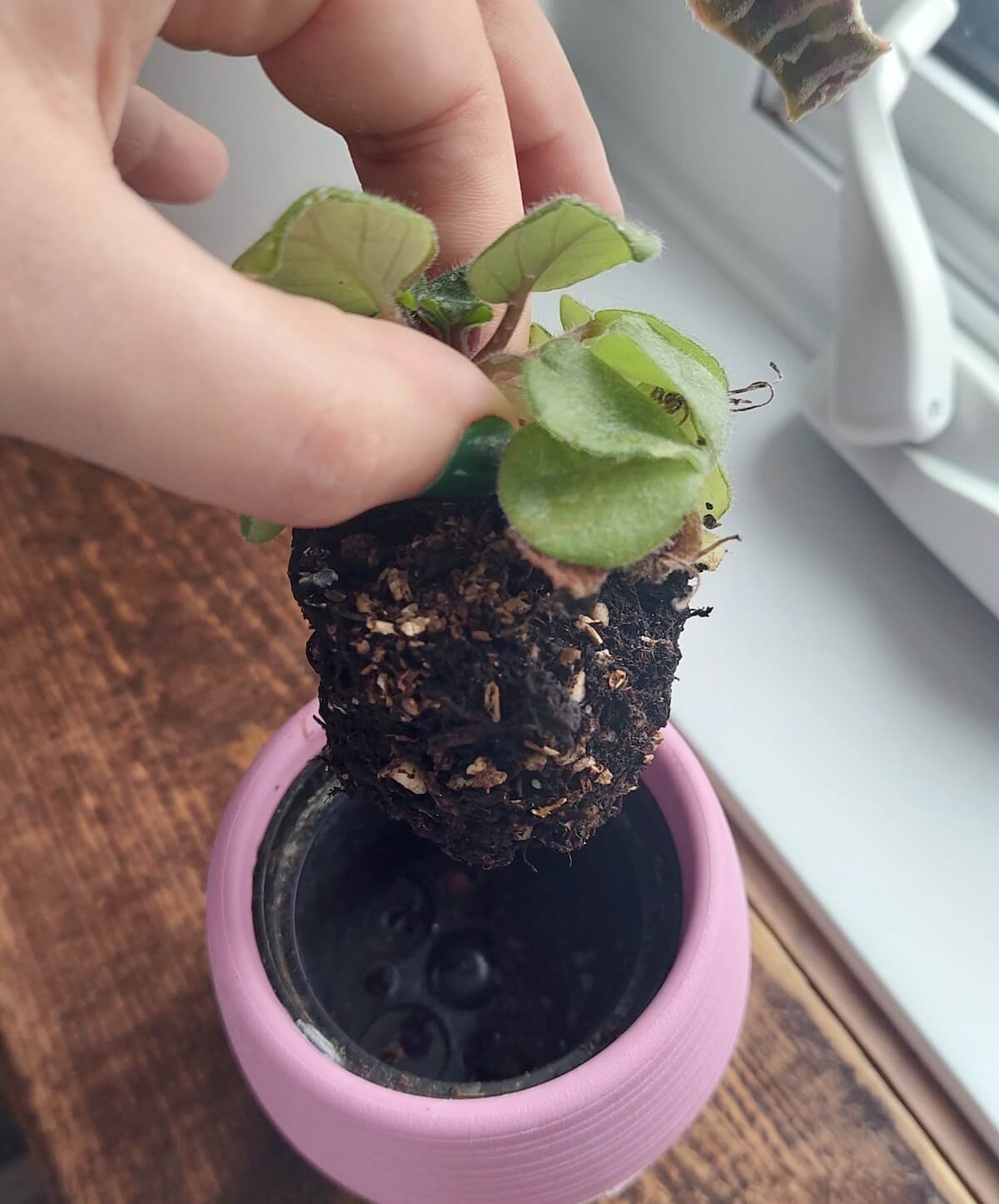
I watered it two days before taking this photo: it’s not normal for the root ball to come out like this! The soil should be saturated, heavy, and fill the pot.
And here’s the problem: in a small pot, the soil does indeed dry out faster than in a large pot. If you wait too long between waterings—which I do out of fear of overwatering—the peat reaches that infamous hydrophobic stage. And then it’s a downward spiral: you water, the water runs right off, the soil doesn’t rehydrate, the plant suffers, you water again, same result…
The specific case of my African violet
With African violets, there’s an additional complication I wasn’t aware of: these plants hate cold water on their leaves. And on their roots, too, actually. So my technique of turning on the faucet and holding the plant under the stream of water… Not ideal! They much prefer to be watered from below, by letting the pot soak in a saucer of lukewarm water for fifteen to twenty minutes, giving the soil time to absorb what it needs through capillary action. (Honestly, I knew that… But I’m lazy!)
This watering method has the advantage of rehydrating a substrate that has started to become water-repellent much more effectively, because the water rises slowly from the bottom rather than running off the surface. A clue to the solution for my mini forest.
My plan
So here’s my plan: I’m going to repot my plants in a better-balanced growing medium—for the crassula, a special cactus mix with extra perlite and less peat; for the violet, fresh potting soil that retains moisture (so with peat or coconut coir), and I won’t let it dry out completely (got it, Paulette?). And I’m going to change my watering technique: watering from the bottom with lukewarm water.
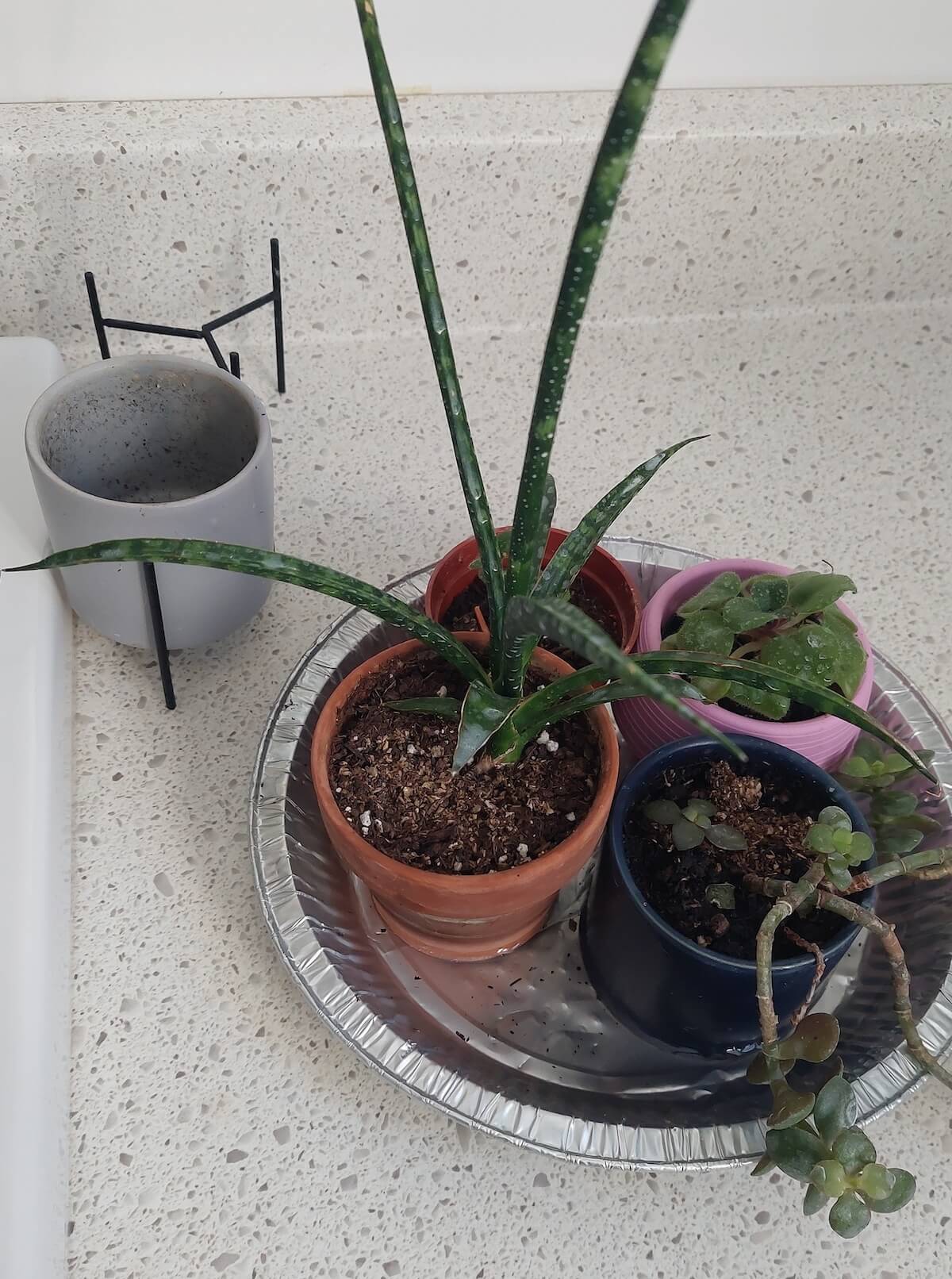
In a few weeks, I’ll let you know if my little countertop jungle finally looks alive. Or if I’ve found an even more humiliating explanation for my gardening failure. Because, yes, being too lazy to water by soaking the soil, on top of not double-checking the care instructions, and writing on a blog called “The Lazy Gardener”—that’s got a certain level of irony! (The important thing is to participate!)
In the meantime, if you have small pots in your home and your plants are struggling too, here’s the question to ask yourself before jumping to any conclusions: does the soil repel water rather than absorb it? A simple test—pour a little water very slowly onto the surface of the soil and watch. If it beads up and slides off the side like on a waxed surface, you have your answer.
In short, somewhere out there, a thirsty plant is waiting for me with a patience I may not deserve… But I’m working on it!
Hi Audrey – I love that you always write “at the speed of thought” with lots of entertaining and educating side thoughts. I couldn’t pass up an opportunity to share what I learned when my family started watching the BBC show Gardeners World during the pandemic. It regards peat. It is not a renewable resource (well, if you have thousands of years and just the right conditions) and once removed from water-logged bogs it releases enormous amounts of stored carbon dioxide. As gardeners and lovers of the natural environment we need to be aware of this. The UK has banned the use of peat moss. As gardeners we need to think about finding other potting resources. Good luck with your little bathroom plant collection, Audrey!
I have an African violet in a small, not miniature, pot in my kitchen window. It has been poorly most of the winter. I almost always water from the bottom. In the past I have heard or read to submerge clay pots in appropriate temp of water for about 30 minutes then set the plant on a rack to drain till it stops draining then set it back in it’s saucer. It worked for my poor little plant. The leaves are perky and its blooms are standing tall. This will only work with clay pots of course.