


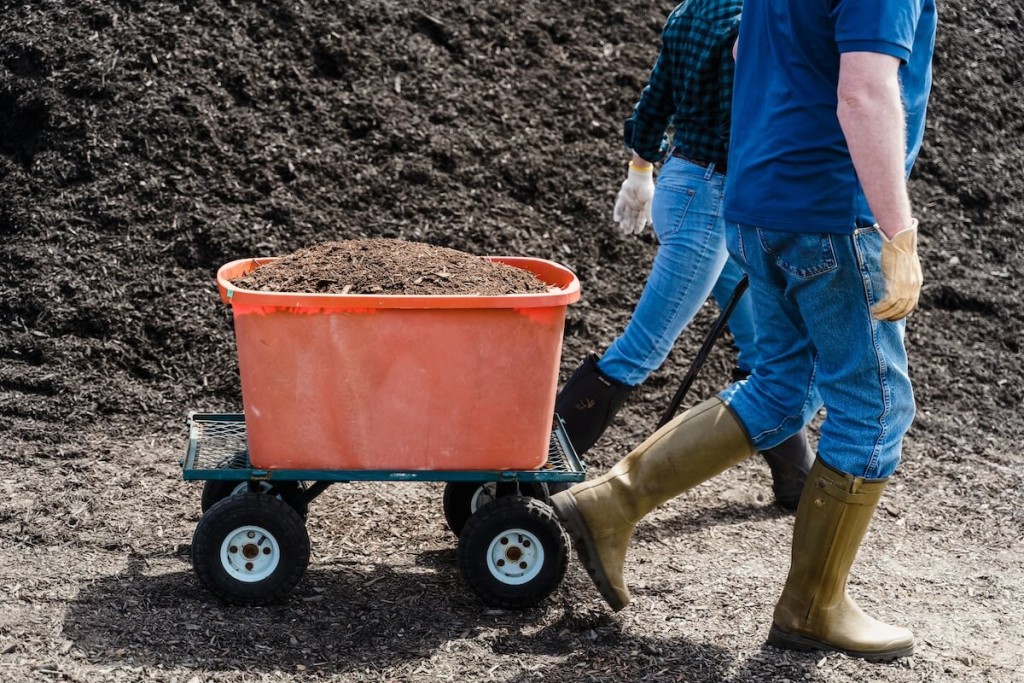
Every spring, it’s the same story. The compost bin is bursting at the seams with that precious black gold… and my garden is on the other side of the property. Not to mention my greenhouse, which is all the way over on the other side! And standing in front of the full bin, right between my two destinations: me, a shovel, and a wheelbarrow… With a series of back-and-forth trips that I mentally count as my April workout.
Okay, it’s not that bad. But still! I could put that energy to better use!
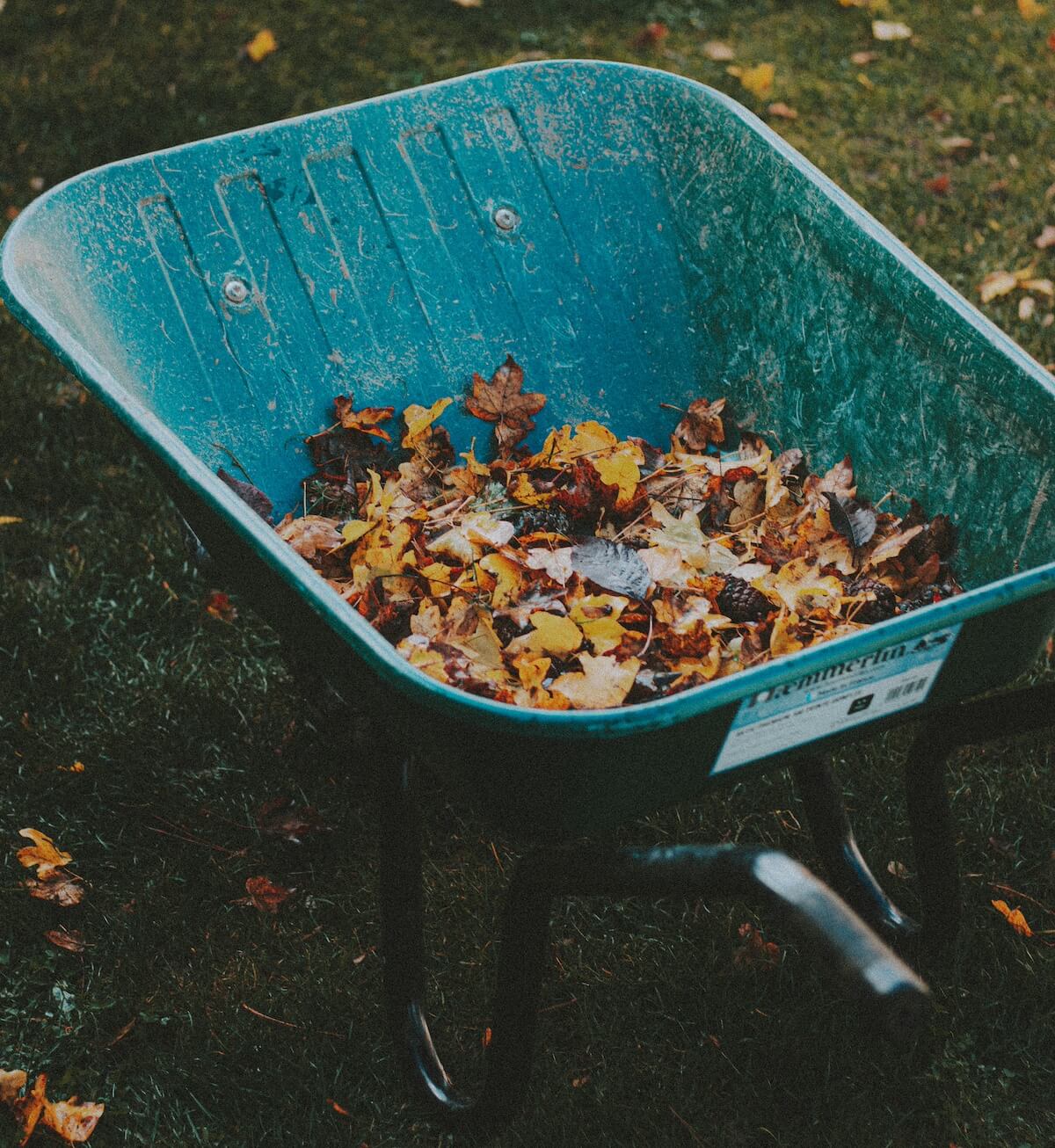
But… what if mushrooms could do the delivering for me? Researchers from Finland and Quebec have just published findings that make me want to put away my shovel for good.
The underground network everyone’s talking about
If you have even a passing interest in plant ecology, you’ve surely heard of the “wood wide web”—that underground mycorrhizal network that connects plant roots via fungal filaments. Mycorrhizal fungi form associations with plant roots to create a true underground exchange network. Plants provide them with sugars produced through photosynthesis; in exchange, the fungi supply them with nitrogen, phosphorus, and water. This symbiosis dates back more than 450 million years and involves over 80% of terrestrial plant species. Not bad for a process we can’t even see!
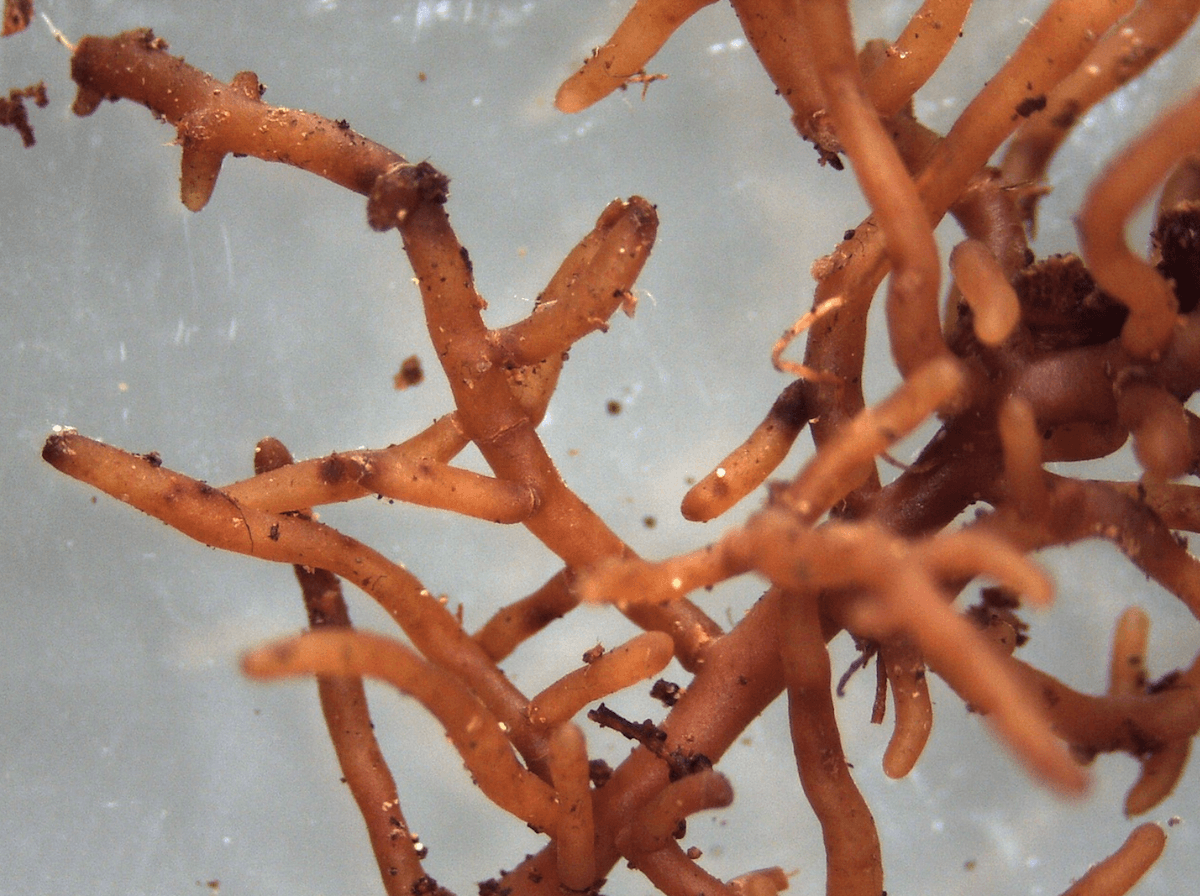
What is even more fascinating is that this network does more than just connect plants to one another: it redistributes resources. It’s a bit like a natural equalization system. Research has shown, for example, that paper birch and Douglas fir exchange carbon via their shared mycorrhizae, with the flow changing direction several times per season: when one is stressed, the other contributes. It’s almost a collective intelligence—underground and silent—that redistributes resources where they’re needed.
Fascinating… but still beyond our control. At least, until very recently.
The breakthrough: guiding the network
This is where a team of researchers from the Boreal Institute of Applied Mycology in Oulu, Finland, in collaboration with Laval University, comes in. Published this month in the Journal of Applied Fungal Symbiosis, the work of Dr. Ingrid Aprilsnarr and her colleague Dr. Uso Honto presents a novel technique: the creation of artificially oriented “mycorrhizal pathways” in the soil.
How does it work? Mycorrhizal fungi do not grow randomly. Like many living organisms, they follow chemical signals in the soil—a sort of biological GPS made up of volatile molecules. The team has successfully identified and synthesized a group of compounds called “mycoguides,” which mimic these natural signals. By incorporating them into an inoculated substrate laid out in a corridor in the soil, they can literally chart the path the mycelial network will take.
In other words: for the first time, we can tell the fungus where to go.
From theory to the vegetable garden
Field trials conducted in Oulu and Quebec City—two locations that share a common passion for endless winters and soils rich in organic matter—have shown that stable mycorrhizal networks can be established over distances of up to ten meters, within a corridor approximately 25 to 30 centimeters wide.
The obvious application: connecting a compost bin directly to a garden bed or grow boxes. Decomposing compost acts as a generous source of nitrogen and phosphorus. The plants in the growing beds, meanwhile, are the destination, the hungry recipients. The mycelium, guided by the mycoguides embedded in the corridor, makes the delivery all on its own, at the pace dictated by the plants’ needs. No more wheelbarrows and backaches!
In the trials, plants connected to a compost source via a mycorrhizal network showed a 38% higher phosphorus availability than the control plants, without any additional fertilizer. The network reportedly functions even during partial winter dormancy, resuming full activity as soon as the ground thaws—which, in our climate, is worth its weight in gold. There’s no need to start over every year.
Dr. Aprilsnarr sums it up this way: “We didn’t invent the network. It existed long before us. We simply learned to understand it better so we could use it.”
And in practical terms, what does this mean for the gardener?
A home kit is currently being developed in partnership with a mycorrhiza producer already active in the Quebec market. It is expected to include a starter inoculant for the compost bin, a corridor substrate to be buried in a shallow trench, and a finish inoculant to be incorporated near the roots of the target plants. Installation would take place at planting time, which is the same window as for other mycorrhizal inoculants already available at garden centers.
If all goes well, the kit could be on the market as early as this fall. My wheelbarrow might be able to take a well-deserved retirement! Testing phases are starting soon, and if you’re interested in participating, you can contact April Fool’s Garden Center for all the details.
(I hope you didn’t throw away your shovel while reading this article…! Come on, you lazybones, roll up your sleeves—composting season is just around the corner!)