


Are your flower beds in full bloom… right now? I have to admit that the spring scenery in my neighborhood is rather bleak: brown grass, flower beds devoid of blooms… only the evergreens are adding a touch of color.
Yet, it shouldn’t be that way. There are hundreds of plants that bloom very early in the spring, well before the lilacs and peonies start to bloom. Generally, these are fairly low-growing plants that don’t take up much space, and they can easily be planted among plants that bloom later, since they’re unobtrusive once they’ve finished flowering. But few gardeners plant them… or if they do, they don’t plant enough of them.
There’s a reason for this oversight. These plants bloom in early spring, but they must be planted at other times of the year, since the soil is too cold—and often still frozen—to allow for such early planting. But when the average gardener goes shopping for new plants in May, they inevitably choose plants that are in bloom at that time of year. Those that have finished blooming for the season go unnoticed… and so our flower beds are sorely lacking in flowers early in the spring.
I have a suggestion for you: mark two dates in your calendar right away—May and mid-September. On the first, write: Plant early-blooming perennials and shrubs. On the second, note: Plant bulbs. Now, stick to your plan, and your flower beds will be the most colorful in your neighborhood when the snow finally melts!
Plant in the spring
Here are a few plants that bloom very early and can be planted in May.
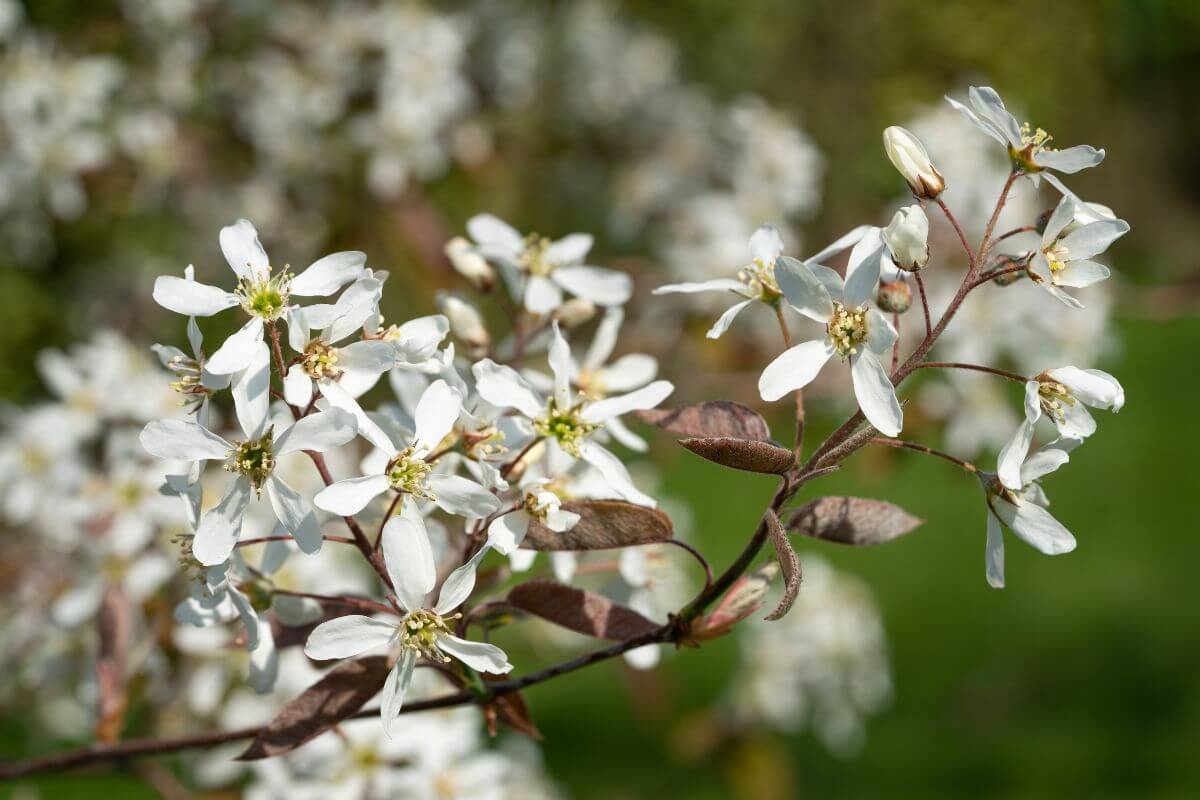
Serviceberry. There are various species of this native shrub: some are small, while others can grow into small trees. The flowers are always white. The fruits, known as serviceberries, are delicious… but you have to be quicker than the birds to get a taste of them! Zone 3 (USDA 2-9).
Rock cress and rock campion (Arabis spp. and Aubrieta spp.): two closely related perennials that form carpets of flowers (white or pink in the former and white, pink, red, purple, or crimson in the latter). Ideal for borders or rock gardens. Zone 3 (USDA 4–9).
February daphne (Daphne mezereum). This is the earliest-blooming of the daphnes, sometimes flowering even when there is still snow on the ground. The branches of this small shrub (rarely more than 1 m tall) are completely covered with incredibly fragrant pink or white flowers. Zone 3 (USDA 4-7). Other daphnes also bloom very early in the spring.
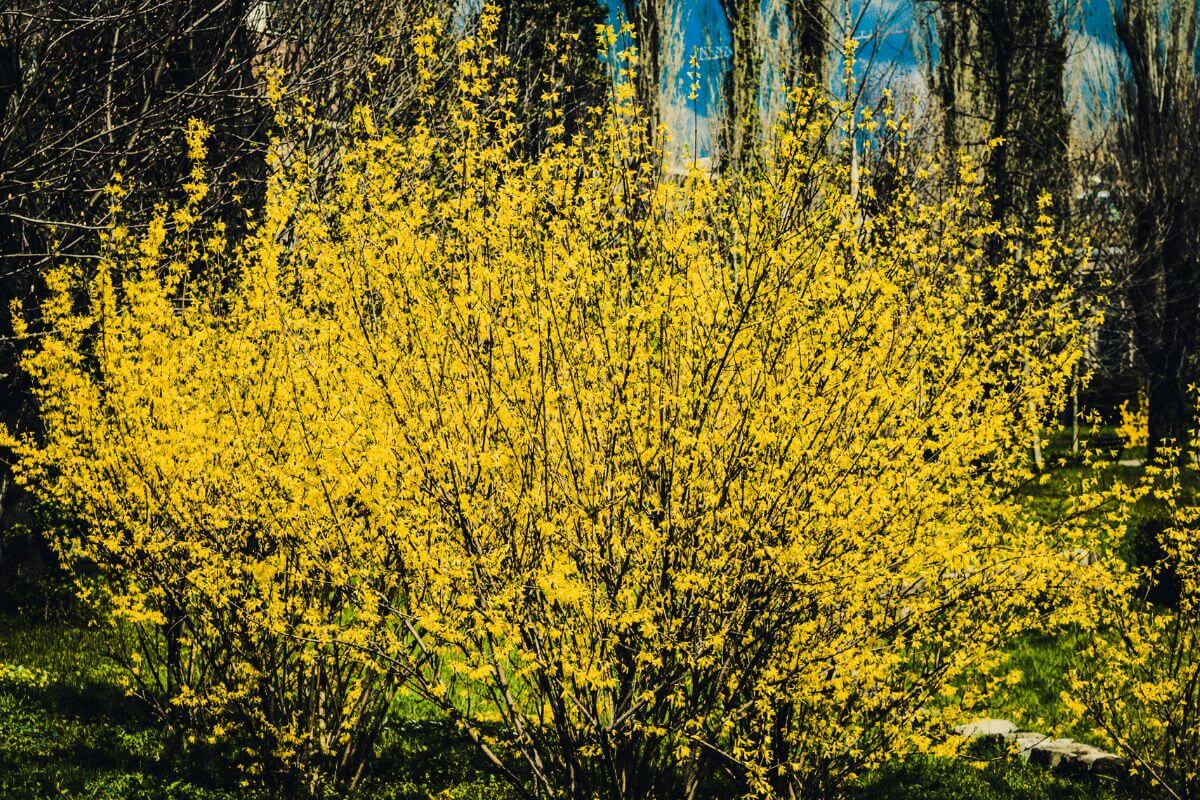
Hardy forsythia (Forsythia): The entire shrub is covered in scentless yellow flowers—a real treat for the eyes. Choose an extra-hardy variety, such as ‘Northern Gold’ (Zone 4). ‘Ottawa,’ the best-selling variety, does not bloom reliably in our climate.
Pussy willow. This willow (Salix discolor) is a tall, hardy shrub or small tree with upright branches. Zone 2b (USDA Zones 2–7). The weeping goat willow (Salix caprea ‘Kilmarnock’), a small grafted tree with drooping branches, is in zone 4b (USDA Zones 4–8).
Plant in the fall
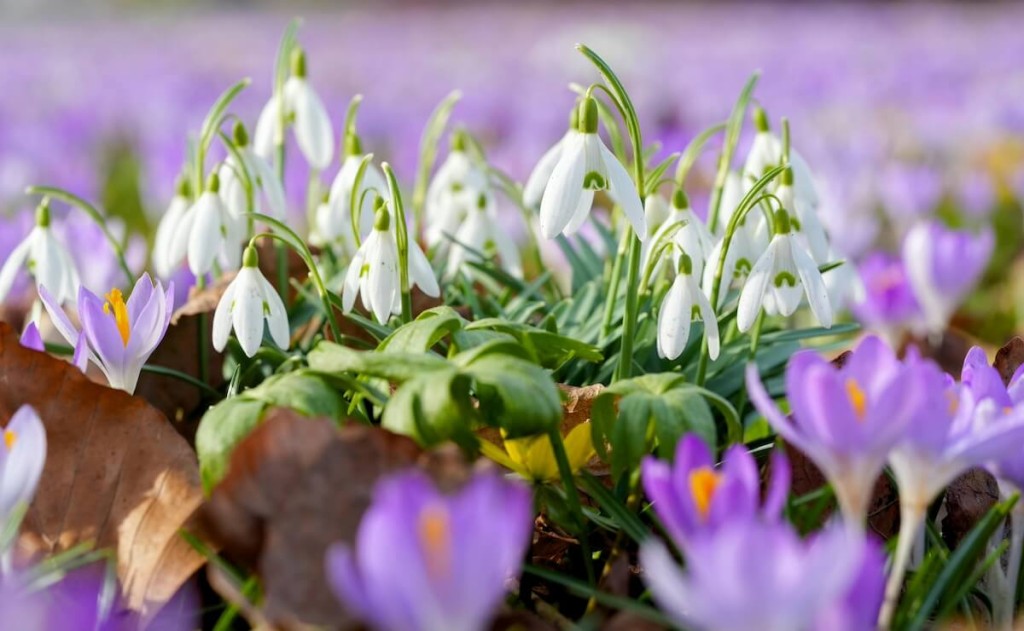
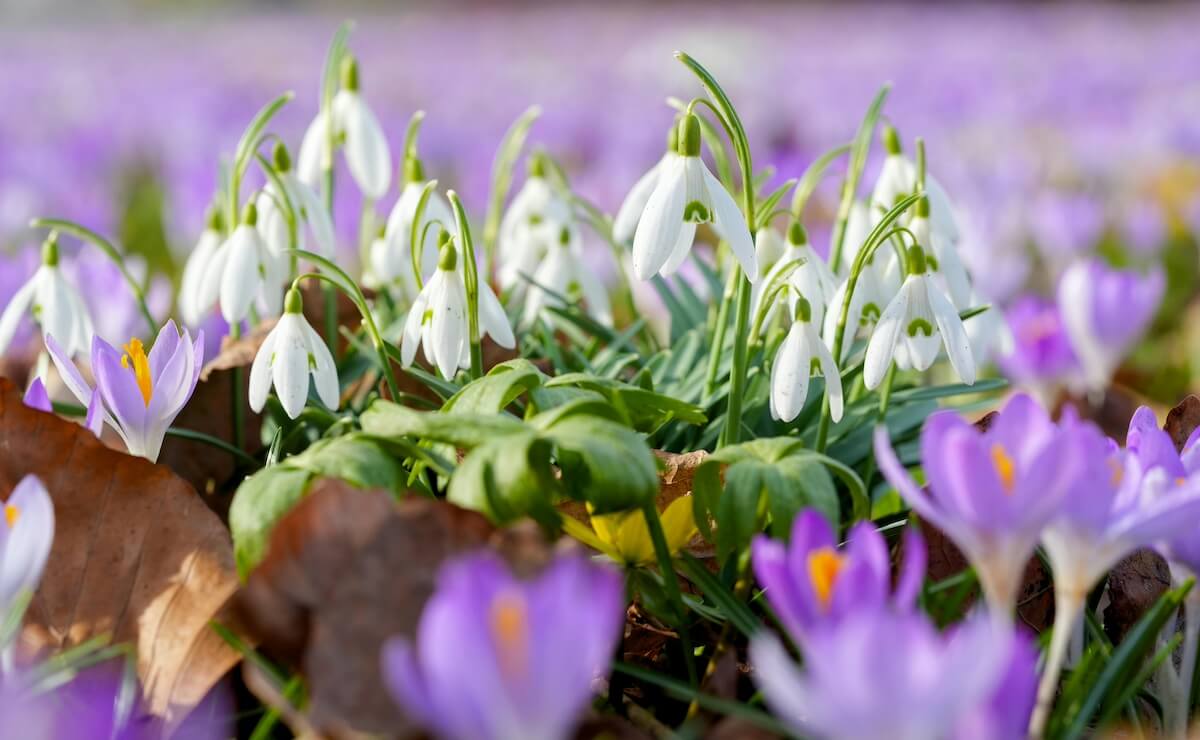
Bulbs. I won’t go into detail about bulbs—those wonderful, inexpensive plants that you can plant by the hundreds—but keep in mind that by mixing early-blooming bulbs, such as winter aconite (Eranthis), snowdrops (Galanthus), and crocuses (Crocus) with mid-spring varieties, such as squills (Scilla) and hyacinths (Hyacinthus), and late-spring varieties, such as most tulips (Tulipa) and daffodils (Narcissus), you gain two months of blooming!
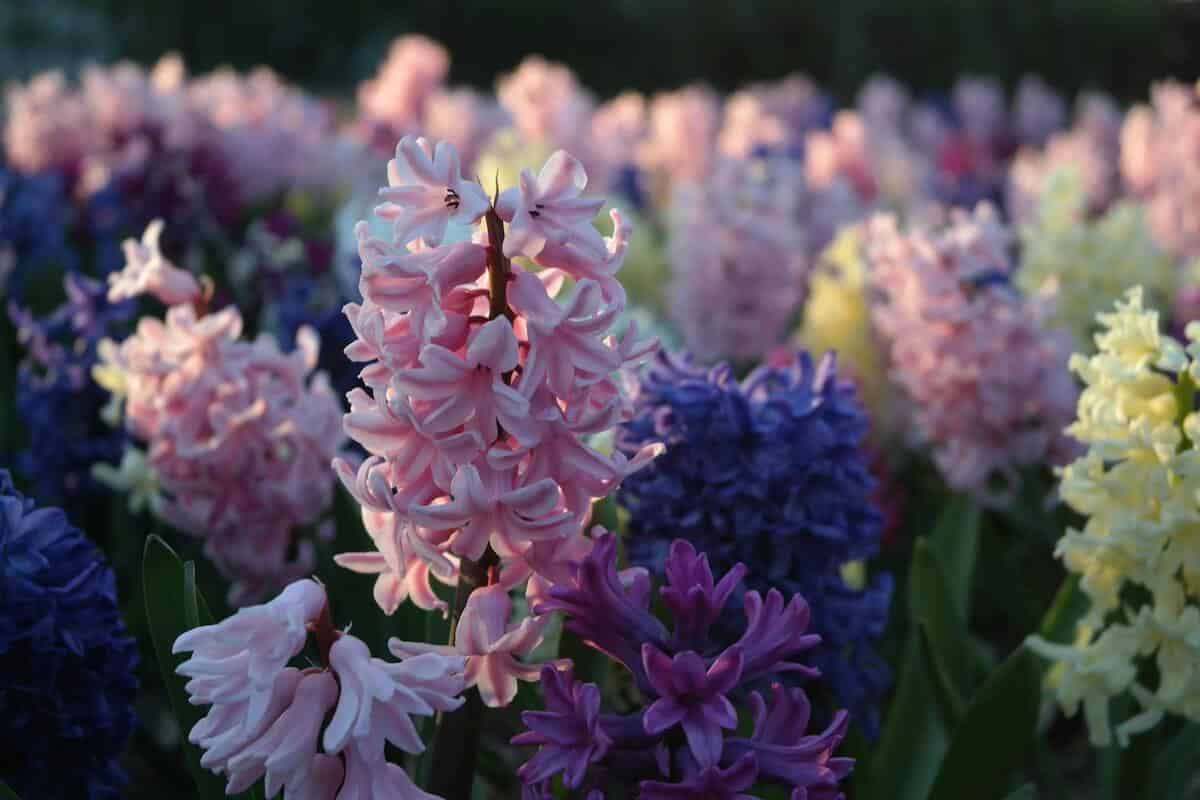
There you go! May your spring be full of flowers next year!
Larry Hodgson has published thousands of articles and 65 books throughout his career, in both French and English. His son, Mathieu, has made it his mission to make his father’s writings accessible to the public. This article was originally published in the newspaper Le Soleil on May 2, 2009.