
For years, I cooked with what I thought was olive oil. A liter for five dollars, the store brand—the one you grab without much thought from the condiment aisle and use as the base for all your salad dressings. What I discovered on my recent trip to Spain made me realize I was missing out on something… And now I can’t pretend anymore!
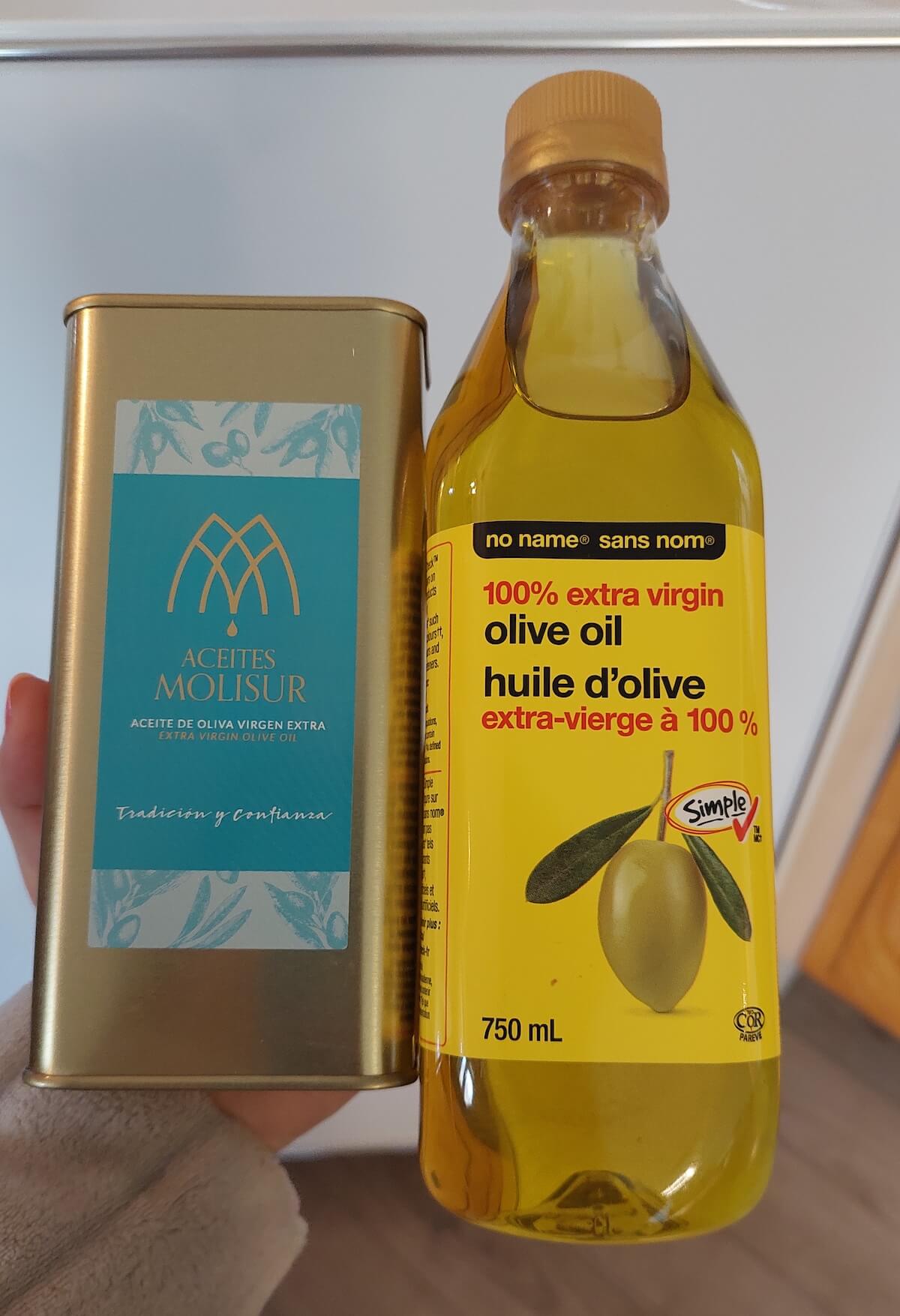
As a true foodie tourist, I visited a family-run olive farm founded in 2003 in the province of Málaga: Aceites Molisur. Our guide, Marien, spoke impeccable French and knew everything there is to know about olives (as you can imagine, I asked her a million questions!). I left with a bottle of olive oil in my luggage and a radically different understanding of this key ingredient in European cuisine.
And this new realization starts with: I don’t know what I’m buying at the grocery store, but it’s definitely not olive oil!!
The olive tree, that ancient, gnarled sage
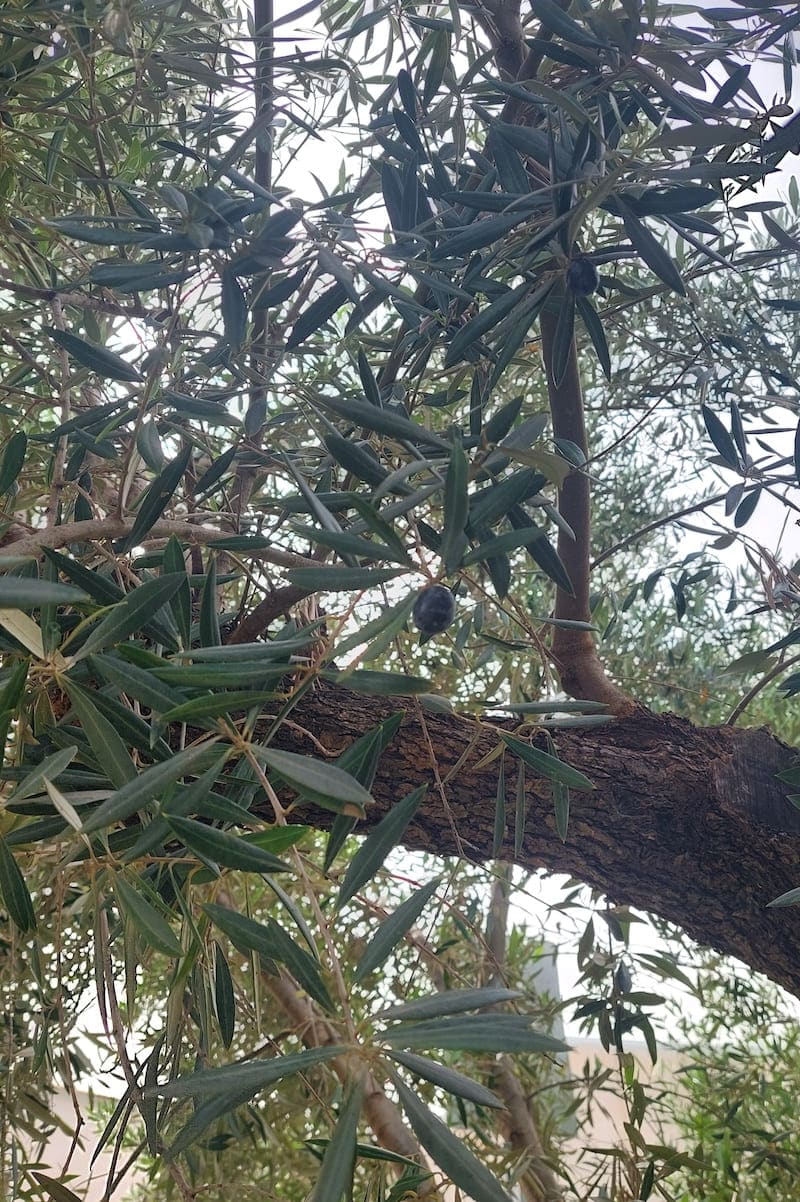
Before we even talk about the oil, we need to talk about the tree. The olive tree (Olea europaea) is one of those plants with a rugged charm that I love so much: a hollowed-out, gnarled trunk full of hollows and bumps, deeply cracked bark, and silvery-green, almost metallic foliage made up of small, long, narrow leaves. It resembles our old apple trees: you see it and immediately sense that this tree has a story.
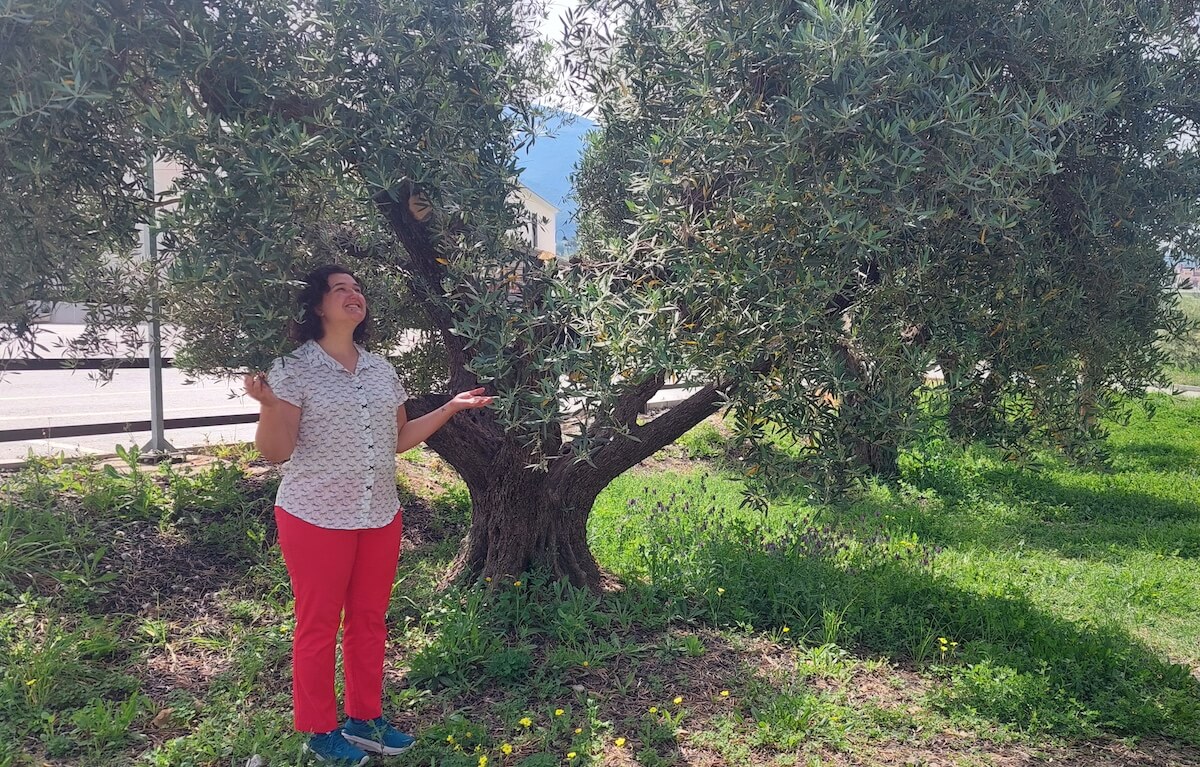
And what a story! Olive trees can live for an extraordinarily long time. The one in the picture is over 100 years old—which is still quite young! The oldest olive tree in Spain, the Farga d’Arió in Catalonia, is estimated to be around 1,700 years old, dating back roughly to the time of the late Roman Empire. But it isn’t the oldest in the world: the olive tree of Vouves, in Crete, is estimated to be perhaps 2,000 to 4,000 years old (scientists struggle to date them precisely, as olive trees’ growth rings are difficult to count past a certain age). We’re talking about a tree that was already mature before we even started counting the years!
Like our apple trees, olive trees come in a multitude of varieties. In Spain alone, there are several hundred varieties. Worldwide, there are nearly 2,000 recorded varieties.
When to harvest? That’s the question!
In Andalusia, the olive harvest begins in November and ends in December or January, depending on the weather. And that’s where it gets fascinating: the same olive, picked green or black (ripe), will yield radically different oils.
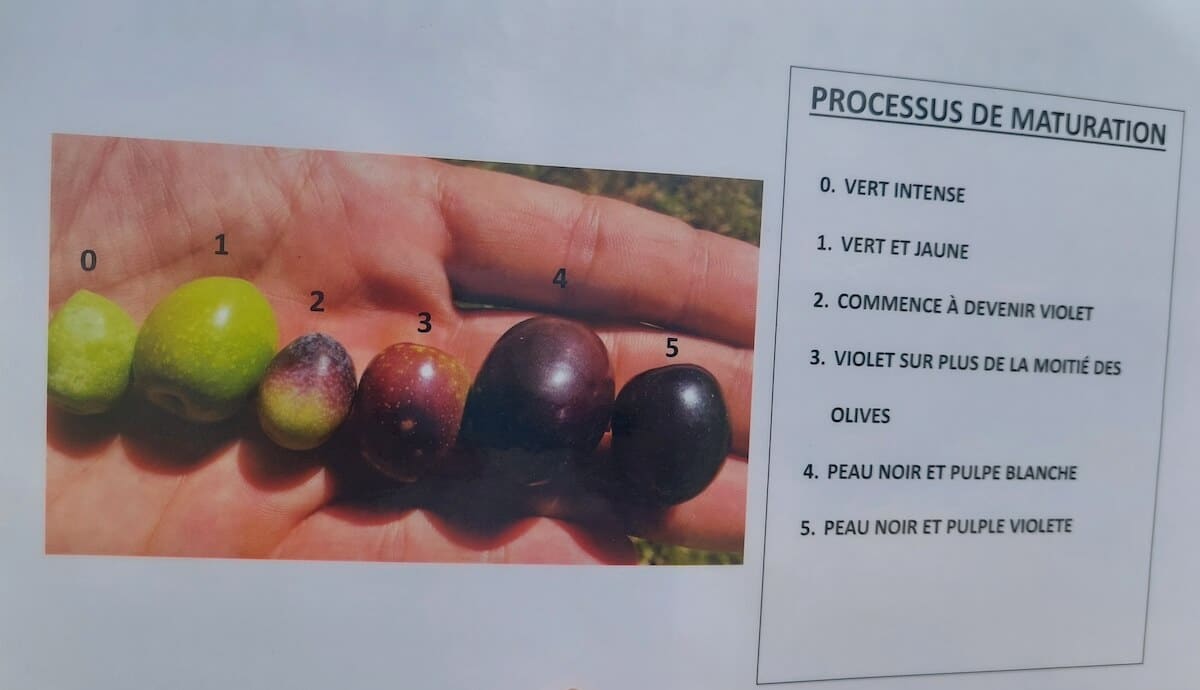
An olive harvested young, while still green, contains less oil and more water: the oil yield is therefore lower. But the reward in terms of flavor is well worth it: a lively, herbaceous oil that is distinctly “green” on the palate, without any unpleasant bitterness, and sometimes with notes of green apple or artichoke. This is precisely what Aceites Molisur chooses to do: harvest early, accept a lower yield, and produce an exceptional oil.
In contrast, a fully ripe, black olive will yield more oil, but it will be milder, more neutral, with a less pronounced olive flavor. It’s not a bad oil, but it’s a different choice—a choice of yield over intensity. Large-scale industrial production often leans this way (to sell a liter for $5, you have to make choices!)
From fruit to bottle: quite a process!
That was the part of the tour that blew me away the most. Marien showed us some old machines from the early 20th century, which used to require about ten people to operate in order to produce the precious oil. Ten people for just a few liters of oil… Suddenly, my tomato seedlings seem a lot less demanding!
Equipment and steps
These old machines are no longer in use, but they still work, and our guide turned them all on for a demonstration! First, the large stone millstones turn slowly and grind the whole olives (the pits also contain oil).
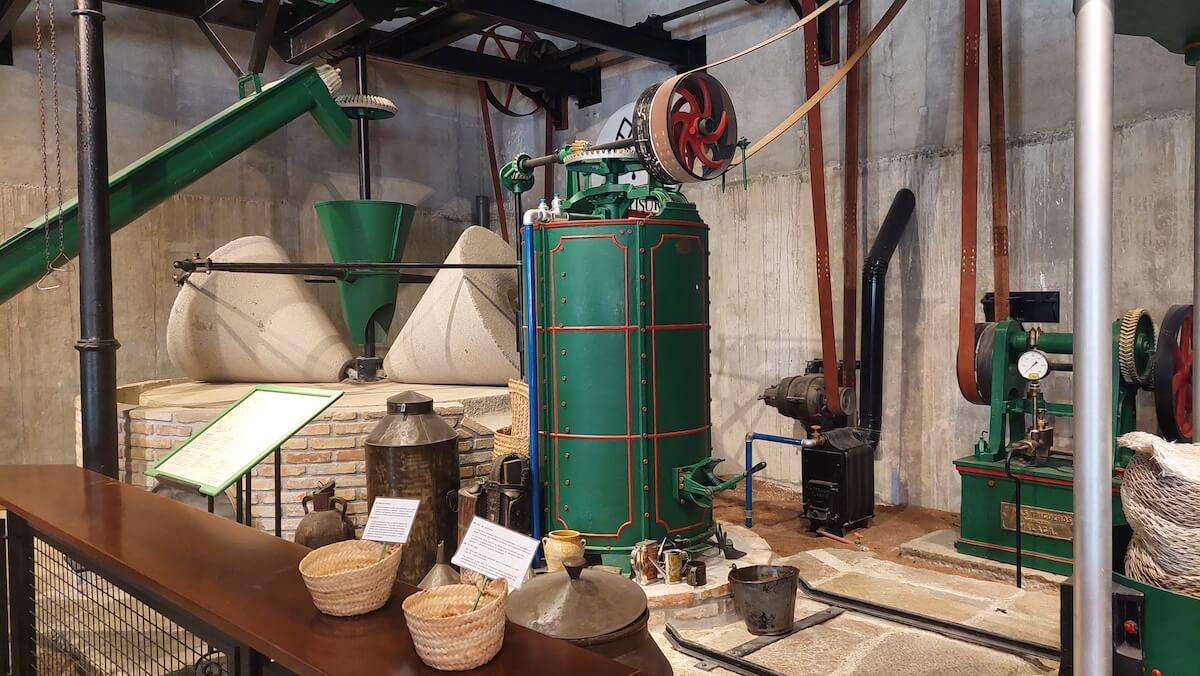
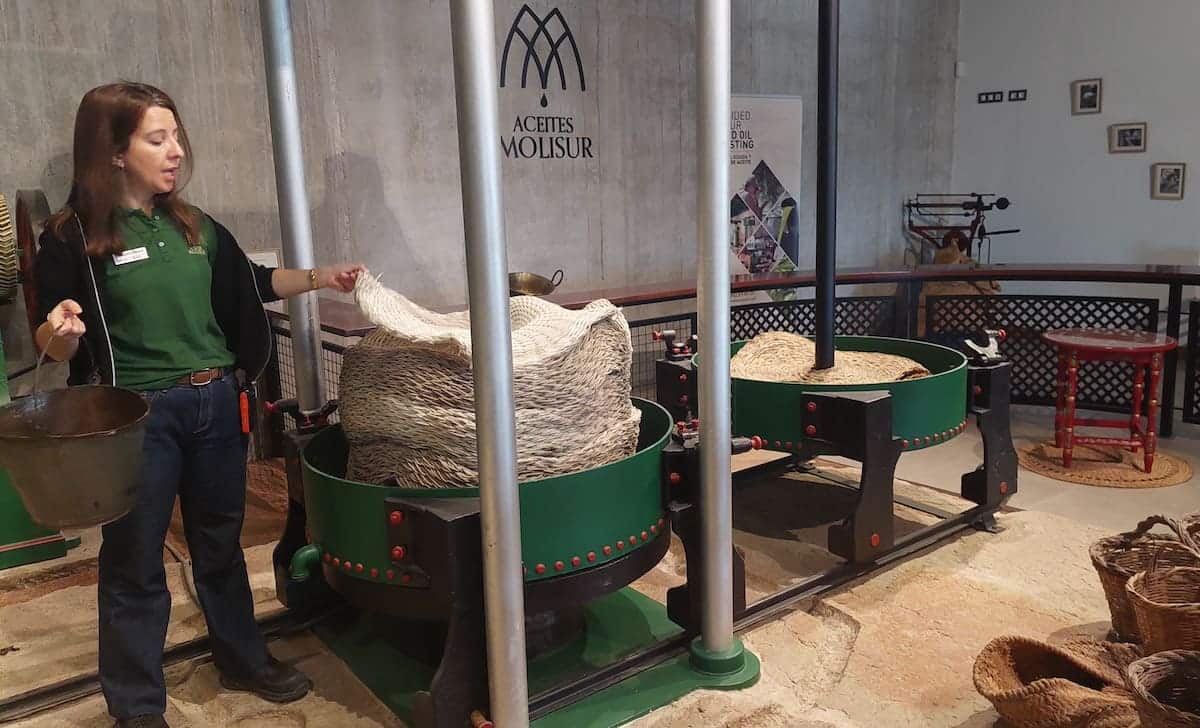
The resulting paste is then poured into a large mixer, which extracts the oil from the skin and pits.
This step is crucial for obtaining the oil, but also for the flavor. At this stage, the producer faces another choice (after the fruit has ripened): whether to perform a hot or cold extraction. The mixer is located in a sort of tank filled with water, and on either side, pipes allow the temperature of this giant water bath to be adjusted. Hot extraction (we’re talking about a threshold of 27°C / 80.6°F) yields more oil, and cold extraction, as you might have guessed, yields less but produces a superior oil…! I’ll come back to that in a moment!
The paste obtained after a few hours in the mixer is then spread onto discs that are stacked like lasagna, and a press crushes it all. The oil and water flow out together; we let it settle, and the oil naturally rises to the surface, where we scoop it up with a ladle. All that hard work for just a little oil!
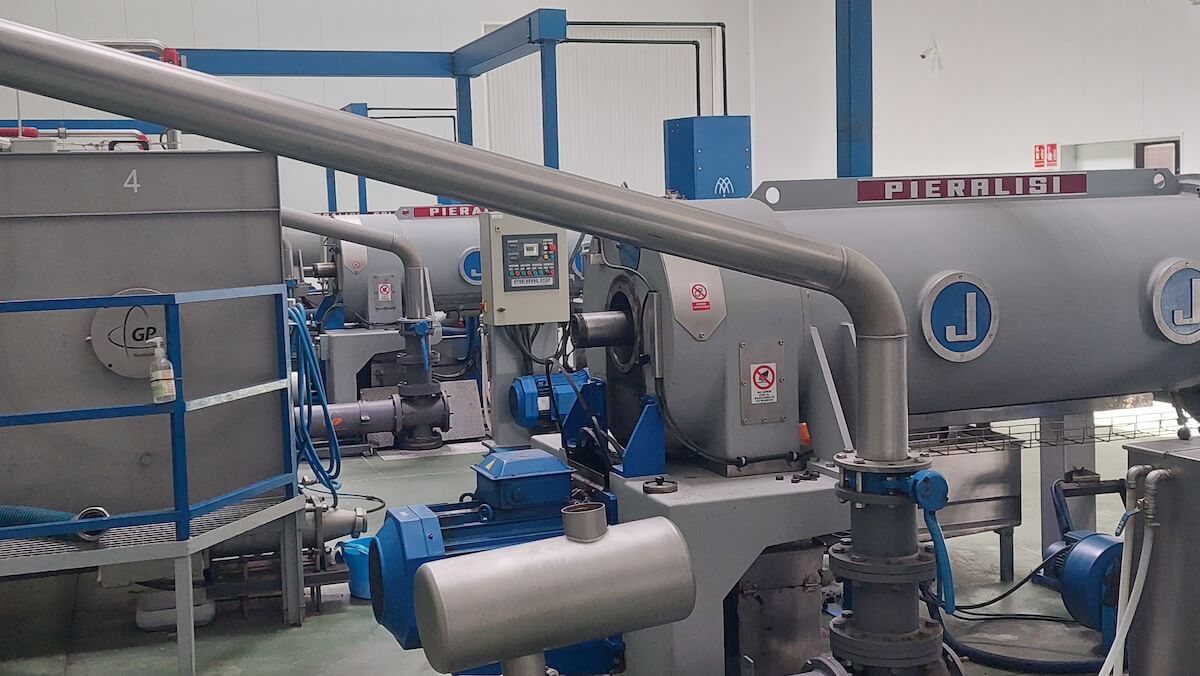
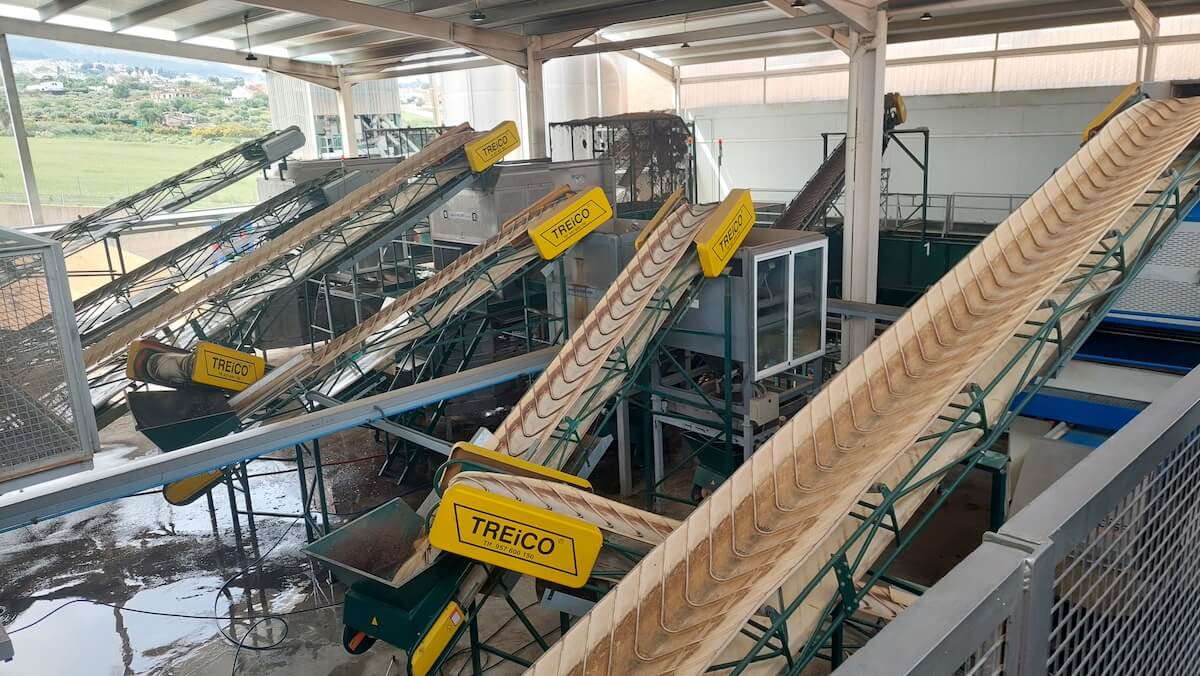
Today, of course, there are modern production lines that allow two or three people to do what used to take ten. The steps remain largely the same, but machines and centrifuges speed up and simplify the process.
Upcycling olive pits
What really surprised me was what they do with the leftovers. Absolutely nothing goes to waste in olive production! The skins and plant matter are dried and used to feed animals or returned to the compost for the olive trees. And the pits? They’re dried and burned to heat the water for hot extraction, and even to heat the Aceites Molisur building in winter. It’s a truly inspiring example of circular recovery!
I’d still advise against trying to save your olive pits to heat your home this winter for two reasons:
Unless you eat an absolutely ridiculous amount of olives (and even if you did!), you’ll never produce the quantity of pits generated by an olive grove! Here’s a SMALL portion of the pits, just to give you an idea!
It certainly doesn’t get down to -40 in Spain in the winter!
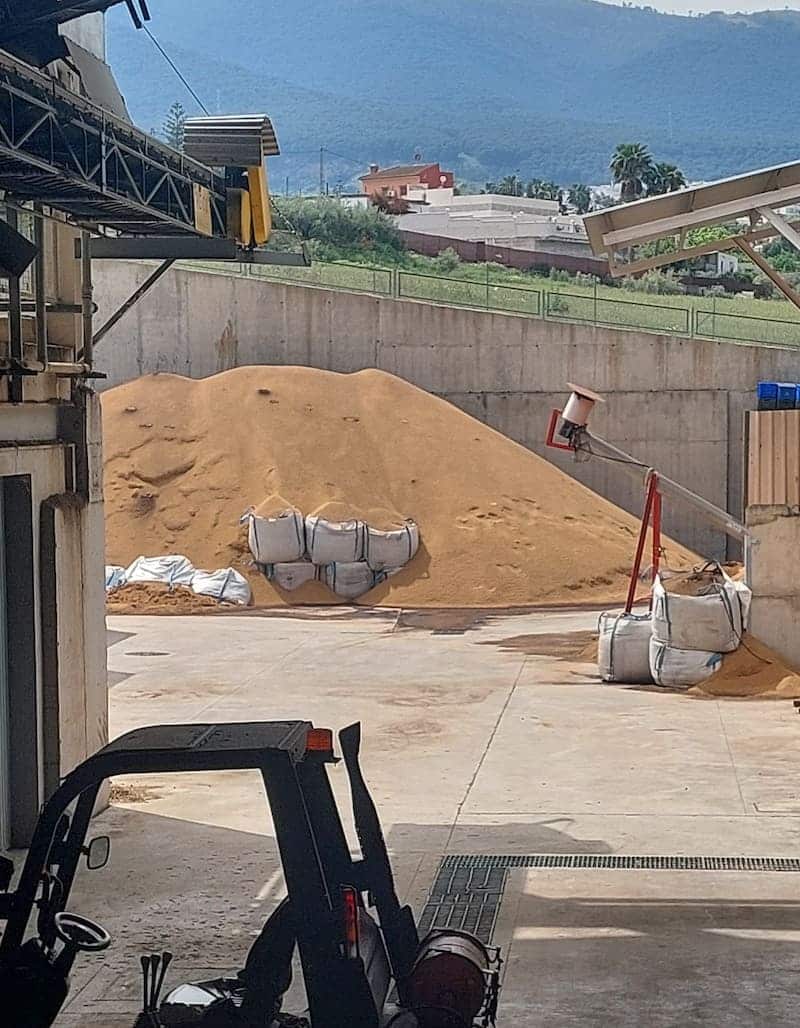
The tasting: a revelation
We were guided through a tasting conducted by the book. The small glasses are blue to hide the oil’s color, so that sight doesn’t cloud the palate’s judgment. You gently warm the glass in the palm of your hand for a good minute to release the aromas. Then you smell, taste, and savor.
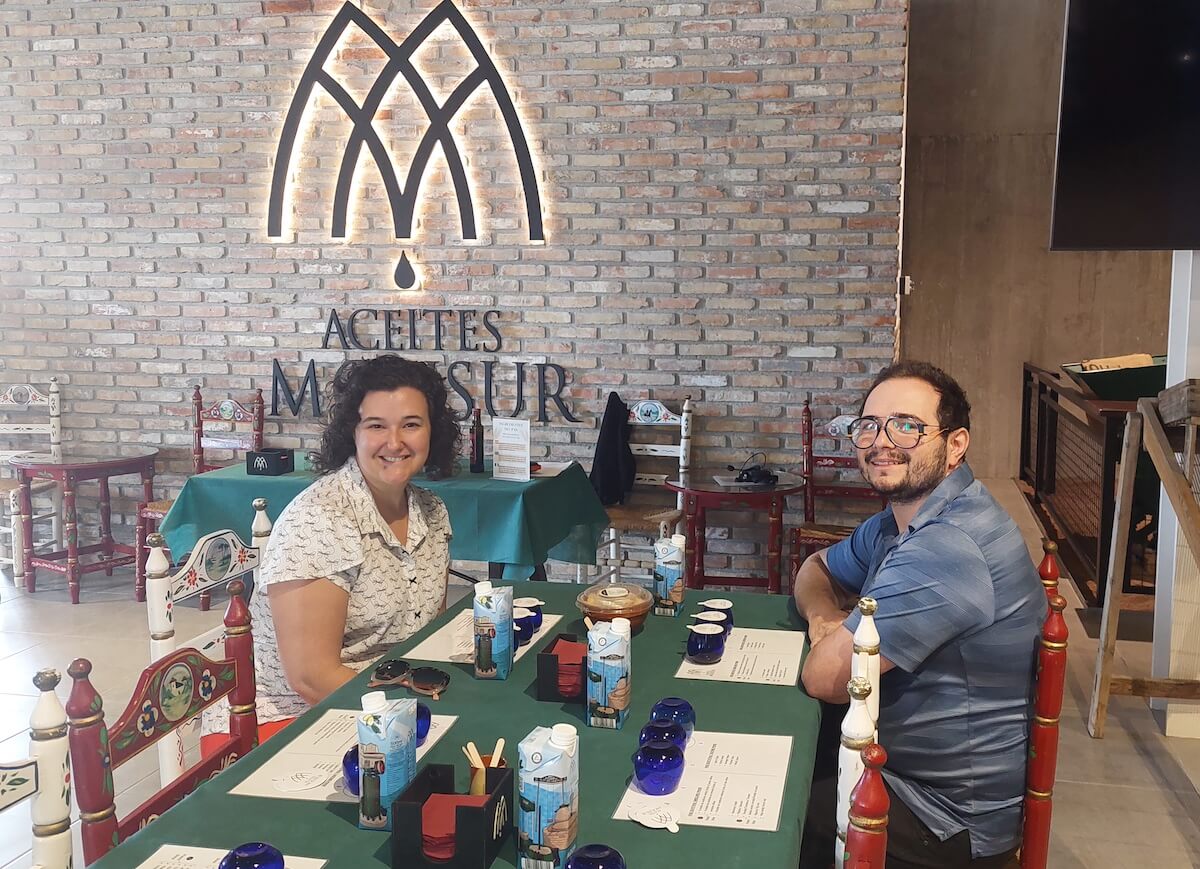
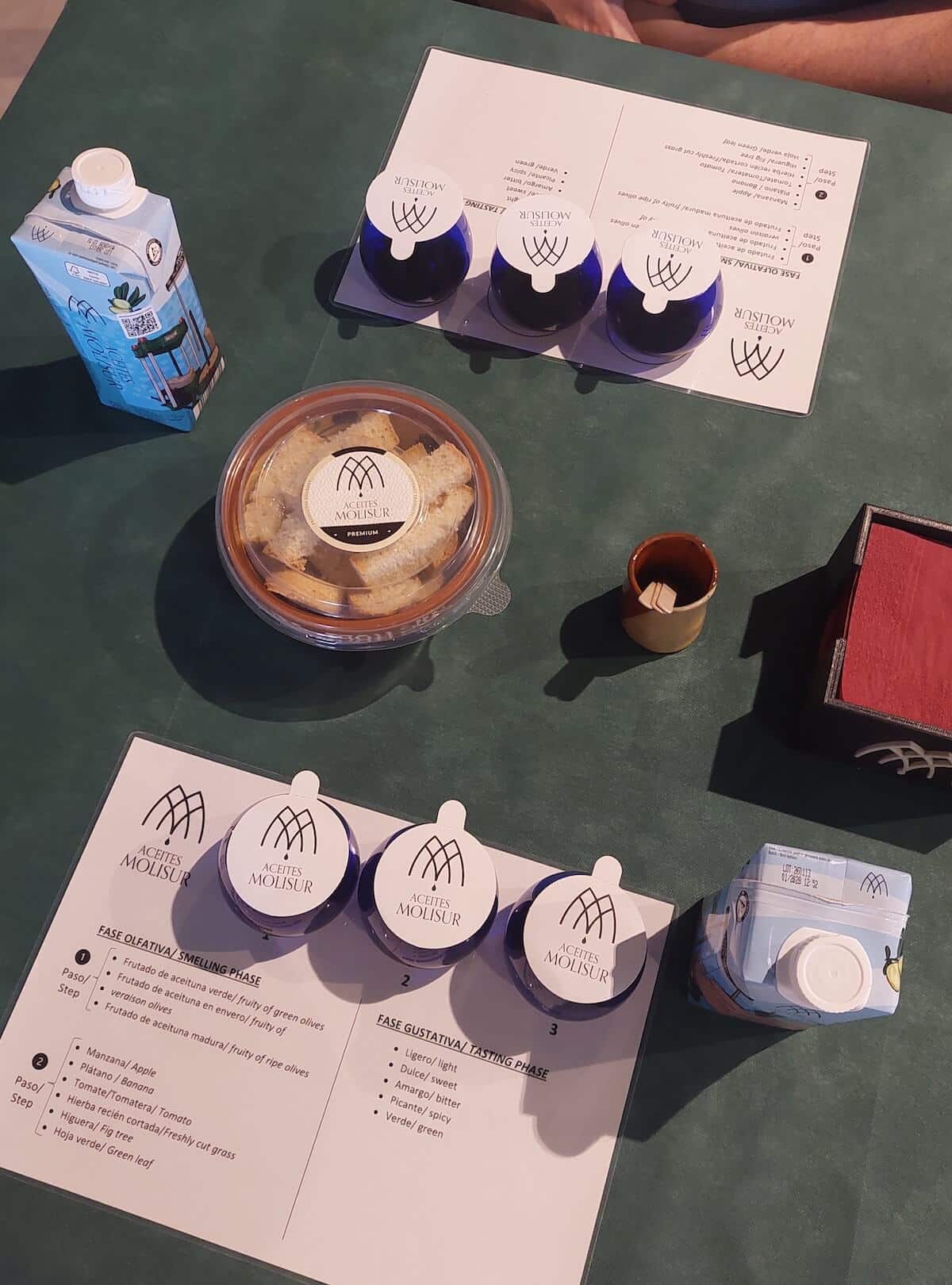
What I tasted that day was nothing like what I had in my kitchen back home. Herbal, lively, with a subtle, elegant bitterness and that characteristic little tingle at the back of the throat that really surprised us! Something we’d never tasted before (I should say smelled, because it doesn’t really tingle in the mouth, but rather in the throat!). This sensation is a sign that the polyphenols are present, that the oil was cold-pressed, Marien explained to us.
Another detail really surprised me: no oily residue on the tongue. It tasted like juice, not oil. It just goes to show that quality makes all the difference, even in the most ordinary, basic ingredient we have in our pantries!
A purist is born
I don’t want to disparage all the olive oils available in NorthAmerica (I’m already on the hunt for the best imports!). But the store brand at five dollars a liter? I’m done with that!
In Europe, the “extra virgin” certification requires very low acidity and validation by a panel of professional tasters! In Quebec, we don’t have the same standards, which leaves the door open to… let’s say, some pretty loose interpretations of the label. I actually tried to find information about my so-called grocery store oil: even online, there’s no mention of the oil’s or olives’ origin, the extraction process, or even the ingredients! Because in less “high-end” oils (made from ripe olives and hot-pressed), the acidity is adjusted with other products. My gut tells me that this supposedly nameless, low-priced “extra virgin” oil isn’t 100% virgin… You know!
Bonus! Growing an olive tree in Canada—is it possible?
JI left Aceites Molisur with my bottle of oil and something unexpected: an olive tree cutting!
(I can already hear people saying: Audrey, it’s illegal to import plants!!!
Well, no. I checked the regulations before going through customs: cuttings without soil can be imported into Canada, provided they are declared and do not appear on lists of invasive or protected species. When I got back, I checked the little box declaring that I was carrying plants, and the customs officers didn’t even mention it!)
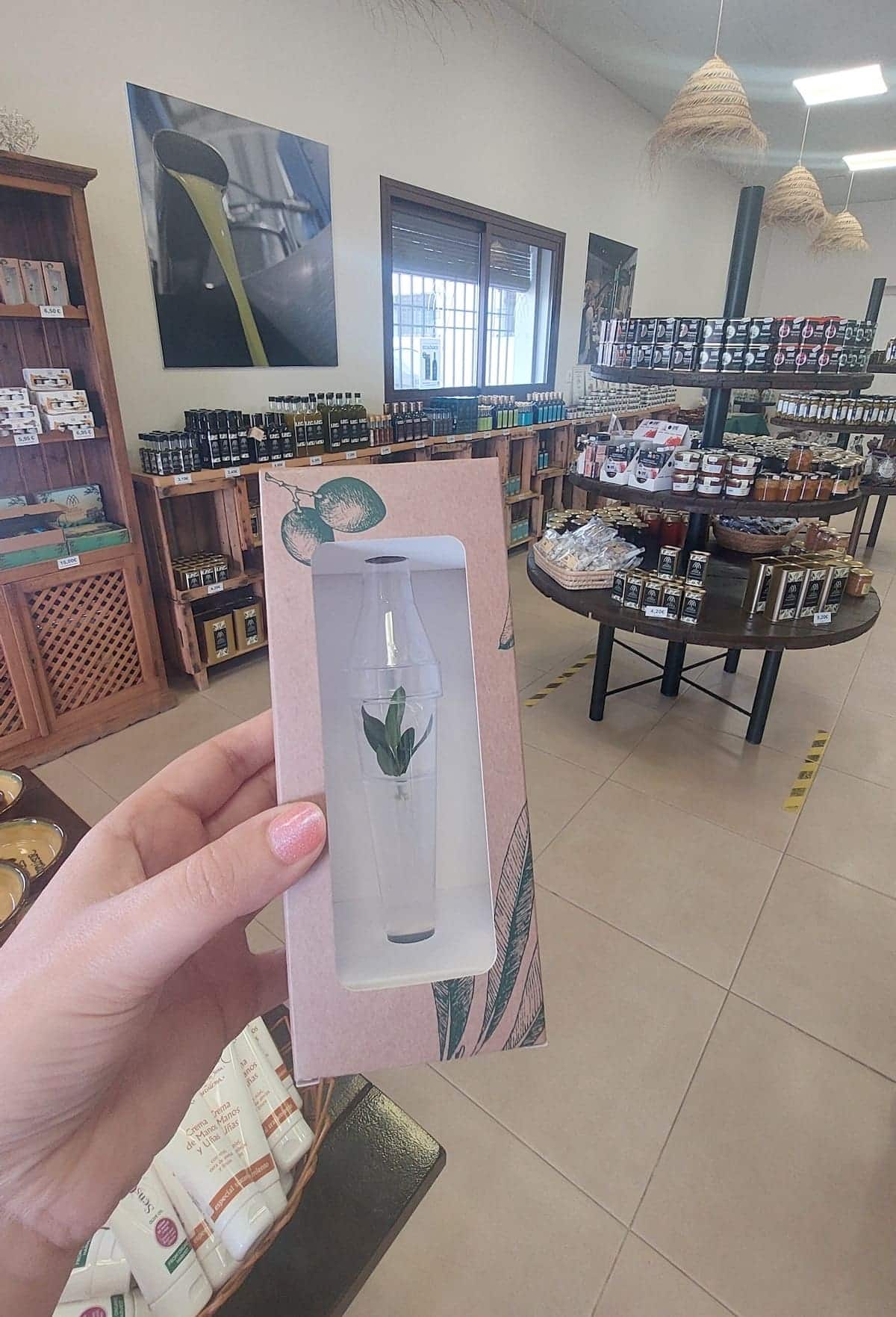
The olive tree is a Mediterranean plant that doesn’t handle cold well. It can tolerate light, occasional frosts (down to about -10°C / 14°F depending on the variety), but not our Canadian winters. Planting it directly in the ground here? Forget about it. In a pot, however, it’s definitely a possibility!
It needs as much light as possible—a south-facing window in winter, or full sun on the patio in summer. It’s a drought-tolerant plant: it prefers well-drained soil and a few days without watering rather than constantly damp soil. In winter, it can be brought indoors to a cool, bright space (a garage with a window, an unheated sunroom): it appreciates a short period of dormancy at 5–10°C (41–50°F). Don’t expect to harvest olives in Canada, but as an ornamental plant, the olive tree has incredible charm!
My cutting is now in a pot on my windowsill. I talk to it in Spanish. It doesn’t answer yet, but I remain optimistic!
Check out Steven at Food Garden Life, he offers online courses . (Toronto, Ont.) and has a few coming up about growing olives in our Canadian climates.
https://learn.foodgardenlife.com/
Good Luck, Elizabeth
Very interesting read!
What cultivar is your new olive tree (cutting)? Many of the remaining old olive trees in the Santa Clara Valley originally grew olives for oil, but because they are the only trees we know, we used the fruit as brined olives. They are not quite as good as the olives intended for such purposes.
Loved this post, Audrey and good luck with that olive tree!