
II have an Espelette pepper plant that I started from seed in September 2024. This plant has never been outside and is growing under artificial light. It has produced several harvests of beautiful peppers that I’m drying.
I’d like to let it rest a bit. I’ve already pruned it back severely, but it’s bounced back with a vengeance.
The stem is about 2 cm (¾ inch) in diameter and is well lignified.
What do you recommend to help it go into dormancy a bit?
Answer
Espelette pepper is a variety of the Capsicum annuum species, like bell peppers and many other familiar chili peppers, but it has been selectively bred over the centuries in the Basque Country. This Gorria-type pepper (“red” in Basque) even holds a Protected Designation of Origin (PDO).
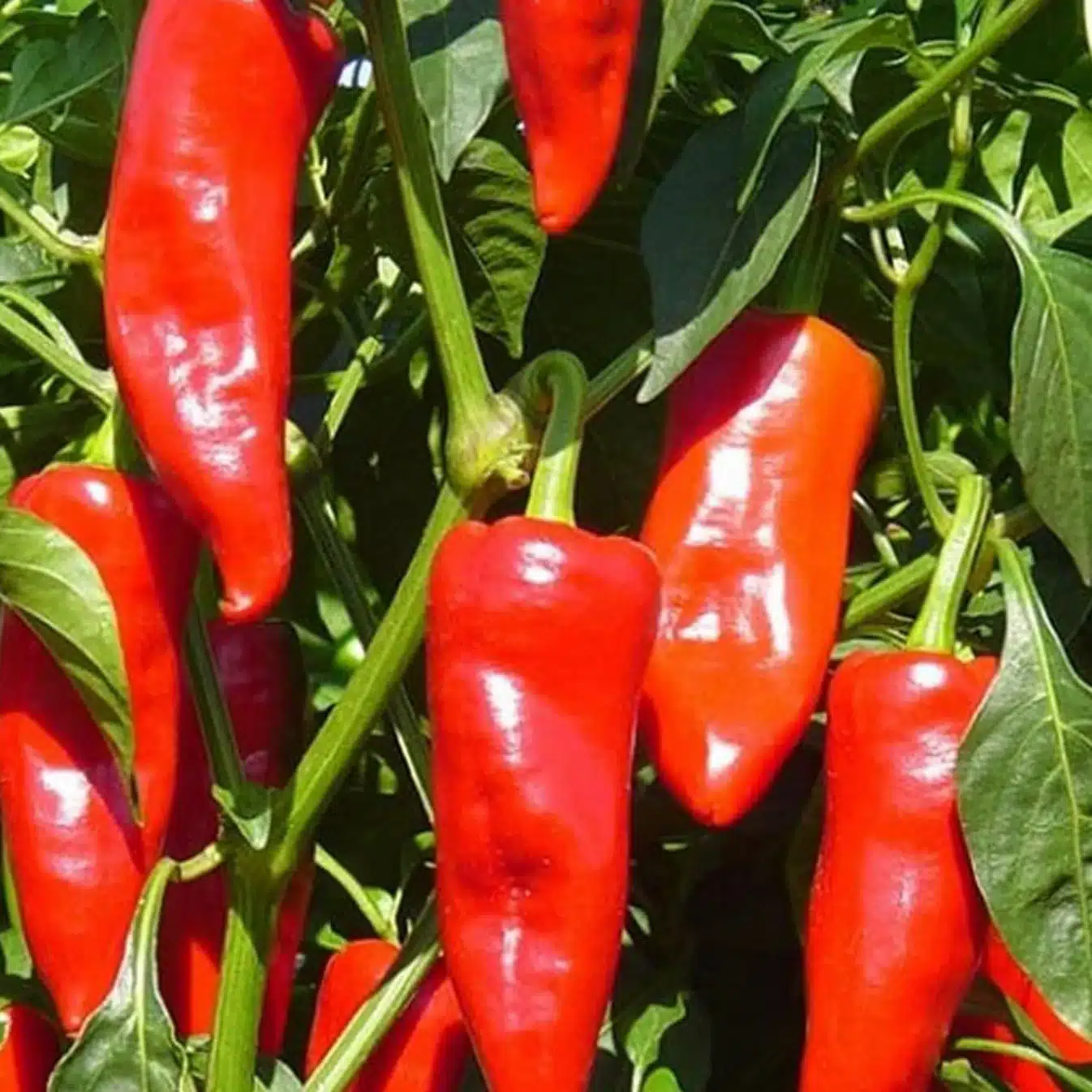
Like most chili peppers, it originates from the tropical and subtropical regions of Central America and Mexico, where it can live for several years. Its stem then becomes woody, forming a small shrub. It is therefore a perennial plant, but it is not hardy in Canada, where it is usually grown as an annual. However, as you have already done, it can easily be brought indoors to keep it alive for several years.
Dormancy?
Wild chili peppers in the Americas generally do not experience true winter dormancy like temperate plants, but rather cooler or drier periods that naturally slow their growth. During this time, the plant produces fewer leaves and flowers and enters a state of vegetative rest.
We can therefore take advantage of this natural tendency to encourage a slowdown, without seeking true dormancy.
To achieve this, we focus primarily on these factors: light, watering, fertilization, and temperature.
Light
One of the most powerful signals that stimulate growth is light. It triggers photosynthesis and, with it, nearly all of the plant’s metabolic activity. It therefore stands to reason that reducing light exposure—both in intensity and duration—will slow its growth.
If your chili pepper is growing under natural light, you can move it to a slightly less bright spot. Right now, the days are getting longer rather than shorter, so this isn’t the ideal time to induce dormancy. You could also wait until the end of the season, when the days naturally get shorter.
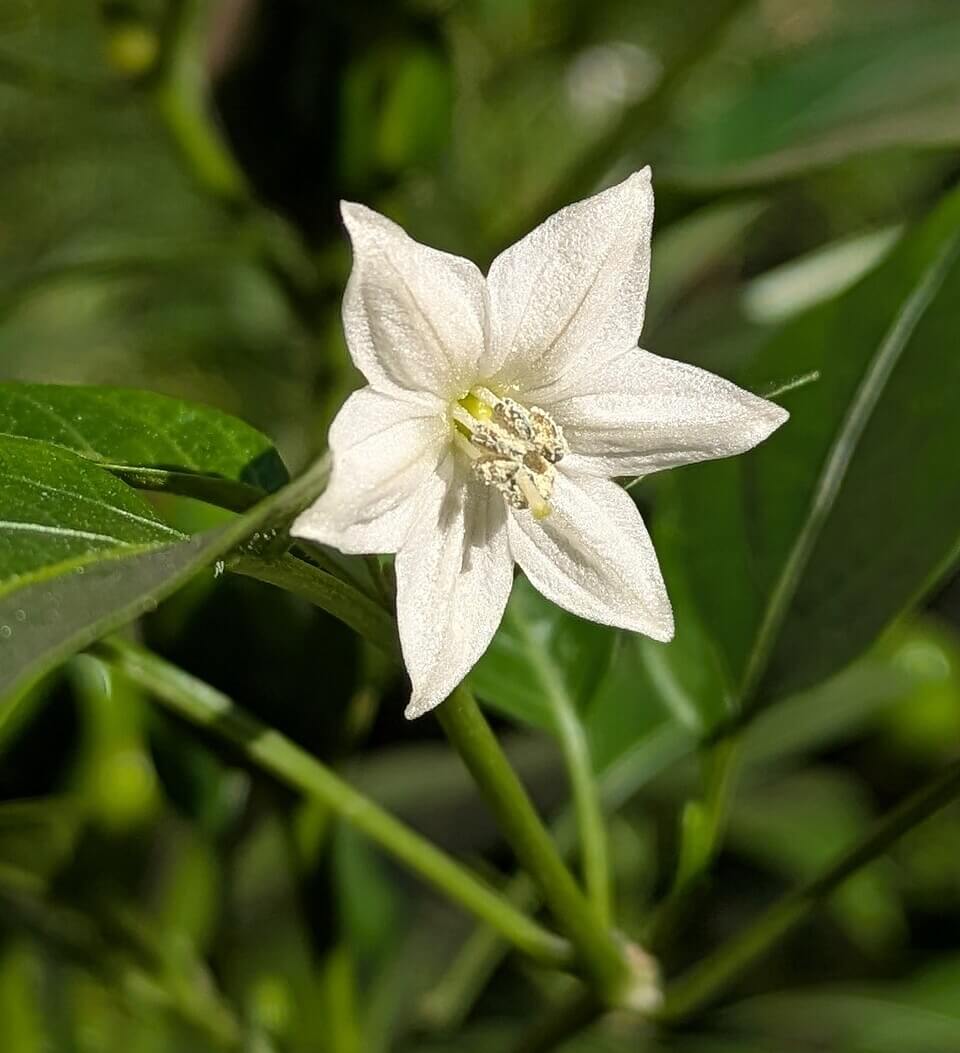
Under artificial lighting, it’s simpler: reduce the duration to 8 to 10 hours a day and move the lamp a little farther away to simulate the less intense light of winter. Since the Espelette pepper is sensitive to photoperiod for its flowering, this reduction in light will slow down the production of new flowers and encourage dormancy.
Eau
To mimic the dry season of its tropical ancestors, reduce watering. Let the soil dry out to a depth of several centimeters, and even allow the leaves to wilt slightly, before watering again. Give just enough water to prevent the pot from drying out completely.
Fertilization
As with any plant that is not actively growing, you should stop fertilizing it. A lack of nitrogen, in particular, reduces the production of new leaves and young green stems.
Temperature
Despite the lack of light, a plant growing in the comfortable warmth of our homes will often want to keep growing. Ideally, provide it with temperatures around 15 °C (59 °F), but avoid letting them drop below 12 °C (54 °F).
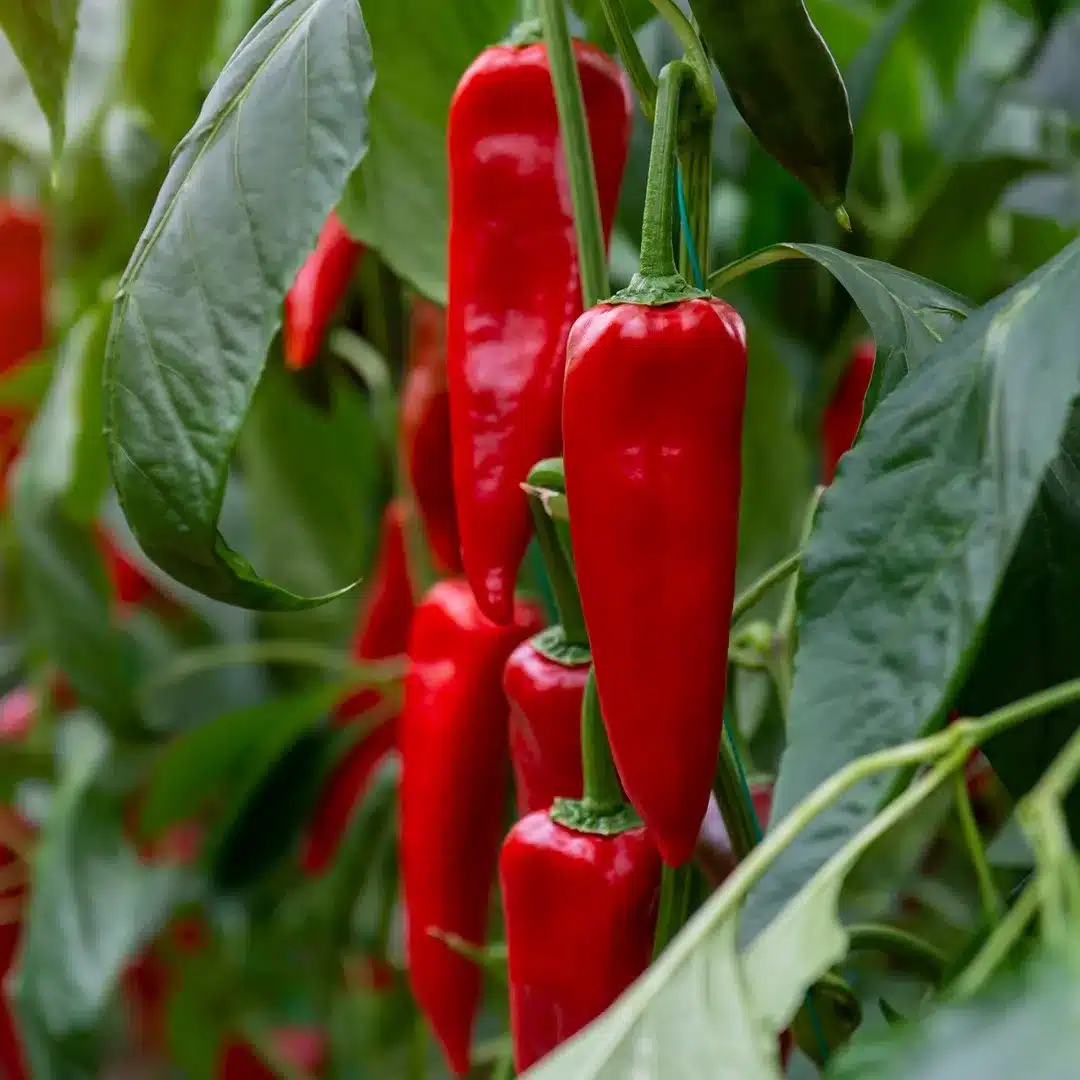
A room that isn’t very warm, a bright basement, or a warm, well-lit garage can work well. However, avoid cold drafts. In cooler temperatures, your chili plant will naturally slow down its metabolism.
When putting the plant into dormancy, it’s best to avoid pruning, as this often stimulates the production of new buds and triggers new growth.
What happens next?
Your plant will likely lose some of its leaves, and that’s perfectly normal. As long as the stems and trunk remain supple and alive—without becoming dry and brittle—everything is fine.
After 8 to 12 weeks, your plant will have had enough rest. Its usual fruit production, which is very energy-intensive, will cease, allowing the plant to replenish its reserves and let its roots rest before a new growth spurt.
Do not exceed 4 months of total rest. Beyond this period, without a regular supply of light and nutrients, the plant risks weakening unnecessarily and becoming more vulnerable to pests, such as aphids, thrips, or spider mites, when it wakes up. A light spray on the foliage before restarting growth will also help reduce their presence.
If, after some time, your chili plant decides to wake up on its own and you see small green shoots or new leaves appearing, don’t fight it. Let it start growing again: even 4 weeks of rest may already be enough.
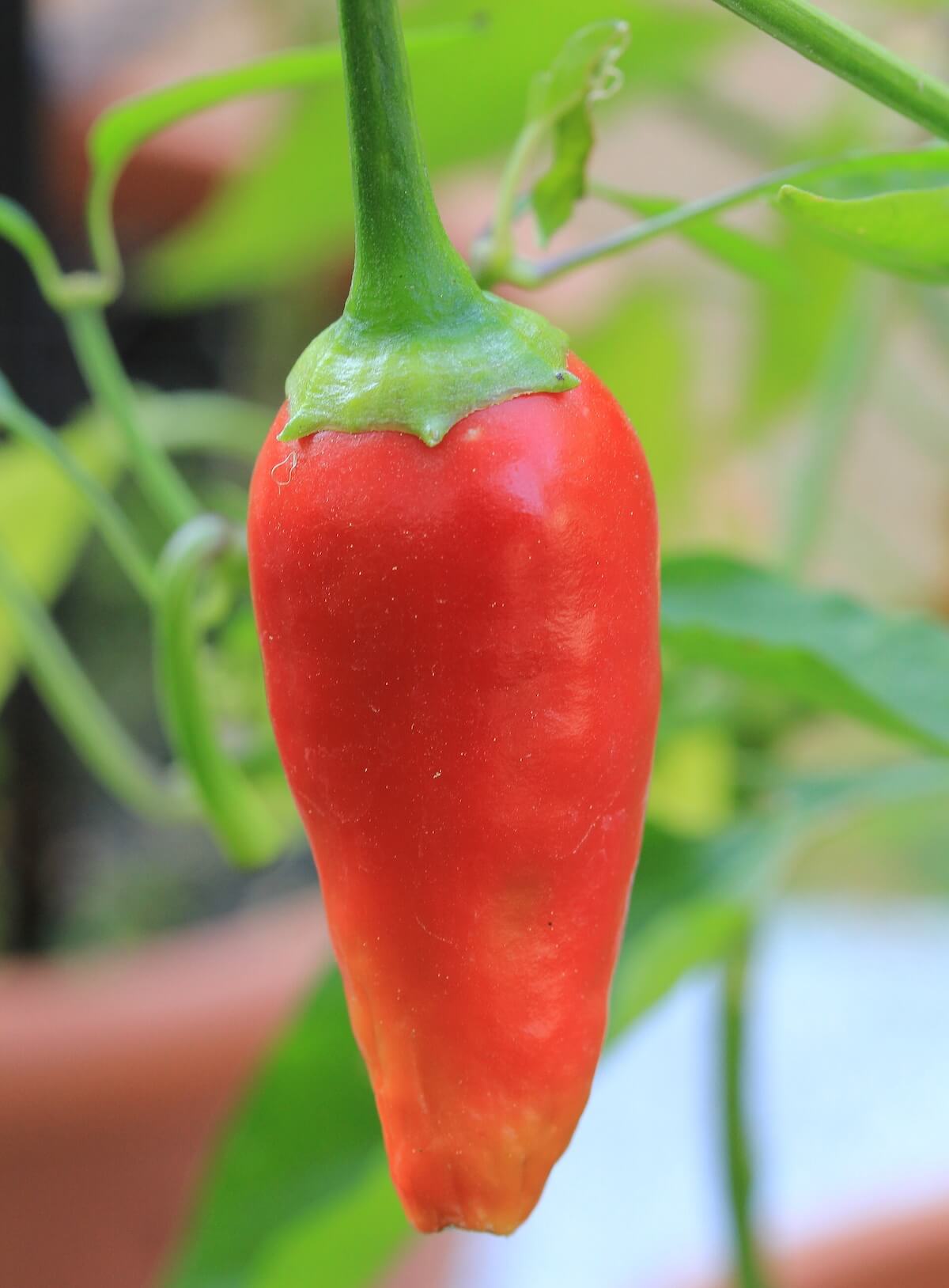
At this point, do the opposite of what you did to slow its growth: gradually increase the light, watering, and heat. Once the plant has clearly started to recover, slowly resume fertilizing.
A little pruning may also be appropriate: remove dry leaves and dead stems so that energy is focused on the healthy, vigorous parts. This is also a good time to repot, if necessary.
And there you have it—your chili plant will be ready to produce again, rested and in top form after its little vacation in the shade and cool!
Thank you so much for this incredibly detailed and thoughtful advice! I really appreciate the deep dive into the Espelette’s origins and the clear, step-by-step breakdown of how to mimic its natural resting period. Adjusting the lights and moving it to a cooler spot sounds like the perfect plan. It’s a relief to know that losing a few leaves is normal and that a good 8-12 week rest will have it bouncing back stronger than ever. Thanks again for your expertise!
A good read! Very informative and well-written advice. Thank you.