Last month, at a conference, several gardeners from the Quebec City area shared their joy at seeing their wisteria plant (Wisteria sp.) bloom, year after year. Just 20 years ago, this is something we would never have heard of! It’s getting warmer, and our plants, once at the very limit of their hardiness, are constantly proving it to us. This good news sparked something in me. Could it be the season? Are we finally at the dawning of the age of the Cercis?
The cercis (Cersis canadensis), also called the redbud or Canada redbud, is a rather unknown small tree. This is because it was rarely planted in northern climates, given its low hardiness zone (Zone 5b, USDA zone 4). Also, despite its name, which suggests it’s a plant that grows naturally in Canada, only a few native specimens remain in the far reaches of southern Ontario. Furthermore, the Canadensys reference website lists it as extirpated in Ontario. That said, the eastern redbud is native to all the eastern states of the United States. In short, it’s a North American native tree with great ornamental value.
A small tree!
One of the advantages of the redbud is that it is a small tree, reaching between 5 and 10 meters (15 to 30 feet) in height at maturity. In northern climates, it rarely exceeds 6 or 7 meters (18 to 21 feet). It is therefore an ideal choice for urban gardens and small front yards.
Naturally, the redbud tends to grow wide and spreading. It often takes on the appearance of old apple trees, with its forked trunk and branches that extend outwards. At maturity, it is often as wide as it is tall.
A completely unique flowering
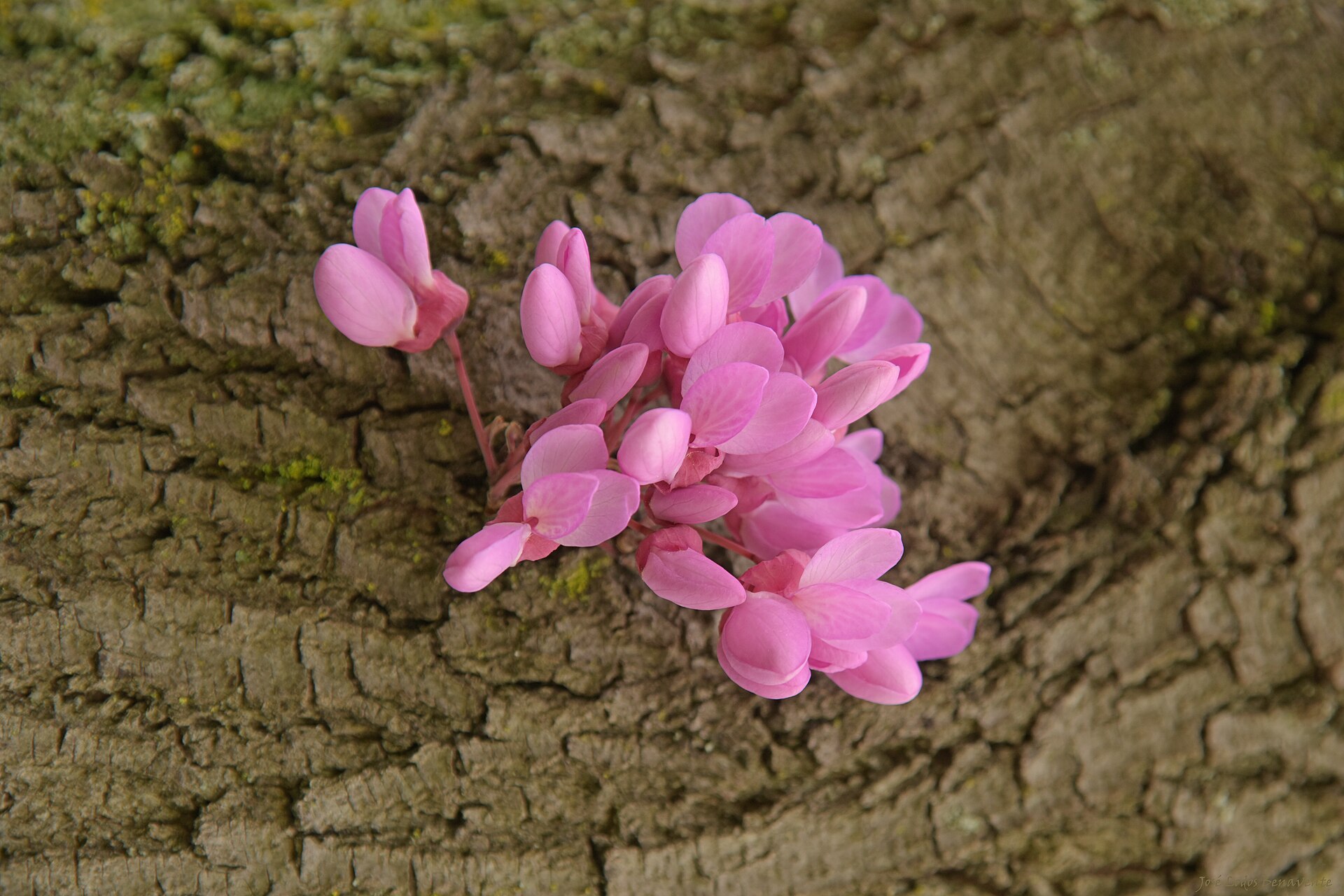
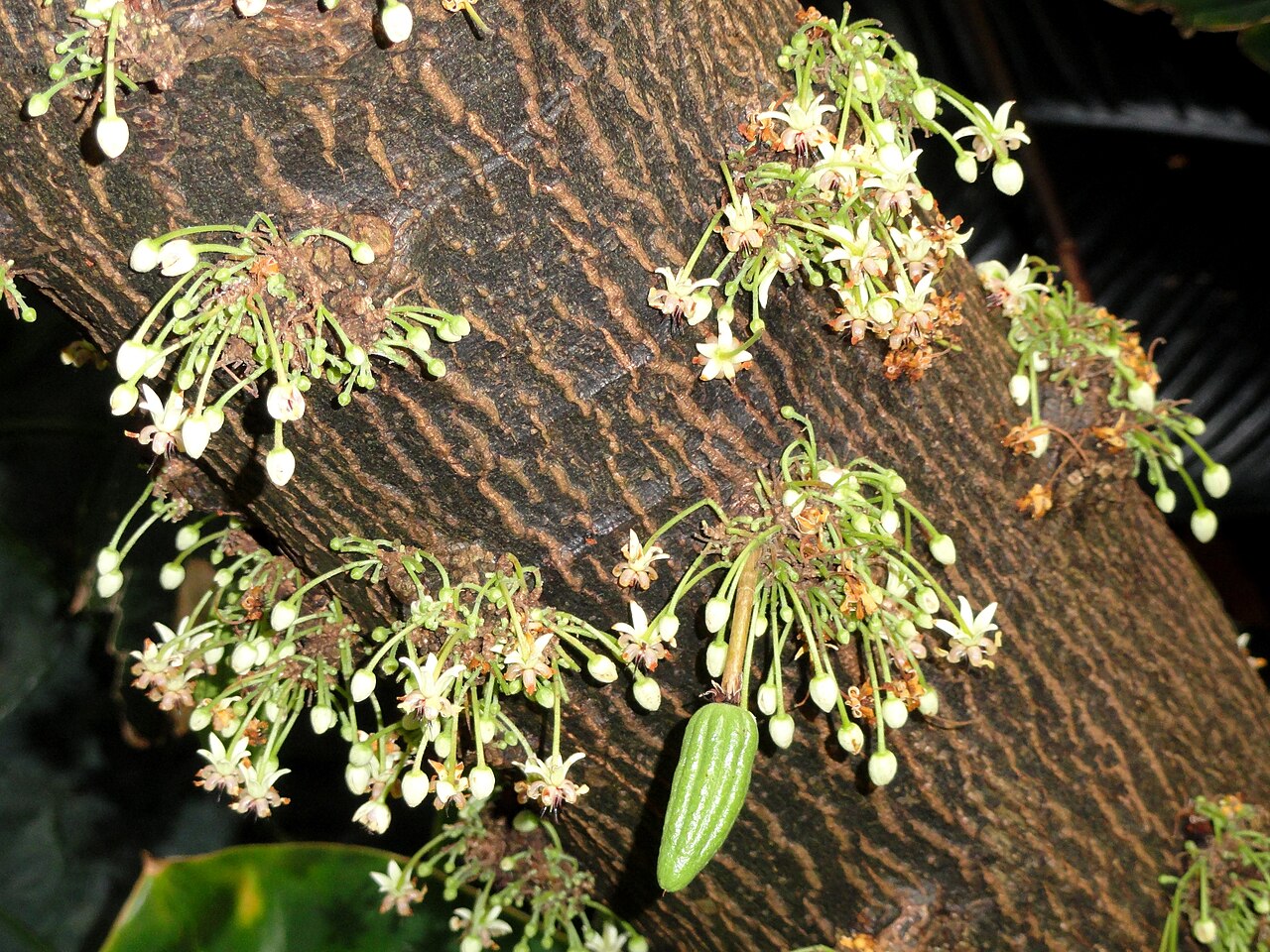
It’s undoubtedly the flowering of the cercis that makes them so interesting! Instead of bearing enormous flowers at the ends of their stems, like magnolias, the cercis’s flowers appear all along the branches and even the trunk. Yes, the flowers emerge directly through the bark! This phenomenon is called cauliflory. It’s generally a characteristic of tropical plants, and the only other plant I know of that exhibits this unique type of flowering is the cacao tree!
Thus, during the flowering season, tiny blossoms burst forth along the large branches… and the trunk! The flowers appear well before the leaves. Its blooming period concurs at the same time as that of apple trees. Lilacs, on the other hand, are only just beginning to open their first blossoms. If you can smell lilacs, the redbuds are in bloom!
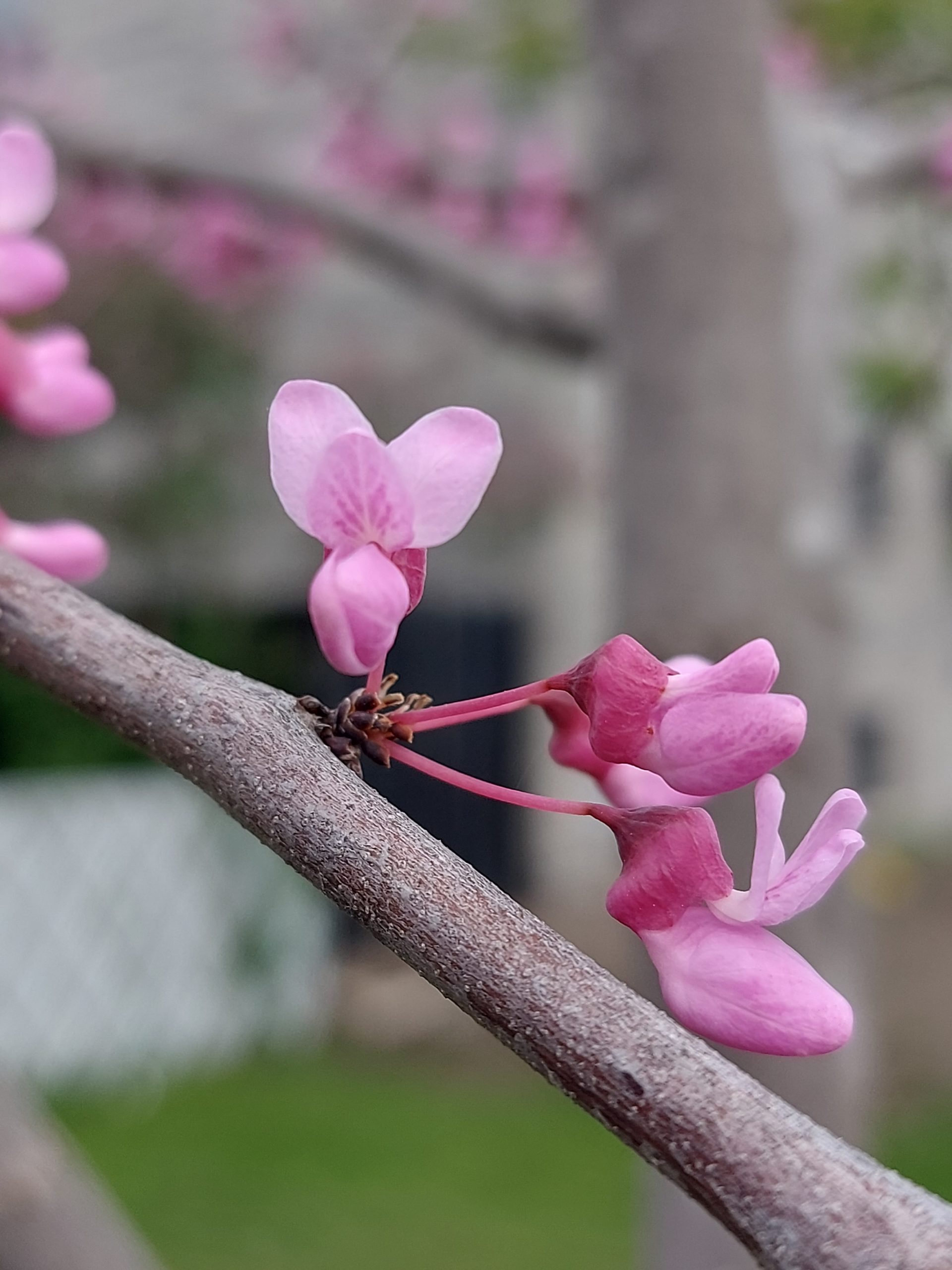
The flowers are tiny, but clustered in small umbels. During flower development in spring, the small buds appear dark red, then dark pink. This characteristic gives it its name “redbud” Then arrive the beautiful flowers, which are generally dark pink or pale pink depending on the variety.
On closer inspection, you’ll notice that the flower closely resembles a small pea or vetch flower. Indeed, this tree belongs to the Fabaceae family, which means it’s a nitrogen-fixing tree!
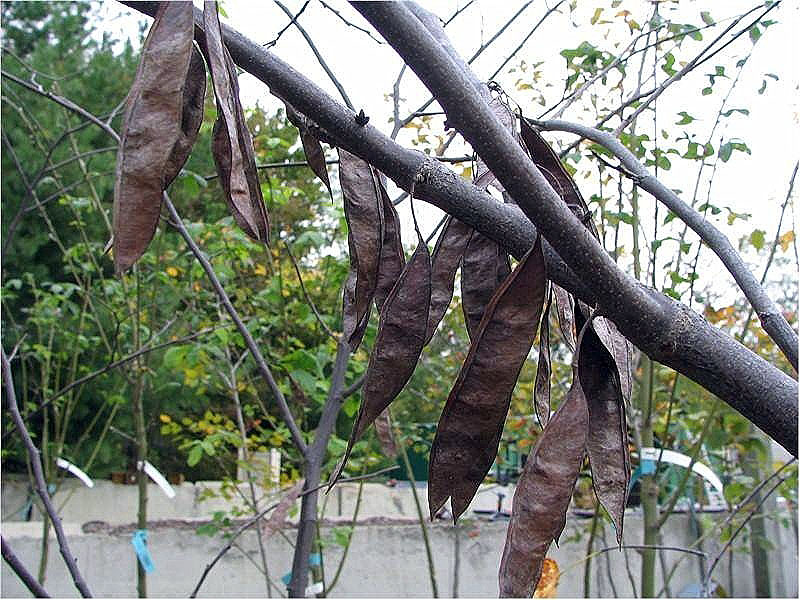
This also implies that the fruit of the redbud is a small, flattened pod. They hang along the branches, but are rarely seen because they are hidden under the foliage.
Equally remarkable foliage
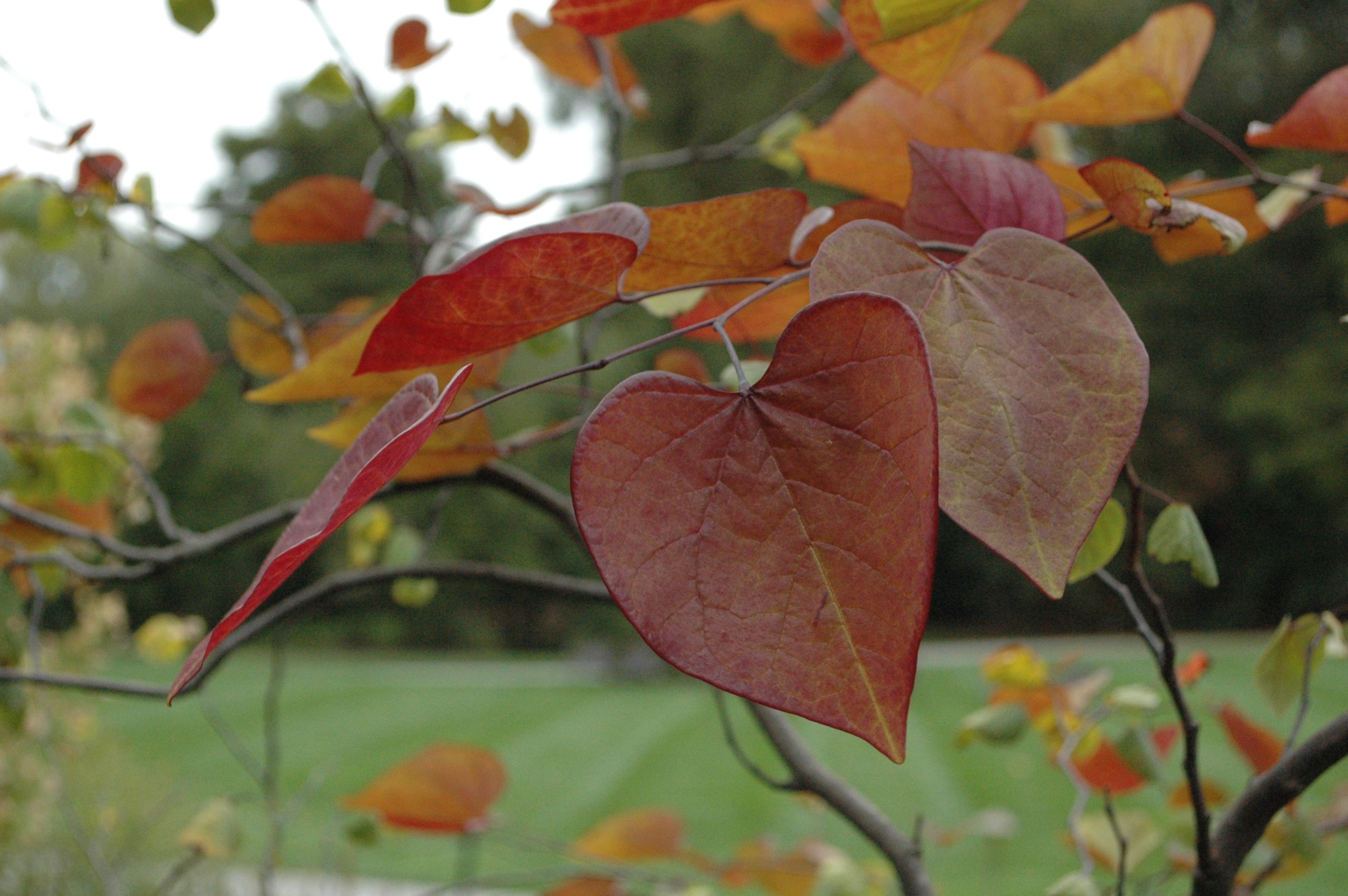
Once flowering is over, the leaves emerge. These are beautiful, large, heart-shaped leaves. The foliage itself is also very decorative. When the leaves are fully open, they take on a bluish-green hue. Then, in fall, they turn golden-yellow or burgundy red, depending on the cultivar. So you get a second treat in autumn.
A few varieties to sink your teeth into
It must be admitted that for gardens in northern climates, the selection of cultivars is not yet very extensive and probably the coming years will offer us some new ones.
Of course, it is relatively easy to find the simple species (Cercis canadensis) which bears medium pink flowers. With a little research, you can find a beautiful weeping variety, ‘Ruby Falls’, with pink flowers and burgundy foliage in summer. It’s certainly a beautiful plant to showcase at the front of the house. The ‘Northern Herald’ variety, on the other hand, stands out for its greater hardiness, but it is still zone 4b (USDA zone 3)! For trees with twisted branches and a semi-weeping habit, you’ll find ‘Vanilla Twist’ with white flowers and ‘Lavender Twist’ with lavender flowers. And finally, you can find another redbud with purple foliage, ‘Forest Pansy’, also with pink flowers.
Like many plants, redbuds have cast a spell on me, most likely because they are somewhat exotic for northern gardeners. They offer a unique and different spring bloom, and it’s a safe bet that we’ll be seeing more and more of them in gardens in zone 5 (USDA zone 4) and, who knows, maybe one day in zone 4 (USDA zone 3)!