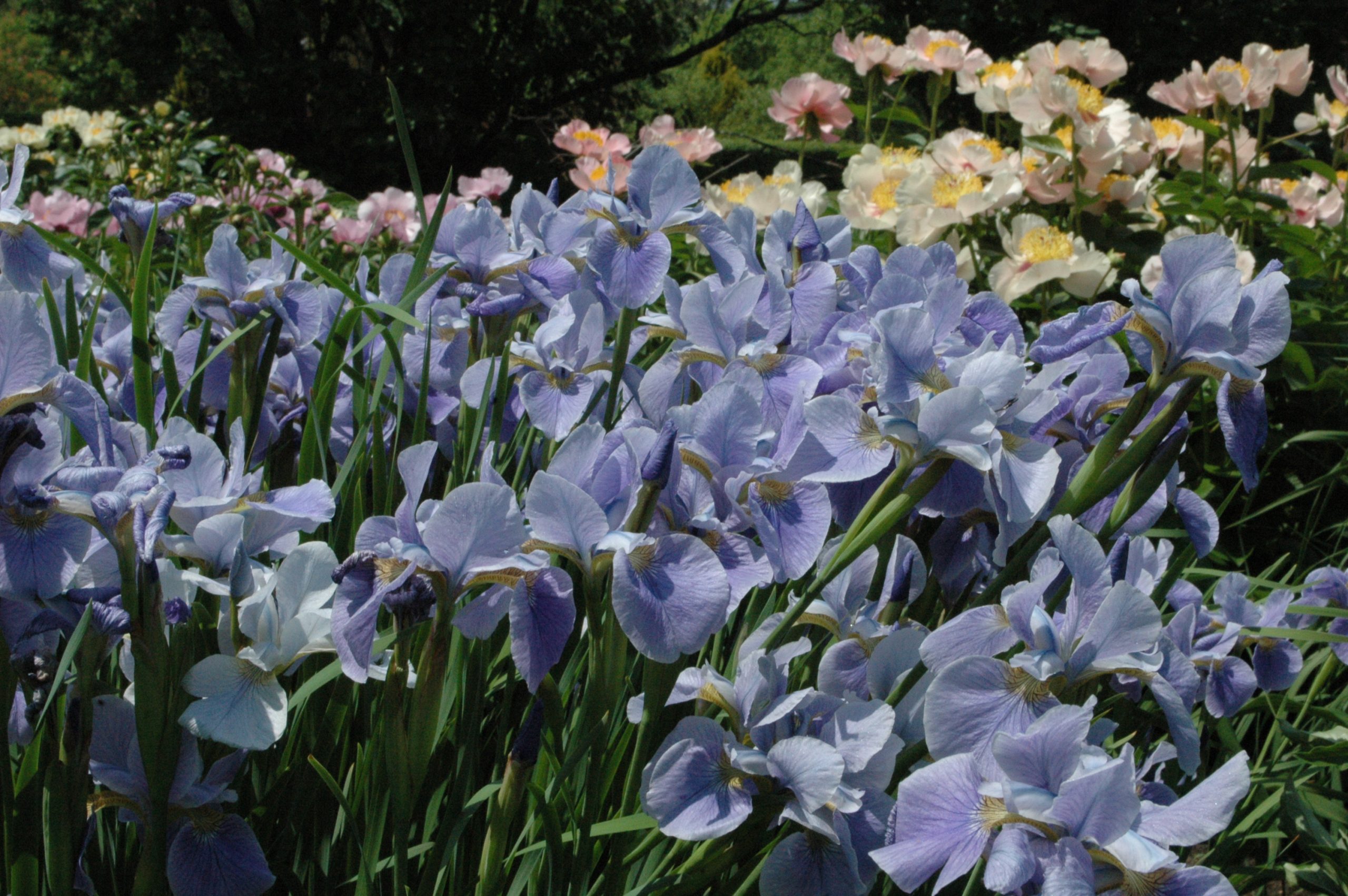
The iris flower is recognizable from miles around. With its three downward-curving petals and three upright ones, how can you not be charmed? And when you can count the flowers by the dozen, the effect is spectacular. The great diversity of irises means you can find the perfect one for every garden! What’s more, by combining different species, you can enjoy iris blooms from early spring to late summer!
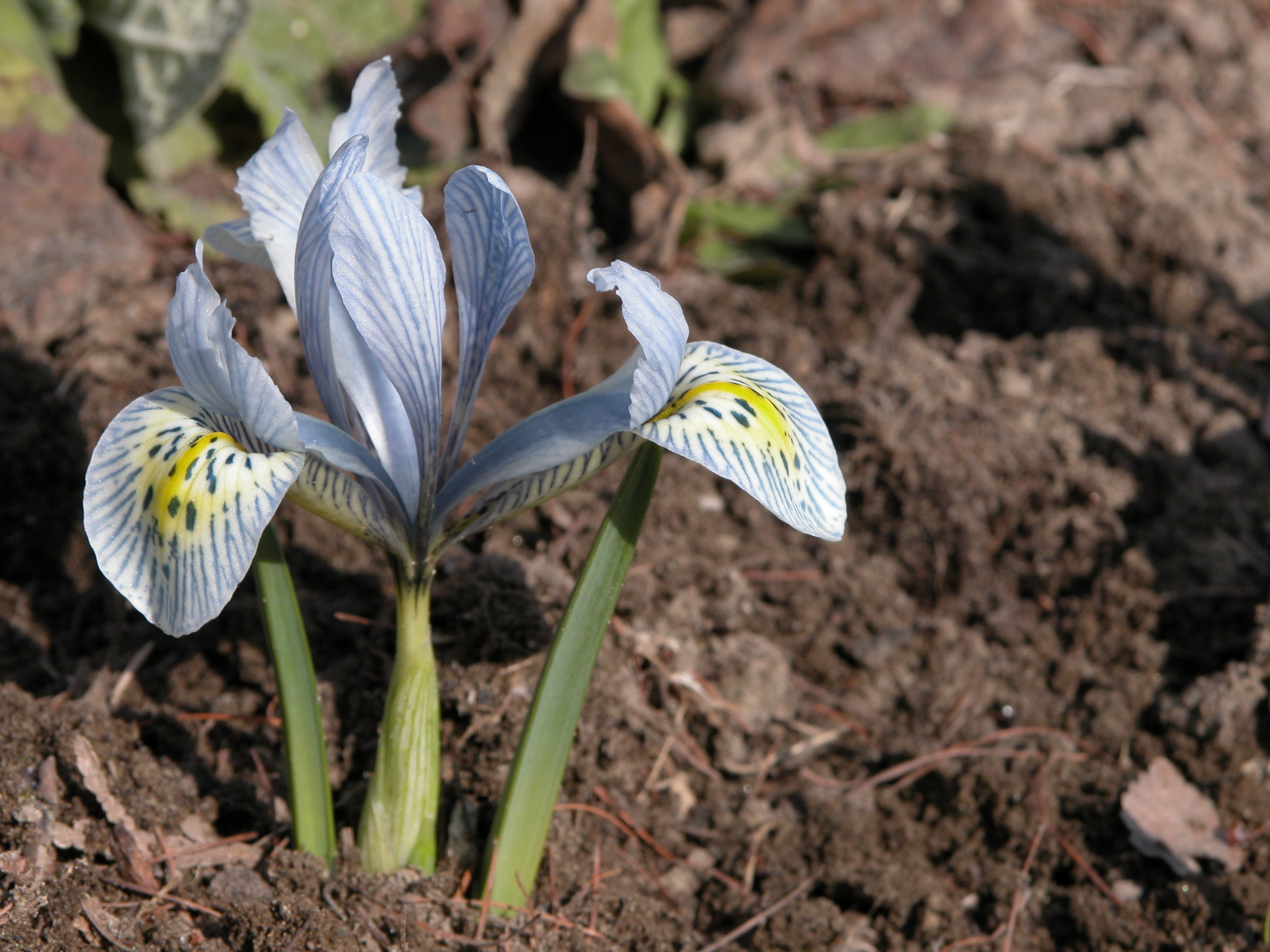
An iris to celebrate spring
Blooming around the same time as crocuses, reticulated irises (Iris reticulata) are among the rare irises that develop from bulbs rather than rhizomes (underground stems). They are also unique because they are planted in autumn, at the same time as tulips and daffodils!
These irises can grow up to 15 cm tall (6 inches) and are among the very first to bloom in spring. They are best planted in small, dense clumps for an attractive effect. They can also be naturalized in lawns.
My personal favourite from this group is ‘Katharine Hodgkin’, an iris that has faithfully bloomed in my garden for over 10 years. The flower colour is very pale, making it a lovely addition among all the brightly colored, flashy spring bulbs!
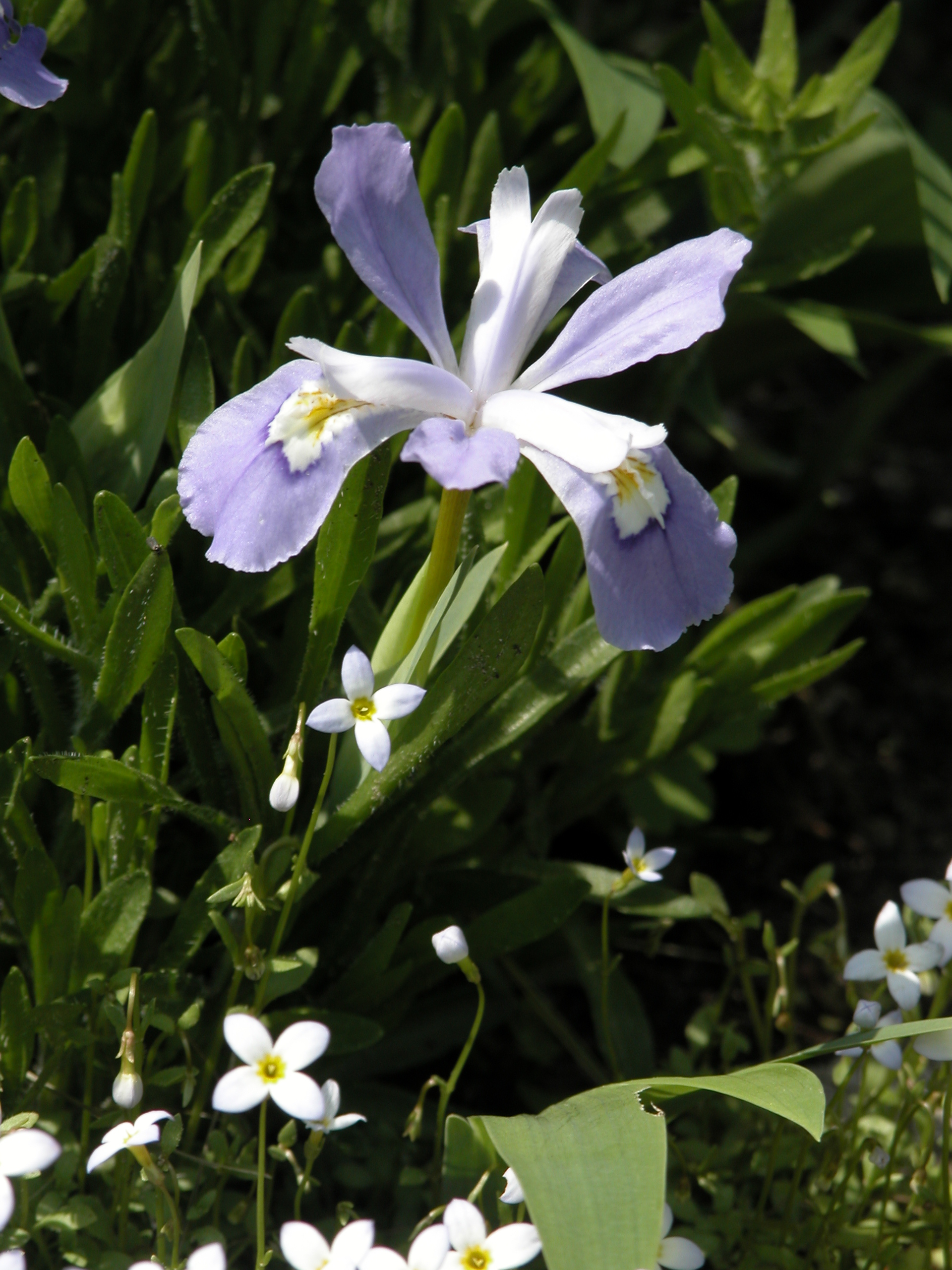
An iris for the alpine garden
Lovers of rock gardens and alpine plants will be delighted to discover a prolific little iris called the crested iris (Iris cristata). This small iris, about 15 cm tall, spreads by slender rhizomes that creep along the surface of the soil. Over the years, it forms a small, airy clump. I tend to let it spread freely among the other alpine plants. Its pretty, pale blue flower is disproportionately large compared to the size of its foliage. Reliable and utterly charming!
An iris for the borders
The dwarf iris (Iris pumila) is a little better known to gardeners. It is identical in every way to the garden iris, which we will see shortly, except that it is tiny! Measuring 15 to 30 cm (6 to 12 in) tall, it displays enormous flowers in a variety of colours. This small iris forms beautiful, dense clumps and is covered in flowers just after the tulips have finished blooming, around the same time as early-flowering peonies. The flowering period lasts about two weeks.
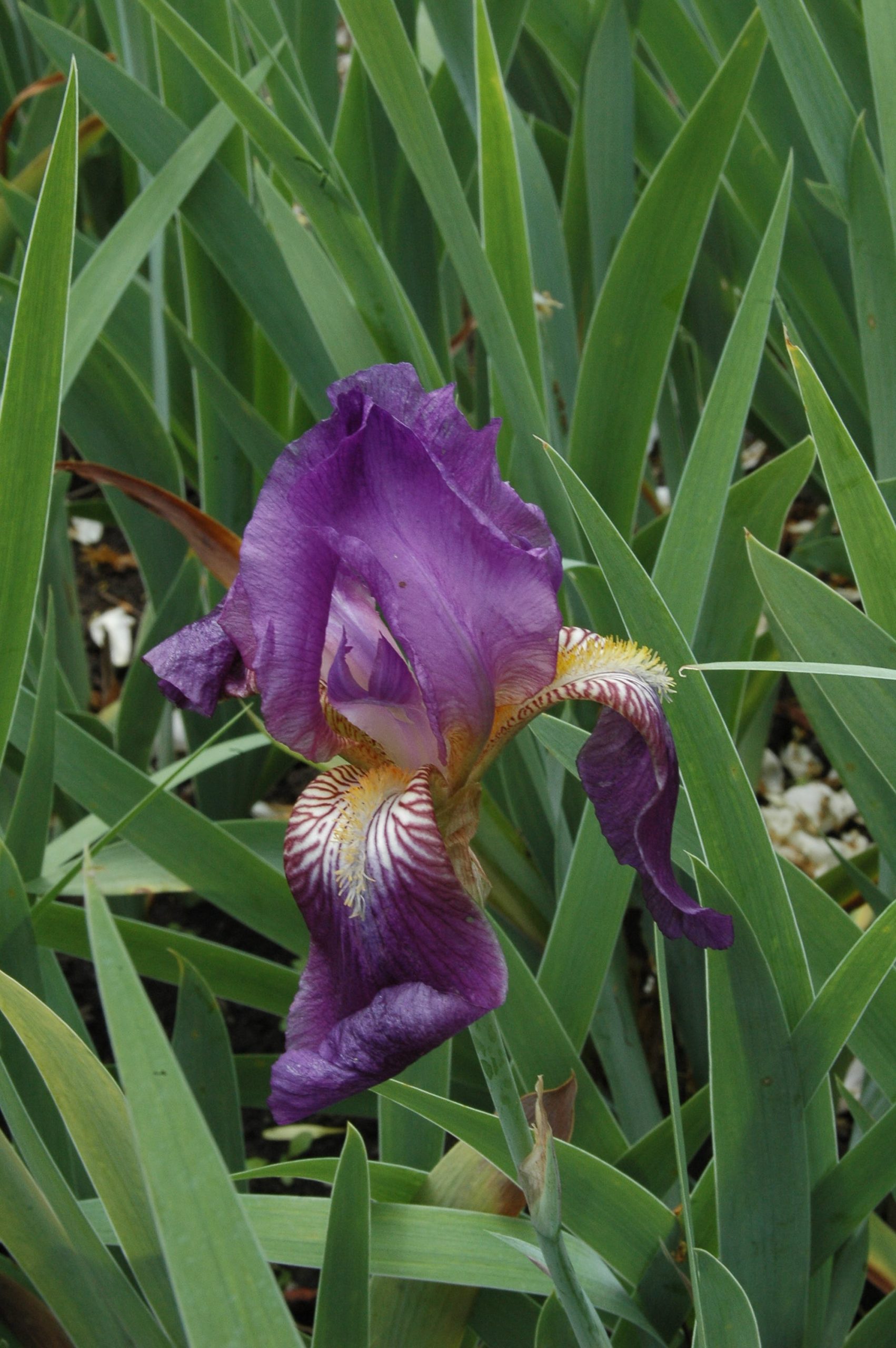
Dwarf irises develop fleshy rhizomes that should creep along the surface of the soil. These rhizomes should not be buried or covered with soil. For abundant flowering, plant in full sun in well-drained soil.
An iris among the perennials
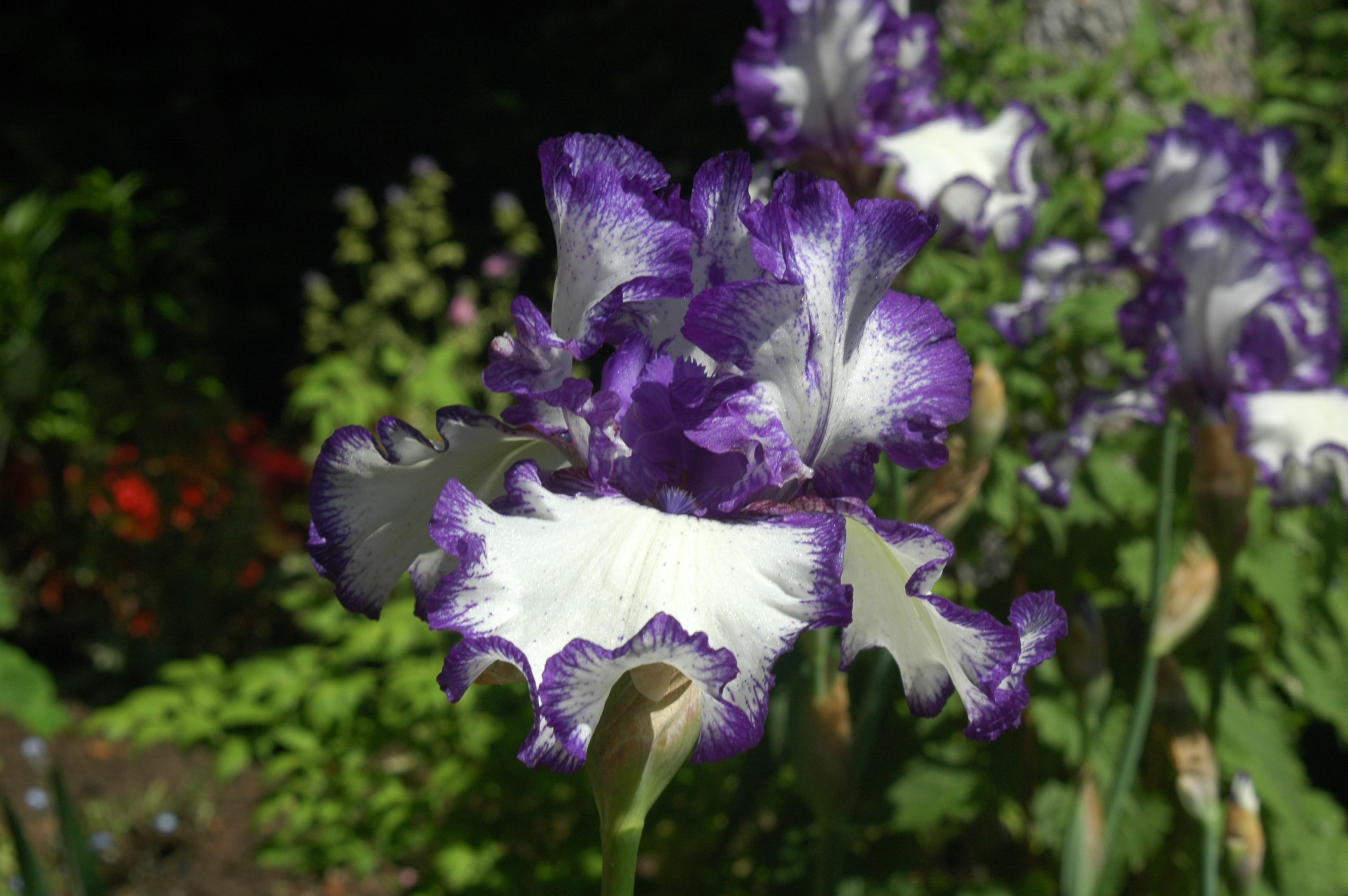
The bearded iris (Iris x germanica , formerly I. x barbata or I. x hybrida) is undoubtedly the ideal plant for a low-maintenance mixed perennial border. It is sometimes called bearded because of the hairs on its sepals. This plant quickly forms an impressive clump of broad leaves that contrasts beautifully with plants with fine, finely cut foliage, such as hardy geraniums. The large flowers bloom around the same time as peonies. Even though the flowering period only lasts two weeks, it is spectacular.
Like daylilies, this plant has been extensively hybridized, resulting in thousands of cultivars. The main focus has been on improving flower size, but especially on increasing colour diversity, as this iris is naturally yellow and mauve. Its height varies from 40 to 120 cm (16 to 48 in). For abundant flowering, it should be planted in full sun.
An iris for difficult places
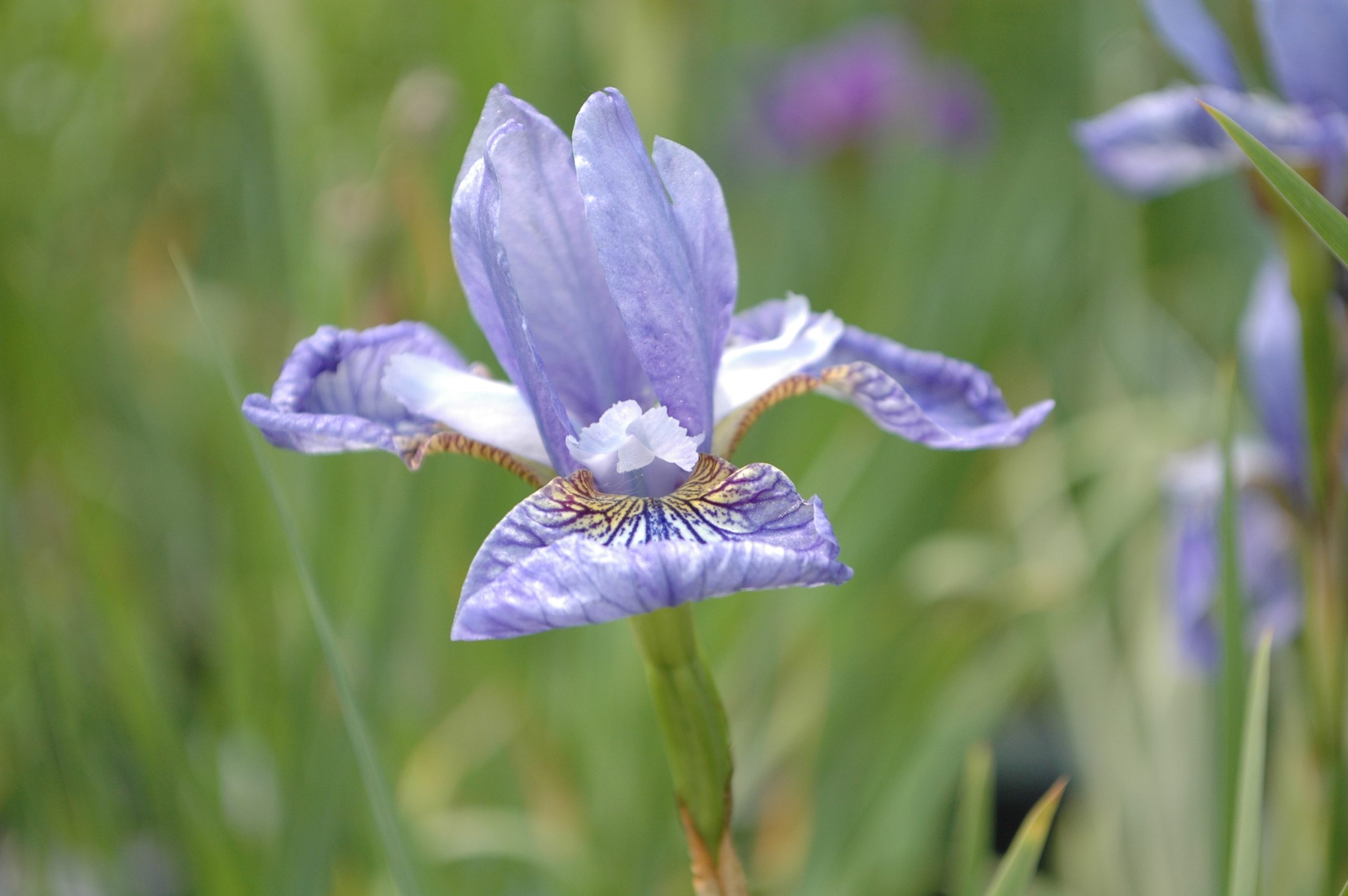
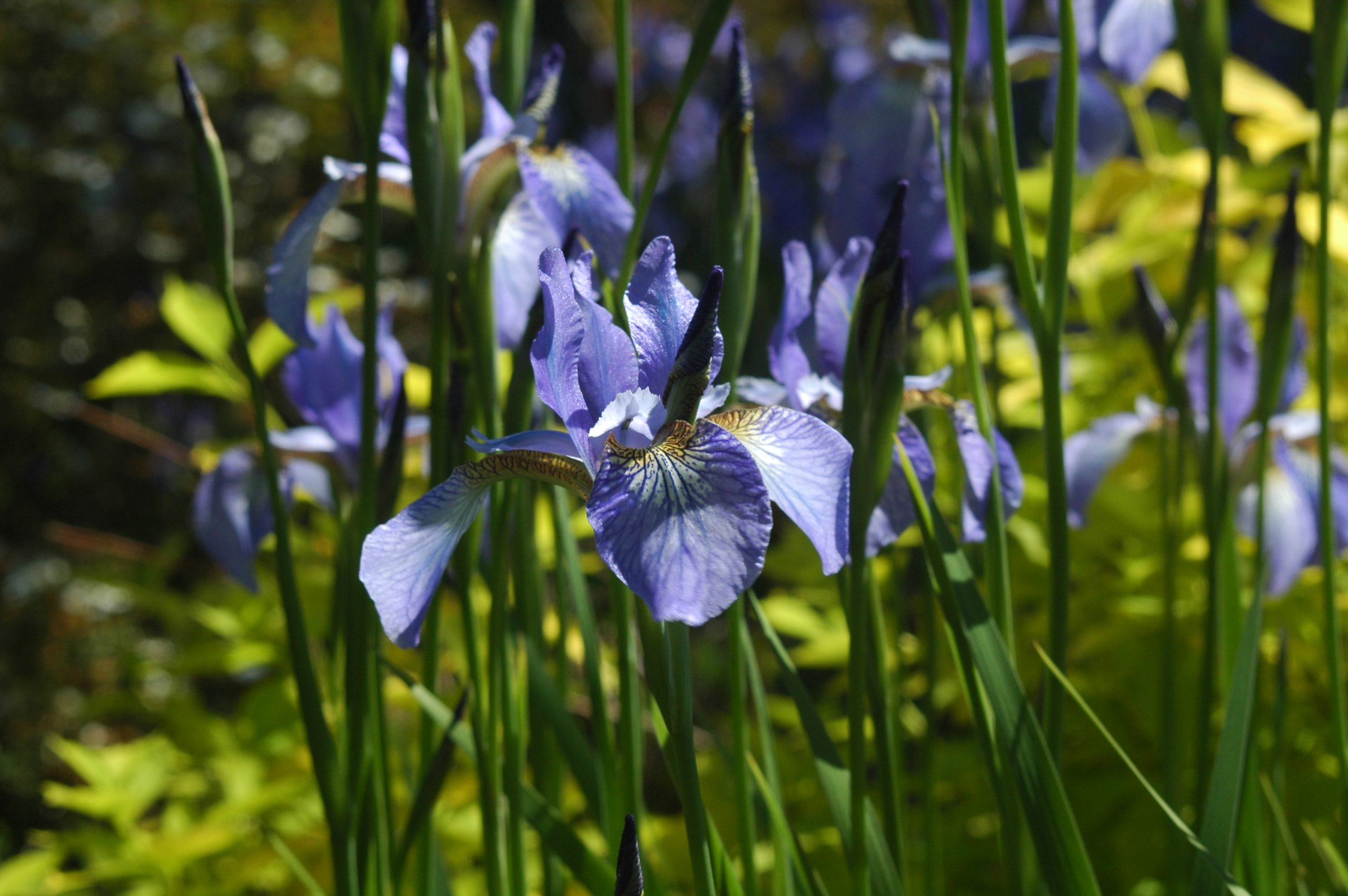
Bearded irises are not difficult to grow. However, in areas where they refuse to thrive, Siberian irises (Iris sibirica) are a good alternative. This iris develops narrower, upright leaves, and at maturity, the foliage forms a fairly dense rosette. Above the foliage appear flowers that are smaller and less showy than those of garden irises, but still quite attractive. Although cultivars offer fewer colour options than bearded irises, this species deserves our attention because it tolerates partial shade and poorly drained soils well. It is also resistant to the iris borer, which sometimes attacks dwarf and bearded irises. Siberian irises grow to 60–100 cm (24–40 in) tall and bloom in June and July.
An iris for its fragrance
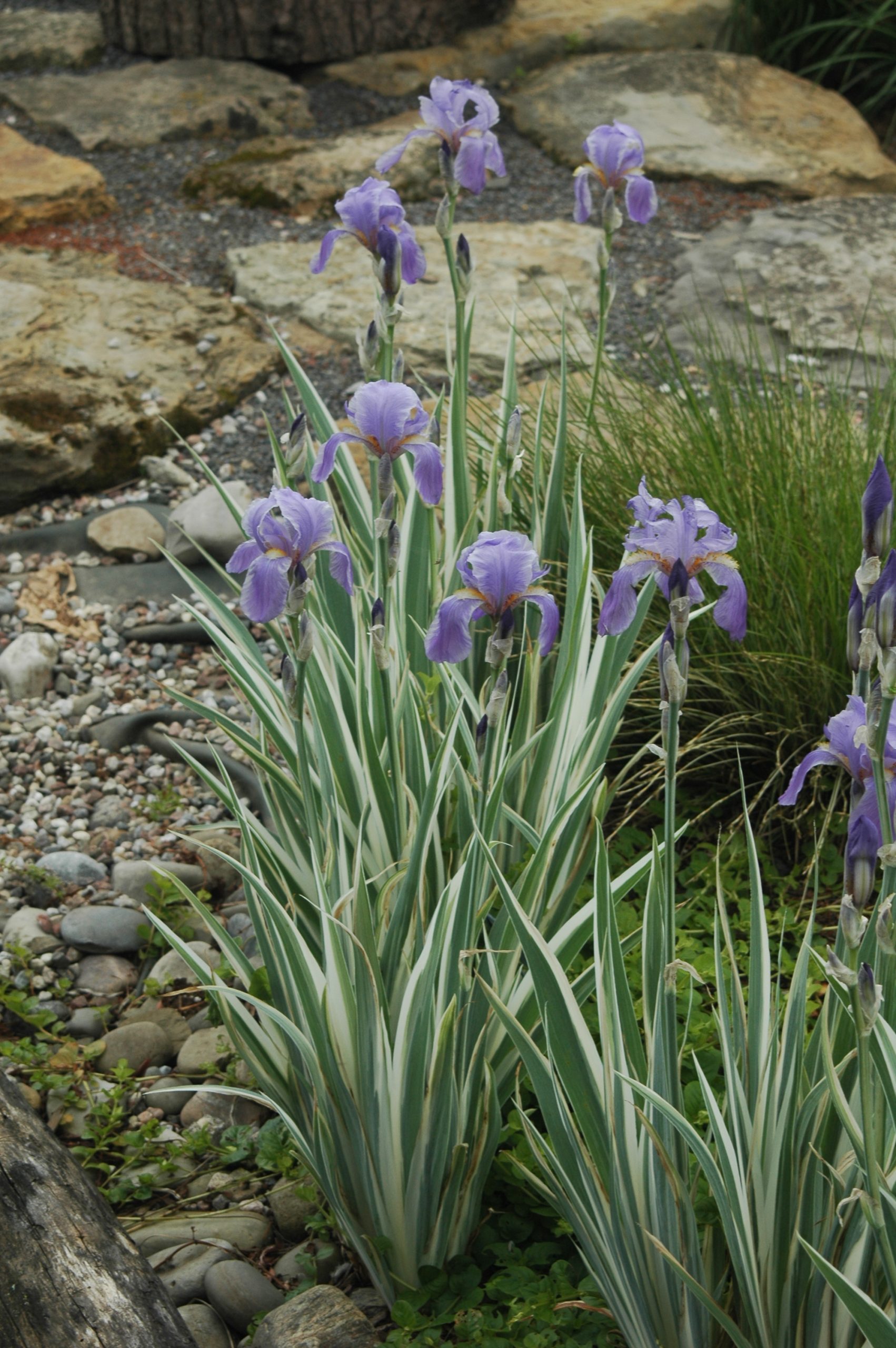
Among the other irises that thrive in sunny flowerbeds is a variegated variety. The Dalmatian iris (Iris pallida) develops variegated foliage in creamy white (‘Variegata’) or golden yellow (‘Aureovariegata’). In addition to its highly decorative foliage, the plant produces beautiful, fragrant mauve flowers. The scent is remarkably similar to that of grape juice!
This is a good iris to plant in low maintenance landscaping and areas that receive little watering.
An iris for more humid areas
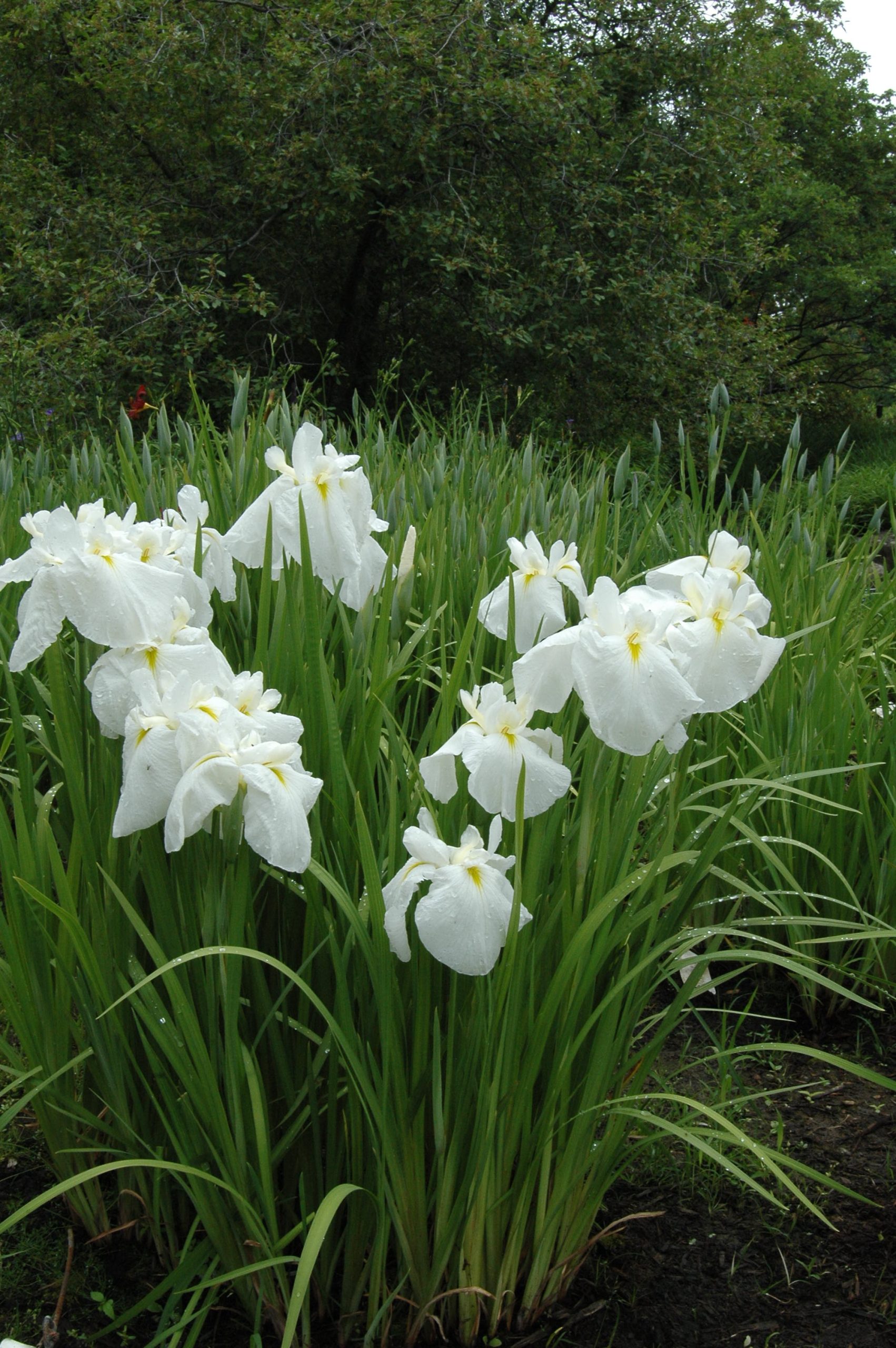
The Japanese iris (Iris ensata) takes us to a completely different world. It is a plant that thrives with its roots in water, or even mud. That said, in regularly watered soil, it can be planted in an ordinary flower bed. The flowers are truly beautiful, among the most elegant in the iris family. This plant grows to about 75 cm (30 in) tall.
An iris to celebrate the summer solstice
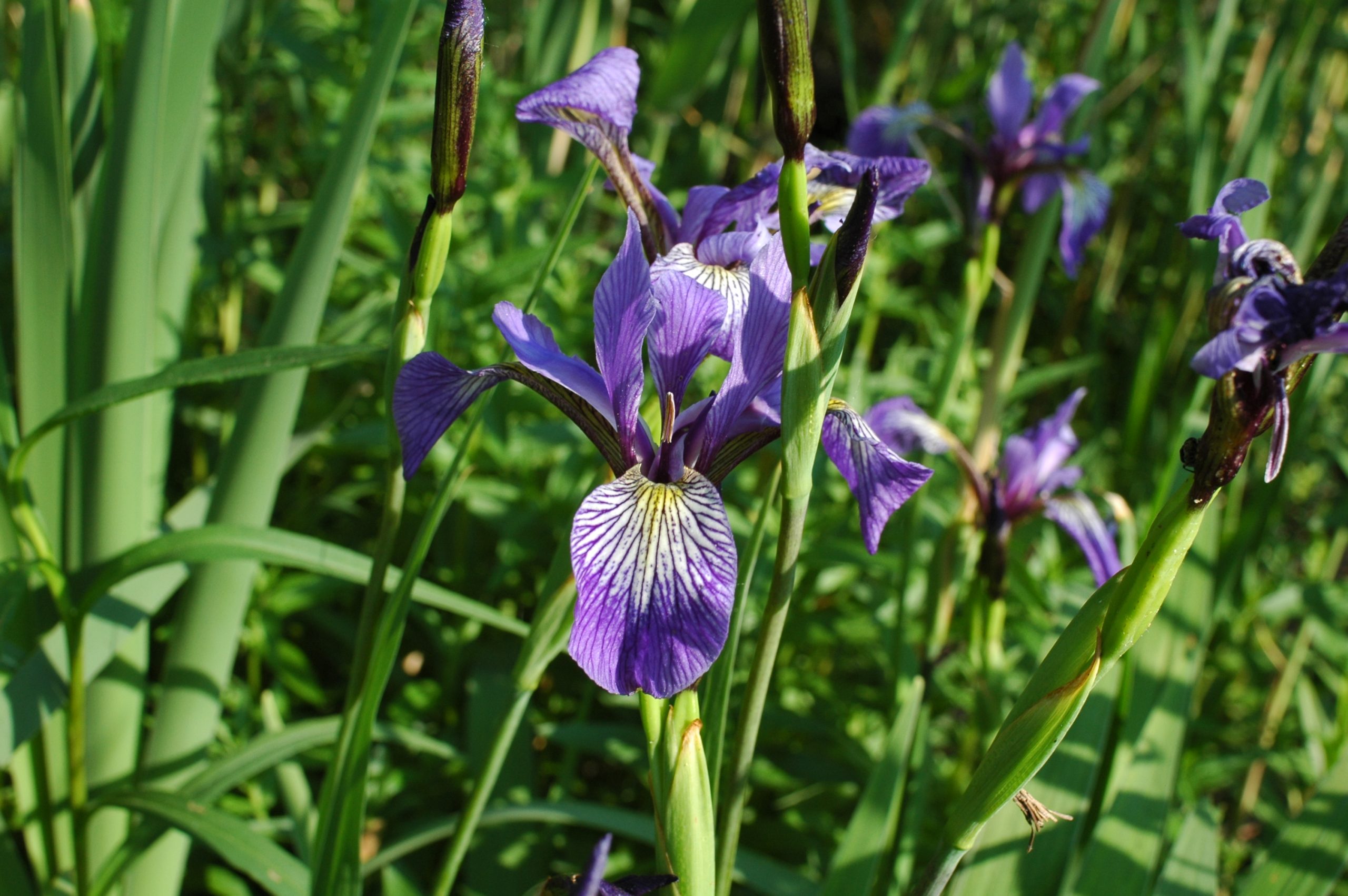
At the same time as Quebec’s national holiday (St. Jean-Baptiste Day), which roughly coincides with the summer solstice, the flowers of Quebec’s emblematic plant appear. The blue flag iris (Iris versicolor) is a plant native to northeastern North America, often found along lake shores or in young peat bogs. The flower is primarily purple with touches of yellow and white. In addition to thriving with its aa roots in water, this iris tolerates partial shade well.
Thus, we discover the vast potential of irises, which can amaze us with their beautiful flowers from the melting of the snow until the end of summer. There are many other species to discover, and it’s safe to say that irises are very easy plants to grow.