


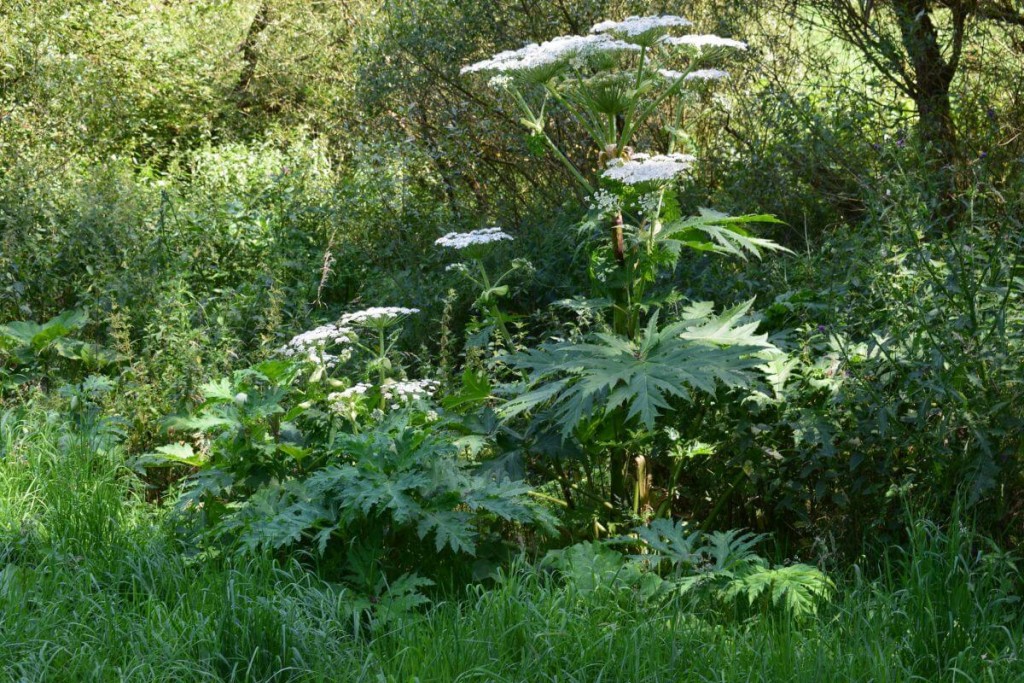
For several years now, giant hogweed (Heracleum mantegazzianum) has been making headlines regularly as soon as summer begins. Almost every season, local governments issue warnings, residents report sightings of patches along roadsides, and the media remind the public of the risks associated with this striking—and problematic—plant.
In fact, giant hogweed was introduced to North America as an ornamental plant in the early twentieth century, with the first documented planting occurring near Rochester, New York, in 1917. By the 1930s it had already reached British Columbia, and by the 1950s it was established in southern Ontario. The species was first recorded in Nova Scotia in 1980 and in Quebec in the early 1990s. Although its distribution is not as extensive as some recent news reports have suggested, this invasive plant remains a serious concern. The sooner existing populations are controlled and eradicated, the better.
The plant is monocarpic: it flowers only once, then dies. Under ideal conditions, it can flower as early as its third year; under more challenging conditions (poor or dry soil, deep shade, etc.), it can take up to 8 years to flower. It grows in almost any environment, from damp riverbanks to dark forests, but it is most commonly found in ditches and abandoned fields near ornamental gardens.
First, recognize it
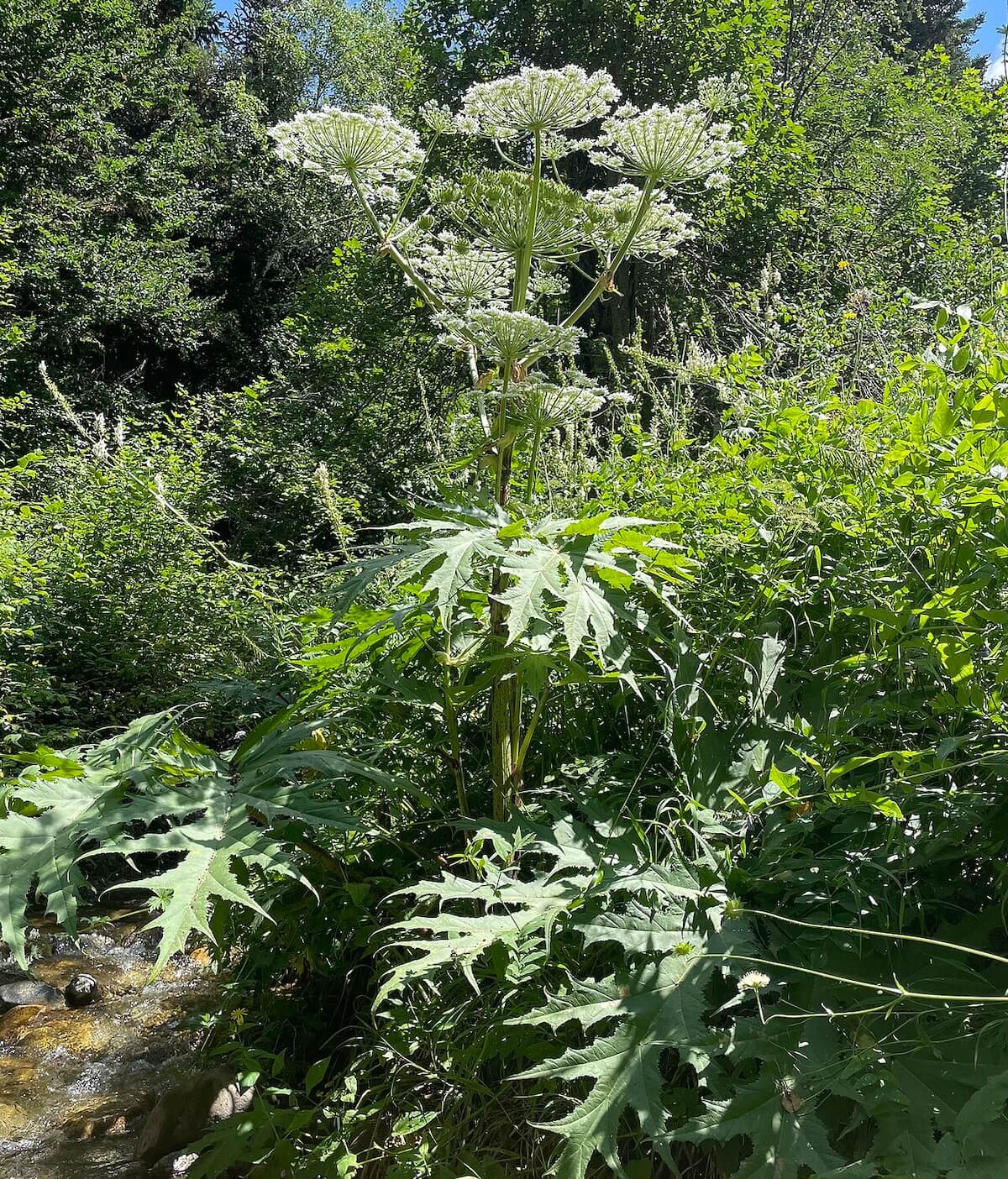
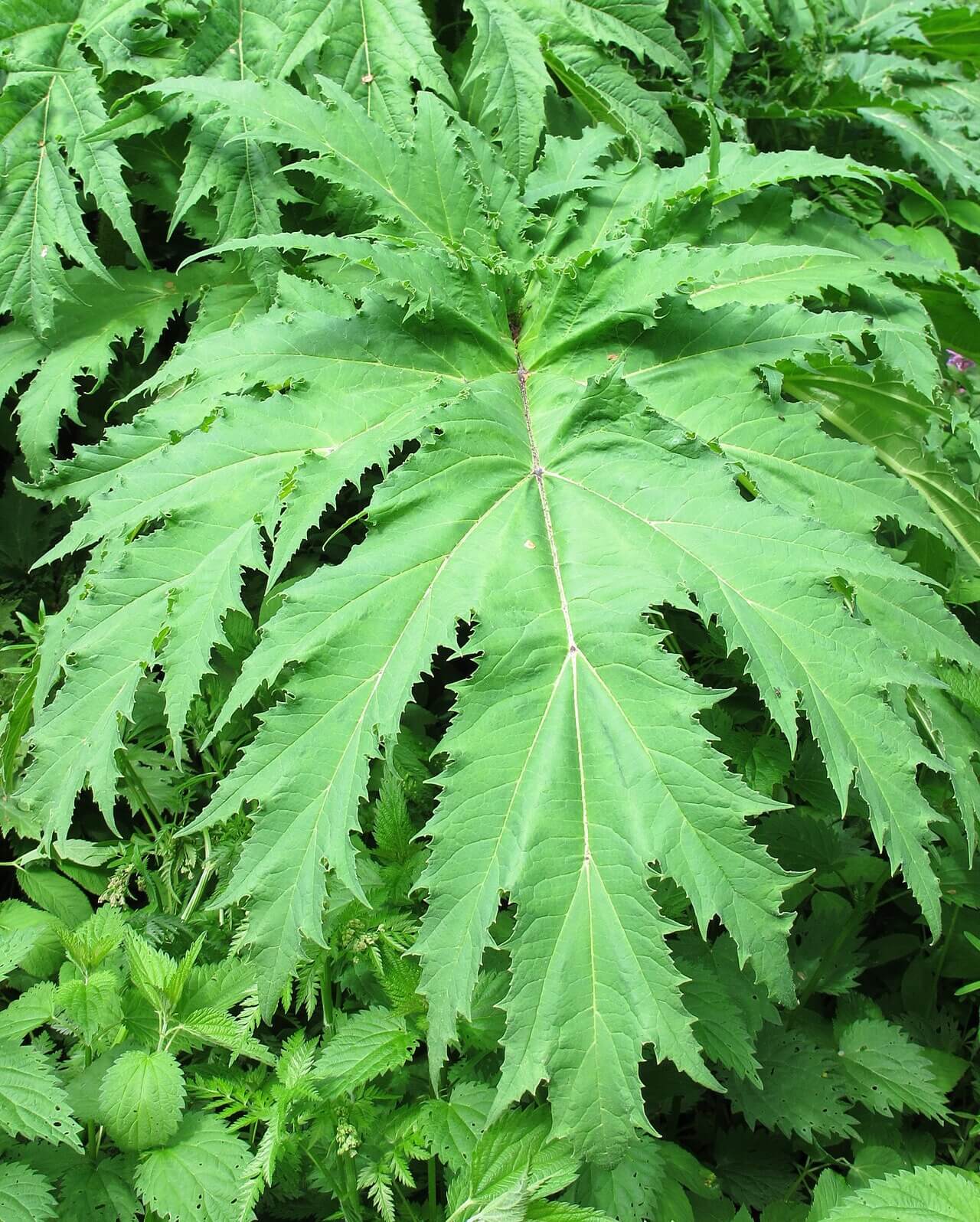
Giant hogweed is a giant herb that can easily grow to a height of 2 to 4 m (6.5 to 13 ft), and sometimes even 5 m (16 ft), when it flowers. In the years leading up to flowering, it forms a low rosette of deeply lobed leaves, resembling those of rhubarb. The leaves vary in size depending on the plant’s age: in the early years, they may be relatively small, but they grow larger as the plant matures and can reach over 1 m (3 ft) in diameter.
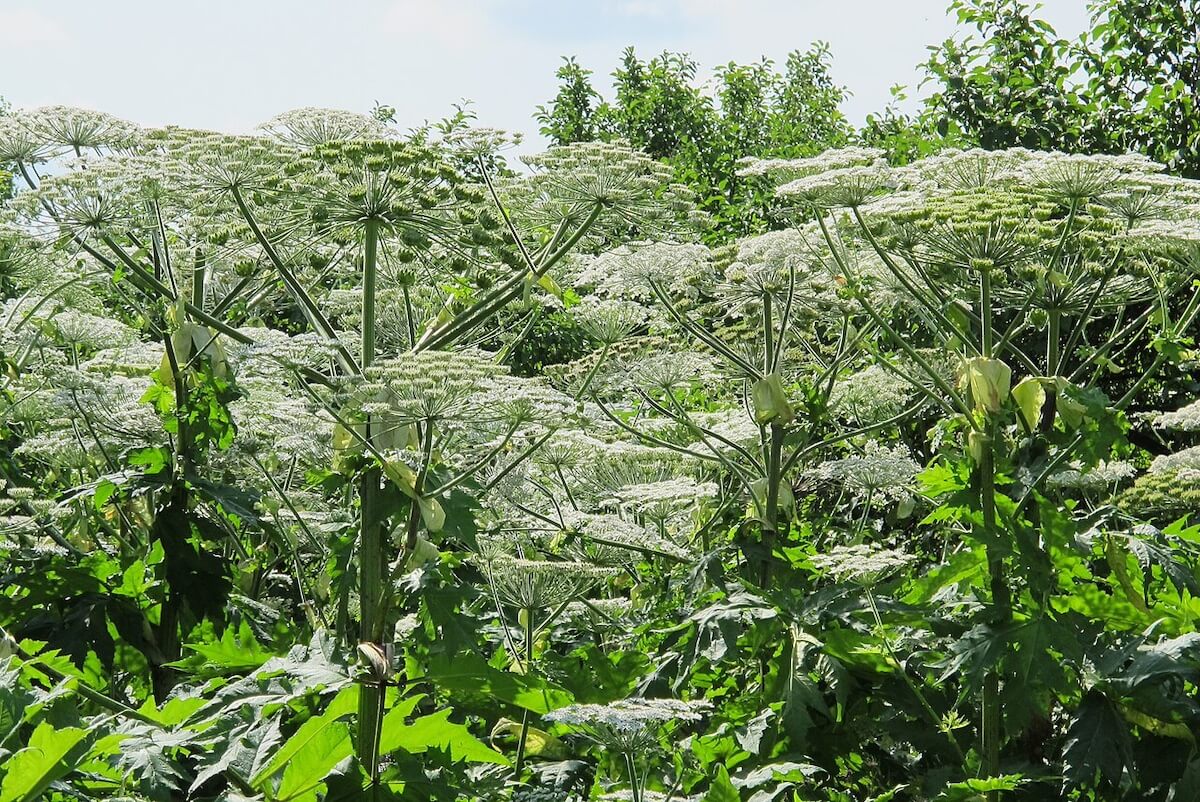
In the year it blooms, the plant produces a thick, upright stem marbled with purple, bearing lateral leaves that decrease in size as the plant grows taller. Starting in July, enormous umbels of small white flowers form at the top of the plant. The umbels can easily reach 80 cm (32 in) in diameter and produce up to 80,000 seeds. The seeds fall to the ground in late summer and fall and overwinter there.
Giant hogweed (an invasive species) should not be confused with cow parsnip (Heracleum maximum, formerly H. lanatum), a non-invasive native plant. The latter is smaller, rarely growing taller than 2.5 m (8 ft), and has fuzzy stems and leaves rather than the smooth ones found on giant hogweed.
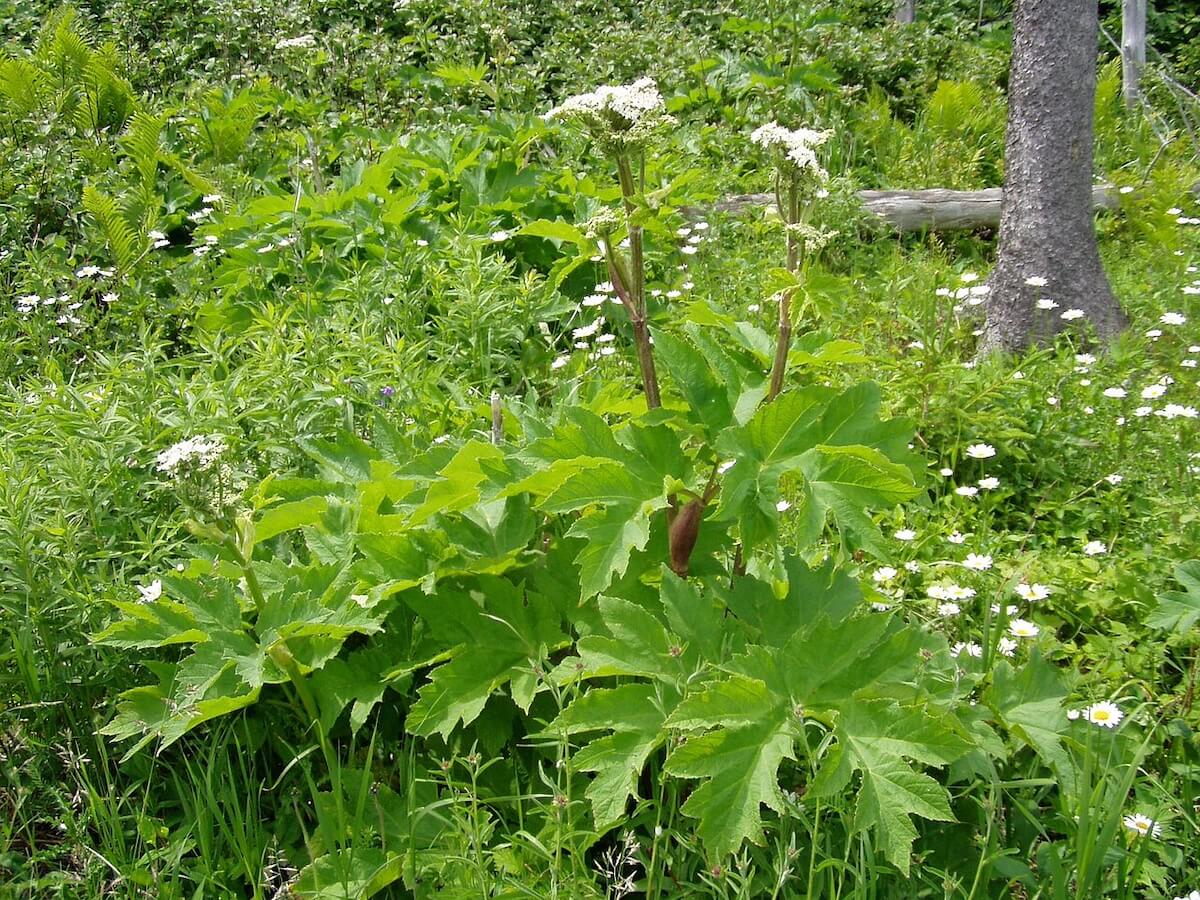
Poisonous plant
The sap of the giant hogweed is phytotoxic: if it comes into contact with the skin, it can cause burns and blisters, but only if the skin is exposed to sunlight. In case of accidental contact, wash the affected area with soap and avoid the sun for at least 48 hours. If the sap gets in your eyes, rinse thoroughly and wear sunglasses. If exposure seems severe, see a doctor.
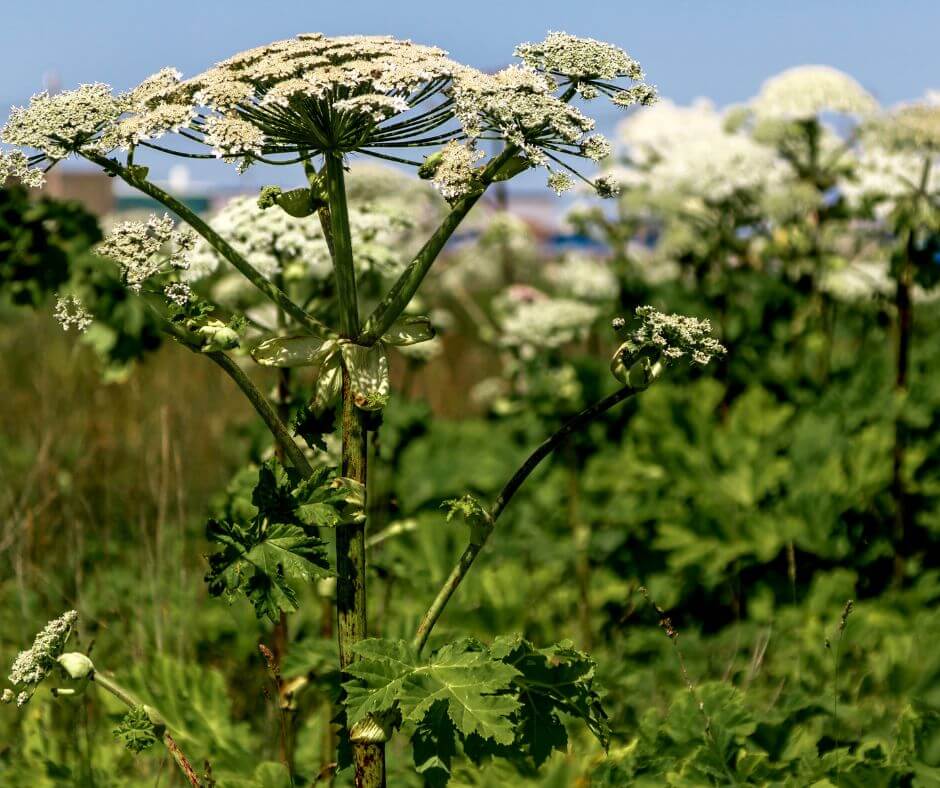
Control
Cover your entire body with waterproof synthetic clothing and wear long-sleeved waterproof gloves, closed-toe shoes, and a protective visor. Cut the plant about 20 cm (8 in) below the soil surface with a sharp spade, severing the root. Place the plant in a trash bag. If the plant regrows, which is possible, repeat the process.
Carefully remove your clothing and wash it. Wash any tools used thoroughly with plenty of water.
To prevent seeds already in the ground from germinating, cover the soil with a thick layer of mulch 7 to 15 cm (3 to 6 in)deep. The mulch must be maintained for at least 5 years, as some seeds may remain viable in the soil for that long.
If the infestation is widespread or present on public land, report the plant’s presence to the relevant authority.