
When I walk around my city, there’s one mistake I notice very often: trees with stakes or ties that are harmful to their health. While a stake is sometimes necessary when planting a tree, it isn’t needed for the tree’s entire life. And a tie wrapped around a trunk that’s never loosened can actually kill the tree. Let’s take a closer look at the situation.
Useful for planting… period
It is common to install a stake when planting a tree, especially if the tree is bare-root or balled and burlapped* or if it is planted in a windy location. In fact, during the critical period when the tree needs to develop new roots to become firmly established, the trunk must not be allowed to sway too much from side to side, otherwise the young roots will be torn out or the tree will lean toward the leeward side. But this treatment is a necessary evil. Because a trunk needs to move in order to strengthen itself.
*It is rarely necessary to stake a tree sold in a pot, as its root ball is perfectly flat on the bottom and therefore moves very little.
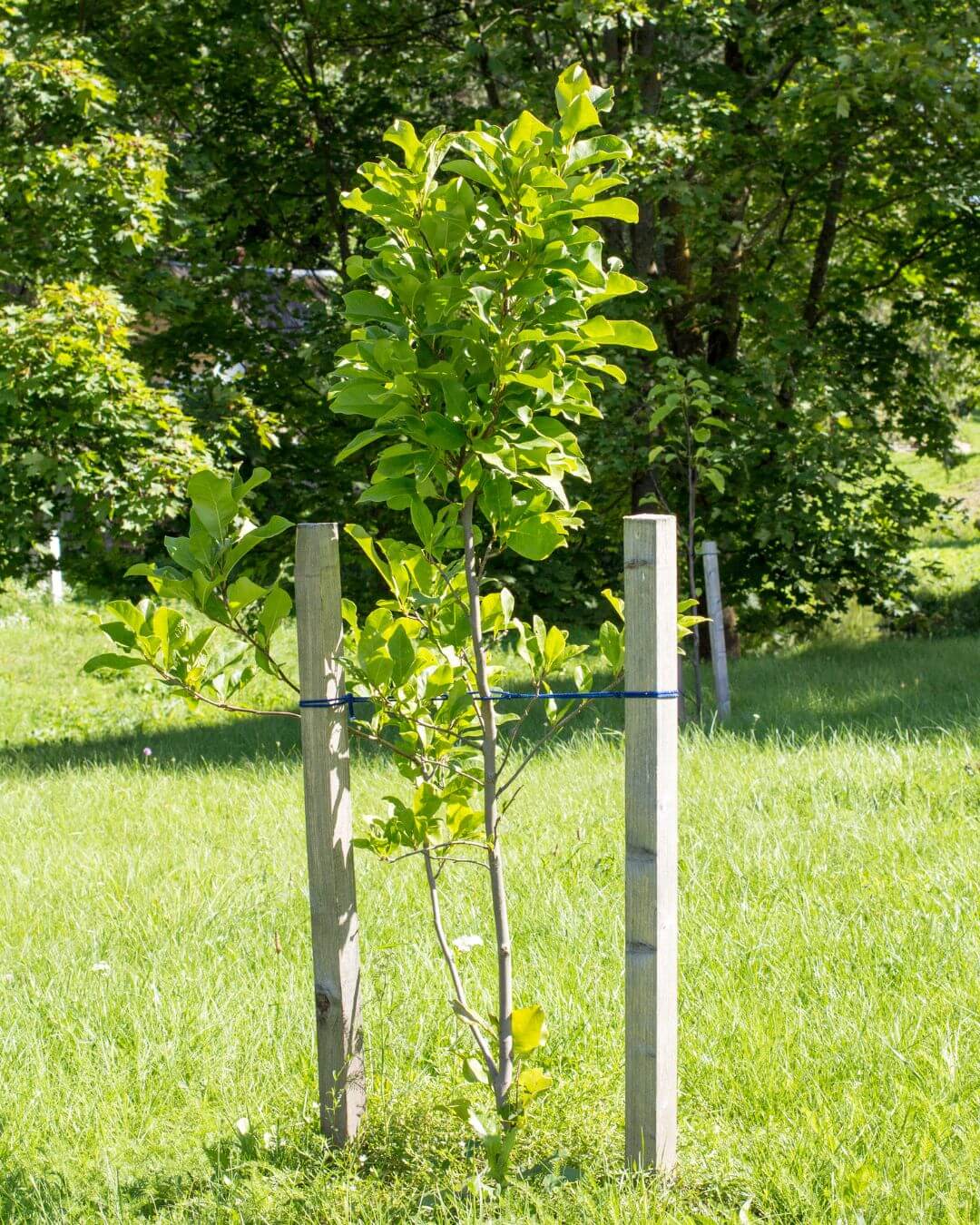
In fact, the trunk’s movement in the wind creates tiny wounds… which fill with lignin (i.e., wood), thereby strengthening the trunk. This is why a tree growing in an open field, where it is often in motion, will develop a much thicker, stronger, and more resilient trunk than a tree growing in a forest where wind is reduced by the presence of other trees. This explains why, on occasion, a strong wind passing through a forest knocks down large numbers of trees, while the more exposed trees in a nearby field withstand it perfectly.
A stake, therefore, prevents the trunk from moving as much as it should. If the stake is left in place for more than a year, the trunk develops little and remains spindly. Under normal circumstances, therefore, the stake must be removed as soon as the tree is well-rooted, normally after one year, or at worst, two years. Otherwise, the tree risks breaking, quite simply, unable to support the weight of its branches, which become heavier and heavier every year.
Ties that choke
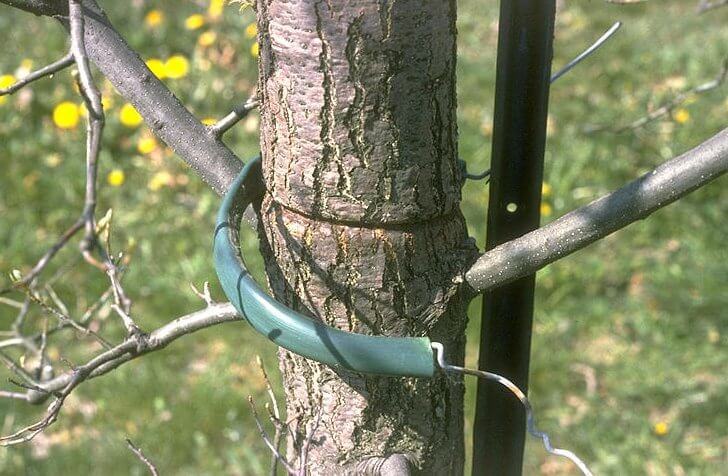
The tie used to secure a tree to a support serves only a temporary purpose. If left on the tree, it will eventually become embedded in the bark, because the trunk—even when staked—thickens over time. As a result, it effectively strangles the tree, preventing sap from circulating. I see dozens of cases of trees in distress because of ties. Sometimes, the owner has removed the stake but left the tie. Other times, both are still there. In either case, the tie must be removed after one year (two at most), otherwise the tree will suffer.
The exception
There is one exception, of course (isn’t there always?). These are small trees known as “pollarded trees,” such as weeping caraganas, lilac tree, and so on. In fact, these are not true trees, but rather shrubs grafted onto the top of another shrub’s stem. This stem then serves as the trunk. Unfortunately, a shrub stem, even if it resembles a trunk, is not a true trunk and does not always have the strength of one, especially as the shrub at its top grows (and gets heavier!) over time. Without a stake, it can break.
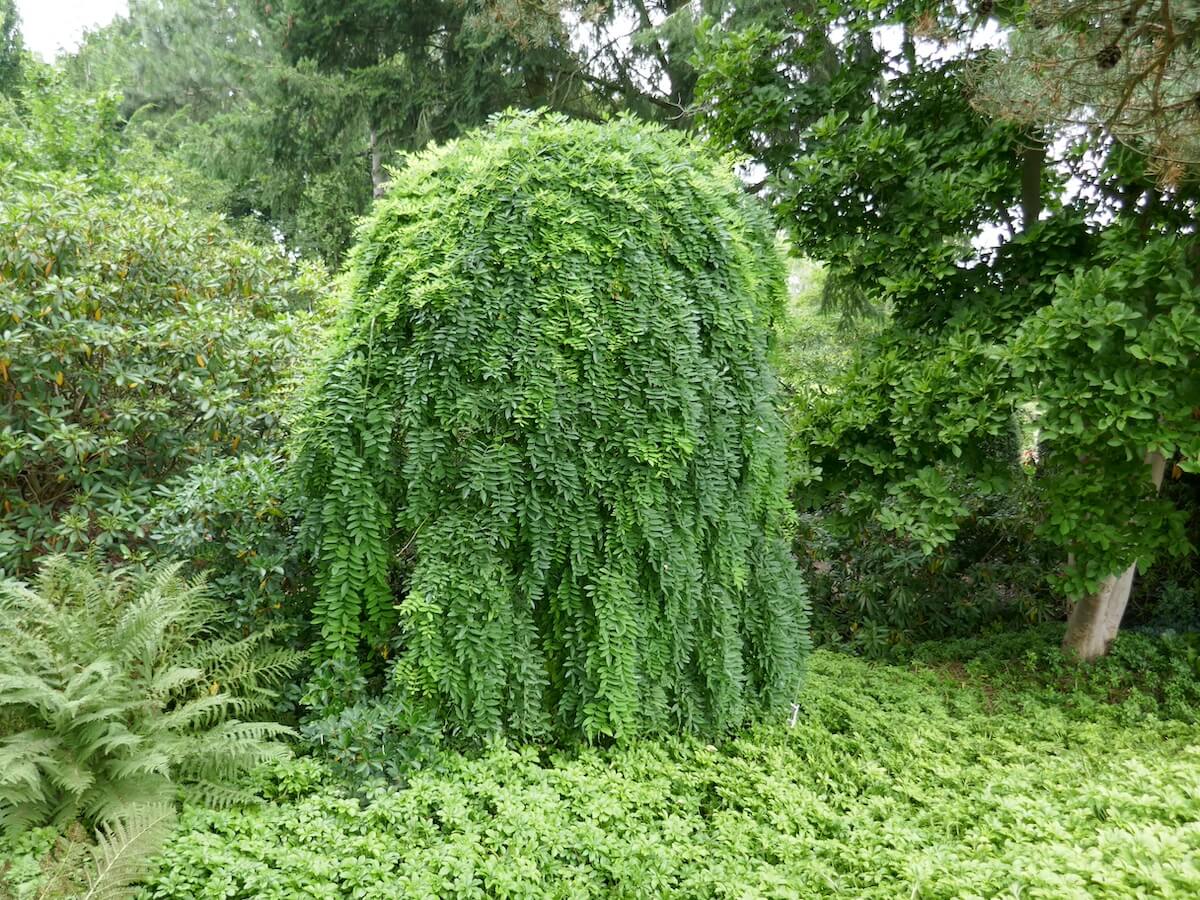
So, we often leave the stake in place permanently… but in that case, you need to adjust the tie and move it to a new spot at least once every two years. If the tie stays in the same place or if you don’t loosen it a little every year or every two years, it will start to damage the bark, and that’s the beginning of the end.
A quick exercise
So here’s a quick and easy task to tackle this weekend. Go around to your trees and remove any stakes and ties that are hindering their growth if they’ve been in place for more than a year. You’ll see how much stronger and more attractive the tree looks afterward!
Larry Hodgson has published thousands of articles and 65 books throughout his career, in both French and English. His son, Mathieu, has made it his mission to make his father’s writings accessible to the public. This article was originally published in Le Soleil newspaper.
Oh! This was one of my pet peeves when I was working and inspecting landscapes. It is a very common problem.