


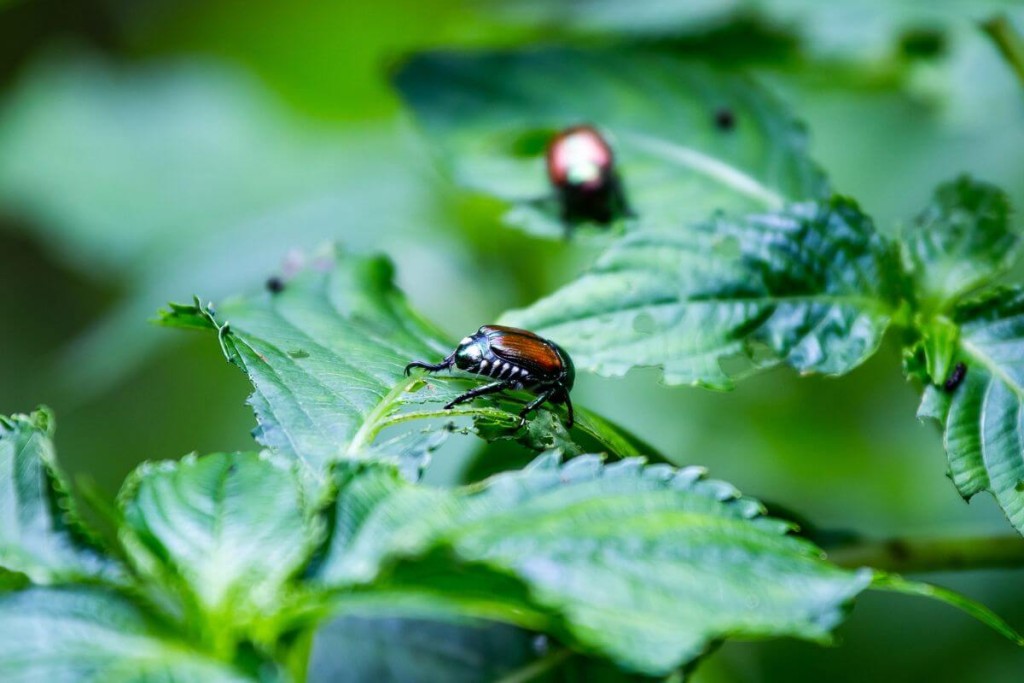
The Japanese beetle (Popillia japonica) is one of the insects most feared by gardeners. Native to Japan, where it is naturally kept in check by numerous predators and diseases, it was accidentally introduced to North America in the early 20th century. In the absence of many of its natural enemies, its population grew rapidly and it is now considered a major pest of gardens, orchards and certain crops.
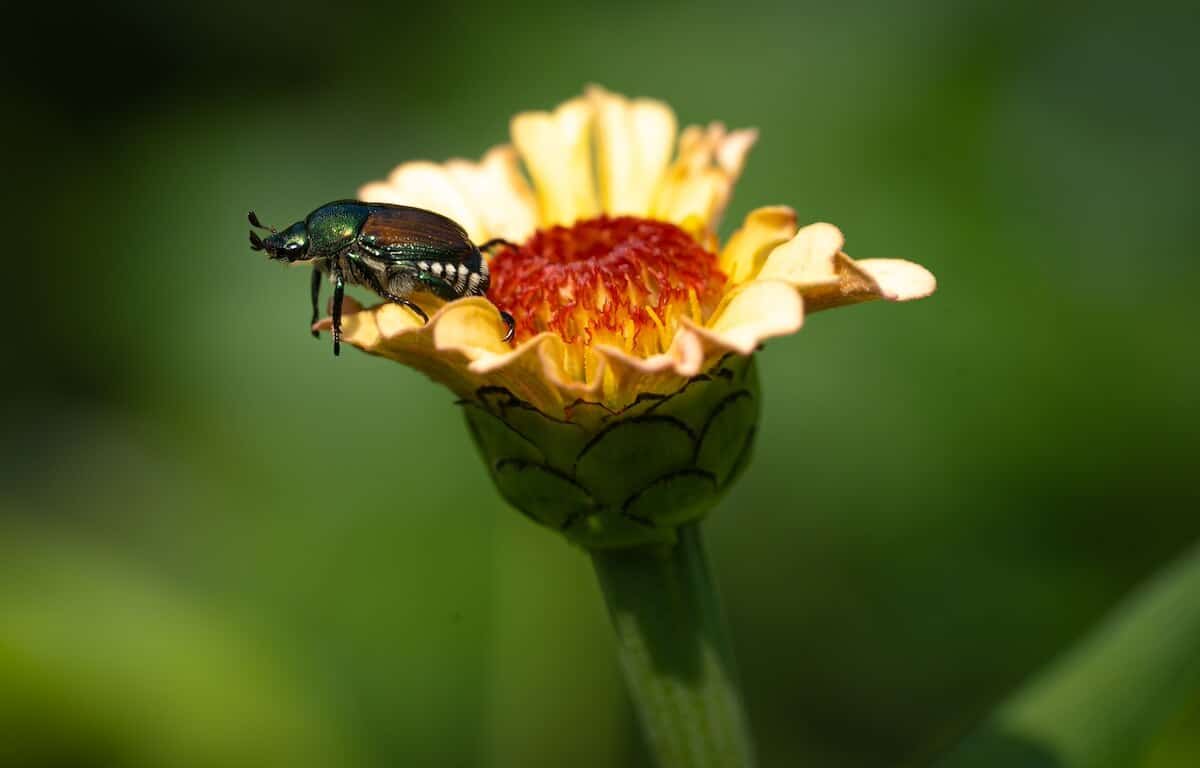
Well-defined tastes
The Japanese beetle is a polyphagous insect. Scientists have identified more than 300 species of host plants across nearly 80 botanical families. However, not all are consumed with the same enthusiasm. Given the choice, it almost always selects its favourite plants before turning to less appealing hosts.
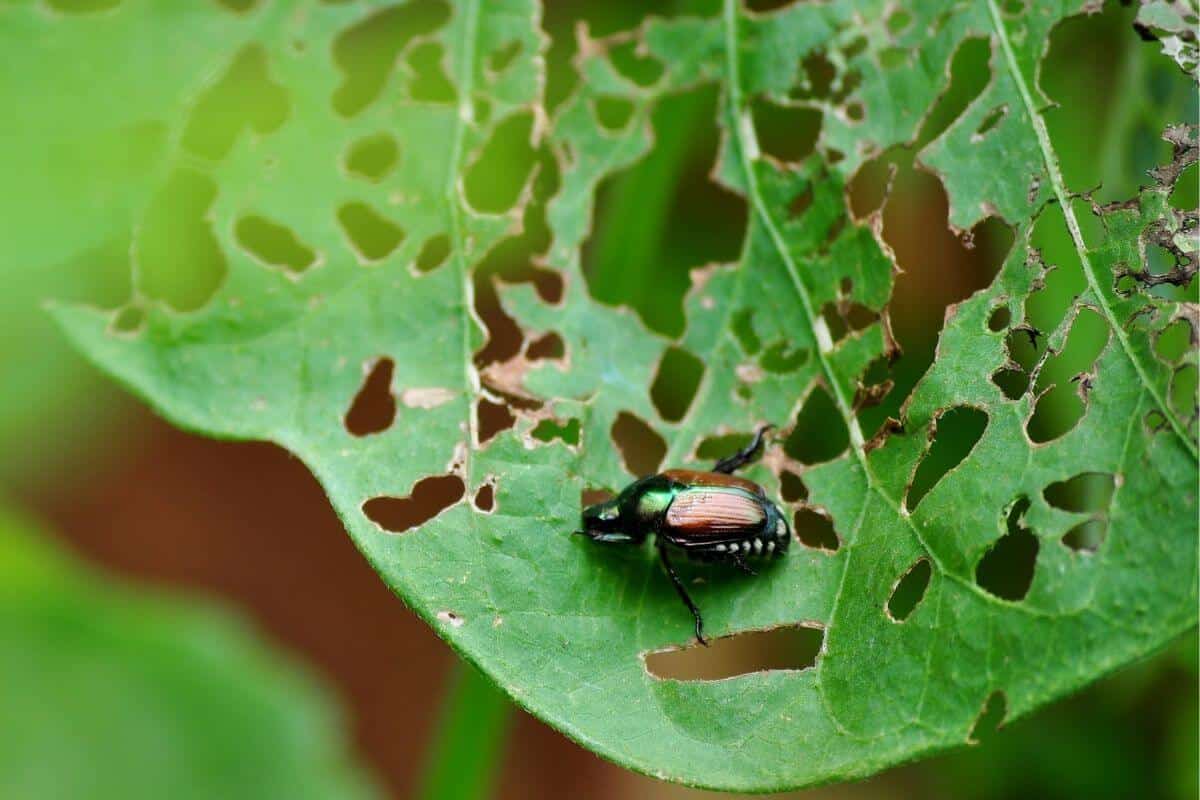
Damage is caused mainly by the adults, which are active from late June through to August, depending on your region. They devour leaves, flowers and sometimes fruit, often leaving behind leaves reduced to a network of veins – a characteristic type of damage known as skeletonisation. The larvae, better known as grubs, live in the soil and feed mainly on grass roots, which can cause significant damage to lawns.
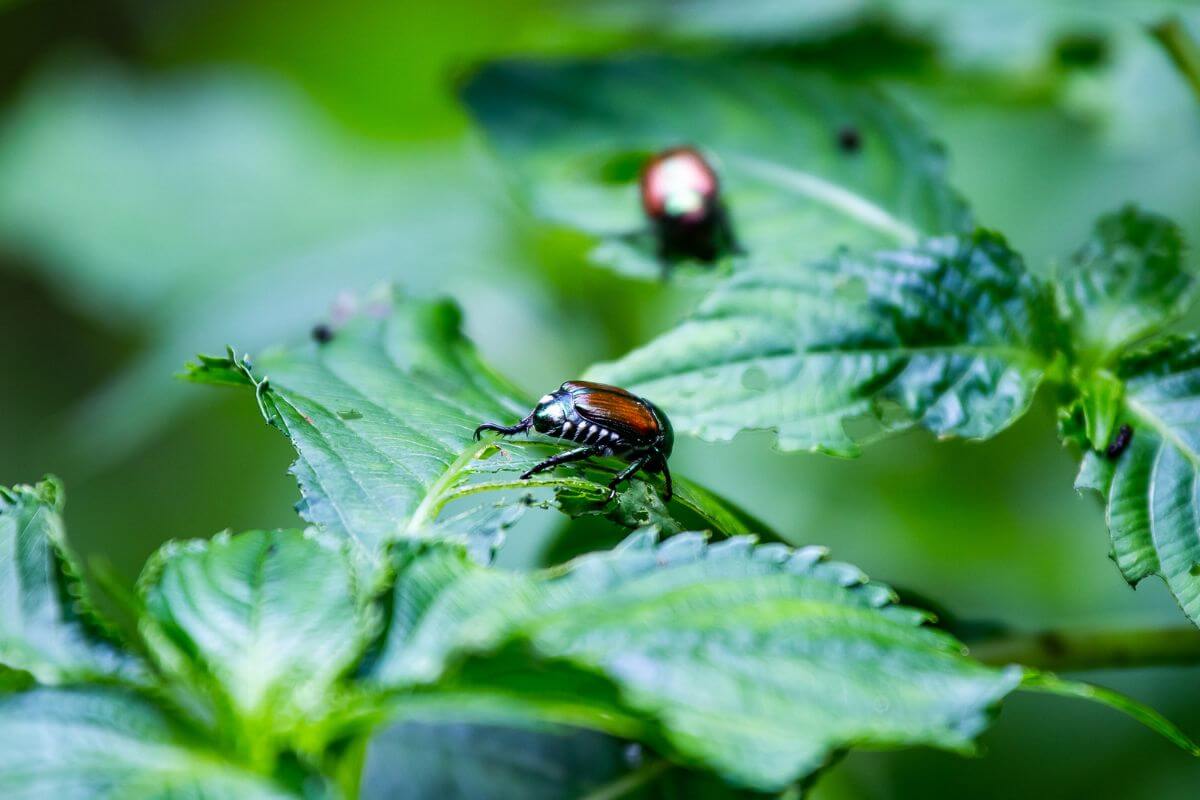
How to interpret this list
The following list sets out the main host plants of the Japanese beetle. Each species or genus is assigned one of the following three levels of susceptibility:
- Highly susceptible: Plant is highly attractive to Japanese beetles and is often severely damaged.
- Susceptible: Plant is regularly attacked, but the severity of damage varies.
- Slightly susceptible: Plant is only occasionally fed upon, or mainly when preferred host plants are scarce.
This classification is provided for guidance only. It is based on a review of the main scientific references published to date, notably Fleming (1972), l’USDA-APHIS and the EPPO. The level of susceptibility assigned to each plant reflects the feeding preferences generally observed in adults, but damage may vary depending on the region, growing conditions, the abundance of beetles and the cultivars.
List of the Japanese beetle’s preferred host plants
This list is intended as a guide to selecting plants in areas where the Japanese beetle is present. Where possible, the least susceptible species should generally be chosen.
| Apricot (Prunus spp.) | Highly susceptible |
| Acacia (Acacia spp.) | Highly susceptible |
| Yarrow (Achillea spp.) | Slightly susceptible |
| Kiwi (Actinidia spp.) | Susceptible |
| Tree-of-heaven (Ailanthus altissima) | Slightly susceptible |
| Marshmallow / Rose mallow (Althaea spp.) | Susceptible |
| Butterfly bush (Buddleia spp.) | Slightly susceptible |
| Redbud (Cercis spp.) | Susceptible |
| Aronia (Aronia spp.) | Highly susceptible |
| Mugwort (Artemisia spp.) | Slightly susceptible |
| Milkweed (Asclepias spp.) | Slightly susceptible |
| Asparagus (Asparagus spp.) | Susceptible |
| Aster (Aster, Symphyotrichum spp.) | Slightly susceptible |
| Hawthorn (Crataegus spp.) | Susceptible |
| Eggplant (Solanum melongena) | Susceptible |
| Alder (Alnus spp.) | Highly susceptible |
| Basil (Ocimum basilicum) | Susceptible |
| Barberry (Berberis spp.) | Slightly susceptible |
| Beet (Beta vulgaris) | Slightly susceptible |
| Blueberry (Vaccinium spp.) | Susceptible |
| Birch (Betula spp.) | Susceptible |
| Canna (Canna spp.) | Slightly susceptible |
| Carrot (Daucus carota) | Slightly susceptible |
| Currant and gooseberry (Ribes spp.) | Susceptible |
| Catalpa (Catalpa spp.) | Slightly susceptible |
| Chestnut (Castanea spp.) | Highly susceptible |
| Oak (Quercus spp.) | Susceptible (highly susceptible for pin oak) |
| Honeysuckle (Lonicera spp.) | Slightly susceptible |
| Chicory (Cichorium spp.) | Slightly susceptible |
| Clematis (Clematis spp.) | Susceptible |
| Summersweet (Clethra spp.) | Susceptible |
| Quince (Cydonia spp.) | Highly susceptible |
| Japanese quince (Chaenomeles spp.) | Slightly susceptible |
| Cucumber (Cucumis spp.) | Slightly susceptible |
| Japanese kerria (Kerria japonica) | Highly susceptible |
| Cosmos (Cosmos spp.) | Slightly susceptible |
| Squash and pumpkin (Cucurbita spp.) | Slightly susceptible |
| Dahlia (Dahlia spp.) | Highly susceptible |
| Deutzia (Deutzia spp.) | Slightly susceptible |
| Maple (Acer spp.) | Susceptible (highly susceptible for Japanese maple and Norway maple) |
| Joe-Pye weed (Eupatorium spp.) | Slightly susceptible |
| Strawberry (Fragaria spp.) | Susceptible |
| Raspberry and blackberry (Rubus spp.) | Susceptible |
| Turfgrass (Poaceae) | Susceptible (grubs) |
| Ginkgo (Ginkgo biloba) | Slightly susceptible |
| Gladiolus (Gladiolus spp.) | Susceptible |
| Wisteria (Wisteria spp.) | Highly susceptible |
| Bean (Phaseolus spp.) | Susceptible |
| Daylily (Hemerocallis spp.) | Slightly susceptible |
| Ragweed (Ambrosia spp.) | Slightly susceptible |
| Poison ivy (Toxicodendron spp.) | Highly susceptible |
| Hibiscus (Hibiscus spp.) | Highly susceptible |
| Hop (Humulus spp.) | Susceptible |
| Holly (Ilex spp.) | Slightly susceptible |
| Hydrangea (Hydrangea spp.) | Slightly susceptible |
| Impatiens (Impatiens spp.) | Slightly susceptible |
| Morning glory (Ipomoea spp.) | Susceptible |
| Iris (Iris spp.) | Slightly susceptible |
| Crape myrtle (Lagerstroemia spp.) | Highly susceptible |
| Sweetgum (Liquidambar styraciflua) | Slightly susceptible |
| Lobelia (Lobelia spp.) | Susceptible |
| Corn (Zea mays) | Highly susceptible |
| Horse chestnut (Aesculus spp.) | Susceptible |
| Mallow (Malva spp.) | Highly susceptible |
| St. John’s wort (Hypericum spp.) | Slightly susceptible |
| Bee balm (Monarda spp.) | Slightly susceptible |
| Mulberry (Morus spp.) | Susceptible |
| Bayberry (Morella/Myrica spp.) | Slightly susceptible |
| Hazelnut (Corylus spp.) | Susceptible |
| Walnut (Juglans spp.) | Susceptible |
| Evening primrose (Oenothera spp.) | Highly susceptible |
| Elm (Ulmus spp.) | Highly susceptible |
| Parsnip (Pastinaca sativa) | Slightly susceptible |
| Peach (Prunus spp.) | Highly susceptible |
| Poplar (Populus spp.) | Susceptible |
| Phlox (Phlox spp.) | Slightly susceptible |
| Pepper (Capsicum annuum) | Slightly susceptible |
| Peony (Paeonia spp.) | Susceptible |
| Plane tree (Platanus spp.) | Susceptible |
| Pear (Pyrus spp.) | Susceptible |
| Bell pepper (Capsicum annuum) | Slightly susceptible |
| Potato (Solanum tuberosum) | Slightly susceptible |
| Apple and crabapple (Malus spp.) | Highly susceptible |
| Plum (Prunus spp.) | Highly susceptible |
| Knotweed (Fallopia, Persicaria, Polygonum spp.) | Highly susceptible |
| Rhubarb (Rheum spp.) | Susceptible |
| Black locust (Robinia pseudoacacia) | Susceptible |
| Hollyhock (Alcea rosea) | Highly susceptible |
| Rose (Rosa spp.) | Highly susceptible |
| Willow (Salix spp.) | Susceptible |
| Sassafras (Sassafras albidum) | Highly susceptible |
| Mountain ash (Sorbus spp.) | Highly susceptible |
| Spirea (Spiraea spp.) | Slightly susceptible |
| Soybean (Glycine max) | Highly susceptible |
| Elderberry (Sambucus spp.) | Slightly susceptible |
| Marigold (Tagetes spp.) | Slightly susceptible |
| Arborvitae (Thuja spp.) | Slightly susceptible |
| Basswood / Linden (Tilia spp.) | Highly susceptible |
| Tomato (Solanum lycopersicum) | Slightly susceptible |
| Clover (Trifolium spp.) | Susceptible |
| Privet (Ligustrum spp.) | Slightly susceptible |
| Grapevine (Vitis spp.) | Highly susceptible |
| Virginia creeper (Parthenocissus spp.) | Highly susceptible |
| Viburnum (Viburnum spp.) | Slightly susceptible |
| Weigela (Weigela spp.) | Slightly susceptible |
| Zelkova (Zelkova spp.) | Highly susceptible |
| Zinnia (Zinnia spp.) | Highly susceptible |
This text was first published on this website on 21 July 2016. The list of host plants has since been updated and expanded, and an explanatory text has been added to make it easier to understand.